Two Attacks Put Families and Diplomats on Alert
A Japanese woman injured in a Suzhou subway station and two Chinese men seriously hurt in an attack with iron pipes in central Tokyo have renewed concern about the safety of people living abroad in Asia's two largest economies. The violence occurred within hours in late July 2025, bringing fresh anxiety to communities already shaken by earlier attacks.
Contents
- Two Attacks Put Families and Diplomats on Alert
- What Happened in Tokyo and Suzhou?
- Earlier Violence Weighs on the Response
- Diplomats Demand Protection for Their Citizens
- Why the Pattern Is Drawing Wider Concern
- Wartime Memories and Present Disputes
- How Online Hostility Reaches Wider Audiences
- Families and Businesses Reconsider Safety
- Mourning Opens a Debate About Education
- Security Concerns Reach Beyond the Two Countries
- Key Points
In Tokyo, four unidentified assailants attacked two Chinese men on a Thursday morning in Chiyoda Ward. Hours later, a Japanese woman accompanied by her child was assaulted in the eastern Chinese city of Suzhou. Her child was unharmed, and police quickly detained a suspect. The attackers in Tokyo remained at large.
As of August 4, the incidents had prompted diplomatic demands for protection, warnings to foreign residents and renewed discussion of nationalism, online hate and the difficult history between China and Japan. Officials have described such attacks as isolated, while diplomats, business leaders and residents worry about a pattern of violence and deepening mistrust.
The immediate consequences are personal: injured people needing treatment, parents worrying about their children and employees reconsidering how safely their families can live overseas. The wider concern is that fear could weaken the trade, investment and everyday contact connecting the two countries.
The motives behind the latest attacks have not been publicly established. Concern about xenophobia, meaning hostility toward people because they are foreign or perceived as foreign, has nevertheless become central to the response. Embassies, business chambers and human rights organizations have called for stronger protection for expatriate communities and action against the attitudes that can encourage hostility.
What Happened in Tokyo and Suzhou?
The two Chinese men were walking along a street in Tokyo's Chiyoda Ward when four attackers struck them on the head with iron pipes, according to statements from the Chinese Embassy in Japan and local police accounts. The assailants wore hoodies and work uniforms.
The attackers fled toward Akihabara subway station before escaping in a car bearing a Kansai license plate. Both victims suffered serious injuries but survived. Japanese authorities launched a search for the four suspects.
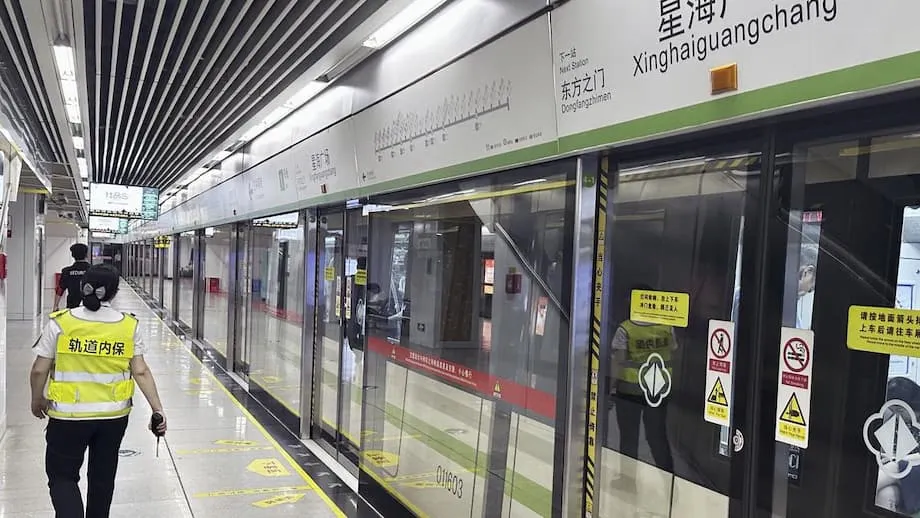
In Suzhou, the Japanese woman was attacked inside a subway station while with her child. She received hospital treatment for her injuries. Her identity has not been made public.
Information attributed to Japan's Consulate General in Shanghai indicated that local police quickly detained the suspect. Suzhou officials had not released an official statement. The limited public information left the woman's condition beyond the reported injuries, and further details of the encounter, unclear.
The close timing has intensified concern on both sides. Japanese residents in China and Chinese residents in Japan are confronting similar practical worries about personal safety, even as their governments seek answers from different police forces.
Earlier Violence Weighs on the Response
Suzhou had already experienced a serious attack involving a Japanese family. In June 2024, a Japanese woman and her child were attacked there. A Chinese bus attendant who intervened died, making the incident a tragedy for a Chinese family as well as a source of fear among Japanese residents.
In September 2023, a boy aged 10 was fatally stabbed outside the Japanese School in Shenzhen, southern China. The attack occurred on the anniversary of the 1931 Mukden Incident, which marked the beginning of Japan's occupation of Manchuria. The attackers in the earlier Suzhou and Shenzhen cases were both sentenced to death.
The sequence helps explain why the latest incidents have drawn attention beyond the people directly involved:
- September 2023: A Japanese schoolboy aged 10 was fatally stabbed outside the Japanese School in Shenzhen.
- June 2024: A Japanese woman and her child were attacked in Suzhou, and a Chinese bus attendant died after intervening.
- Late July 2025: Two Chinese men suffered serious injuries in Tokyo, followed within hours by an assault on a Japanese woman in a Suzhou subway station.
Women, children and people going about ordinary activities feature prominently in these cases. That has made the question of protection especially urgent for families, schools and employers responsible for staff living abroad.
Diplomats Demand Protection for Their Citizens
The Chinese Embassy in Tokyo urged Japanese authorities to apprehend the attackers quickly and protect the safety and legal rights of Chinese citizens. It also advised Chinese nationals and tourists to remain vigilant and take extra precautions.
Guo Jiakun, a spokesperson for China's Foreign Ministry, described the embassy's response and called for Japanese action:
The Chinese Embassy in Japan has expressed concerns to Japan immediately after the incident and is now further verifying the situation. We urge Japan to take effective measures to ensure the safety of Chinese citizens.
The Japanese Chamber of Commerce and Industry in China also called for protection. Its statement connected the latest assault with the conditions Japanese businesses need for their employees and families:
It is extremely regrettable that such an incident has happened again. Ensuring the safety of employees and their families is fundamental for doing business in China.
Both responses place responsibility on the country where the violence occurred. Chinese officials want arrests and protection in Japan, while Japanese business representatives want assurances that families can live safely in China. For residents, those demands concern routine activities such as travelling on public transport, walking outside and taking children to school.
Chinese and Japanese officials have repeatedly described attacks of this kind as isolated incidents that do not reflect wider social attitudes. The recurrence of violence has nevertheless led observers to question whether that description adequately addresses the fears of affected communities.
Why the Pattern Is Drawing Wider Concern
An Oxford Analytica analysis assessed that xenophobic attacks in China were likely to persist, driven by international tensions, historical grievances and domestic politics. Its assessment connected the violence with possible consequences for foreign investment, trade and the security environment.
Diplomats, business leaders and ordinary citizens are also worried about retaliatory violence. When an attack on one country's nationals becomes part of a wider argument about national identity, people with no involvement in diplomatic disputes can become the focus of hostility.
The concern extends beyond the immediate police investigations. Human rights organizations have called for stronger protection for expatriate communities and efforts to address the causes of xenophobia. Their warnings focus on the possibility that fear and anger could feed further hostility if governments fail to calm public sentiment.
China and Japan both have substantial interests in maintaining contact between their populations. The security of residents, workers and visitors matters to that relationship because economic ties depend on people being willing to travel, take overseas assignments and bring their families with them.
Wartime Memories and Present Disputes
Anti-Japanese sentiment in China draws on Japan's invasion and occupation of parts of the country during World War II. Millions of Chinese people died during that era. Patriotic education and state media continue to keep those memories prominent in public life.
Anniversaries of wartime events can bring sharper nationalist rhetoric and, at times, violence. The timing of the Shenzhen schoolboy's killing on the anniversary of the Mukden Incident added to the distress surrounding that case and the debate about how historical grievances are expressed today.
Nationalism places strong weight on loyalty to one's country. In the concerns raised around these attacks, the issue is how that loyalty can turn into hostility toward individuals identified with another nation, including children and families.
In Japan, anti-Chinese sentiment has been fed by territorial disputes, economic competition and concern about China's growing regional influence. Outright violence against Chinese nationals is rare, but the Tokyo attack has increased fears that hostile attitudes may be hardening.
The historical and political pressures differ between the two countries. Their practical effect on foreign residents can be similar: people become anxious that their nationality will shape how they are treated in public, regardless of their own views or conduct.
How Online Hostility Reaches Wider Audiences
Social media has become a major focus of concern about xenophobia. On Chinese platforms such as Weibo, intensely nationalistic comments include open calls for violence against foreigners. Major technology companies have pledged to tackle hate speech, but enforcement remains inconsistent.
Elena Yi-Ching Ho, a research analyst specializing in propaganda and social media, described how commercial incentives can reward inflammatory content:
Chinese social media platforms want to maximize engagement between users, and controversy—especially hyper-nationalistic content—can be lucrative for influencers and vloggers. Algorithms are designed to keep users engaged, sometimes at the cost of amplifying hate.
Algorithms are the automated systems that select and recommend posts. Ho's explanation describes a business problem as well as a political one: content that provokes strong reactions can attract attention and income, giving its creators a reason to publish more of it.
Andrew Devine, a PhD student at Tulane University, also pointed to company incentives, political considerations and the difficulty of monitoring enormous amounts of content:
Tech companies have incentives not to control hate speech, and content that echoes the government's official position is less likely to be removed. The sheer volume of information makes it impossible to eradicate all hateful content.
The Chinese government says it opposes all forms of discrimination and hate speech. Critics argue that patriotic education directed by the state and selective censorship help create conditions in which xenophobia can grow.
The debate concerns both what platforms remove and what they allow to circulate. Promises to address hateful posts sit alongside commercial rewards for controversy and political limits on discussion, making enforcement a central part of the public response.
Families and Businesses Reconsider Safety
Japanese residents in China have reported greater anxiety following the attacks. Some companies have offered to bring staff and families home, while the Japanese embassy has urged citizens to remain vigilant. Some parents have withdrawn their children from international schools.
Toyota and Panasonic are among the Japanese companies with substantial operations in China that have previously taken steps to protect employees. Those measures have included free flights home and advice to exercise caution in public places.
Chinese nationals in Japan have also expressed fear following the Tokyo attack. The Chinese embassy has issued safety advice and called for increased police protection.
Business leaders warn that persistent fear could discourage foreign workers and investment. For an employer, protecting staff can involve decisions about overseas assignments, family travel and whether employees feel able to remain in a posting.
China and Japan's economic relationship rests on extensive trade, investment and contact between people. Anxiety among expatriate communities therefore has consequences beyond individual households. A company may continue to see business opportunities while struggling to reassure the employees needed to carry out its work.
Mourning Opens a Debate About Education
Chinese citizens responded to the Japanese schoolboy's killing with public mourning. People laid flowers at the Japanese school and expressed apologies and hopes for peace. Those gestures showed a public desire to reject hostility toward the child and his community.
Online calls for a reckoning with anti-Japan sentiment were also quickly censored. The response reflected the government's ambivalence toward open discussion of nationalism, even as people sought to address the attitudes surrounding the violence.
Some educators and parents have raised concerns about children encountering views hostile to foreigners through school lessons, media and family conversations. Their concerns have brought calls to reconsider how history is taught and how national identity is formed.
Tina Wu, a social media manager in Shanghai, connected the discussion of hate speech with the way the past is presented:
I think we need to change the way we are dealing with our past if we want to see less hate speech. As long as the narrative is that we are constantly the victims of foreign aggression, there might be more attacks on foreigners in China.
Wang Zichen, a former Chinese state media journalist, expressed cautious optimism about China's ability to approach its future with greater confidence:
China should have the confidence of walking into the future with a greater sense of security and confidence instead of still being haunted by the memories of the past.
These responses connect immediate grief with a wider argument about education and public discussion. Calls for change include greater understanding between cultures and a firmer response to hate speech, both online and offline.
Security Concerns Reach Beyond the Two Countries
China and Japan are major powers in the Asia-Pacific. Their relationship affects supply chains, security alliances and the regional environment in which other countries trade and make diplomatic decisions.
Growing distrust could turn individual acts of violence into wider diplomatic or economic disputes. Human rights organizations have warned that protecting vulnerable communities and calming public sentiment are necessary to prevent a cycle of retaliation from deepening.
Calls for action therefore extend beyond official expressions of concern. They include practical protection for residents, efforts to promote understanding between cultures, changes in education and consistent action against hate speech. For families in Suzhou, Tokyo and elsewhere, the immediate priority is being able to continue ordinary life safely.
Key Points
- A Japanese woman was injured in a Suzhou subway station in late July 2025. Her child was unharmed, and a suspect was detained.
- Two Chinese men suffered serious injuries in Tokyo after four attackers struck them with iron pipes. The attackers remained at large.
- China demanded protection for its citizens in Japan, while Japanese business representatives called for safety assurances in China.
- Earlier attacks in Suzhou and Shenzhen have intensified concern among families, schools and employers.
- Historical grievances, nationalist messages and online hate are central to the debate about xenophobia.
- Residents and businesses face immediate safety concerns, while wider mistrust threatens economic and diplomatic ties.