A Retired Doctor Takes Japan's Longevity Title
Shigeko Kagawa, a retired physician who continued treating patients until she was 86 and joined the Tokyo Olympic torch relay at 109, is now Japan's oldest living person at 114. Her recognition follows the death of Miyoko Hiroyasu, who was also 114.
Contents
- A Retired Doctor Takes Japan's Longevity Title
- From Medical College to Wartime Osaka
- A Life That Continued Beyond Retirement
- What Kagawa Says About Living So Long
- Japan's Exceptional Numbers of Older People
- What Helps Explain Japan's Longevity?
- Remembering Miyoko Hiroyasu
- How an Aging Population Changes Daily Life
- A Local Life With Wider Meaning
- Key Points
As of August 4, 2025, Kagawa lives with her family at home in Yamatokoriyama, Nara Prefecture. Reading newspapers, watching television and practicing calligraphy remain part of her life. Her family describes a regular daily routine, small portions at mealtimes and continued physical and mental activity.
Born on May 28, 1911, in Nara Prefecture, Kagawa spent more than six decades in medicine. Her career took her from a hospital in Osaka during the Pacific War to her family's clinic, where she worked as an obstetrician and gynecologist, caring for women during pregnancy and childbirth and treating conditions affecting their reproductive health.
Kagawa's recognition comes in a country with more than 95,000 centenarians, meaning people aged 100 or older. Japan has the world's highest number of centenarians per person. Her experience brings a personal face to a national change: more people are reaching very old age while the country's total population declines.
From Medical College to Wartime Osaka
Kagawa graduated from Osaka Women's Medical College, now Kansai Medical University, before World War II. Completing a medical education was a rare achievement for a woman at that time, and it began a working life that would continue into her eighties.
During the Pacific War, she served at a hospital in Osaka. There, she witnessed the devastation caused by air raids and the resilience of the community around her. Her medical career continued through the destruction of war and the changes that followed it.
After the war, Kagawa took over her family's clinic. As an obstetrician and gynecologist, she devoted herself to local healthcare. She often kept a telephone beside her bed so she could answer patients' calls at any hour, making herself available when help was needed outside normal working hours.
Kagawa retired at 86 after more than six decades of medical work. When she became Japan's oldest person, she told city officials that helping others through difficult times during her career had contributed to her longevity. Service to patients remained part of how she understood her own long life.
A Life That Continued Beyond Retirement
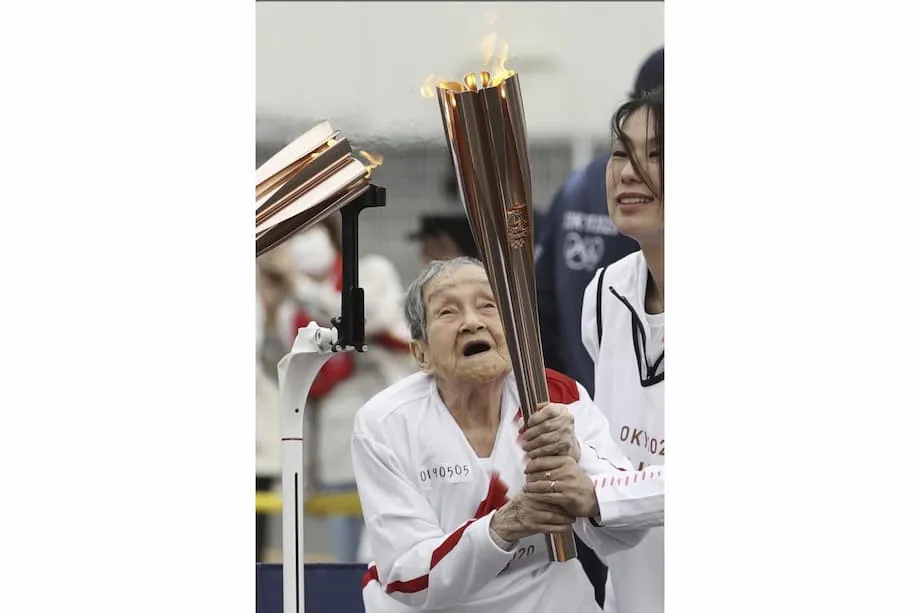
Kagawa remained active after leaving medical practice. At 109, she participated in the Tokyo 2021 Olympic torch relay, becoming one of the oldest Olympic torchbearers in history. Her appearance attracted attention in Japan and around the world.
Her daily life today is centered on home and family in Yamatokoriyama. She reads newspapers, watches television and practices calligraphy. These activities keep her connected with current events and give her familiar ways to spend her time.
Several milestones show the span of her life and career:
- May 28, 1911: Kagawa was born in Nara Prefecture.
- Before World War II: She graduated from Osaka Women's Medical College, now Kansai Medical University.
- During the Pacific War: She worked at a hospital in Osaka and witnessed the effects of air raids.
- After the war: She took over her family's clinic and served local patients as an obstetrician and gynecologist.
- At age 86: She retired after a medical career lasting more than six decades.
- 2021: At 109, she participated in the Tokyo Olympic torch relay.
- By August 4, 2025: At 114, she had been recognized as Japan's oldest living person following Miyoko Hiroyasu's death.
What Kagawa Says About Living So Long
Kagawa's own account of longevity centers on freedom, energy and enjoying daily life. Asked in a 2023 interview about her secret to living so long, the retired physician gave a direct answer:
I don't have any. I just play every day. My energy is my greatest asset. I go where I want, eat what I want and do what I want. I'm free and independent.
Her family says she follows no extraordinary health regimen. She goes to bed and gets up at set times, eats three proper meals each day in small portions, and remains mentally and physically active. Regular habits sit alongside the independence she values.
On her 113th birthday, Kagawa expressed gratitude for her health:
I am grateful to be healthy.
Her comments connect the ordinary pleasures of daily life with a career spent helping other people. She speaks about doing what she enjoys, while her family points to the steady routine that structures her days.
Japan's Exceptional Numbers of Older People
Japan's more than 95,000 centenarians place Kagawa within a much larger population of people who have reached their 100th birthday. At 114, she also belongs to the smaller group known as supercentenarians, people who have reached 110.
As of September 1, 2024, a record 36 million people in Japan were aged 65 or older, accounting for 29% of the population. People aged 80 and above now make up 10% of the population. Put simply, close to three in every 10 residents are at least 65, and one in 10 is at least 80.
The Gerontology Research Group, an authority on supercentenarians, has validated the longevity claims of hundreds of Japanese citizens. Most of those whose ages it has validated are women.
Kane Tanaka remains the oldest verified Japanese person ever. She lived to 119 years and 107 days, making her the second oldest validated person in history. Japan was also home to Jiroemon Kimura, the world's oldest man, who lived to 116 years and 54 days.
Those individual records sit alongside a broader demographic transformation. Japan's total population is shrinking, while the proportion of older residents continues to rise. Longer lives are a source of national pride, but they also change the balance between people needing care, people providing it and the workforce supporting public services.
What Helps Explain Japan's Longevity?
Researchers point to a combination of food, healthcare, social connections, activity and attitudes when explaining Japan's long lives. Genetics also play a role, while lifestyle and social conditions are widely considered the main contributors to the country's exceptional longevity.
Traditional Japanese cuisine is rich in vegetables, fish, rice and fermented foods, and low in processed sugars and red meat. Diet is one part of the explanation, alongside access to medical care and the circumstances in which people live.
Japan's universal healthcare system and attention to preventive medicine help illnesses to be detected and treated early. Preventive medicine means trying to stop illness from developing, or finding it before it becomes more serious.
Family and community ties can provide emotional support and a sense of purpose. Many older Japanese people also remain physically and mentally active well into later life. A positive outlook and the ability to adapt to change, both visible in Kagawa's approach, are common features in accounts of the country's oldest citizens.
Kagawa's family describes habits that fit several of these themes: regular meals, daily activity and a familiar routine. Her own explanation puts more weight on enjoying her independence and on the satisfaction she gained from helping patients.
Remembering Miyoko Hiroyasu
Miyoko Hiroyasu held the title of Japan's oldest living person before Kagawa. Like Kagawa, she was born in 1911 and lived to 114. Her life followed a different professional path, through art, teaching and family.
Hiroyasu studied art in Tokyo, taught in Hiroshima Prefecture and raised three children. She spent her final years in a nursing home in Oita Prefecture, where she enjoyed reading newspapers, sketching and playing card games. The date of her death was not given in the announcement described here.
Both women remained interested in activities well into old age. Kagawa continued with newspapers and calligraphy, while Hiroyasu maintained her interest in drawing and games. Their lives also spanned wars, economic upheaval and rapid technological change.
Japan's supercentenarians often share accounts of resilience, adaptability and gratitude. Their personal histories show how people who have lived through repeated disruption can remain optimistic and involved in the world around them.
How an Aging Population Changes Daily Life
Japan's growing proportion of older residents affects healthcare, social security and the economy. More seniors place pressure on public resources and the workforce, particularly as the total population declines. Care needs and the resources available to meet them are central concerns.
Older people also bring experience, knowledge and skills to their communities. Kagawa's long medical career is one example of service continuing far beyond the age at which many people retire. Across Japan, initiatives supporting active aging, contact between generations and learning throughout life are gaining momentum.
The government and local communities are responding in several areas:
- Healthcare: Investment in medical technology, care at home and preventive health programs aims to support people as they age.
- Work: Encouraging older people to remain in employment longer and supporting flexible working arrangements can help them continue contributing their skills.
- Community life: Opportunities for volunteering, education and cultural activities give seniors ways to remain involved.
- Urban planning: Accessible transport, housing and public spaces can help older residents move around and manage daily life.
These efforts aim to help older people lead fulfilling, independent lives while continuing to contribute to society. For families, practical support can mean access to care at home. For communities, accessible streets, transport and activities can make participation easier.
A Local Life With Wider Meaning
Kagawa's recognition draws attention to a woman whose working life was rooted in local healthcare. Her bedside telephone, decades at the family clinic and willingness to answer patients at any hour describe the practical commitment behind her long career.
Yamatokoriyama Mayor Kiyoshi Ueda welcomed her recognition as Japan's oldest person and expressed his hopes for her continued presence in the community:
We hope she will continue to inspire us with her smile.
Kagawa's experience has meaning beyond Japan as societies elsewhere also deal with longer lifespans. Her enjoyment of activity, independence and ordinary pleasures offers a personal perspective on aging, alongside the national questions about care, work and public services.
At 114, her story combines an unusually long life with decades of service and an enduring interest in the present. Her gratitude for her health and her pleasure in choosing how to spend each day remain central to the way she describes that life.
Key Points
- Shigeko Kagawa, born on May 28, 1911, is Japan's oldest living person at 114, following the death of Miyoko Hiroyasu, also 114.
- A retired obstetrician and gynecologist, Kagawa worked for more than six decades before retiring at 86.
- She participated in the Tokyo 2021 Olympic torch relay at 109 and now lives with family in Yamatokoriyama, Nara Prefecture.
- Her family describes regular sleeping times, three daily meals in small portions, and continued mental and physical activity.
- Japan has more than 95,000 centenarians. As of September 1, 2024, 36 million residents, or 29% of the population, were aged 65 or older.
- Japan is addressing its aging population through healthcare, flexible work, community activities and more accessible places to live.