Just 25.6% of written Japanese answers were correct
Japan's third year junior high students recorded an average correct answer rate of just 25.6% on questions requiring written explanations in the Japanese language section of the 2025 National Achievement Test. Their average across the full Japanese section was 54.6%, down from 58.4% in 2024 and the lowest since the current question format began in 2019.
Contents
- Just 25.6% of written Japanese answers were correct
- What the national results show
- Why explaining an answer takes more than knowing it
- Teaching habits and the pressure of exams
- Girls lead in Japanese but feel less confident in science
- Strong international rankings, weaker enthusiasm
- How the national test developed
- What test scores can change in schools
- Challenging expectations about who belongs in STEM
- Computer testing and the wider reform challenge
- Key Points
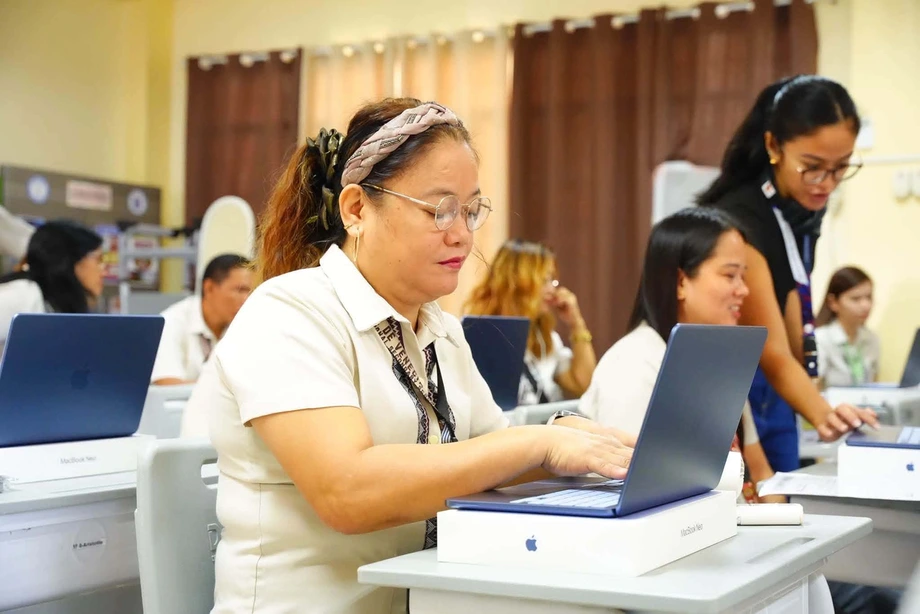
The test, conducted in April, involved about 1.9 million students at approximately 28,000 schools. Results released by the Ministry of Education, Culture, Sports, Science, and Technology (MEXT) covered Japanese, mathematics and science for sixth grade elementary students and third year junior high students.
The findings bring several concerns into view at once. Students struggled to explain their thinking in writing, Japanese and mathematics results declined, and girls expressed less confidence in mathematics and science despite achieving results similar to boys.
Japan continues to perform strongly in international mathematics and science assessments. Yet those assessments also show that achievement and enthusiasm do not always go together: many students earn high marks without feeling confident in the subjects or wanting to use them in a future career.
As of August 1, 2025, the national results had prompted discussion about teaching methods, gender expectations and how schools can help children communicate ideas. The planned expansion of computer testing to all subjects by 2027 adds another change to an education system already trying to strengthen reasoning and expression.
What the national results show
MEXT's figures show different levels of performance across subjects and school stages. The average correct answer rates were:
- Elementary Japanese: 67.0%.
- Junior high Japanese: 54.6%.
- Elementary mathematics: 58.2%.
- Junior high mathematics: 48.8%.
- Elementary science: 57.3%.
- Junior high Japanese questions requiring written explanations: 25.6%.
Mathematics results at both school stages declined from previous years. Japanese results also showed a downward trend, with the junior high average falling by 3.8 percentage points between 2024 and 2025, from 58.4% to 54.6%.
Junior high science used a different scoring method following the introduction of computer testing. Students received an average score of 505 on a scale with a base of 500 points. Readers therefore need to understand that figure as a score on its own scale, rather than as a percentage of answers answered correctly.
The sharpest weakness was within junior high Japanese. The 25.6% average for written explanation questions was 29 percentage points below the 54.6% average across the subject. That comparison shows how much more difficult this part of the assessment was for students.
Why explaining an answer takes more than knowing it
Questions requiring written explanations ask students to put their answers into sentences or paragraphs. They are also called open ended questions or constructed response questions. Instead of selecting an answer from a list or supplying a short response, a student must build an explanation.
Japanese language tasks can require students to interpret a text, reflect on its meaning and write their own opinion or analysis. Completing such a task involves several steps: understanding the material, deciding what to say, arranging ideas logically and choosing words that another person can follow.
A ministry official described the difficulty students encountered, focusing on whether their writing communicated their thinking to a reader:
Students seemed to struggle especially with those [questions] asking them to write their thoughts in a way that others can understand.
The official's explanation directs attention to organisation and communication as well as language mechanics. A student may need help connecting an idea to supporting reasons and presenting that connection clearly.
Higher education and workplaces value these abilities because people often need to explain complex ideas, reason through a problem and communicate with others. The low correct answer rate suggests that many students are not developing those skills to the level expected by the assessment.
Teaching habits and the pressure of exams
Japanese education has traditionally placed considerable weight on memorisation and arriving at the correct answer. Discussion without a single predetermined answer and opportunities for personal expression have received less attention. Reforms have sought to develop critical thinking and communication, but the change in classroom practice has been gradual.
Entrance exams and standardised tests have also historically relied on questions with a choice of answers or brief responses. When those formats dominate preparation, students have fewer opportunities to practise writing an extended explanation.
The Japanese language presents another challenge. Its complex writing systems and nuances can make written expression demanding, especially for children who do not regularly complete assignments in essay form. They must manage the language while also deciding how to organise their response.
Social expectations may play a part too. A cultural preference for harmony and avoiding standing out can discourage students from expressing a strong personal opinion or an unusual perspective. The possible pressures described here involve teaching, assessment, language and classroom expression, rather than one simple cause.
For schools, the practical issue is how much experience students receive in making their reasoning understandable. Reforms intended to strengthen communication depend on children having opportunities to develop and express ideas, alongside learning the subject content.
Girls lead in Japanese but feel less confident in science
MEXT released results by gender for the first time in 2025. Girls at both elementary and junior high school performed better than boys in Japanese language questions. More girls also said they liked Japanese, were good at it or understood it well.
Mathematics and science presented a different picture. There were no significant gender gaps in correct answer rates, yet fewer girls than boys expressed interest or confidence in those subjects.
Achievement measures how successfully a student answers a question. Confidence concerns how capable that student feels, while interest concerns whether the student enjoys or wants to pursue the subject. The results show why those aspects of learning need separate attention: similar marks can sit alongside different feelings about ability.
The same pattern appeared in the 2023 Trends in International Mathematics and Science Study (TIMSS). Japanese girls were less likely than boys to enjoy mathematics and science or feel competent in them, despite achieving similar results.
Unconscious gender bias and social expectations have been identified as possible influences on those attitudes from an early age. Such bias involves assumptions about what boys or girls are suited to, even when the person making the assumption is not aware of it.
Strong international rankings, weaker enthusiasm
Japan's performance in the 2023 TIMSS placed its elementary and junior high students among the leading education systems in mathematics and science. Japanese fourth graders ranked fifth in mathematics and sixth in science. Junior high students ranked fourth in mathematics and third in science.
Singapore, Taiwan and South Korea also ranked highly. Japan's positions show substantial achievement in the subjects, even as the national test identifies difficulties in particular skills and student surveys reveal weaker enthusiasm.
Only 45% of Japanese junior high students said they usually did well in science, compared with an international average of 51%. The gap was larger when students were asked about work: 27% wanted a job using science, against an international average of 58%.
The career figure was therefore 31 percentage points below the international average. The share saying they usually did well in science was six percentage points lower. These comparisons make the difference between classroom achievement and willingness to pursue science especially visible.
Japanese students are mastering content while reporting less engagement or belief in their own ability than students elsewhere. That belief, sometimes called self efficacy, means feeling able to carry out a task successfully. The difficulty with written explanations may be connected to this broader concern about engagement and confidence.
How the national test developed
Japan introduced the National Achievement Test in 2007 to assess the academic skills of sixth grade elementary students and third year junior high students. Its purposes include monitoring educational standards, identifying differences between regions and informing education policy.
All public schools initially participated. From 2010, participation shifted to selected schools, while private schools participated voluntarily. The assessment covers Japanese and arithmetic at elementary level, and Japanese and mathematics at junior high level. Science is added every three years.
The main dates surrounding the assessment and the changes discussed in 2025 are:
- 2007: The National Achievement Test began.
- 2010: Participation shifted from all public schools to selected schools, with voluntary participation by private schools.
- 2019: The current Japanese question format was introduced.
- 2023: TIMSS recorded strong Japanese mathematics and science achievement alongside concerns about confidence and interest.
- 2024: Junior high students averaged 58.4% in Japanese on the national test.
- April 2025: About 1.9 million students took the national assessment.
- 2027: Computer testing is scheduled to expand to all subjects.
Regional results have repeatedly placed Akita, Fukui and Ishikawa among the highest performing prefectures. Okinawa and several urban areas have lagged behind. Socioeconomic circumstances, family structure and community characteristics have all been linked to differences in performance between regions.
What test scores can change in schools
Supporters of the national assessment argue that its results give schools and policymakers useful information for improving education and ensuring accountability. Subject results, regional patterns and responses to individual types of questions can direct attention to areas where students need support.
Critics warn that placing too much weight on scores can create unhealthy competition. Schools may spend more time preparing students for the test itself, while broader educational goals receive less attention.
An education expert raised concern about the effect of competition and a narrow focus on immediate results on children's development:
There is no guarantee that increased competition and focus on test scores will benefit children's development. The hope is that Japan avoids relying solely on short-term results.
Japan's debate resembles arguments about standardised testing elsewhere. International assessments such as TIMSS and the Program for International Student Assessment (PISA) have influenced education policy worldwide, encouraging reforms informed by data while also bringing concerns about narrower curricula and student wellbeing.
The 2025 writing results give that debate a concrete focus. Improving a correct answer rate involves decisions about what happens in lessons, how students practise explaining ideas and how schools balance assessment preparation with wider learning.
Challenging expectations about who belongs in STEM
Student surveys have found that a significant proportion of Japanese children believe ability in particular subjects depends on gender. Social stereotypes and adult attitudes can reinforce those beliefs, even when girls and boys achieve similar mathematics and science results.
The Unconscious Bias Laboratory and the Yamada Shintaro D & I Foundation are working to address these issues. Their efforts include promoting education free from gender assumptions and supporting girls interested in STEM, the collective term for science, technology, engineering and mathematics.
Encouraging girls early and challenging stereotypes are central to the concerns raised by the gender results. A child who performs well in a subject but feels it is unsuitable for her may have a different view of future study or work from a child who receives encouragement.
The Japanese language results also show that gender patterns vary by subject. Girls performed better and expressed more positive feelings about Japanese, while mathematics and science revealed a gap in confidence without a significant gap in correct answers. Schools therefore face different needs across the curriculum.
Computer testing and the wider reform challenge
Computer testing has already changed the junior high science assessment and is scheduled to extend to all subjects by 2027. The approach may provide more detailed information about performance and create opportunities for new question formats.
Policymakers are considering changes to curricula and assessment methods to strengthen reasoning, communication and the ability to adapt to unfamiliar situations. The concerns extend beyond one test as Japan faces demographic challenges, technological change and global competition.
Changes to assessment need accompanying changes in teaching practices, classroom culture and social attitudes toward learning and achievement. A different testing format can change how a task is presented, while classroom experience shapes how prepared a student is to answer it.
An international education analyst described the balance between measuring achievement and developing a broader relationship with learning:
Standardized assessments are essential for measuring progress and ensuring accountability, but they must be balanced with efforts to cultivate creativity, resilience, and a love of learning.
Japan's 2025 results bring that balance into practical terms: students need to communicate their reasoning, girls need encouragement consistent with their mathematics and science achievement, and schools need to respond to weak areas without making test scores their sole goal.
Key Points
- Junior high students averaged 25.6% correct on Japanese questions requiring written explanations.
- Their full Japanese average fell from 58.4% in 2024 to 54.6% in 2025, the lowest since the current format began in 2019.
- The April test involved about 1.9 million students at approximately 28,000 schools.
- Girls performed better in Japanese but expressed less interest and confidence in mathematics and science despite similar achievement.
- Japan ranked highly in TIMSS 2023, while just 27% of junior high students wanted a job using science, compared with 58% internationally.
- Computer testing is scheduled to expand to all subjects by 2027, alongside discussion of changes to teaching and assessment.