China's Corporate Giants Combine Scale With Uneven Growth
Greater China placed 130 companies in the 2025 Fortune Global 500, with combined revenue of about $10.7 trillion, as electric vehicle makers, technology businesses and internet platforms advanced alongside the country's large state enterprises. The United States led with 138 companies, while Japan had 38.
Contents
- China's Corporate Giants Combine Scale With Uneven Growth
- What the Ranking Measures
- China's Revenue Share and Shanghai's Headquarters
- Electric Vehicle Makers Move Up
- Huawei and JD.com Show Technology's Reach
- Internet Platforms Turn Growth Into Higher Rankings
- Metals and Taiwan's Technology Companies
- Why Profitability Changes the Comparison With America
- Private Companies Drive a Different Kind of Competition
- Key Points
The Chinese total comprised 124 companies from the mainland and Hong Kong Special Administrative Region, plus six based in Taiwan. Together, the 130 businesses accounted for about 26% of the revenue generated by the world's 500 largest companies on the list.
BYD entered the top 100 for the first time, Huawei returned to that group, and PDD Holdings recorded the largest ranking gain among Chinese companies. Their advances show how automotive technology, online commerce and digital services are becoming increasingly prominent within China's corporate economy.
State enterprises still supplied much of China's corporate scale. Their size, however, sat alongside concerns about profitability and efficiency, particularly when compared with American companies and China's own private businesses.
The picture as of August 1, 2025, was therefore more varied than the headline count suggests. Among the 124 companies from the mainland and Hong Kong, 49 improved their positions, while 68 fell. Large revenue totals and rapid gains in some industries coexisted with competitive pressure and economic difficulties elsewhere.
What the Ranking Measures
The annual Fortune Global 500 ranks the world's largest companies by total revenue, meaning the money a business receives from its activities before its costs are deducted. The 2025 edition uses fiscal years ending on or before March 31, 2025.
Both public and private companies can qualify, provided their financial information is publicly available. Alongside revenue, the ranking presents measures including profit and assets, giving readers several ways to examine corporate size and financial performance.
The minimum revenue threshold was stated as $322 billion, a figure requiring clarification because included companies such as Chery had much lower reported revenue, at $59.7 billion.
The companies in the ranking generated a combined $41.7 trillion in revenue in 2024, an amount described as equivalent to more than one third of global gross domestic product, and employed more than 70 million people worldwide. Their reach makes the list a closely watched reference for investors, policymakers and business leaders.
Revenue measures the amount of business a company conducts. Profit measures what remains after expenses. A company can therefore rank highly because it sells enormous quantities of goods or services while retaining only a small share of those sales as earnings.
Employment, innovation and international reach also help explain why the ranking attracts attention. The businesses it contains influence supply chains, investment decisions and competition across national borders, even though revenue determines their order on the list.
China's Revenue Share and Shanghai's Headquarters
The 130 companies from Greater China averaged about $82 billion in sales each. Average profit reached $4.2 billion, an increase of 7.4% from the previous year. Those figures show substantial earning power across the group, although individual companies and industries performed differently.
China's representation remained close to the United States in company numbers. The American total of 138 was eight higher than Greater China's 130. Japan's 38 entries placed it a distant third.
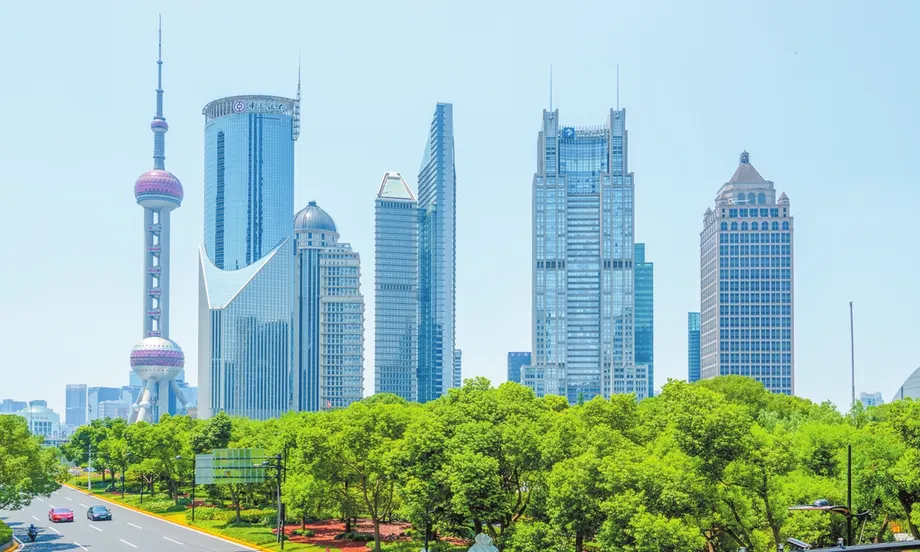
Shanghai had 12 company headquarters on the list, ranking fourth among cities worldwide behind Beijing, Tokyo and New York. Its businesses spanned steel, vehicles, banking, shipping and online commerce, illustrating the breadth of the city's corporate base.
China Baowu Steel Group, SAIC Motor, Bank of Communications, COSCO Shipping and PDD Holdings were among the Shanghai companies included. Their activities connect the city to both traditional industrial production and newer forms of retail and digital trade.
PDD Holdings supplied Shanghai's most dramatic advance, rising 176 places to No. 266. Its growth also made it a central example of the widening gap between fast expanding private platforms and companies facing slower demand or tougher competitive conditions.
Electric Vehicle Makers Move Up
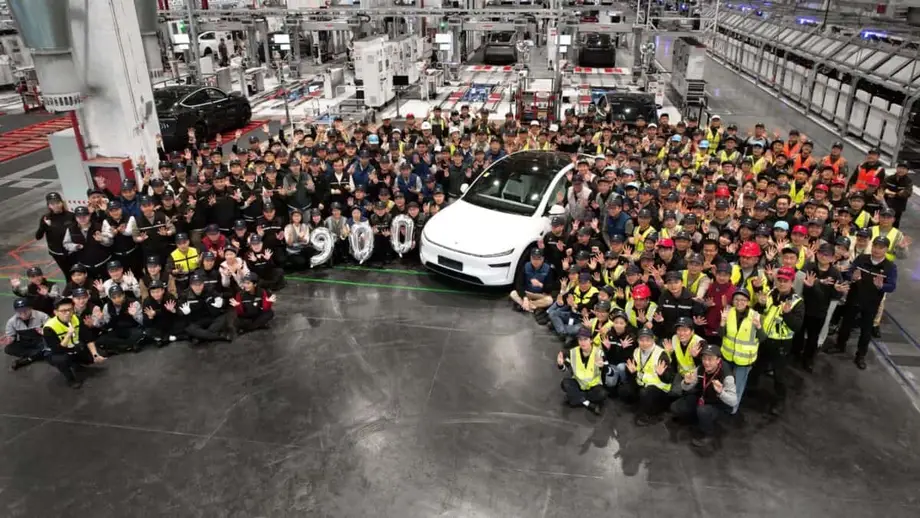
Ten Chinese automakers appeared in the 2025 ranking. BYD rose 52 places to No. 91, moving into the top 100 for the first time and ahead of Tesla, which ranked No. 102. The shift placed China's electric vehicle industry among the most visible features of the year's results.
Chery climbed 152 places to No. 233 as revenue increased from $39.1 billion to $59.7 billion. Geely advanced 30 positions, with revenue rising from $70.4 billion to $79.9 billion. Both companies contributed to the automotive sector's strong showing.
BYD's international expansion included the launch of its luxury Yangwang brand in Europe. Its push brought it into closer competition with established manufacturers, including Volkswagen, in their home markets.
Fortune, the publisher of the ranking, described BYD's advance and its competitive ambitions:
Chinese electric vehicle maker BYD rose 52 spots to No. 91, overtaking Tesla in the electric car market and challenging Volkswagen in Europe.
BYD also faced scrutiny over its sales reporting practices in China and intense competition within its domestic market. Its international growth and technological innovation were accompanied by pressure to compete for customers at home.
For manufacturers elsewhere, the ranking highlighted the increasing scale of Chinese competitors. For China's automakers, expansion abroad offered another source of customers as rivalry within China remained fierce.
Huawei and JD.com Show Technology's Reach
Technology businesses also advanced. The list included 34 technology firms, 15 from the United States. The remaining 19 included six from the Chinese mainland, showing the presence of Chinese businesses within global technology production and supply chains.
Huawei led Chinese high technology companies, returning to the top 100 at No. 83 with revenue approaching $120 billion. It maintained strong sales growth and substantial investment in research and development despite international pressures, including United States sanctions.
Research and development is the work companies undertake to create or improve products and technologies. Huawei's continued spending in this area formed part of its effort to sustain business growth while operating under restrictions.
Alibaba, Tencent and JD.com were other prominent Chinese technology businesses on the list. JD.com rose three places to No. 44, marking a decade of inclusion and reflecting its expansion in online commerce and logistics in China and overseas.
JD.com's corporate blog described how its customer base and commercial network had grown since its first appearance:
Since joining the Fortune Global 500 in 2016, JD.com has quadrupled its customer base and expanded its network of brand and merchant partners by over tenfold.
JD.com's experience connects digital retail with the physical movement of goods. Its logistics operations support the delivery of purchases, while its relationships with brands and merchants broaden the range of businesses selling through its network.
Internet Platforms Turn Growth Into Higher Rankings
Five Chinese internet platforms improved their positions: JD.com, Alibaba, Tencent, Pinduoduo, represented by PDD Holdings, and Meituan. Their collective advance made online services another area of strength alongside vehicles and technology manufacturing.
PDD Holdings rose 176 places to No. 266, the largest gain among Chinese companies and the second largest globally. Revenue increased 59% from a year earlier, while net income rose 87%.
PDD also led Chinese companies in return on equity. This measure compares profit with shareholders' equity, the owners' financial stake in a business. It helps readers understand how much profit a company generates relative to that stake.
Meituan climbed 57 places to No. 327. JD.com's smaller rise of three positions came from an already much higher place in the ranking, illustrating how both established scale and rapid expansion contributed to the platforms' performance.
The internet companies' gains mattered because they added a different source of growth to a corporate list still heavily shaped by state enterprises and industrial businesses. Revenue expansion and stronger earnings made PDD's advance particularly striking.
Metals and Taiwan's Technology Companies
Twelve Chinese companies in nonferrous metals appeared in the ranking. These businesses produce or trade metals such as copper and aluminum, which serve as essential materials across manufacturing and global supply chains.
China Minmetals led the group at No. 86, followed by Jiangxi Copper at No. 165 and Shandong Weiqiao Pioneering Group at No. 166. Their presence showed the continuing weight of heavy industry alongside the faster moving vehicle and internet sectors.
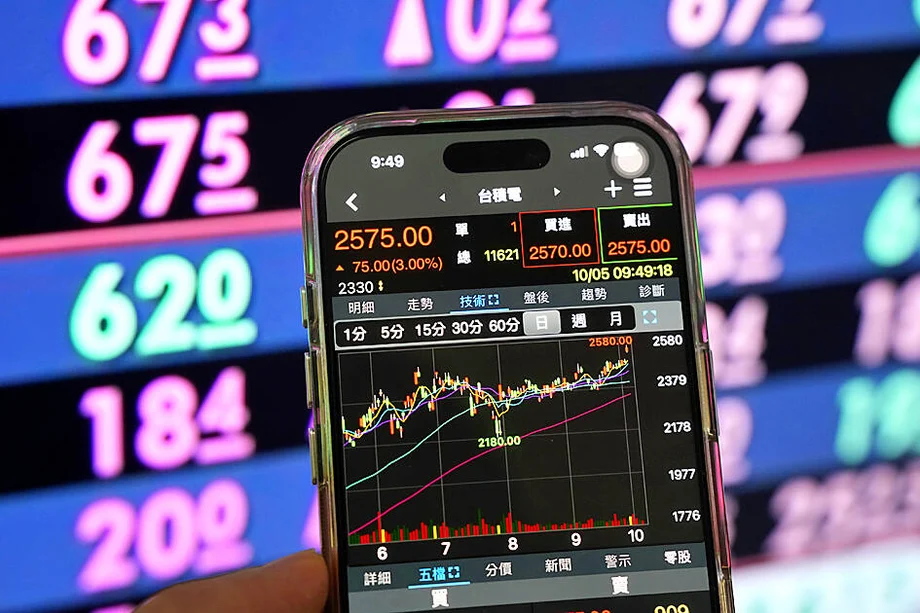
Taiwan's six companies included Foxconn, formally Hon Hai Precision Industry, at No. 28. Taiwan Semiconductor Manufacturing Co., known as TSMC, ranked No. 126 after climbing 60 places.
TSMC's advance highlighted the strategic importance of advanced semiconductor manufacturing. Semiconductors are the chips that allow electronic devices to process information, linking the company's production to the wider technology economy.
Quanta Computer also posted a substantial gain, rising 96 places to No. 348. Together, the advances by TSMC and Quanta added to the technology strength represented within the Greater China total.
Why Profitability Changes the Comparison With America
The United States had retaken the lead in the number of companies on the list, with 138 against Greater China's 130. Company counts offered one measure of corporate strength; earnings and efficiency supplied another.
Analysis by the Center for Strategic and International Studies, or CSIS, found that most Chinese companies in the Fortune Global 500 were state owned. These enterprises accounted for most Chinese revenue and assets on the list but tended to generate lower profit margins and returns on assets than private businesses.
A profit margin is the share of revenue left as profit. Return on assets compares profit with the resources a business owns or controls. Both measures help explain why a very large company may generate less financial return than a smaller competitor.
The comparison cited for 2024 put American company profit at $1.19 trillion, with a margin of 8.6%, against $420 billion and a 4% margin for Chinese companies. Those figures belong to the 2024 comparison, while the $4.2 billion average profit and its 7.4% increase describe the Chinese group in the 2025 ranking.
CSIS identified China as the only major country with a downward trend in profit margins since 2020. Its analysts linked weaker business performance to concerns including consumer and investor confidence and the struggling property sector:
The majority of Chinese firms in the Fortune Global 500 are SOEs, which account for most of the revenue and assets but have lower profit margins and ROA than private firms. Private Chinese firms are more efficient and profitable, but their metrics are also declining, possibly due to low consumer and investor confidence and a struggling property sector.
SOEs are state owned enterprises, while ROA means return on assets. The comparison placed the financial performance of China's largest businesses alongside a broader question about how effectively companies turn their resources and sales into earnings.
Private Companies Drive a Different Kind of Competition
BYD and battery producer CATL stood out as private companies in growing industries that outperformed state enterprises in profitability and efficiency. Their performance illustrated the role of innovation, adaptability and international expansion in building competitive businesses.
China's corporate transformation therefore contained two developments at once. State enterprises remained dominant in scale, while private companies became increasingly visible as sources of growth and innovation.
Electric vehicles and high technology formed a major part of China's international push. BYD and Huawei challenged established Western competitors, while expanding commerce, manufacturing and technology operations changed how Chinese companies participated in global supply chains.
The competition with the United States extended beyond the number of companies included. Profitability, innovation and international influence also shaped the comparison, with American businesses retaining an advantage in the earnings measures cited.
For policymakers and business leaders, the results brought attention to reform, investment in innovation and adaptation to changing global markets. Improving profitability and efficiency, especially among state enterprises, remained part of the challenge of balancing state control with business decisions driven by markets.
The dates behind the ranking help separate the stages of that comparison:
- 2016: JD.com first joined the Fortune Global 500.
- Since 2020: CSIS identified a downward trend in Chinese company profit margins.
- 2024: The financial performance discussed includes the revenue and earnings underpinning many of the 2025 rankings, alongside the cited comparison of American and Chinese profits.
- March 31, 2025: The latest eligible fiscal year end for the 2025 ranking.
- August 1, 2025: The assessment of China's 130 companies reflects the results available on this date.
Key Points
- Greater China had 130 companies in the 2025 Fortune Global 500: 124 from the mainland and Hong Kong, and six from Taiwan.
- The United States led with 138 companies; Japan had 38.
- The Chinese companies generated about $10.7 trillion in revenue, approximately 26% of the total.
- BYD entered the top 100 at No. 91, ahead of Tesla at No. 102, while Huawei returned at No. 83.
- PDD Holdings rose 176 places, the largest Chinese gain and the second largest worldwide.
- Shanghai had 12 headquarters, ranking fourth among cities behind Beijing, Tokyo and New York.
- State enterprises dominated China's corporate scale, while private businesses stood out in vehicles, batteries and internet services.
- American companies led the cited profitability comparison, making efficiency a central part of the competition.