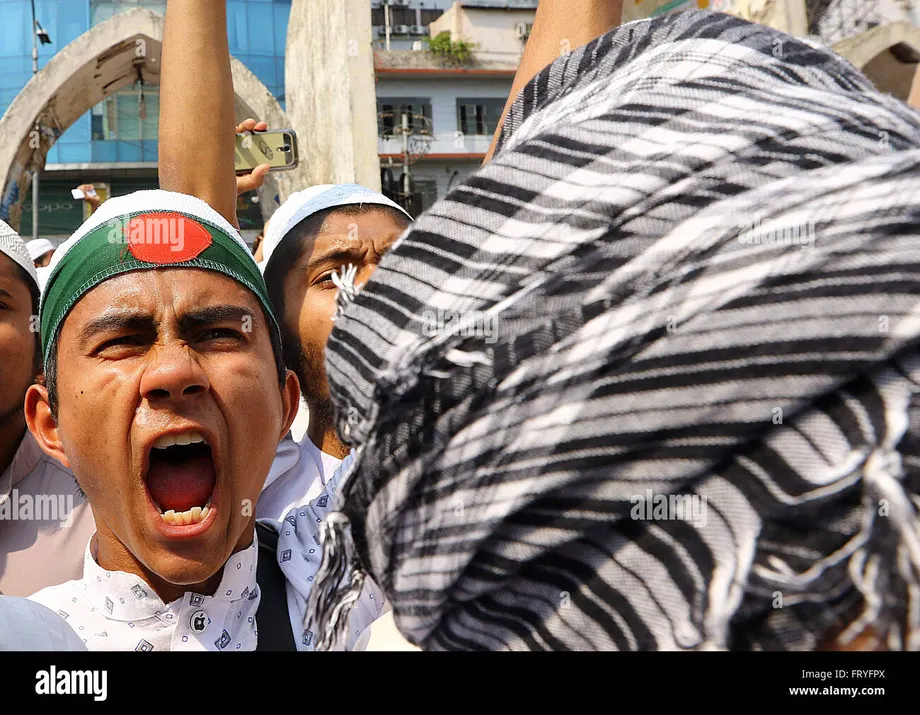
A Dhaka Rally Challenges the Government's UN Decision
Hefazat-e-Islam has demanded that Bangladesh cancel its decision to allow the United Nations Office of the High Commissioner for Human Rights (OHCHR) to establish a presence in Dhaka, bringing a dispute over international scrutiny, religious values and national sovereignty into public view.
Contents
- A Dhaka Rally Challenges the Government's UN Decision
- What Hefazat Leaders Are Demanding
- What the UN Office Is Intended to Do
- Why Bangladesh's Rights Record Is Central
- Local Rights Groups Face Their Own Constraints
- Election Preparations Add Political Pressure
- Why Hefazat's Opposition Carries Weight
- Two Different Approaches to Protecting Rights
- Key Points
The influential Islamist coalition held its demonstration at the north gate of Baitul Mukarram National Mosque on a recent afternoon. Its leaders argued that a UN human rights office could expose Bangladesh to foreign interference and threaten the country's Islamic values, social stability and national security. As of July 12, 2025, no exact date for the demonstration or opening date for the office was given.
The government has defended the decision as a way to improve transparency, strengthen human rights protections and work more closely with the international community. Supporters see an opportunity for independent monitoring and help with legal reform. Hefazat wants local, independent rights organizations to take a larger role instead.
The disagreement comes as Bangladesh prepares for national elections and faces criticism over its human rights record and democratic credentials. Allegations of killings outside the judicial process, enforced disappearances and restrictions on political activity have increased pressure for accountability.
At the center of the dispute is a practical question: who should help monitor abuses and support changes to the institutions responsible for protecting people? The government and supporters of the UN presence favor closer international cooperation. Hefazat argues that Bangladesh should address its problems through institutions rooted in its own society.
What Hefazat Leaders Are Demanding
Mamunul Haque, Hefazat's joint secretary general, said the government had made its decision without sufficient public consultation. He argued that allowing the office "goes against public sentiment and the spirit of independence." His objections linked the process used to make the decision with concerns about Bangladesh's authority over its internal affairs.
Haque also challenged the values behind international human rights frameworks. He presented those frameworks as expressions of Western ideology that conflict with Islam and Bangladesh's religious traditions.
The so-called human rights of the United Nations are actually tools of Western ideology, which go against Islam and humanity.
Hefazat leaders demanded the immediate cancellation of the decision. They warned that an OHCHR presence could give foreign actors greater influence over domestic affairs, with consequences for sovereignty, security and social stability.
The coalition's proposed alternative is a more active role for local, independent human rights organizations. Its position combines opposition to an international office with support for monitoring led within Bangladesh. The dispute therefore concerns both the identity of the institution doing the work and the standards it would apply.
What the UN Office Is Intended to Do
OHCHR is the principal UN body responsible for promoting and protecting human rights around the world. The proposed presence in Dhaka is intended to provide technical assistance, monitor conditions and support Bangladesh in meeting its international obligations.
Technical assistance means helping institutions improve how they work. In this case, officials have identified legal reform, building the skills and resources of institutions, and protecting vulnerable groups as areas where the office could contribute. Monitoring means examining the human rights situation and identifying concerns that need attention.
The government's argument is that cooperation with the UN can make public institutions more transparent and better able to protect people. Bangladesh's commitments under international treaties are also part of the case made by supporters, who want the country to meet the obligations it has accepted.
A UN spokesperson described the intended relationship as cooperation with both the government and civil society, including organizations outside government that work on public issues.
The opening of an OHCHR office in Dhaka will enable closer cooperation with the government and civil society to address human rights challenges and support Bangladesh in meeting its international obligations.
Supporters favor international oversight because they believe independent scrutiny can help secure accountability and protect vulnerable people where domestic institutions face constraints. Hefazat views that outside involvement as a risk to the country's ability to determine its own affairs.
Why Bangladesh's Rights Record Is Central
Bangladesh has faced concern over its human rights record for decades. Rights organizations have documented patterns of extrajudicial killings, enforced disappearances, arbitrary arrests and restrictions on freedom of speech and assembly.
Extrajudicial killings are killings carried out outside a lawful judicial process. Enforced disappearances involve people being taken away while their detention or whereabouts are concealed. Arbitrary arrests are arrests made without a proper legal basis. These allegations concern the most basic protections people expect when dealing with the state.
The government has often denied allegations of abuse. It has argued that security operations are necessary to maintain law and order, particularly when confronting terrorism and political unrest. That defense has remained part of the debate over how security forces operate and how complaints against them are investigated.
In recent years, criticism has also focused on the handling of protests, the treatment of journalists, restrictions on political opposition and the use of digital security laws to suppress dissent. Restrictions on expression affect whether people can criticize officials, report on public affairs or challenge government decisions without fear of punishment.
International human rights organizations, Western governments and UN bodies have called for independent investigations into alleged abuses and stronger protection of civil liberties. Civil liberties include freedoms such as speaking openly, gathering peacefully and participating in public life.
The proposed office follows years of this international concern. Its supporters see monitoring and technical support as ways to address the weaknesses behind repeated allegations. Opponents focus on the authority and influence that an international presence might acquire inside Bangladesh.
Local Rights Groups Face Their Own Constraints
Hefazat's call for stronger local monitoring draws attention to the role of Bangladesh's civil society. The country has an active network of organizations working on public concerns, but local rights groups face legal restrictions, harassment and limited resources.
Those pressures can make it difficult to investigate allegations, support people seeking redress or sustain work that challenges powerful institutions. Resources matter because documenting abuses requires time, staff and the ability to gather information.
Some activists argue that international support is essential to strengthen local efforts and help ensure impartial investigations. In their view, cooperation with an international body can support domestic organizations as they carry out their work.
Hefazat places greater weight on local knowledge and national control. Its leaders argue that organizations within Bangladesh are better placed to understand the country's interests, culture and religious traditions.
The disagreement turns partly on whether local institutions have enough independence and practical capacity to investigate sensitive cases. Supporters of the UN presence see outside assistance as useful where those institutions are constrained. Hefazat wants responsibility to remain more firmly with organizations operating within the country.
Election Preparations Add Political Pressure
The government's decision comes at a sensitive moment as Bangladesh prepares for national elections. Criticism of its human rights record sits alongside broader concerns about democratic credentials, making the proposed office part of a wider political debate.
Officials have presented cooperation with OHCHR as evidence of a commitment to human rights and engagement with the international community. Their stated goals include greater transparency, legal reform and better protection for vulnerable groups.
Some analysts have suggested that accepting the office may also be an attempt to demonstrate openness and respond to international concerns before the polls. The government's stated justification remains its commitment to improving human rights protections through cooperation.
Reactions among political and civil society groups have been mixed. Hefazat and other conservative groups have condemned the move, while many human rights activists and opposition politicians have welcomed it as a step toward greater accountability.
Some supporters want action beyond establishing an office. Their demands include an independent judiciary, the repeal of restrictive laws, and stronger protection for minorities and people who express dissent. An independent judiciary means courts can make decisions according to the law without improper political pressure.
International organizations have also supported the proposed OHCHR presence. For those backing it, the office is one part of a wider effort to improve institutions and safeguard rights, alongside changes that Bangladesh's own authorities would need to carry out.
Why Hefazat's Opposition Carries Weight
Hefazat-e-Islam is one of Bangladesh's most prominent Islamist coalitions. It draws support from religious seminaries, clerics and conservative sections of society, giving it the ability to organize large public demonstrations.
The coalition has mobilized over religious values, education and what it considers threats to Islam. Its past demands have included changes to school curricula, stricter blasphemy laws and the protection of Islamic symbols.
Hefazat has also influenced public discussion about the role of women and the secular character of the state. These issues connect religious beliefs with decisions about education, public institutions and the rules that shape everyday life.
Successive governments have engaged in dialogue with Hefazat leaders, who have sometimes secured policy concessions. Its ability to bring supporters onto the streets has made the coalition a significant participant in political debate, even when the immediate issue is presented as a religious concern.
The protest over OHCHR continues that effort to shape national decisions. Hefazat is linking the proposed office to wider arguments about national identity, sovereignty and the role foreign actors should have in Bangladesh.
Two Different Approaches to Protecting Rights
Supporters and opponents of the office disagree about how rights should be defined and protected within Bangladesh's cultural and religious setting. Supporters favor international monitoring, treaty commitments and help for institutions that struggle to investigate abuses independently.
Hefazat argues that international human rights frameworks can impose foreign values and weaken national control. It wants Bangladesh to address its challenges through local organizations and institutions that it considers more responsive to the country's traditions and interests.
Similar debates occur across South Asia and elsewhere, where governments and civil society groups weigh national sovereignty against international efforts to protect universal rights. Sovereignty concerns a country's authority over its own affairs. Universal human rights are protections intended to apply to every person.
Bangladesh's decision could influence how other countries in the region approach cooperation with international organizations and how civil society seeks support for change. Within Bangladesh, the immediate dispute is more concrete: whether the government proceeds with the UN presence despite Hefazat's demand for cancellation, and how that presence would work with public institutions and local organizations.
Key Points
- Hefazat-e-Islam protested at the north gate of Baitul Mukarram National Mosque against a proposed UN human rights presence in Dhaka.
- Mamunul Haque and other leaders demanded cancellation, citing sovereignty, Islamic values, security and insufficient public consultation.
- The government says cooperation with OHCHR would support transparency, legal reform and protection for vulnerable groups.
- The proposal follows longstanding allegations of killings outside judicial processes, disappearances, arbitrary arrests and restrictions on civil liberties.
- Local rights groups face legal restrictions, harassment and limited resources, while activists disagree with Hefazat over the value of international support.
- The controversy comes during preparations for national elections, with activists and opposition politicians also calling for wider institutional reforms.