Nearly One Million Swim Shorts Put on Hold
An order for nearly one million swim shorts has been put on hold as Bangladesh's garment manufacturers confront the threat of a 35 percent US tariff. Classic Fashion, a major supplier and buying agent for Walmart, paused the order, bringing the uncertainty over trade policy directly onto factory production schedules.
Contents
- Nearly One Million Swim Shorts Put on Hold
- Why the US Market Matters
- Why Factories Say 35 Percent Is Too Much
- How Early Orders Can Hide a Coming Slowdown
- What the Walmart Supplier Decision Means
- Small Factories and Workers Face the Greatest Pressure
- Negotiations and the Search for Other Buyers
- Retailers Weigh New Suppliers and Higher Prices
- A Trade Decision Reaches Across Borders
- Key Points
As of July 12, 2025, the proposed tariff is already affecting decisions about buying and manufacturing, even before its outcome is settled. Walmart did not directly issue the instruction to hold the order. The decision came from Classic Fashion and reflects caution among suppliers and buying agents concerned about being left with inventory they cannot sell if tariffs suddenly increase costs.
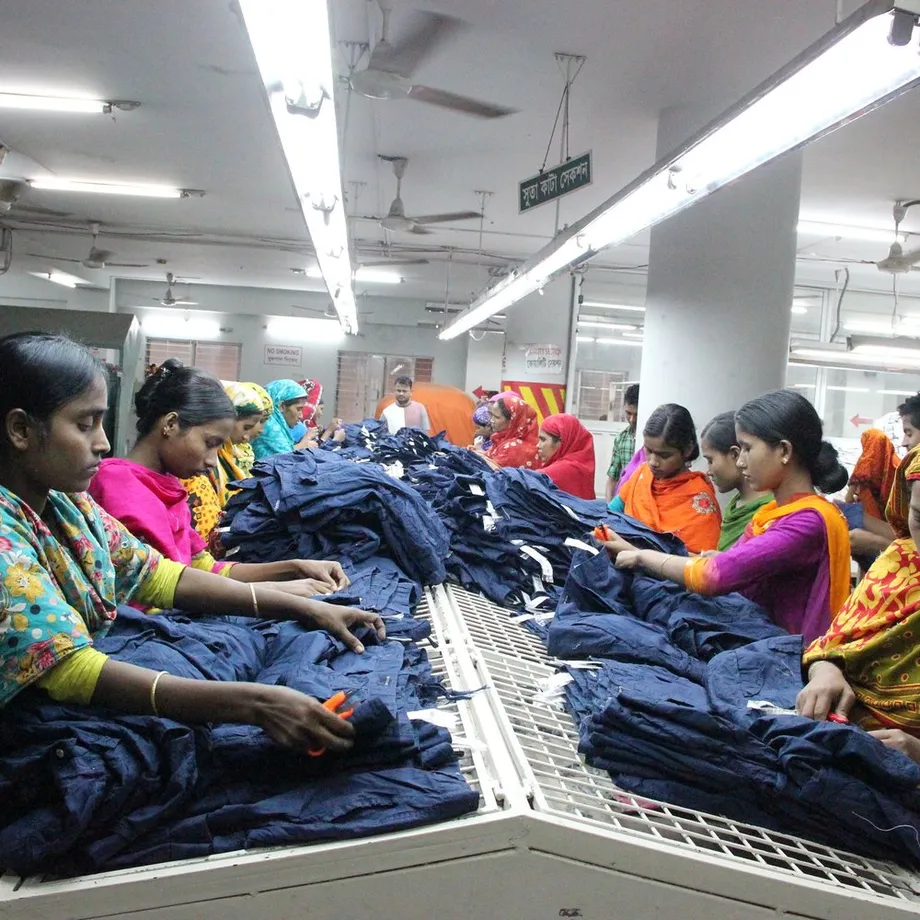
Bangladesh's garment industry generates about $45 billion in exports, accounts for 80 percent of the country's export earnings and employs more than four million people. Most of those workers are women from rural areas. A prolonged slowdown in orders would therefore reach far beyond the companies that make clothing.
The immediate problem is uncertainty. Factories need confirmed orders to plan production, while buyers want to know what importing those garments will cost. A threatened tariff can interrupt that planning before any additional duty is collected.
Why the US Market Matters
The United States is Bangladesh's single largest export market for garments. That makes decisions by American retailers especially consequential for manufacturers that depend on a steady flow of US orders.
Bangladesh competes with China and Vietnam among the world's leading garment exporters. Its position depends partly on supplying clothing at prices that large international retailers find attractive. A 35 percent tariff would make Bangladeshi garments more expensive in the US market and weaken that price advantage.
The proposed duty forms part of a broader shift in US trade policy aimed at addressing trade imbalances, labor standards and market access. A trade imbalance concerns the difference between what countries buy from and sell to one another. Market access concerns the conditions under which businesses can sell goods in another country.
Bangladesh previously benefited from relatively low tariffs under the Generalized System of Preferences, or GSP. Its rapid export growth and changing US trade priorities have brought renewed scrutiny. The dispute now combines questions about prices and trade flows with concerns about working conditions and access to markets.
Why Factories Say 35 Percent Is Too Much
Manufacturers largely absorbed a 10 percent tariff imposed by the United States on certain Bangladeshi apparel products in 2024. Absorbing a cost means accepting less money from a sale rather than passing the entire increase along through higher prices.
A tariff is a tax charged when goods enter a country. Although it raises the cost of importing clothing, the financial pressure can travel along the supply chain. Retailers may seek lower prices from suppliers, manufacturers may accept smaller profits, or shoppers may face higher prices.
Factory owners say the proposed 35 percent tariff would exceed what most businesses can absorb. The threat is especially serious for smaller manufacturers, whose profit margins leave little room to cover a sharp increase in costs.
Rubana Huq, a former president of the Bangladesh Garment Manufacturers and Exporters Association, known as BGMEA, warned that the proposed rate would threaten factories that had already taken on additional costs:
A 35 percent tariff would be devastating for our industry. We have already absorbed a 10 percent tariff, but this level is simply not sustainable. Many factories, especially the smaller ones, will not survive.
Her warning points to the central commercial problem: keeping an order may become difficult if the price a buyer is willing to pay no longer covers the manufacturer's costs.
How Early Orders Can Hide a Coming Slowdown
US clothing imports from Bangladesh rose by 21 percent in the first five months of 2025 compared with the same period a year earlier. Some American retailers brought purchases forward to build stocks before a possible tariff increase.
This practice, often called front loading, means buying earlier than usual. It can create a temporary increase in exports because orders that would normally arrive later are placed sooner.
Factory owners are now seeing US importers delay order confirmations or reduce the size of their commitments. The earlier rush is expected to be followed by a slump as retailers wait for a clearer picture of tariff costs before agreeing to new purchases.
The sequence helps explain why strong import growth and anxiety about future production can exist at the same time:
- In 2024, manufacturers largely absorbed a 10 percent US tariff on certain Bangladeshi apparel products.
- In the first five months of 2025, US clothing imports from Bangladesh increased by 21 percent compared with the same period in 2024, as some retailers brought orders forward.
- By July 12, 2025, Classic Fashion had put nearly one million swim shorts on hold, while other US importers were delaying confirmations or reducing commitments.
What the Walmart Supplier Decision Means
Classic Fashion's decision shows how a tariff threat can affect production through a buying agent. The company supplies Walmart, but Walmart itself did not directly order the pause.
Suppliers and buying agents face the possibility that goods ordered at one expected cost will arrive under a different tariff. Their concern is that a sudden increase could leave them holding clothing that is too expensive to sell on the terms originally planned.
For Bangladeshi manufacturers, an order on hold creates an immediate planning problem. Factories cannot treat a delayed commitment as dependable future business, yet the buyer may still return once the tariff situation becomes clearer.
The nearly one million swim shorts are therefore a concrete example of the wider hesitation affecting the industry. Other importers are also slowing decisions, and factory owners are preparing for a sharp drop in orders if the proposed tariff takes effect.
Small Factories and Workers Face the Greatest Pressure
More than four million people work in Bangladesh's garment sector, most of them women from rural areas. The industry's expansion has helped reduce poverty and supported social progress by providing paid employment.
Small and medium sized manufacturers are particularly exposed to a decline in US demand. Many depend heavily on American orders and operate with thin profit margins. Larger factories may have financial reserves or a broader range of customers that give them more room to manage a slowdown.
A smaller factory losing a substantial share of its orders could have to cut jobs or close. Those are the risks owners are warning about as buyers delay decisions and seek protection from higher import costs.
Bangladesh's dependence on garments makes those business decisions a national economic concern. With the sector responsible for 80 percent of export earnings, fewer clothing sales would reduce an important source of income from abroad as well as threaten employment at individual factories.
Negotiations and the Search for Other Buyers
Bangladeshi officials are negotiating with the US government for a reduction in, or exemption from, the proposed tariff. They are highlighting progress on labor rights, workplace safety and environmental standards, all areas that have been contentious in earlier trade discussions.
The tariff outcome and the timing of a resolution remain uncertain as of July 12. Manufacturers and buyers must make decisions while those negotiations continue.
Factories are also trying to reduce their dependence on any single market. Europe is the second largest destination for Bangladeshi garments, and some manufacturers are seeking more business from European customers to offset possible losses in the United States.
European orders come with their own commercial pressures. Buyers there tend to be more sensitive to prices, and competition is intense. Factories seeking additional business may have to accept lower prices, leaving less money from each sale even if they maintain production.
Retailers Weigh New Suppliers and Higher Prices
US retailers are adjusting their purchasing strategies as well. Some are delaying confirmations, while others are exploring suppliers in Vietnam, India and Indonesia. Buyers are also seeking to renegotiate contracts or move orders to countries with more stable trade relations with the United States.
For Bangladesh, the competitive risk depends on the terms available elsewhere. Factory owners fear that customers will choose countries with lower tariffs or more favorable trade arrangements if Bangladeshi clothing becomes more expensive.
US trade analysts warn that tariffs intended to protect domestic industries or address trade imbalances can also create costs for retailers and consumers. Disrupted supply arrangements may mean higher prices or a narrower choice of products in American stores.
Retailers are therefore balancing several pressures at once: avoiding a sudden increase in import costs, maintaining enough stock and keeping prices attractive to shoppers. Delayed orders and possible changes of supplier are ways of managing those pressures, but they also make production less predictable for exporters.
A Trade Decision Reaches Across Borders
Garment production connects businesses across several countries. Raw materials, labor and finished clothing can cross borders at different stages before a product reaches a customer. A change in the cost of entering one major market can affect decisions throughout that network.
Bangladesh's experience shows how trade barriers can lead to fewer orders, pressure on jobs and economic instability in an exporting country, while also raising prices in the country buying the goods. Buyers seeking to protect profits may change suppliers, shifting production from one place to another.
For Bangladeshi manufacturers, the immediate priorities are securing orders and managing costs. The wider response includes continued investment in product quality, compliance with required standards and a broader range of export markets.
Stable and predictable trade relations matter because factories and retailers plan ahead. The paused swim shorts order illustrates what happens when the cost of a future shipment becomes uncertain: buyers hesitate, manufacturers lose visibility over production, and workers face the risk of reduced employment.
Key Points
- As of July 12, 2025, Bangladesh faces the threat of a 35 percent US tariff on apparel exports.
- Classic Fashion, a Walmart supplier and buying agent, put nearly one million swim shorts on hold. Walmart did not directly issue the pause.
- US clothing imports from Bangladesh rose 21 percent in the first five months of 2025 as some retailers brought purchases forward.
- Bangladesh's garment industry generates about $45 billion in exports, supplies 80 percent of export earnings and employs more than four million people.
- Smaller factories face particular risks because of thin profit margins and dependence on US orders.
- Bangladesh is seeking a tariff reduction or exemption while manufacturers pursue more European business and retailers consider alternative suppliers.