A $244.8 Billion Relationship Looks Beyond Raw Materials
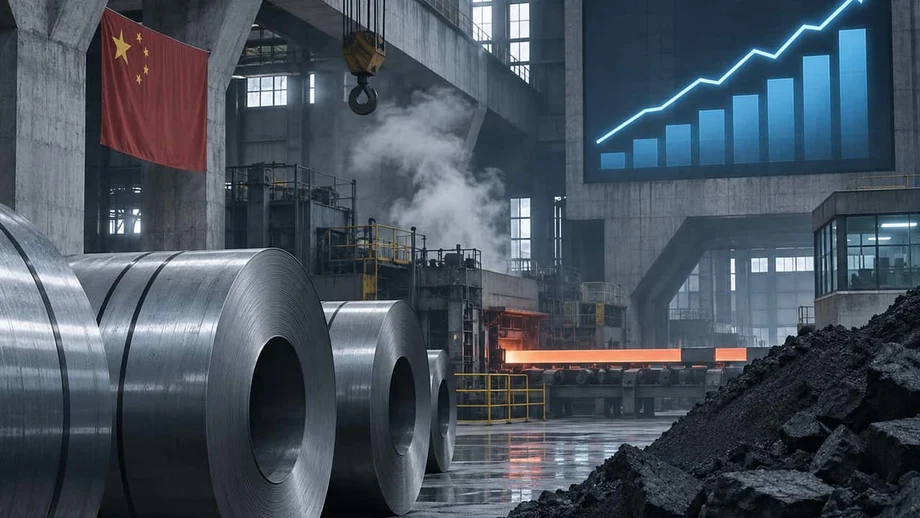
China and Russia are seeking to broaden a trading relationship worth $244.8 billion in 2024, with green energy, transport infrastructure and advanced manufacturing emerging as areas for closer cooperation. Bilateral trade increased 1.9 percent from the previous year, according to China's Ministry of Foreign Affairs.
Contents
- A $244.8 Billion Relationship Looks Beyond Raw Materials
- What Is Driving Closer Trade?
- Green Energy Becomes a Focus
- Manufacturers Adapt to Russian Conditions
- Transport Links Support a Wider Commercial Network
- More Than 300 Chinese Companies Join Expo
- Advanced Manufacturing Draws Attention
- Rules, Distance and Sanctions Complicate Expansion
- Recent Figures Show Different Stages of Growth
- Key Points
Oil, gas, coal and other natural resources have long dominated Russian shipments to China, while Chinese exports have centred on manufactured goods and electronics. Those exchanges remain important, but governments and businesses in both countries are working to develop a wider range of commercial ties.
The shift is taking shape through products adapted to Russian conditions, investment in transport connections and efforts to bring companies together. Chinese manufacturers have developed lighting equipment for harsh winters and unstable voltage, as well as kitchen appliances that can use either gas or electricity.
Infrastructure projects, including the China-Russia East-Route Natural Gas Pipeline and new railway links across the border, are strengthening connections between the two economies. Businesses are also exploring cooperation in robotics, automation, aerospace and machinery using advanced technology.
For companies, the opportunity involves more than finding another market for existing goods. It includes changing products to suit local needs, sharing technology and improving the routes through which equipment and materials reach customers. For both countries, a broader trade relationship could support economic modernisation while extending cooperation beyond their established exchange of resources and manufactured products.
What Is Driving Closer Trade?
Russia's extensive natural resources and China's manufacturing capabilities provide a strong basis for trade. Each economy can supply goods that the other needs, helping explain why energy and industrial products remain central even as new sectors attract attention.
Western sanctions on Russia have pushed Moscow to look eastward for economic partners. China, meanwhile, is seeking stable partnerships amid uncertainty in the global economy. These pressures are encouraging both countries to diversify their economic relationships.
Government support is another part of the expansion. Both sides have introduced measures to make trade easier, simplify customs procedures and encourage investment across the border. Customs procedures are the checks and paperwork required to move goods between countries, so changes in this area matter to businesses shipping equipment, components and finished products.
Anastasia Likhacheva, dean at Russia's HSE University, and Xu Poling, a researcher at the Chinese Academy of Social Sciences, identify room for growth in green energy, infrastructure and advanced manufacturing. Both regard energy and mining as continuing parts of the relationship, alongside opportunities in newer areas.
Their assessment points to a broader commercial agenda rather than a departure from existing trade. The countries are looking to build additional industries and services around a relationship whose foundations remain energy, resources and manufacturing.
Green Energy Becomes a Focus
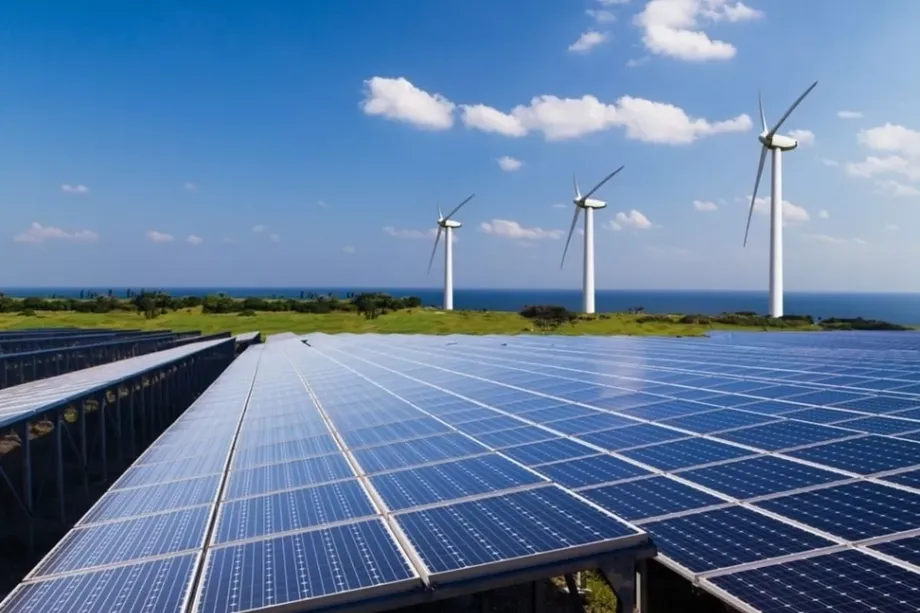
China and Russia are investing heavily in solar, wind and hydropower as the world moves toward cleaner sources of electricity. Green energy has consequently become one of the areas identified for future trade growth.
China, already a global leader in renewable energy manufacturing, is exporting products and expertise to Russia. Russian demand for solutions that use energy more efficiently is creating opportunities for Chinese suppliers.
Renewable power and energy efficiency address different parts of the same challenge. Solar, wind and hydropower concern how electricity is produced; equipment designed to use energy efficiently concerns how it is consumed. Both feature in the wider push toward cleaner and more reliable energy systems described by the two countries' commercial ambitions.
Both countries are also pursuing ambitious climate goals and seeking to reduce their reliance on fossil fuels. That gives businesses a reason to develop products suited to changing energy needs, while responding to the practical conditions customers face today.
Manufacturers Adapt to Russian Conditions
Ningbo Partner Electronics Co, a lighting equipment manufacturer in Zhejiang province, has developed lighting transformers designed to handle high power, harsh Russian winters and unstable voltage conditions. A transformer adjusts voltage for electrical equipment, making its ability to cope with the local power supply an important part of product design.
Company president Xu Guiling said exports to Russia exceeded 49 million yuan, equivalent to $6.83 million, in the first half of the year. That represented growth of 172.85 percent compared with the same period a year earlier. The reporting year for that first half figure was not specified.
Qingdao Xingbang Electric Appliance Group Co has responded to another feature of the Russian market: the use of both gas and electricity in an energy environment where supplies can be unstable. The company developed stoves that can switch between gas and electric heating.
Its exports to Russia rose by more than 82 percent in the first half of 2024. The product gives customers a choice between two forms of heating, reflecting the company's effort to design around local energy conditions.
These manufacturers illustrate the commercial role of adaptation. Their products address specific problems faced by Russian customers, connecting export growth with changes in engineering and design. That approach is expected to become more important as both countries pursue their energy and climate objectives.
Transport Links Support a Wider Commercial Network
China and Russia are investing in transport corridors, logistics hubs and infrastructure across their border to support trade and closer economic integration. Logistics covers the organisation of moving and storing goods, including the connections between factories, warehouses and customers.
China's Belt and Road Initiative, a large international infrastructure programme, has played a significant role in connecting the two economies. Transport routes and hubs form part of the physical network needed to sustain commercial exchanges.
Recent years have brought the completion of major projects, including the China-Russia East-Route Natural Gas Pipeline and new railway links across the border. The pipeline supports the established energy relationship, while wider infrastructure development creates opportunities for logistics businesses, construction firms and technology providers.
The business case extends beyond the infrastructure itself. Companies supplying equipment, managing shipments or providing technology can participate in the activity generated by stronger connections. Both governments are also investing in new infrastructure as part of their effort to address the distances and transport constraints that complicate bilateral trade.
More Than 300 Chinese Companies Join Expo
The ninth China-Russia Expo in Yekaterinburg, Russia, brought together more than 300 Chinese companies displaying products and services. The sectors represented included electromechanical equipment, agriculture, healthcare, the digital economy and new energy.
Organised by China's Ministry of Commerce, the event gave local governments and businesses a platform to deepen cooperation and explore new ventures. Its range of exhibitors reflected commercial interests extending beyond energy and raw materials.
The ministry said a series of commercial promotion activities took place during the expo. Those activities highlighted interest in joint infrastructure projects and closer connections between supply chains, the networks of businesses involved in producing and delivering goods.
For manufacturers and service providers, such events create opportunities to identify partners across several industries. The expo connected the wider policy goal of expanding trade with companies seeking specific customers, projects and business relationships.
Advanced Manufacturing Draws Attention
China and Russia are also seeking cooperation in advanced manufacturing as they modernise their economies. Robotics, automation, aerospace and machinery using advanced technology are among the sectors identified for collaboration.
Chinese and Russian companies are forming joint ventures and sharing technology to accelerate innovation. A joint venture allows businesses to work together on a shared commercial undertaking, while technology transfer involves sharing equipment, methods or technical knowledge.
Chinese firms are supplying advanced manufacturing equipment and expertise to Russian partners. Russian companies contribute their own technological knowledge and access to local markets. The aim is to develop new products, improve quality and reduce costs.
Both countries want to move toward producing goods of greater value and compete more effectively in global markets. In practical terms, that means extending cooperation from selling equipment to developing products and improving how they are made.
Such partnerships are expected to become more common as trade ties deepen, supporting sectors that previously played a smaller role in the relationship. Advanced manufacturing therefore sits alongside green energy and infrastructure as a prospective source of growth.
Rules, Distance and Sanctions Complicate Expansion
Businesses still face differences in standards, regulations and commercial practices. A product designed for one market may need adjustments to meet the requirements of another, adding complexity to efforts to expand sales.
The vast distances between the two countries' production centres and customers, together with limited infrastructure in some areas, can increase transport costs and make shipments harder to organise. Ongoing tensions with Western countries and sanctions affecting Russia also create uncertainty for companies.
Both governments are working to address these problems. Recent agreements have focused on bringing standards into closer alignment, improving customs procedures and investing in infrastructure. These measures target the rules and physical connections that businesses rely on to move goods.
Digitalisation is another priority. Both sides are exploring electronic commerce platforms and digital payment systems to simplify trade across the border. Such tools form part of the broader effort to make commercial transactions easier to organise.
Expectations of sustained trade growth centre particularly on green energy, infrastructure and advanced manufacturing. The opportunities depend on companies continuing to adapt to market conditions while governments work on the regulatory and logistical barriers.
Recent Figures Show Different Stages of Growth
The figures describe developments at both the company and national level. Qingdao Xingbang's export increase concerns one manufacturer, while the annual bilateral total measures the much wider relationship between the two economies.
- First half of 2024: Qingdao Xingbang Electric Appliance Group Co recorded growth of more than 82 percent in exports to Russia.
- Full year 2024: China-Russia trade reached $244.8 billion, an increase of 1.9 percent from the previous year, according to China's Ministry of Foreign Affairs.
The combination of established resource trade and newer industrial opportunities is shaping the relationship. Energy and mining remain important, while manufacturers, infrastructure businesses and technology providers are seeking a larger role in its next stage.
Key Points
- China-Russia trade reached $244.8 billion in 2024, up 1.9 percent.
- Green energy, infrastructure and advanced manufacturing are priorities for broader cooperation.
- Chinese manufacturers are adapting lighting equipment and stoves to Russian conditions.
- Pipeline and railway projects are strengthening connections between the two economies.
- More than 300 Chinese companies participated in the ninth China-Russia Expo in Yekaterinburg.
- Regulatory differences, transport constraints and sanctions remain challenges for businesses.