Cambodian Apps Connect With Japanese Checkouts
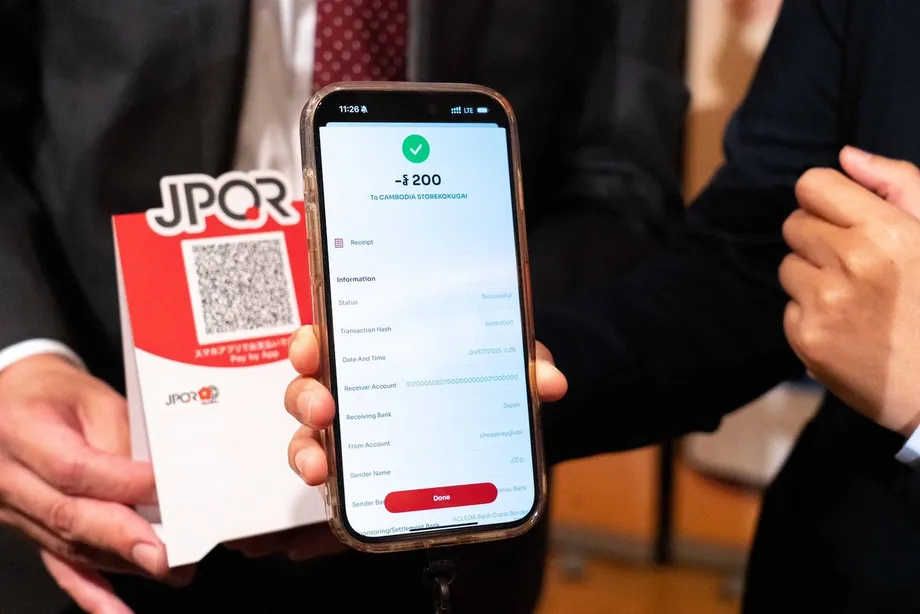
Cambodian travelers can now use their banking and mobile payment apps to pay at participating merchants in Japan, following the launch of a connection between the two countries' QR payment systems on July 4, 2025, at the World Expo in Osaka.
Contents
- Cambodian Apps Connect With Japanese Checkouts
- How a Payment Moves From Riel to Yen
- Agreements Behind the July Launch
- The Banks and Operators Moving the Money
- Why the Connection Uses QR Codes
- What Changes for Travelers and Businesses
- Tourism and Investment Expectations
- Bakong and Cambodia's Expanding Network
- Japan's Wider Payment Ambitions
- A Shared Digital Finance Strategy
- Key Points
The service links Cambodia's KHQR, or Khmer QR, with Japan's JPQR, or Japan QR. In its first phase, users of apps including Bakong, ACLEDA Super App and Sathapana Mobile can scan a Japanese merchant's JPQR code and pay directly from an account holding Khmer riel. The merchant receives Japanese yen.
The launch brings a practical change for travelers: they can use a familiar app for purchases instead of relying on cash and exchanging money for each payment. Japanese merchants gain another way to accept payments from Cambodian customers.
The National Bank of Cambodia (NBC), the Payments Japan Association (PJA) and Japan's Ministry of Economy, Trade and Industry (METI) have worked together on the connection. Banks and payment companies in both countries provide the services that move money and keep the systems connected.
A second phase is expected by the end of 2025, allowing Japanese users to scan KHQR codes and pay in Cambodia. As of July 7, no exact launch date had been given for that direction of the service.
The initiative is intended to support tourism, trade and investment between Cambodia and Japan while providing a model for connecting payment networks across the region. Its immediate benefit is more specific: Cambodian users can make payments in Japan through participating services, with the currency conversion handled within the payment process.
How a Payment Moves From Riel to Yen
A QR code is the code a customer scans with a phone to begin a payment. Connecting KHQR and JPQR makes the two national payment systems interoperable, meaning they can work together even though customers and merchants use different currencies and financial networks.
For Cambodian users, the payment process follows four steps:
- Download and register with an app compatible with KHQR, such as Bakong, ACLEDA Super App or Sathapana Mobile.
- Look for a participating Japanese shop, restaurant or other merchant displaying a JPQR code.
- Open the app, select its payment option and scan the merchant's code.
- Complete the payment, which is processed in real time, taking money from the user's riel account and crediting the merchant in yen.
The connection uses payment infrastructure already in place. That makes the service accessible to millions of Cambodians who already use mobile banking and electronic wallets, without requiring them to move to an entirely separate payment system for their trip.
The first phase serves Cambodian users paying in Japan. Japanese visitors will gain the corresponding ability to pay Cambodian merchants through KHQR when the second phase begins.
Agreements Behind the July Launch
The July announcement followed agreements covering both government cooperation and the operation of the service. Work began with a Memorandum of Cooperation between NBC and METI in December 2023, focused on payments using unified QR codes.
A Memorandum of Understanding between NBC and PJA followed in April 2025. It designated PJA as the project operator and prepared the way for the technical and operational work needed to connect the systems.
- December 2023: NBC and METI signed a Memorandum of Cooperation on payments using unified QR codes.
- April 2025: NBC and PJA signed a Memorandum of Understanding, designating PJA as project operator.
- July 4, 2025: The first phase was announced at the World Expo in Osaka, enabling Cambodian users to pay in Japan.
- By the end of 2025: The second phase is expected to allow Japanese users to pay in Cambodia.
Those agreements connect public policy with the practical work of banks and payment operators. A shared payment standard needs institutions that can process transactions, maintain connections and help resolve problems when a customer or merchant disputes a payment.
The Banks and Operators Moving the Money
ACLEDA Bank and Sathapana Bank were appointed as sponsoring banks in Cambodia. Their responsibilities include connecting banking systems across the border, providing payment services, giving technical support and supporting dispute resolution.
On the Japanese side, NETSTARS Co., Ltd. was selected as the payment and settlement operator. Its role includes maintaining stable system connectivity and providing technical support. Settlement is the process through which the money owed for a payment reaches the receiving side.
Sumitomo Mitsui Banking Corporation (SMBC) and NETSTARS are among the Japanese counterparts handling settlement and network operations. Together with the Cambodian banks, they provide the working connections behind the code a customer scans at a checkout.
The arrangement combines public and private institutions. NBC, METI and PJA support the framework for cooperation, while banks and payment operators address the regulatory and operational requirements involved in making the service work.
Why the Connection Uses QR Codes
QR payments have become increasingly popular across Asia because they are simple to use, relatively inexpensive and compatible with smartphones. Customers scan a code through an app, while merchants can accept payments without the expensive hardware and complex infrastructure associated with traditional card systems.
That approach can serve both large retailers and small businesses. For smaller merchants, accepting customers from another country can otherwise involve barriers associated with international payment services.
Japan's JPQR is a unified QR code standard developed to simplify digital payments across a financial system with many different services. Cambodia's KHQR provides the other side of the connection. Linking the standards allows a payment started in a Cambodian app to work with a Japanese merchant's payment system.
The initiative builds on Cambodia's Bakong platform and Japan's JPQR standard to provide compatibility, security and settlement in real time. It is also part of a wider regional effort to connect national payment systems so that people can make purchases across borders using services they already know.
What Changes for Travelers and Businesses
Cambodian tourists, students and businesspeople traveling to Japan are the immediate beneficiaries. Japan is a popular destination for these groups, and the service gives them a way to pay for goods and services without carrying large amounts of cash or arranging a cash exchange for those purchases.
Japanese merchants gain access to Cambodian customers through another payment method, potentially supporting sales and closer economic ties. As the connection expands in both directions, businesses of different sizes in both countries are expected to gain more payment options and more efficient operations.
Payments made directly from bank accounts reduce the need to handle cash and exchange physical currency, activities that can bring costs and risks. The system processes transactions securely in real time, helping reduce the risk of fraud and errors.
Small and medium enterprises, often called SMEs, are among the businesses that could benefit because they frequently face barriers to accepting international payments. A connection built around existing QR services gives them another way to serve foreign customers.
ACLEDA Bank says the initiative will help local businesses manage operations securely and conveniently, reduce costs and support economic growth. The bank also plans to expand payments using QR codes to other countries in the region, further connecting Cambodia with the global digital economy.
Tourism and Investment Expectations
Hong Vanak, an economist at the Royal Academy of Cambodia, links easier payments with the country's ability to attract visitors and foreign direct investment. Foreign direct investment means money invested by people or businesses from another country in business activity in Cambodia.
Vanak said the launch offers particular convenience for tourists and that the planned ability for Japanese visitors to use QR payments in Cambodia could bring further benefits:
When payment methods are simple and efficient, it creates new momentum for attracting more foreign direct investment into Cambodia. The launch of this QR code-based cross-border payment system provides great convenience, especially for tourists. Once Japanese people can pay using QR codes in Cambodia, we can expect even more Japanese tourists and investors.
The second phase would extend the immediate convenience now offered to Cambodian travelers to Japanese visitors in Cambodia. Cambodian merchants would then be able to receive payments initiated through Japanese users' own apps by displaying KHQR codes.
Bakong and Cambodia's Expanding Network
Bakong, launched by the National Bank of Cambodia, is a payment system built using blockchain technology, a method of recording transactions digitally. It supports payments in both Khmer riel and US dollars.
As of 2024, Bakong had more than 642,500 registered users and had processed more than 600 million transactions, alongside a substantial increase in riel usage. The platform is part of Cambodia's effort to modernize finance, widen access to financial services and encourage use of the national currency.
Cambodia has already established similar agreements for QR payments across borders with Vietnam, Thailand, Laos, South Korea, Malaysia and UnionPay International (UPI). The Japan connection adds to that network.
In October 2024, Cambodia also partnered with Ant International to enable Alipay Plus users to pay in Cambodia through KHQR. That connection reaches a network with more than 1.6 billion users worldwide.
These links are intended to help Cambodia move past barriers associated with traditional banking, lower transaction costs and bring more people and businesses into the formal financial sector. Using existing mobile payment services can widen access while promoting riel payments.
Cambodia's approach also aligns with the ASEAN Payment Connectivity initiative, which seeks faster, cheaper and more transparent payments across Southeast Asia and beyond. The Japan launch extends that effort to a major partner outside ASEAN.
Japan's Wider Payment Ambitions
Japan's Ministry of Economy, Trade and Industry has been pursuing connections between QR payment systems with regional partners, targeting full implementation by 2025. The Cambodia collaboration is viewed as a pilot for broader integration with other ASEAN countries and partners outside ASEAN, including India and Hong Kong.
Fukuda Yoshio, General Director of the Payments Japan Association, thanked the institutions involved and described the ambition to build exchanges beyond payments:
We hereby express our profound appreciation to all stakeholders who supported the realization of this initiative, with particular gratitude to the governments of both Cambodia and Japan. Today's announcement marks a pivotal step in this endeavor. We anticipate that this linkage will contribute to the increase of cross-border exchanges beyond payment, creating connections and networks that would enable continued growth and prosperity for Cambodia and Japan.
Common technical standards and cooperation between regulators provide a model that other countries can use when building similar connections. For increasingly digital and connected ASEAN markets, the practical goal is to make national payment systems work together rather than requiring travelers to change how they pay whenever they cross a border.
A Shared Digital Finance Strategy
Economist Duch Darin described the KHQR and JPQR collaboration as consistent with the digital economy plans of both countries. Darin connected it with NBC's work on financial inclusion, meaning access to useful financial services, and with innovation built around shared payment infrastructure:
The KHQR–JPQR consortium is significant in realizing the visions for the Digital Economy of Cambodia and Japan. It is in line with the strategic vision of NBC to drive the financial inclusion and innovation agenda using digital public infrastructure, such as Bakong and KHQR. Additionally, JPQR is targeting similar aims, making it a very compatible and forward-looking collaboration.
Reducing reliance on cash and physical currency exchange is also intended to support financial stability and inclusion, encouraging more people and businesses to participate in the formal financial system.
NBC and PJA have committed to working with public and private partners on smooth implementation and expansion. Their stated goal is a connected, secure and inclusive digital payment environment that benefits travelers, businesses and both economies.
The next planned development is the second phase by the end of 2025. For Cambodian travelers, the first phase already provides a new payment option in Japan. For Cambodian merchants, the planned return connection would bring the same convenience to Japanese customers visiting Cambodia.
Key Points
- The Cambodia and Japan QR payment connection launched on July 4, 2025, at the World Expo in Osaka.
- Cambodian users can pay participating Japanese merchants through apps including Bakong, ACLEDA Super App and Sathapana Mobile.
- Payments come from riel accounts, with Japanese merchants receiving yen.
- ACLEDA Bank and Sathapana Bank support the Cambodian side, while Japanese partners include NETSTARS and SMBC.
- A second phase, expected by the end of 2025, will allow Japanese users to scan KHQR codes in Cambodia.
- The project builds on agreements signed in December 2023 and April 2025 and adds to Cambodia's growing network of international payment connections.