Two Tigers Begin a Much Larger Life in Longyan
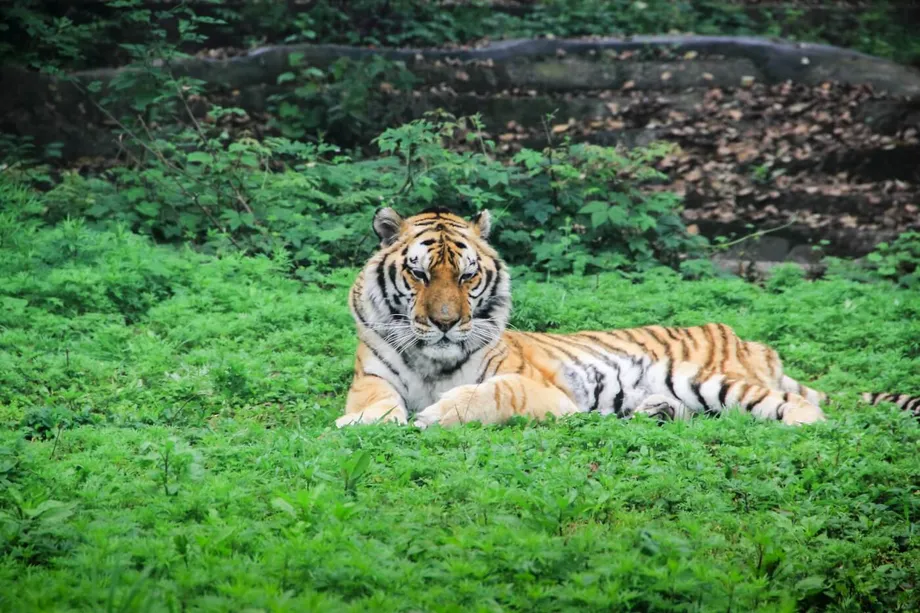
Seven-year-old Weiwei and five-year-old Linlin moved from a 50-square-meter enclosure into a rewilding base covering 1,500 mu, or 100 hectares, in Longyan, Fujian Province, on June 26, 2025. Their arrival marked the opening of China's largest facility of its kind for South China tigers, built to prepare animals bred in captivity for possible life in the wild.
Contents
- Two Tigers Begin a Much Larger Life in Longyan
- How the New Base Recreates a Forest Environment
- Cameras and Drones Follow the Tigers' Progress
- What Tigers Must Learn Before Release
- A Breeding Effort Built Over 27 Years
- A Tiger Kindergarten for Young Cubs
- Visitors Become Part of the Conservation Effort
- Small Numbers and Shrinking Habitat Complicate Recovery
- South Africa Provides Another Testing Ground
- Why the Tiger's Return Matters Beyond One Species
- Key Points
The move gives the two tigers room to develop skills that a small enclosure cannot accommodate: stalking prey, hunting, exploring difficult terrain and patrolling territory. Researchers will follow their progress through cameras and drones before deciding whether they are ready for more demanding training.
Fewer than 250 South China tigers remain nationwide, most in captivity. Also known as the Chinese or Amoy tiger, this critically endangered subspecies once roamed across vast areas of southern China. The last confirmed sighting of a wild South China tiger in China dates to the 1990s.
Meihua Mountain, historically a stronghold for wild South China tigers, is now at the center of an effort to rebuild the abilities needed for their return. The project brings together breeding, survival training, animal monitoring and public education. Its goal reaches beyond keeping tigers alive in managed enclosures: it seeks to prepare animals capable of living independently in protected natural habitat.
As of July 5, 2025, Weiwei and Linlin's move is the latest step in that process. Their training begins in a controlled environment, with eventual release reserved for tigers that demonstrate the necessary survival skills. No date for a release into the wild has been given.
How the New Base Recreates a Forest Environment
The Meihua Mountain base contains two adaptation areas, a quarantine section and two advanced training zones. This layout allows researchers to introduce tigers to a more natural setting before moving them into larger and more challenging spaces.
Native forests, dens, watering holes and feeding passages form part of the adaptation areas. The terrain is left as natural as possible, giving the animals opportunities to exercise, explore and develop both physical strength and the ability to respond to their surroundings.
Researchers periodically release sika deer, wild boars and rabbits into the adaptation areas to create a realistic food chain. Finding and pursuing prey makes feeding a task the tiger must work through, helping it practice stalking and hunting rather than relying entirely on food delivered by keepers.
Huang Cheng, an assistant engineer at the Meihua Mountain South China Tiger Breeding Research Institute, explained how the animals' jumping ability shaped the enclosure design:
Tiger's jumping ability is quite strong. They can jump about three meters high from a standstill, reaching the middle position between the third and fourth steel cables. Therefore, when designing the enclosure, we chose a height of 4.5 meters and added an inward-bent structure at the top.
The enclosure combines a forest environment with a physical boundary. Inside it, the tigers can practice territorial patrolling and other natural behaviors while researchers continue to manage their training.
Cameras and Drones Follow the Tigers' Progress
Eight infrared cameras and sixteen surveillance cameras monitor the tigers, with drones providing additional observation. Together, these tools supply real-time information about the animals' behavior and health.
Researchers use that information to track progress and adjust training. A tiger's movement through the forest, its response to prey and its use of the available terrain all matter to the process of developing independent survival skills.
Monitoring connects the different stages of the program. The adaptation areas provide an initial setting for learning and exercise, while the advanced zones offer more demanding conditions. Observations help researchers decide how each animal is progressing rather than treating every tiger's training needs as identical.
What Tigers Must Learn Before Release
Weiwei and Linlin will move to larger, more challenging training areas after their initial adaptation. There, they must demonstrate that they can hunt independently and navigate complex environments. Only animals judged capable will be considered for eventual release into the wild.
Rewilding means preparing an animal raised under human care to meet the demands of living in nature. For these tigers, the process involves developing hunting ability, strength, awareness of their surroundings and the capacity to use a territory.
A successful hunt requires several abilities working together. A tiger must locate prey, approach it and have the physical capacity to pursue and catch it. The base's natural terrain and prey animals give researchers a setting in which those abilities can develop and be observed.
The training approach draws on decades of research and international collaboration. Breeding supplies animals for the recovery effort; rewilding addresses the next challenge, preparing those animals to obtain food and move through a forest without depending on daily human provision.
Protected habitat and the support of surrounding communities will also be necessary for a return to the wild. The program therefore connects the abilities of individual tigers with the wider question of where they can live securely.
A Breeding Effort Built Over 27 Years
The Meihua Mountain South China Tiger Breeding Research Institute was established in 1998. Over 27 years, the center has successfully bred 76 South China tigers, gradually building a population that could one day return to China's forests.
The new base extends that work from reproduction to preparation for independent life. Keeping a rare population alive and teaching animals to survive outside captivity are connected tasks, but each requires its own care, facilities and assessment.
The main milestones show how the current opening fits into the longer recovery effort:
- 1990s: The last confirmed sighting of a wild South China tiger in China.
- 1998: The Meihua Mountain South China Tiger Breeding Research Institute was established.
- Over 27 years: The center successfully bred 76 South China tigers.
- June 26, 2025: Weiwei and Linlin entered the new rewilding base in Longyan, marking its official opening.
The center's breeding record provides a foundation for rewilding, while the small remaining population makes careful management essential. Conservationists must protect the health of individual animals and maintain enough genetic diversity for the population to remain viable over time.
A Tiger Kindergarten for Young Cubs
The center also runs a program known as the "tiger kindergarten," where cubs learn essential survival skills. Under the supervision of conservationists, young tigers take part in mock hunts, obstacle courses and socialization exercises.
These activities are designed to develop muscle strength, sharpen instincts and help cubs recognize natural dangers. Climbing and moving through obstacles build physical ability, while simulated hunting gives young animals opportunities to practice behaviors they will need later.
Chen Zhuo, director of the center, described the training philosophy:
We simulate real-world challenges they'll face. Cubs practice stalking prey-shaped targets, develop muscle strength through climbing structures, and learn to recognize natural dangers.
Thermal cameras and other monitoring tools track each cub's progress, allowing researchers to tailor training to individual needs. The program has drawn international attention, with experts from around the world contributing to the development of rewilding protocols, the procedures used to guide the work.
Recent successes have strengthened hopes for recovery. The challenges of maintaining genetic diversity and keeping the population healthy remain central to the program, from the youngest cubs to adults preparing for more advanced training.
Visitors Become Part of the Conservation Effort
The Meihua Mountain South China Tiger Breeding Research Center also serves as a hub for public education and ecotourism. It has welcomed visitors since its founding, including young students learning about one of the world's rarest animals.
Up to 150,000 people visit each year. Activities include guided tours, nighttime observation programs and interactive exhibits at the South China Tiger Museum, giving visitors several ways to learn about the animals and the work involved in protecting them.
Lin Kaixiong, the center's director, described the scale of public participation:
Since its founding, our research center has been open to the public. Now we receive up to 150,000 arrivals annually.
The educational programs explain ecological conservation and the difficulties facing South China tigers. They also seek to inspire a new generation of conservationists and encourage visitors to take responsibility for protecting China's natural heritage.
Public engagement forms part of the center's wider role as a living laboratory. Visitors can learn about breeding and conservation while researchers work on the more demanding task of preparing tigers for possible release.
Small Numbers and Shrinking Habitat Complicate Recovery
The remaining South China tiger population is dangerously small, and genetic diversity is a persistent concern. Conservationists must manage breeding carefully to avoid inbreeding and preserve the population's health over the long term.
Genetic diversity means the range of inherited differences within a population. With very few animals, breeding choices become more limited. Managing those choices helps reduce the risk of closely related tigers producing successive generations.
Habitat loss presents another challenge. As China's economy has grown, forests have been cleared for agriculture and development, reducing the natural range where South China tigers once lived.
Human conflict with wildlife also remains a threat. A return to the wild will require healthy animals, secure habitat, effective management and support from local communities. Training tigers to hunt addresses their need for food, while protected reserves and community cooperation address the conditions around them.
The Meihua Mountain project brings those needs into focus. Its enclosures can support training and observation, but recovery also depends on finding places where tigers can live safely beyond a managed facility.
South Africa Provides Another Testing Ground
International collaboration has played a crucial role in addressing the challenges of South China tiger recovery. Save China's Tigers has pioneered conservation models that include rewilding tigers bred in zoos at reserves abroad.
The Laohu Valley Reserve in South Africa has served as a testing ground for rewilding techniques that are now being adapted in China. That work connects efforts to develop survival skills with the longer goal of finding suitable protected reserves in the tigers' native country.
Brad Nilson, Managing Director of Save China's Tigers, described the charity's continuing needs and objectives:
As a small charity with a big challenge, we rely on any and all donations. We continue to provide a proper reserve facility, professional staffing, prey, habitat and medical care to the world's most endangered tigers and remain steadfast in our efforts to eventually find suitable protected reserves in China.
His statement sets out the practical support required for rewilding: space, trained staff, prey, suitable habitat and medical care. Maintaining those resources allows conservation work to continue while efforts to secure appropriate reserves in China proceed.
Why the Tiger's Return Matters Beyond One Species
The South China tiger is an apex predator, an animal at the top of its food chain. By hunting prey, tigers help regulate prey populations and maintain the balance of their habitats.
The tiger is also a keystone species, meaning its presence shapes the wider ecosystem. Its disappearance can have cascading effects on biodiversity, the variety of living things in a habitat, threatening many other species.
Dr. Liang Wei, a leading big cat researcher at the Chinese Academy of Sciences, described the broader purpose of the project:
This initiative represents more than species preservation – it's about restoring balance to entire ecosystems.
Reintroducing South China tigers could help restore the natural food chain and support biodiversity across the region. That ecological goal depends on the same practical work underway at Meihua Mountain: raising healthy animals, developing their survival skills and securing suitable habitat.
The South China tiger also holds deep cultural significance as a national icon and the ancestral root of all tiger subspecies. Saving it preserves a living link to China's past as well as an animal whose presence can shape the forests around it.
Weiwei and Linlin's arrival at the new base makes the next stage of that effort concrete. Their progress will be assessed through adaptation, monitoring and increasingly demanding training, with eventual release dependent on their ability to survive independently.
Key Points
- China's largest South China tiger rewilding base opened in Longyan, Fujian, on June 26, 2025.
- Weiwei, seven, and Linlin, five, moved from a 50-square-meter enclosure to a base covering 1,500 mu, or 100 hectares.
- Fewer than 250 South China tigers remain nationwide, most in captivity. The last confirmed wild sighting in China dates to the 1990s.
- The base has two adaptation areas, a quarantine section and two advanced training zones, supported by cameras and drones.
- The Meihua Mountain institute, established in 1998, has successfully bred 76 South China tigers over 27 years.
- Cub training, public education and international collaboration support the recovery effort.
- Genetic diversity, animal health, habitat loss and community support remain central challenges. No release date has been given.
- Restoring the tiger could help rebuild natural food chains while preserving an important part of China's natural and cultural heritage.