Singapore Orders Rise as Tainan Faces a Smaller Harvest
Singaporean supermarkets have increased their orders for Tainan mangoes sixfold compared with the previous year, according to Mayor Huang Wei-che, even as adverse weather has reduced the southern Taiwan city's mango harvest to just 40% of the previous year's output.
Contents
- Singapore Orders Rise as Tainan Faces a Smaller Harvest
- What Makes Tainan's Mangoes Stand Out?
- How Singapore Became a Sales Priority
- From the Orchard to an Overseas Supermarket
- Opening Markets Takes More Than Finding Buyers
- Pineapples and Guavas Broaden the Export Effort
- A Mayor Takes on the Sales Role
- Making More Use of Every Harvest
- The Dates and Decisions Behind the Expansion
- Key Points
As of July 5, 2025, those two figures capture the opportunity and pressure facing Tainan's fruit industry. Overseas buyers are ordering more, while farmers have fewer mangoes to sell. Huang says the smaller harvest has produced sweeter, more flavorful fruit because trees are concentrating their resources on fewer mangoes.
Tainan's latest promotional campaign brought mangoes and pineapples to Singapore's major supermarket chains. Huang joined shoppers for tastings, quizzes about the city and its produce, and a demonstration of how to make mango ice cream. Tung Chen-yuan, Taiwan's envoy to Singapore, joined the delegation, highlighting the place of agricultural exports in Taiwan's international relations.
The campaign is part of a wider effort to turn Tainan's agricultural strengths into lasting overseas sales. Fresh fruit, gift boxes, online shopping, treatment facilities and products made from surplus harvests all have a role in that effort.
Singapore offers a demanding market: consumers pay close attention to food safety and quality, and exporters must satisfy strict standards. Tainan sees success there as a way to build its reputation and reach more buyers across Southeast Asia. The city is also pursuing opportunities in Japan, South Korea, New Zealand, the European Union and the United States, with different products and market access requirements shaping each effort.
What Makes Tainan's Mangoes Stand Out?
Tainan is Taiwan's largest production area for improved mango varieties, particularly Irwin mangoes, also known as Aiwen, and golden mangoes. Its orchards are an important part of the city's agricultural economy and its growing international identity.
Warm temperatures, abundant sunshine and soil that drains well create favorable conditions for cultivation. Tainan's mangoes are known for their sweetness, bright color and juicy texture, qualities that the city places at the center of its overseas promotions.
Aiwen mangoes have deep orange flesh, little fiber and a rich aroma often described as honeyed. Their texture and flavor have helped make them sought after in Taiwan and in overseas markets, including Japan, South Korea and, increasingly, Singapore.
Huang's explanation for this year's sweeter fruit links quality to the reduced harvest. With fewer mangoes growing on each tree, he says, the tree's resources are distributed among fewer pieces of fruit. His reassurance addresses taste, while the sharp fall in output remains a challenge for the industry.
A harvest at 40% of the previous year's level represents a decline of 60%. That contraction gives the rise in Singapore orders particular weight: Tainan is trying to strengthen overseas demand during a season when its available crop is much smaller.
How Singapore Became a Sales Priority
Singapore's strict food safety and quality requirements make it a challenging market for fruit exporters. Its affluent consumers are also willing to pay more for produce they regard as safe, delicious and of high quality. For Tainan, meeting those expectations is both a commercial goal and a way to build confidence in its name.
Huang's visit combined direct selling with activities designed to draw shoppers into the promotion. Customers could taste fresh fruit, answer questions about Tainan and its agricultural products, and receive small prizes. His mango ice cream demonstration showed another way to enjoy the fruit beyond eating it fresh.
The campaign attracted attention from local media and consumers. The mayor's presence and Tung's participation also connected an everyday purchase with Taiwan's wider effort to develop overseas relationships through agricultural trade.
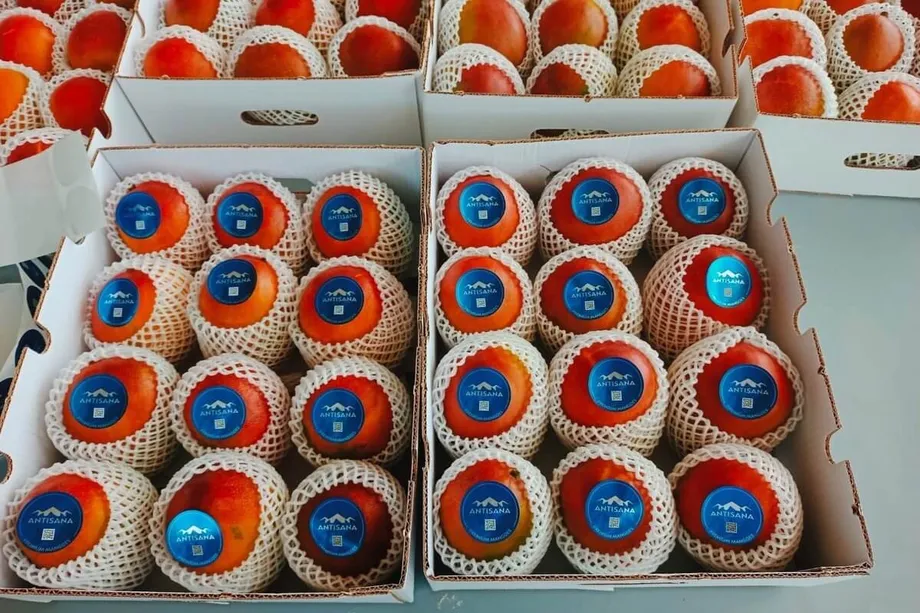
Tainan mangoes are available through physical retailers including CS Fresh and Giant, as well as online platforms RedMart and Shopee. Specially selected gift boxes cater to Singapore's gifting culture, giving the fruit a place in purchases for other people as well as for the household.
Huang attributed the sixfold increase to orders from Singaporean supermarkets. Maintaining those relationships depends on more than a successful tasting event: the fruit must continue to meet buyers' expectations for quality and food safety when it reaches store shelves.
From the Orchard to an Overseas Supermarket
Tainan's export effort relies on quality checks, treatment after harvesting and efficient transport. A mango intended for an overseas buyer must move through that system while retaining the flavor and texture that made the buyer interested in the first place.
Mangoes destined for export undergo vapor heat treatment. The process heats the fruit to a specified temperature to eliminate pests such as the oriental fruit fly without compromising its eating quality. Pest control matters because importing countries seek to protect their own crops from insects carried in incoming fruit.
The Yujing Vapor Heat Treatment Plant in Tainan has recently upgraded its technology. The facility supports efforts to meet strict quarantine requirements in markets including Singapore, Japan and the European Union. Quarantine requirements are the rules governing pests and diseases that could travel with agricultural goods.
After treatment, mangoes are sorted, graded and packaged in modern facilities. These steps allow exporters to prepare fruit for sale according to its quality and the needs of the destination market.
Traceability is another part of the system. Each box of exported fruit comes with a full drug test report and can be traced back to its source orchard. The records connect a shipment to the place where its fruit was grown, supporting regulatory checks and confidence in Tainan's produce.
Huang has tied the city's ambitions to maintaining those standards. Explaining Tainan's commitment to current buyers and prospective markets, the mayor said:
We must ensure that every mango exported from Tainan meets the highest standards, not only to satisfy our current customers but to pave the way for future opportunities in markets like the United States and the European Union.
Opening Markets Takes More Than Finding Buyers
Tainan's push into new destinations involves negotiations as well as marketing. Each importing country has its own quarantine and quality standards, and gaining access can require years of discussions and investment in treatment technology.
The European Union's recent opening to Taiwanese mangoes and guavas followed extensive work involving Tainan's government, Taiwan's Ministry of Agriculture and international regulatory agencies. The process required effective pest control measures and treatment facilities capable of meeting EU standards.
Upgrading a facility and demonstrating that its treatment works are practical steps toward making trade possible. A supermarket may want to buy fruit, but the exporter must also satisfy the destination's rules before that commercial opportunity can become a shipment.
Tainan is pursuing access to the United States as well. As of July 5, negotiations were underway with the aim of beginning mango exports there within the next two years. No confirmed starting date was given.
The city's approach brings several tasks together: maintaining strict quality control, investing in treatment and processing technology, working directly with consumers and trade partners, and seeking additional markets. Existing customers and prospective destinations both depend on the same foundation of reliable fruit and export preparation.
Pineapples and Guavas Broaden the Export Effort
Tainan's agricultural promotion extends beyond mangoes. The city is also a major producer of pineapples, guavas and other tropical fruits, giving its overseas campaigns a wider range of products to sell.
Huang has promoted Tainan produce in Japan, South Korea and New Zealand, as well as in the European Union. Each destination offers a potential source of revenue and an opportunity to demonstrate Taiwan's agricultural technology and attention to quality.
Tainan pineapples recently received approval for export to New Zealand after work to meet quarantine and quality requirements. Like the effort involving mangoes and guavas in Europe, that development required attention to the importing market's rules.
The city's Agriculture Bureau estimates that pineapple exports will exceed 3,500 tons in 2025. That forecast is separate from the sixfold increase in Singaporean supermarket orders for mangoes: one describes an expected export volume for pineapples, while the other describes a change in mango orders from a particular group of buyers.
Mangoes and pineapples appeared together in the Singapore promotion. Presenting several products allows Tainan to introduce buyers to more of its agricultural output while using the same public campaign to build recognition for the city's produce.
A Mayor Takes on the Sales Role
Huang's involvement goes beyond attending formal meetings. He travels abroad to promote agricultural goods, participates in live shopping events and interacts directly with consumers. His role makes the mayor a visible representative of the farmers and products behind the campaign.
Taiwan's political culture places value on leaders being approachable and engaged with the public. The country's democratization, including the introduction of direct presidential elections in 1996, helped shape expectations that politicians should take an active part in community and economic development.
Huang often uses low cost airlines and budget accommodation during his travels, presenting his promotional work as public service rather than an exercise in personal comfort. That approach has helped endear him to voters and gives his sales appearances a more personal character.
Explaining why he is willing to act as a promoter, Huang compared his participation with the cost of hiring a celebrity:
As a mayor, my appearance fee is much lower than that of a celebrity, but I am willing to do this work to raise international awareness of Tainan's agricultural products. Going out for sales does not diminish a mayor's authority; it allows for more direct engagement with the community and citizens.
His supermarket appearances connect that political approach to a concrete economic task. Shoppers can meet the person representing Tainan, try its fruit and ask about the city during the same visit. The campaign uses personal contact alongside retail distribution and export preparation.
Making More Use of Every Harvest
Tainan has also invested in processing facilities that turn surplus mangoes or fruit of lower grades into dried snacks, juices and other products. Processing gives farmers additional ways to earn income beyond selling fresh mangoes.
These products help reduce food waste by finding uses for fruit that is surplus to fresh sales or suited to a different form of consumption. The strategy links the export campaign's focus on quality with a broader effort to make use of more of the crop.
Mango rinds left after processing are also being recycled through cooperation with industry and research centers. The work turns material that would otherwise be discarded into useful byproducts.
Tainan describes this approach as circular agriculture. In simple terms, it means finding another use for material left over from growing or processing food, rather than treating it only as waste. The city's processing and recycling work reflects growing interest in agriculture that uses resources more responsibly.
Fresh fruit exports, processed foods and reuse of processing leftovers serve different purposes within the same industry. Together, they give Tainan more ways to obtain value from its harvest while supporting its reputation for agricultural innovation and quality.
The Dates and Decisions Behind the Expansion
Tainan's current campaign sits within a longer political history and a continuing effort to gain market access. The key dates and periods described in that effort are:
- 1996: Taiwan introduced direct presidential elections, part of the democratization that shaped expectations of accessible, publicly engaged political leaders.
- 2025, as of July 5: Huang reported a sixfold increase in Singaporean supermarket orders for Tainan mangoes compared with the previous year, while the mango harvest had fallen to 40% of the previous year's output.
- 2025: Tainan's Agriculture Bureau expects pineapple exports to exceed 3,500 tons.
- The next two years from July 2025: Tainan aims to begin mango exports to the United States through negotiations underway at the time.
Farmers, exporters and retailers face different parts of the same task. Farmers are working with a smaller mango harvest, exporters must meet treatment and documentation requirements, and retailers need fruit that satisfies their customers. Tainan's campaign connects those practical needs with public promotion.
Singapore's increased orders give the city a concrete sales result, while access to New Zealand and the European Union broadens the opportunities for its fruit. Sustaining that expansion depends on the quality controls, facilities, trade relationships and direct engagement already central to the city's strategy.
Key Points
- Mayor Huang Wei-che says Singaporean supermarkets increased Tainan mango orders sixfold compared with the previous year.
- Adverse weather reduced the mango harvest to 40% of the previous year's output. Huang says the smaller crop is sweeter and more flavorful.
- Tainan's Singapore campaign featured mangoes, pineapples, tastings, quizzes and a mango ice cream demonstration, with Taiwan envoy Tung Chen-yuan joining the delegation.
- The upgraded Yujing Vapor Heat Treatment Plant, testing records and orchard traceability support the city's export effort.
- Taiwanese mangoes and guavas recently gained EU access, while Tainan pineapples received approval for New Zealand.
- The Agriculture Bureau expects pineapple exports to exceed 3,500 tons in 2025.
- Negotiations aim to open the United States to Tainan mango exports within two years of July 2025.
- Processing surplus fruit and recycling mango rinds provide additional uses for the harvest and reduce waste.