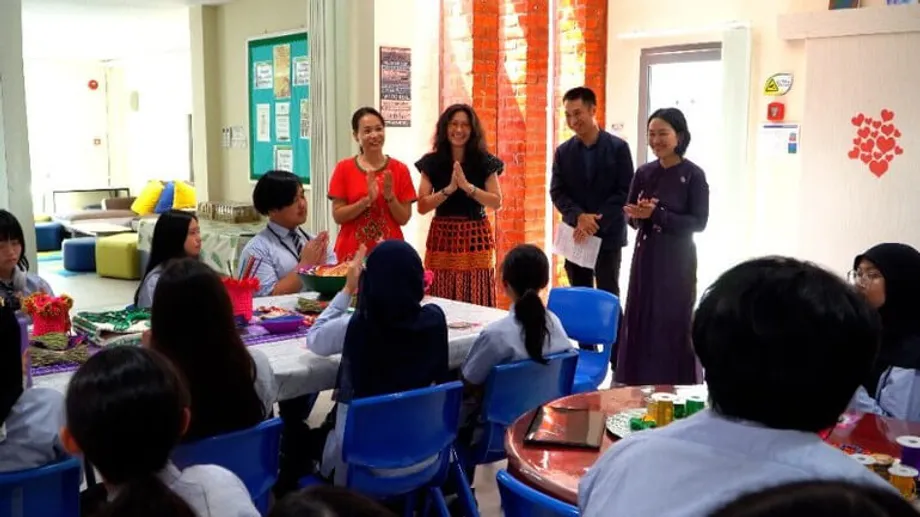
Thirty Students Explore Vietnam Through Stories and Crafts
Thirty students from grades 7 to 12 at International School Brunei (ISB) took part in a Vietnamese cultural exchange on July 2, 2024, combining English translations of celebrated literature with traditional hand embroidery and discussions about environmental responsibility.
Contents
- Thirty Students Explore Vietnam Through Stories and Crafts
- Vietnamese Literature Finds a Place in the Library
- Learning Embroidery With Community Instructors
- Reused Materials Connect Heritage and Environmental Care
- A School With Room for Wider Educational Ties
- How the Exchange Fits Into Diplomatic Cooperation
- Language, Music and Festivals Broaden the Contact
- Nearly 300 Vietnamese Residents Help Sustain the Exchange
- What the ISB Event Brought Together
- Key Points
The Vietnamese Embassy in Brunei organised the event with ISB, bringing students of different nationalities together to explore Vietnamese culture through reading and making things. The programme formed part of a broader effort to share Vietnam's heritage abroad and strengthen connections between people in Vietnam and Brunei.
The embassy donated Vietnamese literary and cultural books to the school library, while workshop leaders guided students through embroidery featuring patterns inspired by the H'Mong ethnic group. Recycled newspapers, repurposed plastic bottles and dried plants were among the materials used in the craft activities.
The exchange brought several parts of the relationship between the countries into one school setting: diplomatic cooperation, education, community participation and the promotion of traditional skills. Students encountered Vietnamese stories and designs while considering how materials that might otherwise be discarded could become part of a creative project.
ISB, with a history of 60 years and approximately 1,400 students from various countries, offered an international audience for the activities. The 30 participants could carry their experience into a school community much larger than the workshop itself, while the donated books would remain available in the library.
Vietnamese Literature Finds a Place in the Library
The collection included English translations of Diary of a Cricket by To Hoai, along with I See Yellow Flowers in the Green Grass and Ticket to Childhood by Nguyen Nhat Anh. These celebrated works introduce readers to Vietnamese society, values and imagination through stories accessible beyond the Vietnamese language.
The literary selection also connected reading with cinema. The works have inspired acclaimed film adaptations, giving students another way to explore the stories and the culture behind them.
Vietnamese Ambassador to Brunei Tran Anh Vu said he hoped ISB students and their international peers would explore the books and their cinematic counterparts. He described literature as a way for young people from different backgrounds to develop cultural understanding and empathy.
We hope that ISB students and international friends will have a deeper appreciation for Vietnamese literature and culture, including works that have inspired acclaimed film adaptations.
The library donation gave that ambition a lasting place within the school. Students could return to the books after the event, discovering more about Vietnam's history, traditions and contemporary life at their own pace. The embassy also hoped the introduction would encourage further educational and cultural exchanges between the countries.
Learning Embroidery With Community Instructors
Le Thi Hong Ngoan, the ambassador's spouse, led the traditional hand embroidery workshop alongside Maisarah Nguyen, founder of the Rattan House handicraft brand, and Pham Thu Phuong, a representative of the Vietnamese community in Brunei.
The three instructors introduced students to the intricate techniques of a craft practised for centuries. Participants decorated their pieces with distinctive patterns inspired by the H'Mong, one of Vietnam's many minority communities, whose textile traditions are known for their vibrant designs.
The activity connected practical skills with the meaning of the craft. In Vietnamese society, embroidery can express identity and artistry, with techniques often passed from one generation to the next. Learning a pattern therefore offered students a way to consider the people and traditions associated with it.
The workshop also gave community members a direct role in cultural exchange. An embassy initiative became a shared activity involving a school, a handicraft business founder and Vietnamese residents, each contributing knowledge or experience.
Reused Materials Connect Heritage and Environmental Care
The organisers used environmentally friendly materials throughout the workshop, including recycled newspapers, repurposed plastic bottles and dried plants. The choice placed environmental responsibility alongside the preservation of traditional craft.
Students were encouraged to consider both what they made and what they used to make it. Giving existing materials another purpose linked the exercise to discussions about sustainability, meaning the responsible use of resources with future generations in mind.
Le Thi Hong Ngoan, one of the workshop leaders, described plans to continue exploring how materials available in Brunei could be incorporated into Vietnamese handicrafts.
We plan to continue exploring Brunei's natural resources for use in Vietnamese handicrafts, fostering both cultural exchange and environmental stewardship.
Ngoan and her fellow instructors intended to continue researching and incorporating Brunei's natural materials into craft products. That approach would bring elements of the two countries' natural environments into the same work, adding a local connection to the Vietnamese techniques being shared.
The event linked cultural preservation with care for the natural world, reflecting a broader direction in Vietnam's cultural diplomacy. It also connected with global efforts to make cultural practices more sustainable. For the students, creativity, responsibility and respect for other cultures were brought together in one practical activity.
A School With Room for Wider Educational Ties
ISB's history of 60 years, international student body and internationally accredited programmes made it a setting suited to exchange across cultures. The school places importance on global citizenship, encouraging students to understand their connections and responsibilities beyond their own countries.
School leaders welcomed the event and expressed hope that more Vietnamese students would join ISB's academic programmes. They also highlighted the potential for broader partnerships and exchanges with educational institutions in Vietnam.
The library donation and workshop served different parts of that educational relationship. The books created an ongoing resource, while the practical session brought students into direct contact with people sharing Vietnamese traditions. Together, they connected classroom learning with cultural experience.
The school's interest extended beyond a single event. More Vietnamese enrolments and cooperation with institutions in Vietnam could widen the relationship through study and exchange, building on the contact established through cultural activities.
How the Exchange Fits Into Diplomatic Cooperation
Vietnam and Brunei have identified cultural exchange and connections between their people as priorities within their comprehensive partnership. Their action programme for 2023-2027 provides a framework for that cooperation, which has support at the highest levels of government.
Cultural diplomacy means using activities such as literature, music, crafts, food and education to build relationships between countries. At ISB, that work took a concrete form: students received access to Vietnamese books and learned craft techniques from people who could explain their cultural meaning.
Vietnamese Prime Minister Pham Minh Chinh's official visit to Brunei in 2023 included participation in cultural activities and meetings with Bruneian students studying Vietnamese. Those encounters connected government relations with the interests of students and educators.
The main dates show how the school event fitted into a broader period of educational and cultural cooperation:
- 2022: Universiti Brunei Darussalam launched its Vietnamese language programme.
- 2023: Prime Minister Pham Minh Chinh made an official visit to Brunei, taking part in cultural activities and meeting students learning Vietnamese.
- 2023-2027: The bilateral action programme set out cooperation within the countries' comprehensive partnership.
- July 2, 2024: The Vietnamese Embassy and ISB held the literary and handicraft exchange for 30 students.
The sequence connects language learning, government engagement and school activities. Each provides a different setting in which people can learn about the other country and develop relationships beyond formal diplomatic meetings.
Language, Music and Festivals Broaden the Contact
The Vietnamese language programme at Universiti Brunei Darussalam (UBD), launched in 2022, has attracted 60 to 90 students each semester. That interest gives educational cooperation a continuing presence beyond individual cultural events.
Language study offers Bruneian students another route into Vietnamese culture. It complements the English translations donated to ISB by allowing learners to engage with Vietnamese through the language itself. The programme reflects both growing curiosity about Vietnam and the countries' commitment to educational cooperation.
The Vietnam-Brunei Friendship Concert has also brought artists from both countries together in a celebration of music and shared heritage. Vietnamese representatives have participated in the ASEAN Textile Exhibition and Brunei's Hari Raya Festival as well.
At those gatherings, Vietnamese traditional dress, known as Ao Dai, has appeared alongside cuisine and handicrafts. The displays have drawn admiration from local and international audiences, extending cultural exchange beyond schools and universities into public celebrations.
Nearly 300 Vietnamese Residents Help Sustain the Exchange
Nearly 300 Vietnamese nationals live in Brunei, including students, lecturers, engineers, entrepreneurs and members of multicultural families. Their participation connects official cultural initiatives with everyday life in the country.
Community members take part in embassy activities and organise cultural promotion efforts of their own. Workshops on Vietnamese handicrafts and cuisine have helped Bruneians become more familiar with Vietnamese traditions, while maintaining opportunities for regular personal contact.
Vietnamese businesses have introduced handicrafts, rattan goods, agricultural products and textiles to Brunei. These products have been well received for their quality and affordability, bringing commercial activity into the wider cultural relationship.
Sai Ngon coffee, a joint venture between Vietnamese and Bruneian partners, has quickly gained popularity in local supermarkets. Its presence offers another everyday connection to Vietnam, alongside the books, clothing, food and craftwork presented at organised events.
The involvement of residents and businesses gives the relationship continuity. Embassy programmes can bring people together for a particular occasion, while community workshops and products create further opportunities for contact in ordinary settings.
What the ISB Event Brought Together
The ISB exchange combined several elements of Vietnam's cultural diplomacy: literature, arts, education, community participation and environmental responsibility. Cuisine, language learning and music form other parts of the broader effort visible in Brunei.
For participating students, the immediate opportunities were concrete. They could handle craft materials, learn embroidery techniques, encounter H'Mong designs and find Vietnamese stories in their school library. Discussions connected those activities with cultural understanding and care for the environment.
Vietnam's wider approach seeks to share its heritage, strengthen its international image and contribute to cultural diversity and understanding. Brunei gains opportunities for its young people to learn about and collaborate with a neighbouring country through education and cultural exchange.
Growing joint initiatives, student exchanges and cultural events give both countries further ways to develop that relationship. At ISB, the connection began with 30 students, a collection of books and an opportunity to learn directly from people sharing their traditions.
Key Points
- The Vietnamese Embassy and International School Brunei held a cultural exchange on July 2, 2024, for 30 students from grades 7 to 12.
- The embassy donated English translations of works by To Hoai and Nguyen Nhat Anh to the school library.
- Three instructors guided students through traditional embroidery featuring patterns inspired by the H'Mong community.
- Recycled newspapers, repurposed plastic bottles and dried plants connected the craft activities with environmental responsibility.
- ISB leaders welcomed the exchange and expressed interest in more Vietnamese students and partnerships with institutions in Vietnam.
- The countries' action programme for 2023-2027 supports cultural and educational cooperation.
- UBD's Vietnamese programme attracts 60 to 90 students each semester, while nearly 300 Vietnamese residents help sustain cultural connections in Brunei.