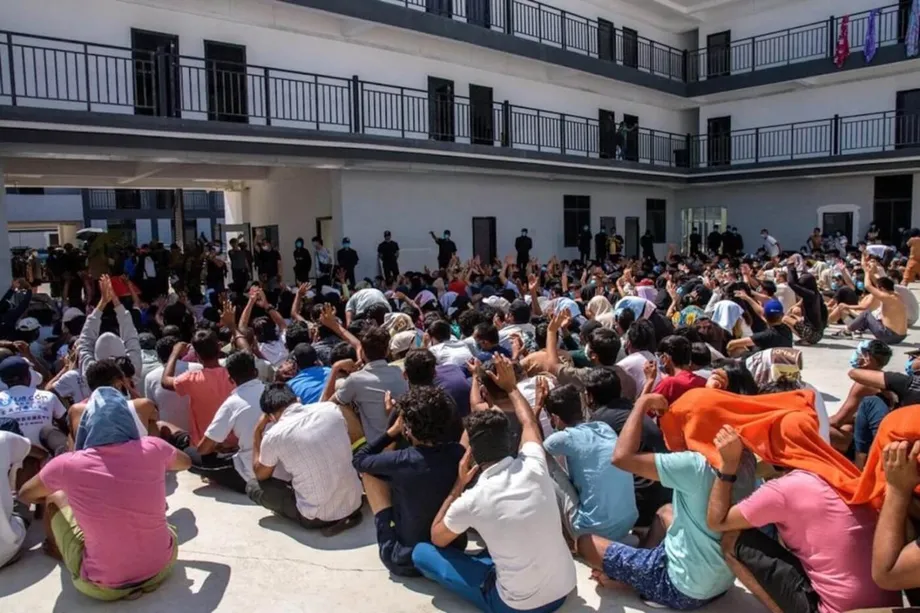
A Crime Network Reaching at Least 66 Countries
Online scam networks built on human trafficking and increasingly supported by artificial intelligence have spread from Southeast Asia to affect at least 66 countries across every continent. As of July 5, 2025, warnings from the International Criminal Police Organization (Interpol) and the United Nations Office on Drugs and Crime (UNODC) describe a crisis that connects physical captivity with fraud committed through phones, computers and digital payment systems.
Contents
- A Crime Network Reaching at Least 66 Countries
- How a Job Offer Becomes Captivity
- Two Groups of Victims, Connected by One Scheme
- What the Cryptocurrency Figures Show
- AI Makes Deception Easier to Produce
- Crackdowns Push Operations Into New Places
- How the Expansion Developed
- The People Running the Trafficking Network
- Survivors Describe Violence and Threats
- Fraud Hubs Also Support Other Crimes
- A Marketplace for Scam Technology and Money Laundering
- What Police and Governments Are Doing
- Key Points
The operations harm two groups at once. People recruited through false promises of work are detained and forced to deceive strangers online. Those strangers can then lose their savings to fabricated romances, investments or other schemes. The person sending a fraudulent message may also be someone facing violence for failing to send it.
Southeast Asia remains the center of this activity: 74% of known trafficking victims associated with scam centers are taken to facilities in the region. Yet criminal networks have extended their operations into West Africa, the Middle East, Central America and parts of Europe and North America, finding new places to operate as authorities put pressure on established hubs.
The money involved helps explain that expansion. Estimates place annual scam center revenue between $18 billion and $40 billion. UNODC separately estimates that the cybercrime industry in Southeast Asia siphons off more than $40 billion a year, with worldwide losses likely much higher.
Artificial intelligence, or AI, adds another layer to the threat. Criminals use it to produce recruitment advertisements, fabricate identities and automate conversations, allowing schemes to reach more people while requiring less technical knowledge from those running them.
How a Job Offer Becomes Captivity
Recruitment often starts with an advertisement promising attractive pay for work in marketing, information technology or customer service. Some advertisements are now generated or improved using AI. Applicants can be recruited from halfway around the world before being taken to compounds in countries including Myanmar, Cambodia, Laos and the Philippines.
On arrival, recruits have their identification documents confiscated. They are detained through threats, violence or debt bondage, in which an alleged debt becomes a means of forcing someone to keep working. Torture can also be used to maintain control.
Inside the compounds, trafficked people are trained to carry out several kinds of fraud:
- Investment scams, often involving cryptocurrency.
- Romance scams, also described as pig butchering or romance baiting.
- Online gambling fraud.
- Money transfer schemes and phishing, which uses deceptive messages to obtain sensitive information.
People who resist orders or fail to meet quotas can face beatings, electric shocks and threats that their organs will be sold. Some secure release only after relatives pay a ransom or recruit someone to replace them. The system uses family relationships both to extract money and to bring more people into captivity.
Two Groups of Victims, Connected by One Scheme
Interpol and UNODC describe the scam center model as a double-edged threat. Trafficked workers endure coercion inside the facilities, while people outside them are persuaded to send money, invest in false opportunities or disclose sensitive information.
Romance baiting relies on building a relationship that can later be used to extract money. Investment fraud offers a different route to the same result: a target is persuaded that a fabricated opportunity is genuine. Both depend on gaining trust before asking for money or information.
Billions of dollars are lost each year, alongside emotional damage to people deceived online. Captive workers also face lasting psychological harm. Their forced participation creates legal complications after rescue because the criminal acts they carried out were committed under threats or violence.
Survivors can face stigma, isolation and trauma long after leaving a compound. Recovering stolen money and freeing detained workers address different parts of the same operation, and both are central to the response described by international agencies.
What the Cryptocurrency Figures Show
Blockchain research firm Chainalysis estimates that cryptocurrency wallets linked to scams received nearly $10 billion in 2024. Its projection suggests that the total could rise to $12.4 billion as more wallets connected to scams are identified.
The firm also records growth of nearly 40% from the previous year in pig butchering schemes, alongside a rapid expansion in the number of victims. These scams combine personal manipulation with financial demands, often using an apparent romantic relationship to make an investment proposal feel trustworthy.
Cryptocurrency plays a central role in laundering proceeds and enabling anonymous transactions. Money laundering is the process of moving criminal earnings through transactions or services to conceal their origins. In the scam center economy, payment infrastructure helps connect fraud committed in one country with criminal operators elsewhere.
The figures describe different parts of that economy. Chainalysis measures cryptocurrency received by wallets linked to scams, while estimates of $18 billion to $40 billion concern annual scam center revenue. UNODC's estimate of more than $40 billion a year covers the cybercrime industry in Southeast Asia.
AI Makes Deception Easier to Produce
AI is being used at several stages of the criminal process, from attracting workers to deceiving financial targets. It can generate convincing job advertisements, create fabricated images and profiles, and automate scripts designed to manipulate people into trusting an online contact.
Deepfakes, which use AI to fabricate or alter images and video, are also being used in romance and sextortion scams. Sextortion involves threatening someone over sexual material to obtain money or compliance. Fabricated identities give criminals more ways to impersonate people and sustain a convincing online presence.
John Wojcik, a regional analyst at UNODC, explains how AI lowers the level of expertise needed to run sophisticated fraud:
Criminal groups once limited by lack of expertise are now empowered to run highly technical scams with minimal knowledge, thanks to AI.
UNODC reports a 600% increase in mentions of deepfakes in scam activity by early 2024, with some countries recording increases above 2,500% in a single year. Criminals use the technology to impersonate real people, bypass identity verification controls and build trust faster.
For people approached online, the result is a much harder task in judging whether an identity is genuine. For criminal operators, automated social engineering scripts make it easier to repeat manipulative conversations across a larger number of targets.
Crackdowns Push Operations Into New Places
Law enforcement pressure in Cambodia and Myanmar has pushed syndicates to seek new operating bases. West Africa, the Middle East and Central America have become part of that expansion, alongside emerging activity in parts of Europe and North America.
The United Nations likens the spread to cancer: when authorities disrupt operations in one place, criminal networks move and establish themselves elsewhere. Regions with weak governance or limited police capacity can provide conditions in which those networks rebuild.
Several cases show the reach of the model:
- In Namibia in 2024, authorities dismantled a scam center, freed 88 young people and seized hundreds of computers and mobile phones.
- In Nigeria, raids on facilities used for romance scams led to nearly 1,000 arrests. The operations targeted people in Europe and the Americas.
- In Myanmar's KK Park, thousands of trafficked workers have been rescued, while up to 100,000 people are believed to remain enslaved in scam compounds in Myanmar.
Many syndicates have roots in Chinese or Southeast Asian organized crime. Their operations increasingly involve local partners in Africa, South America and other regions. Those partnerships give networks local knowledge while retaining connections across borders.
The 66 countries affected by the wider crime include places connected through recruitment, exploitation and online fraud. Southeast Asia's share of known trafficking destinations, at 74%, shows how concentrated the physical exploitation remains even as the wider network spreads.
How the Expansion Developed
The developments described by international agencies span several years, with technological growth, financial flows and police action moving alongside one another. The key dates available as of July 5, 2025, provide a short timeline:
- Since 2021, transactions associated with Huione Guarantee have exceeded $70 billion.
- Since 2022, Interpol's Global Rapid Intervention of Payments mechanism has helped intercept more than $500 million in criminal proceeds.
- By early 2024, UNODC recorded a 600% increase in mentions of deepfakes in scam activity.
- During 2024, Namibia dismantled a scam center and freed 88 young people; cryptocurrency wallets linked to scams received nearly $10 billion; and Huione scam technology vendors received at least $375.9 million in cryptocurrency.
These dates trace the growth of supporting technology and financial services alongside efforts to disrupt the crime. Police interventions have recovered money and freed victims, while the networks have continued to adapt and relocate.
The People Running the Trafficking Network
Interpol's data describes the people it identifies as human trafficking facilitators, whose work can include recruitment, enforcement and technical support. More than 80% are male, and 61% are aged between 20 and 39.
The demographic figures given are 90% of Asian descent, with 11% from Africa or South America. Together, the figures describe a network rooted heavily in Asia but connected to other regions through recruitment and operational roles.
Facilitators can collaborate with corrupt officials and other criminal syndicates. Some bring the technical skills needed to maintain online fraud operations; others find recruits, control captive workers or arrange the connections that allow a center to operate.
Adaptability is central to their work. Local knowledge helps them navigate a new location, while international connections allow them to move people, technology and money across borders. That combination makes a crackdown in one jurisdiction only part of the challenge.
Survivors Describe Violence and Threats
Poom-Jai, a 17-year-old from Thailand, described being beaten and electrocuted after his bosses accused him of stealing. He attempted to escape and suffered severe injuries.
Another account concerns the husband of Chelsea, from the Philippines. He was threatened with organ harvesting if he tried to contact people outside the compound. Such threats reinforce isolation by making even a request for help appear dangerous.
Physical abuse operates alongside psychological manipulation. Captive workers can be cut off from relatives, pressured to meet fraud targets and made to fear punishment for resistance. Families may then be drawn into ransom demands or efforts to recruit replacements.
Rescue is complicated by borders, armed militias and ineffective governance in some areas. Even after someone is freed, repatriation, meaning their return to their home country, and rehabilitation remain major challenges.
Survivors also need to navigate the consequences of crimes they were forced to commit. Legal complications and social stigma can follow them home, while long term trauma continues after the immediate threat of captivity has ended.
Fraud Hubs Also Support Other Crimes
The criminal infrastructure behind scam centers is used for more than online deception. The same trafficking routes and networks also support the smuggling of drugs, firearms and endangered wildlife, including tigers and pangolins.
Scam proceeds can fund armed groups or corrupt officials, adding instability in places already struggling with weak governance. In Myanmar, some scam centers are linked to organizations connected to the military, with profits used to finance armed conflict.
These connections turn a fraud operation into part of a wider criminal economy. Money obtained from an online victim can sustain the people and infrastructure involved in other crimes, while corruption helps protect the operations generating it.
UNODC's estimate of more than $40 billion taken annually by Southeast Asia's cybercrime industry indicates the scale of resources at stake. The connected activities undermine state sovereignty, corrupt institutions and threaten public safety across national borders.
A Marketplace for Scam Technology and Money Laundering
Platforms such as Huione Guarantee have become places where illicit actors can obtain scam technology, AI services and money laundering infrastructure. Bringing those services together allows criminal groups to obtain different parts of an operation through a shared marketplace.
In 2024, Huione scam technology vendors received at least $375.9 million in cryptocurrency. Total transactions associated with the platform since 2021 exceeded $70 billion.
The services matter because criminal groups need more than people to send deceptive messages. They also need tools to construct identities, manage communication and move the proceeds. AI services and payment infrastructure help connect those tasks.
The wider convergence of trafficking, automated fraud and digital finance marks a change in how organized crime operates. Networks combine physical coercion with technology that reaches people around the world, while money from the schemes supports further cybercrime, drug production, weapons trafficking and political destabilization.
What Police and Governments Are Doing
Interpol, UNODC and national law enforcement agencies have launched coordinated operations to disrupt scam centers, rescue victims and seize criminal assets. Interpol's Global Rapid Intervention of Payments, known as I-GRIP, has helped intercept more than $500 million in criminal proceeds since 2022.
Cyril Gout, Acting Executive Director of Police Services at Interpol, calls for cooperation between police forces and organizations that encounter different parts of the crime:
Tackling this rapidly globalizing threat requires a coordinated international response. We must increase the exchange of information between law enforcement in the growing number of countries affected and strengthen partnerships with NGOs that help victims and technology companies whose platforms are being exploited.
Legal frameworks in many countries remain outdated, including in their treatment of AI and complex crime across borders. Calls for a response include better aligned laws between countries, specialized cybercrime units and cooperation between public authorities and private companies to trace and recover stolen funds.
The measures proposed also include investment in technology to detect and disable scams supported by AI, intelligence sharing across borders, and financial investigations that follow digital money trails. Legal reforms would address fraud supported by deepfakes and forced recruitment.
Public education campaigns can alert people to deceptive job advertisements and scam tactics. Technology companies are also being urged to monitor abuse of their platforms and cooperate with authorities, while partnerships with nongovernmental organizations support victims.
Warnings that AI supported trafficking schemes could become common over the next decade reflect the networks' ability to adapt. The immediate tasks are concrete: interrupt recruitment, free captive workers, trace stolen money and help survivors return home. Interpol and UNODC call for synchronized international action to carry out those tasks against a threat that now reaches far beyond its original centers.
Key Points
- Scam networks built on human trafficking affect at least 66 countries across every continent.
- Southeast Asia remains the main destination, accounting for 74% of known trafficking victims taken to scam centers.
- False job advertisements lead people into captivity, where violence and threats force them to commit online fraud.
- AI supports recruitment, fabricated identities, deepfakes and automated manipulation of online targets.
- Scam linked cryptocurrency wallets received nearly $10 billion in 2024, with Chainalysis projecting a possible rise to $12.4 billion as more wallets are identified.
- Criminal networks also connect scam proceeds and infrastructure with drug, firearms and wildlife trafficking, corruption and armed conflict.
- Interpol's I-GRIP mechanism has helped intercept more than $500 million in criminal proceeds since 2022.
- International action must address both the people held inside scam centers and the people losing money to their operations.