Local reporting brings results at a personal cost
Nearly half of 93 citizen journalists surveyed in Cambodia said a community problem had been resolved after they reported on it. Yet 61 percent had experienced restrictions or reprisals, and 94 percent had avoided at least one subject because they feared for their safety, according to a 2026 Cambodian Center for Independent Media report.
Contents
- Local reporting brings results at a personal cost
- What residents are reporting outside the capital
- Safety fears shape which stories reach the public
- Press cards and private messages create further pressure
- Legal cases show the risks around sensitive coverage
- How the pressures developed
- What the government says it is doing
- Existing support reaches beyond journalism training
- Keeping local reporting financially possible
- Key Points
The findings in Active Witnesses: The Risks and Impacts of Citizen Journalism in Cambodia show the pressures on residents who document damaged roads, land disputes, environmental damage and failures in public services. Their work can bring problems to officials' attention, often in places where professional newsrooms have little presence. The same reporting can expose them to threats, pressure to remove videos and difficulties obtaining information.
About 49 percent of those surveyed said they had seen a problem resolved following their coverage. Around 68 percent struggled to secure interviews or information from authorities, sometimes because they lacked an official press card. For a person trying to explain why a road remains broken or a community lacks services, access to an official response is a basic part of getting the story right.
Money adds another constraint. Thirty percent reported financial difficulties or insufficient income, while 45 percent identified equipment as a need and 39 percent wanted editorial or mentoring support.
The findings bring together three practical needs: permission to gather information without intimidation, protection when reporting creates danger, and enough money and guidance to keep working. A mobile phone gives residents a way to publish. Sustaining that work requires support before, during and after a difficult assignment.
What residents are reporting outside the capital
Hun Dimo, a citizen journalist in Siem Reap province, covers land disputes, land encroachment and other community concerns. He has also reported on the Cambodia-Thailand border conflict in Banteay Meanchey, Oddar Meanchey and Preah Vihear provinces.
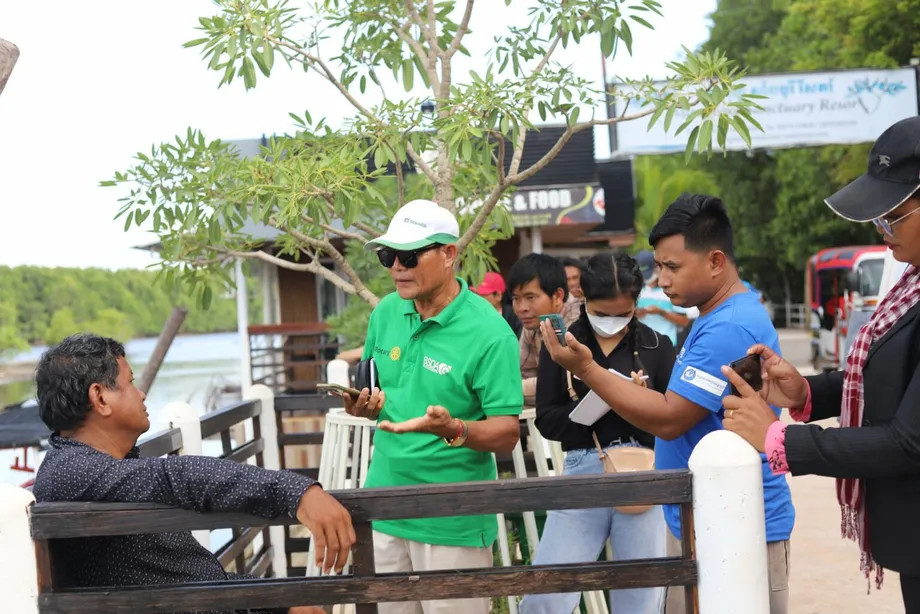
Dimo said citizen journalists help residents in remote areas bring their concerns to authorities when mainstream media coverage is limited. He described restrictions on access to information, especially when he lacked a Ministry of Information press card or was covering a sensitive issue. He called for government recognition of citizen journalists and fewer unnecessary restrictions.
In Stung Treng province, Chhen Leakhna has spent more than three years reporting with a mobile phone. Her subjects include road conditions, economic hardship, public services, land disputes and environmental issues. She said residents increasingly trust her and share information so local problems can reach officials.
Nop Vy, executive director of the Cambodian Journalists Alliance Association, known as CamboJA, described this reporting as a form of public participation. Smartphones and internet access allow people experiencing a problem to document it themselves rather than wait for a newsroom to arrive.
"Citizens themselves, who are dealing with the problem, can bring and voice that problem to the authorities as well as the public," Vy said.
That local connection gives citizen reporters access to concerns that can otherwise remain hidden. It also means the people publishing a story may continue living near those angered by it, making safety a continuing concern after a video or article appears.
Safety fears shape which stories reach the public
Border issues, corruption and politics were the subjects most often avoided by the citizen journalists surveyed by CCIM. Its executive director, Chhan Sokunthea, identified safety as the most serious problem, with particular concern for women working far from urban support networks.
"We found that safety is a major concern, especially for female citizen journalists who report in remote rural areas," she said.
Leakhna, also identified as Chhen Leakena, is a member of the Brao Indigenous group. She said she had been physically assaulted while gathering information. She declined to identify the attacker because discussing the experience was traumatic.
Officials also pressured her to remove at least three videos, she said, including coverage of a health center and a school director accused of mistreating residents. She described threats, surveillance and restrictions, particularly around land and environmental reporting.
Leakena said officials should respond to problems in coverage with explanations and corrections rather than pressure.
If there are shortcomings in our reporting, they should tell us and provide their comments so that we can improve it," she said. "They should not use their power to pressure citizens or journalists.
She also made a direct appeal about how local reporters should be treated:
"Please do not consider us enemies," she said.
Press cards and private messages create further pressure
Ministry of Information requirements for press cards include good conduct reports, a clean complaint record and journalism certificates approved by the ministry. Citizen reporters without credentials or the backing of a licensed outlet can struggle to obtain interviews and official information, according to CCIM.
The access problem affects the reporting process itself. A resident may be willing to describe a land dispute, but a journalist also needs records and responses from the authorities responsible. When officials refuse to cooperate, obtaining a complete explanation becomes harder.
Sokunthea also raised concerns about authorities using conversations in private messaging groups as evidence against citizen journalists. Such groups can be places where reporters exchange information, seek advice or discuss an assignment. CCIM described the practice as a threat to privacy and free expression.
The organization called for action by the Information, Interior and Justice ministries, local authorities and police. Its recommendations include clearer rules for citizen journalists, protection for their reporting and stronger support from media organizations and civil society groups.
A planned National Internet Gateway adds another concern about the conditions for online reporting. The proposed system would direct internet traffic through a controlled point, allowing authorities to monitor, block or redirect it. The project has faced technical delays since a 2021 decree. No exact construction date was given.
Legal cases show the risks around sensitive coverage
CamboJA recorded 12 violations against journalists in the second quarter of 2026, compared with 11 in the first quarter, an increase of about 9 percent. Legal intimidation and restrictions on expression each accounted for 33 percent of the recorded violations. Physical and psychological harm each accounted for 17 percent.
Four journalists faced direct safety threats, including detention or arrest, while eight other incidents occurred during field reporting. The cases involved subjects such as suspected online scams, corruption, human rights and environmental issues.
Two journalists working for TSP 68 TV Online received prison sentences of 14 years in a case involving a photograph with soldiers near the Thai border that was later posted on Facebook. They were charged with supplying a foreign state with information prejudicial to national defense. The Cambodian League for the Promotion and Defense of Human Rights said the photograph showed new landmines.
Journalist Hem Vanna was arrested in February 2026 after reporting on a suspected online scam compound in Poipet, Banteay Meanchey province. He faced incitement and privacy related charges and was released on bail on April 8.
More than 30 opposition figures, activists and journalists were arrested over social media posts concerning the border clashes between July 2025 and February 2026. The combination of border coverage and criminal proceedings helps explain why citizen journalists identified the subject as one they frequently avoided.
How the pressures developed
Cambodia's citizen reporters are working amid a contraction of independent media that has reduced the number of newsrooms available to cover local concerns. The Cambodia Daily newspaper closed over a tax dispute, while Voice of Democracy, operated by CCIM, lost its license.
The reporting risks and attempts to build support have developed over several years:
- 2014: A violent attack on a CCIM reporter helped shape the organization's focus on practical safety training.
- 2021: CCIM began providing legal support to journalists and published an earlier directory of assistance services.
- July 2025 to February 2026: More than 30 opposition figures, activists and journalists were arrested over posts about the Cambodia-Thailand border clashes.
- January to mid-February 2026: At least six journalists were detained, arrested or charged with incitement following coverage of border tensions and suspected scam compounds.
- April to June 2026: CamboJA recorded 12 violations against journalists, up from 11 during the previous three months.
Funding pressures have also affected the organizations that provide reporting, training and protection. The United States' 2025 foreign aid freeze disrupted support for independent media, leaving Cambodian newsrooms and support groups seeking replacement donors or commercial income.
For citizen journalists, fewer independent outlets can mean fewer editors to review sensitive work and fewer organizations able to cover expenses. Sokunthea said they face dangers similar to those confronting professional journalists while having less institutional protection and legal support.
What the government says it is doing
Ministry of Information spokesperson Tep Asnarith said the government already has measures to protect and support citizen journalists reporting on community problems, particularly when they face threats or abuse. He said people exercising those rights must respect the law, ethical standards and the rights and freedoms of others.
Asnarith also said the ministry mediated 49 disputes outside court involving 58 complaints against journalists from 2025 to August 2026. He said it helped protect 69 journalists from legal charges and provided journalistic guidance in about 20 cases.
The ministry welcomed assessments by press associations that meet standards of research, transparency, professionalism and accountability, he said, while calling for findings to be verified and balanced. Asnarith explained the ministry's position on reporting responsibilities:
"The Ministry of Information reminds all relevant parties to be responsible for meaning and potential social consequences of their reporting," he said.
CamboJA research and advocacy manager Sorn Sarath called on authorities to enable reporting without fear of reprisal, investigate violations and bring those responsible to justice. CCIM also raised the continuing delay in passing an Access to Information Law, which would set rules for seeking information held by public bodies.
Existing support reaches beyond journalism training
CCIM's legal support directory identifies practical assistance already available to journalists facing harassment or legal action. Produced with support from IFEX, it updates a 2021 directory developed under a project funded by UNESCO.
The directory explicitly includes citizen journalists reporting on matters of public interest among those eligible to seek CCIM assistance. The organization says more than 20 journalists have accessed its legal support and counseling since 2021. Applicants contact its designated staff and complete an intake form, after which CCIM reviews the case and possible legal remedies.
CamboJA offers psychological and social support to both members and journalists who are not members. Its services also include legal counseling, representation and referrals for environmental journalists. CCIM works with partner organizations through a Journalist Safety Working Group that monitors and records harassment.
Other assistance serves different needs. The Business & Human Rights Law Group, founded in 2018, provides legal defense, advice and training, including on freedom of the press. The Cambodian Human Rights and Development Association lists emergency relocation and some assistance for families of imprisoned clients among its services.
The United Nations human rights office in Cambodia can refer cases, advocate with authorities, monitor trials and visit imprisoned journalists. People seeking a lawyer need a legal aid provider, because the UN office does not directly provide legal services.
CCIM's earlier safety training project proposed tailored instruction in physical and information security for 90 citizen and professional journalists across at least 18 provinces. The plan called for international security specialists to teach practical responses to threats, showing that protection involves both field safety and the handling of digital information.
Keeping local reporting financially possible
Leakhna's reporting depends on projects rather than a reliable field budget. Other committed citizen journalists combine reporting with their main jobs or pay expenses themselves. Equipment, transport and time remain necessary even when the work begins as a voluntary effort to help neighbors.
Vy views citizen journalism as public participation rather than an activity that should depend entirely on paid projects. He also argues that training in reporting techniques, ethics and verification is essential. Verification means checking information before publishing it, including seeking evidence and giving people a chance to respond.
Research involving 30 participants in Indonesia, Malaysia and the Philippines found that financial constraints sometimes led mainstream outlets to use citizen journalists' material without payment. A Myanmar study highlighted by the Reuters Institute described contributors who initially worked without pay and later negotiated reporting fees, alongside efforts to secure training, safety support and expenses.
Cambodia's survey findings suggest that support needs to connect those elements. Media organizations publishing citizen reporting could pay contributors fairly or cover assignment costs. Civil society groups could provide equipment, editorial mentoring, safety planning and access to legal assistance.
For residents waiting for a damaged road to be repaired or a land complaint to receive attention, continuity matters. A reporter needs enough support to return, seek an official answer and follow whether a promised solution actually happens.
Key Points
- About 49 percent of 93 citizen journalists surveyed by CCIM said a local problem was resolved after their reporting.
- Restrictions or reprisals affected 61 percent, while 94 percent avoided at least one topic because of safety concerns.
- Citizen reporters describe barriers to official information, threats, pressure to remove videos and unreliable reporting budgets.
- CamboJA recorded 12 violations against journalists in the second quarter of 2026, compared with 11 in the first.
- The Information Ministry says it provides protection and dispute mediation, while urging legal and ethical responsibility.
- Existing assistance includes legal defense, psychological support and safety training. Survey respondents also identified equipment, income and editorial guidance as needs.