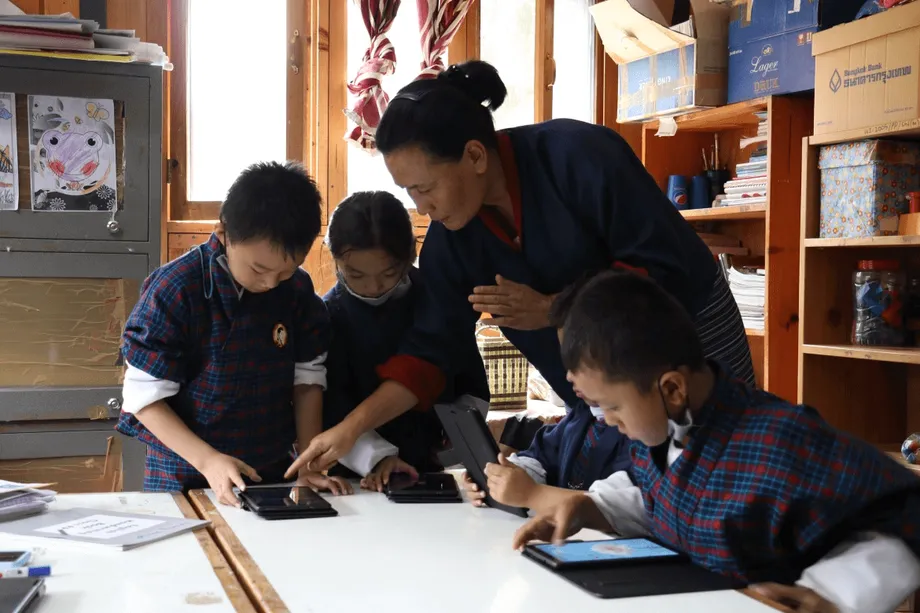
School access grows, but the route to college remains difficult
Bhutan aims to establish 120 inclusive schools under its 13th Five-Year Plan, and more than 80% of students with disabilities are enrolled in inclusive settings. Yet the progress in school education has not been matched by an equally accessible route into colleges and universities. Students who reach Class XII can still face a shortage of interpreters, inaccessible buildings and teaching that does not meet their needs.
Contents
- School access grows, but the route to college remains difficult
- What inclusive education means for a student
- How Bhutan built its school foundations
- Why the transition after Class XII is difficult
- Policies promise opportunities, but colleges need clearer guidance
- Universities identify gaps in readiness
- Changangkha shows the role of school leadership
- Vocational training offers another route after school
- Digital tools create opportunities, with support needed to use them
- Assessments and international practice guide the next steps
- Key Points
As of July 2, 2025, the central challenge is how to carry the support offered in primary and secondary education into higher education. Dechen Tshering, principal of the Wangsel Institute for the Deaf, has expressed concern that many students with disabilities are excluded from continuing their studies beyond Class XII. Since 2016, only a handful have managed to complete higher education, while many struggle to find a path after school.
Bhutan's commitment to Gross National Happiness and sustainable development gives education a place in its wider goals for society. The country has expanded educational access and adopted policies supporting people with disabilities. For students, however, those commitments must translate into practical help: a way to enter a classroom, understand a lecture, use learning materials and complete an assessment.
Technical and vocational training and a digital education initiative offer further opportunities. In 2024, 18 students with disabilities had graduated from technical and vocational education streams, and nine were gaining work experience at newly established inclusive education centers.
The challenge extends beyond admission to a course. Education can open routes to employment, independence and participation in society. When support ends at the school gate, young people can lose access to those opportunities even after completing secondary education.
What inclusive education means for a student
Inclusive education means that students can access quality learning regardless of their abilities or backgrounds. A place in a classroom is one part of that promise. Students also need the resources, support and teaching approaches that allow them to participate and achieve.
The World Bank's inclusive education guidance and UNESCO's technology guidance stress the importance of looking beyond physical access. An inclusive system also requires changes in how institutions teach, provide assistance and respond to different learners.
Bhutan's 2017 Standards for Inclusive Education and its 2019 draft National Education Policy place inclusion within the country's education framework. The approach seeks to value, accept and support diversity in schools so that every child has an opportunity to learn and thrive.
Bhutan's geography, small population and emphasis on cultural preservation shape how these goals are pursued. Geographical difficulties and limited mobility, particularly in rural areas, can make access harder. Schools and colleges therefore need to consider both the learning environment and the circumstances that affect a student's ability to reach it.
How Bhutan built its school foundations
Bhutan's work on education for children with disabilities began in the 1970s with its first special school for children with visual impairments. Government efforts later expanded to include children with disabilities in mainstream schools and to develop specialized institutions, including the Wangsel Institute for the Deaf.
The Ministry of Education and Skills Development (MoESD) has prioritized accessible Early Childhood Care and Development (ECCD) centers, changes to existing school buildings, assistive technologies and adapted furniture. These measures address different needs, from entering a building to using equipment that makes learning possible.
The main milestones span several decades:
- 1970s: Bhutan established its first special school for children with visual impairments.
- 2010: The Tertiary Education Policy included provisions for inclusion.
- 2014–2024: The Bhutan Education Blueprint set out goals for equitable, inclusive and quality education.
- 2017: The Standards for Inclusive Education established expectations for inclusion in schools.
- 2018: The National Policy for Persons with Disabilities called for real opportunities in higher education, employment and society.
- 2019: The draft National Education Policy addressed inclusion, while Samtse College of Education studied the readiness of higher education institutions.
- 2024: The Second National Education Assessment included children with disabilities, and a digital education initiative was launched.
Why the transition after Class XII is difficult
Colleges and universities often lack services that students with disabilities need to take part in academic life. These include trained sign language interpreters, people who can take notes, accessible learning materials and counseling. The gaps can be particularly difficult for students who are deaf or blind.
A student may need information presented in a form they can use, rather than simply being given the same material as everyone else. Accessible materials and communication support allow students to engage with the content of a course. Without that support, admission alone leaves major difficulties unresolved.
Higher education institutions also face shortcomings in their buildings. Missing ramps, elevators and accessible washrooms can restrict students with physical disabilities. A course may be open to a student while parts of the campus remain difficult or impossible to use.
Teachers and other staff often lack training in how to support different learning needs. Inclusive teaching involves adapting methods so that students can participate. Reasonable accommodations are practical adjustments to learning or assessment that respond to a student's needs. Faculty who have not received appropriate preparation may struggle to provide them.
Stigma and limited awareness add to these barriers. Together with mobility difficulties, especially in rural areas, they can restrict access to both higher education and employment. Tshering's concerns about students leaving Class XII point to the need for a supported transition, rather than expecting young people to navigate these obstacles on their own.
Policies promise opportunities, but colleges need clearer guidance
The National Policy for Persons with Disabilities, adopted in 2018, requires real opportunities for people with disabilities in higher education, employment and full participation in society. The Bhutan Education Blueprint for 2014–2024 and the draft National Education Policy also call for equitable, inclusive and quality education, with special provisions for learners with special needs.
The 2010 Tertiary Education Policy includes provisions for inclusion, but lacks specific guidance on admissions, teaching and infrastructure for students with disabilities. Colleges need practical direction on how to turn a broad commitment into everyday arrangements for students.
Bhutan's policy framework therefore reaches across several stages of education, while implementation remains uneven. Many higher education institutions are still unprepared to provide full inclusion. For a student approaching graduation from school, the support available at the next institution is a central concern.
Universities identify gaps in readiness
The Royal University of Bhutan (RUB), the country's main higher education body, has acknowledged that more students with disabilities are completing secondary education and that better support is needed. This growing group of school graduates makes preparation at college level increasingly pressing.
Samtse College of Education examined the readiness of higher education institutions for inclusive education in 2019. Its study highlighted gaps in infrastructure, policy and faculty preparedness. Those three areas are closely connected: accessible buildings allow students to reach learning spaces, institutional rules organize support, and prepared teachers make participation possible.
Officials from RUB and MoESD have stressed collaboration among educational institutions, government agencies and communities. The government's 13th Five-Year Plan includes expanding inclusive infrastructure, providing assistive technologies and building the capacity of teachers and administrators, alongside its target of 120 inclusive schools.
The priorities for higher education include clearer institutional guidelines, investment in support services and accessible facilities, and training for faculty and staff. Stronger data collection and monitoring are also needed to guide policy and practice. These measures address the specific gaps already identified in colleges and universities.
Changangkha shows the role of school leadership
Changangkha Middle Secondary School in Thimphu offers an example of inclusion in practice. Around 85 children with disabilities were enrolled there in 2021, and the school used a range of strategies to support learners with different needs.
Nyendo, the school's Principal Specialist and a graduate of the Perkins Educational Leadership Program, described the demands of leading an inclusive school and the value of professional preparation:
Leading a big inclusive school with many children with multiple disabilities without a deep understanding in the field of disabilities has always been a challenge. The Educational Leadership Program is supporting my role as a principal in an inclusive school so we can provide quality services to children with multiple disabilities and deafblindness, both in and outside the school.
Nyendo's account places leadership and training at the center of daily support. Children with multiple disabilities or deafblindness may need assistance across several parts of school life. Preparing school leaders and teachers helps institutions respond to those needs.
Changangkha's experience also shows the role of international collaboration in professional development. Its work points to the need for continuing support for educators at every level, including the colleges that students may attend after school.
Vocational training offers another route after school
Technical and vocational education and training (TVET) provides an alternative to a traditional academic course. Its focus is on practical skills for employment. The Wangsel Institute and other centers have developed specialized programs to help students with disabilities prepare for work.
As of 2024, 18 students with disabilities had graduated from TVET streams. Nine were gaining work experience at newly established inclusive education centers. Those figures describe a small but concrete pathway from training into practical experience.
Vocational programs can support employability, independence and social participation. They broaden the choices available to students whose interests or circumstances lead them toward practical training rather than university study.
Bhutan's efforts to expand alternative pathways sit alongside the need to make higher education accessible. Students need opportunities across both routes so that disability does not determine which forms of further education are available to them.
Digital tools create opportunities, with support needed to use them
MoESD, UNICEF and the European Union launched the Supporting Inclusive Access to Digitalisation in Education and Skills in Bhutan initiative in 2024. The project aims to improve information technology literacy among students and teachers, develop an Educational Technology Framework and pilot digital skills training in ten schools.
Digital tools can help make learning more accessible. Screen readers turn written digital information into speech for people who need it. Software that converts speech into text can make spoken information available in written form. Online learning platforms can also help students with visual, hearing or mobility impairments access education.
Students and educators need access to these tools and training in how to use them. Affordability and availability affect whether a technology becomes a useful part of learning. A device or program must be matched with the skills and support needed to use it.
Fawzia Hoodbhoy, Deputy Representative of UNICEF Bhutan, described the initiative's wider purpose, including preparation for a changing digital world and online safety:
Digitalisation in Education Initiative is not just about integrating technology into the classroom… it is about transforming the way we teach, the way we learn and think. It is about equipping our young people with the skills they need to succeed in the rapidly changing digital world ensuring online safety.
The initiative connects digital access with teaching practices and skills development. For learners with disabilities, its value depends on whether the tools and training respond to the obstacles they face in participating in education.
Assessments and international practice guide the next steps
The Second National Education Assessment, conducted in 2024, included children with disabilities. Their participation recognizes the need to monitor learning outcomes as well as enrollment. UNICEF Bhutan has described these assessments as crucial for understanding how children are learning and identifying where more support is needed.
Bhutan's efforts align with approaches promoted by the World Bank and UNESCO. Both advocate action across government, investment in teacher training and cooperation among the organizations involved in education. Their guidance calls for policies and action plans suited to local conditions, targeted support, reasonable accommodations and accessible learning environments.
Parents, communities and organizations of persons with disabilities also have a role in shaping support. Technology and innovation form another part of the approach, alongside the staff, facilities and institutional arrangements that students use every day.
Rwanda and Zambia have established model inclusive schools and specialized training programs for educators. Those examples underline the value of leadership, staff development and sustained investment. Bhutan's own school experience, college readiness study and national assessment identify where such work is needed locally.
Government agencies, educational institutions, civil society and international partners all have roles in closing the gap between school and further education. For Bhutan, the practical task is to connect its commitments to Gross National Happiness and sustainable development with accessible classrooms, prepared teachers, useful support services and genuine choices after Class XII.
Key Points
- More than 80% of students with disabilities are enrolled in inclusive settings, and Bhutan's 13th Five-Year Plan aims to establish 120 inclusive schools.
- Students entering higher education face shortages of interpreters, accessible materials and other services, along with inaccessible buildings and insufficient staff training.
- The 2018 National Policy for Persons with Disabilities calls for real opportunities in higher education and employment, while the 2010 Tertiary Education Policy lacks detailed guidance for institutions.
- A 2019 study by Samtse College of Education identified gaps in infrastructure, policy and faculty readiness.
- As of 2024, 18 students with disabilities had graduated from vocational streams, and nine were gaining work experience at inclusive education centers.
- The 2024 digital initiative includes skills training in ten schools, while the Second National Education Assessment included children with disabilities.
- Accessible facilities, trained educators, clearer guidelines and coordinated support are central to extending inclusion beyond secondary school.