A Bangkok Rally Puts the Prime Minister Under Pressure
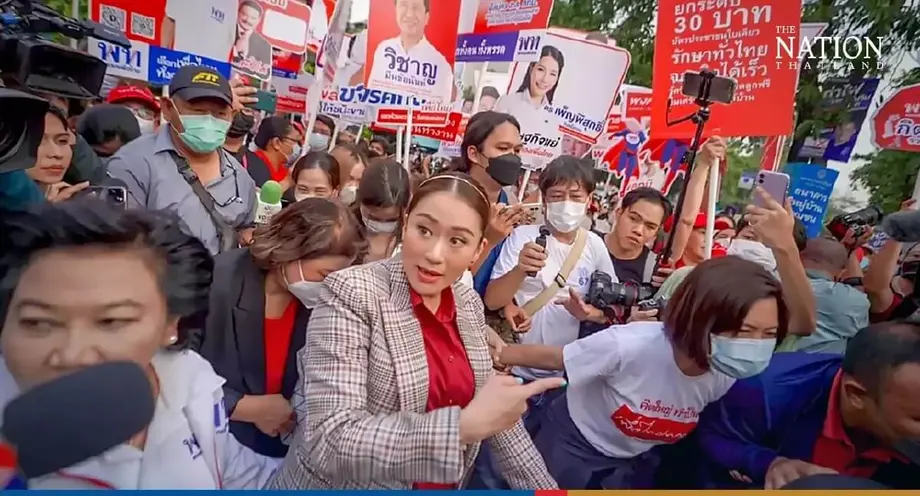
Thousands of demonstrators gathered at Bangkok's Victory Monument on June 28, 2025, demanding the resignation of Prime Minister Paetongtarn Shinawatra after a leaked telephone call with Cambodia's former leader Hun Sen. Heavy monsoon rain failed to disperse the largest protest against the government since the Pheu Thai Party came to power in 2023.
Contents
- A Bangkok Rally Puts the Prime Minister Under Pressure
- How a Border Clash Became a Political Crisis
- Who Gathered at Victory Monument?
- A Coalition Reduced to a Narrow Majority
- Legal Complaints Create Another Threat
- Why the Shinawatra Name Matters
- Hun Sen's Role Complicates Diplomacy
- An Economy Already Facing Strain
- The Dates and Decisions Shaping the Crisis
- Key Points
The rally, organized by the nationalist coalition United Force of the Land, brought together anger over a deadly border confrontation, distrust of the Shinawatra family and accusations that the prime minister had placed Thailand's sovereignty at risk. Protesters waved Thai flags, shouted for her departure and accused her of showing deference to a foreign leader while criticizing her own country's military.
Paetongtarn faces pressure beyond the streets. The departure of her largest coalition partner has left the government with 255 seats in the 500-seat House of Representatives. Legal complaints could also threaten her position, with the Constitutional Court potentially deciding as early as the following week whether to suspend her while a full inquiry proceeds.
The demonstration ended without violence, but organizers promised to return if their demands were ignored. For the government, the immediate challenge is to hold together its remaining parliamentary support while responding to a border crisis that has become a struggle over its right to remain in office.
How a Border Clash Became a Political Crisis
A clash along the Thai-Cambodian border on May 28, 2025, killed a Cambodian soldier and revived tensions over disputed territory. The wider dispute has long centered on the area around Preah Vihear, a historic temple standing on a cliff along the border.
The International Court of Justice issued rulings in 1962 and 2013 awarding the temple and surrounding area to Cambodia. Those decisions remain deeply unpopular among many Thais. Violent clashes in 2011 showed how competing territorial claims could turn into armed confrontation, and periodic fighting has kept the dispute alive.
Paetongtarn's telephone conversation with Hun Sen took place amid efforts to reduce the latest tensions. Once the recording became public, the diplomatic effort itself became the focus of anger. In the call, she referred to Hun Sen as "uncle," appeared to criticize a Thai army commander and promised to "take care of" requests from the Cambodian leader.
Nationalists and military supporters interpreted those remarks as disrespect toward Thailand's powerful armed forces and excessive willingness to accommodate Cambodia. Protesters and opposition figures accused Paetongtarn of betraying national interests and weakening Thai sovereignty, the country's authority over its own territory and decisions.
Hun Sen's subsequent public condemnation of the Thai military added to the anger. Speaking to thousands in Phnom Penh, he called for a change in Thailand's government, turning a dispute between neighboring countries into an even more personal confrontation over Paetongtarn's leadership.
Who Gathered at Victory Monument?
United Force of the Land brought together nationalist activists with a long history of opposing governments backed by the Shinawatra family. Many participants were associated with the Yellow Shirts, the conservative, royalist movement involved in campaigns against Paetongtarn's father, Thaksin Shinawatra, and her aunt, Yingluck Shinawatra.
Elderly citizens, students and activists joined the June 28 demonstration. Their shared demands centered on protecting national sovereignty and rejecting the government's handling of the border crisis. Some carried placards describing Paetongtarn as a "traitor PM." Others chanted "Ung Ing, get out," using her nickname.
Jade Donavanik, a legal scholar who addressed the crowd, described the rally as a collective effort to defend the country and its territory. He told demonstrators:
We are united here by the force of nature to safeguard our national and territorial integrity, to protect our sovereignty and to set the country right. We shall do everything within our capabilities to protect this country and to bring peace and prosperity to the kingdom of Thailand.
The peaceful conclusion left the government facing an organized movement promising further action. Its participants linked the immediate controversy over the call to older grievances about the Shinawatra family's place in Thai politics.
A Coalition Reduced to a Narrow Majority
Bhumjaithai, Pheu Thai's largest coalition partner, withdrew its support after the recording emerged. The party cited concerns about the conversation and the danger it believed the remarks posed to Thai sovereignty.
Its withdrawal left Paetongtarn's government with 255 of the House of Representatives' 500 seats. That is 51 percent of the chamber, only five seats above half. With such a narrow margin, the government's survival depends heavily on its remaining partners continuing to support it.
Parliament's return could bring a vote of no confidence, a formal test of whether lawmakers still support the government. If enough coalition members defect or withhold their support, Paetongtarn could lose that test. The consequences could include the selection of another prime minister or potentially an election.
The same arithmetic affects ordinary governing. Passing legislation requires support in Parliament, so a coalition struggling to keep its members together may also struggle to agree on spending and policy. The national budget and controversial proposals such as casino legalization are among the measures exposed to that uncertainty.
Paetongtarn could try to rebuild the coalition or make concessions to critics. Voluntarily stepping down is another possible route out of the confrontation. As of June 28, her government remained in place, but the loss of Bhumjaithai had sharply reduced its room to maneuver.
Legal Complaints Create Another Threat
Petitions submitted to the Constitutional Court and the National Anti-Corruption Commission allege serious ethical breaches and constitutional violations connected to the telephone call. These complaints place Paetongtarn under scrutiny through institutions separate from Parliament.
The National Anti-Corruption Commission has accepted the case for investigation. The Constitutional Court could decide as early as the following week whether she should be suspended from office pending a full inquiry. A suspension would interrupt her ability to serve while the legal process continued; removal would end her tenure.
Paetongtarn has publicly apologized for her comments and maintained that she acted in Thailand's national interest. Addressing reporters, the prime minister defended her intentions and the consequences of the conversation:
It was clear from the phone call that I had nothing to gain from it, and I also didn't cause any damage to the country.
Her defense places the purpose of the conversation at the center of the dispute. She presents it as an effort to protect the country, while her opponents view the language she used as unacceptable conduct toward a foreign political leader.
The legal proceedings and parliamentary threat can move separately. Retaining a majority would help Paetongtarn survive a confidence test, while the complaints against her would still require an institutional response. The outcome of those complaints was not yet decided on June 28.
Why the Shinawatra Name Matters
Thaksin Shinawatra became prime minister in 2001 and built strong support among rural voters through populist policies. His appeal to those voters made him a powerful electoral figure, while opposition from urban elites, royalists and the military made him deeply divisive.
A military coup removed Thaksin in 2006. His allies and relatives continued to win elections, but governments associated with the family repeatedly faced removal through military or judicial intervention. Yingluck, his sister and Paetongtarn's aunt, was ousted in 2014 amid another period of political confrontation and military takeover.
The Yellow Shirts became a central force opposing Shinawatra governments. Their rivals, the Red Shirts, drew support from Thaksin's populist movement. Both sides staged large demonstrations, and Thailand's repeated political confrontations sometimes brought violence and further coups.
Courts and independent agencies have also played a decisive role in disqualifying or removing leaders backed by the family. Those institutions are often seen as aligned with the royalist establishment, adding another layer of distrust to disputes that extend beyond election results.
Pheu Thai's return to government in 2023 and Paetongtarn's rise to the premiership carried forward the family's political legacy. Her government now faces criticism over its perceived failure to deliver campaign promises, while controversy over Thaksin's return from exile and his lenient treatment by the justice system has fed public anger about elite impunity, the perception that powerful people escape the consequences others would face.
The border dispute has given those older divisions a new focus. Opponents who already distrusted the Shinawatra family can now rally around national territory and the military, while Paetongtarn must defend both her handling of Cambodia and her government's wider performance.
Hun Sen's Role Complicates Diplomacy
Hun Sen stepped down as Cambodia's prime minister in 2023 but remains a powerful political figure as president of the Senate. His longstanding relationship with the Shinawatra family once made him an ally. His recent public attacks on Paetongtarn and her family have instead intensified the confrontation.
The relationship matters because the leaked conversation combined familiar personal language with a sensitive dispute between states. Paetongtarn's use of "uncle" became a focus of criticism at a time when Thai nationalists wanted an assertive defense of territory and the armed forces.
Hun Sen framed Cambodia's position through the country's history of suffering and its demand for equal treatment. In a speech marking the Cambodian People's Party's 74th anniversary, he said:
This poor Cambodia has suffered from foreign invasion, war and genocide, been surrounded and isolated and insulted in the past, but now Cambodia has risen on an equal face with other countries.
His rhetoric has appealed to Cambodian nationalists while making diplomatic efforts more difficult. Leaders on both sides face audiences that view the border dispute as a matter of national dignity as well as territory.
Preah Vihear remains a particularly sensitive symbol in that argument. The court rulings, the history of clashes and continuing resentment among many Thais mean that a new confrontation can quickly draw on memories of earlier disputes. The May death and the leaked call brought those pressures together.
An Economy Already Facing Strain
Thailand entered the political crisis with sluggish economic growth, a downturn in tourism and external risks that included potential United States tariffs. Renewed uncertainty over the government adds another difficulty for businesses and investors trying to make decisions.
The Thai stock market has been among the world's worst performers in 2025. Billions of dollars in foreign capital have left amid fears about instability and policy paralysis, the risk that political disagreement prevents the government from making or carrying out decisions.
A government occupied with defending its survival may find it harder to advance the budget or settle arguments over contentious proposals. For businesses, uncertainty over spending and legislation complicates planning. For people already frustrated by weak economic progress, another political confrontation can deepen dissatisfaction.
Public opinion polls indicate widespread unhappiness with Paetongtarn's leadership and the government's performance. Many Thais, particularly in urban areas, cite limited progress on economic and social issues alongside concerns about privileged treatment for powerful figures.
The controversy surrounding Thaksin's return therefore connects with the wider mood. Anger at the leaked call is unfolding alongside disappointment over daily economic conditions and doubts about fairness in public life. Those overlapping grievances help explain why the demonstration reached beyond the immediate details of the border conversation.
The Dates and Decisions Shaping the Crisis
The confrontation has developed through a series of political and military events. The recent sequence shows how a border incident became a challenge to the government's survival:
- 2023: Pheu Thai came to power in Thailand. Hun Sen stepped down as Cambodia's prime minister but remained politically influential.
- May 28, 2025: A border clash killed a Cambodian soldier, reviving tensions between Thailand and Cambodia.
- Before the June 28 rally: The leaked call prompted accusations against Paetongtarn, Bhumjaithai withdrew its support and legal petitions challenged her conduct.
- June 28, 2025: Thousands gathered at Victory Monument in Bangkok to demand the prime minister's resignation.
- The following week: The Constitutional Court could decide whether to suspend Paetongtarn pending a full inquiry.
Parliament's reconvening offers another possible test through a no-confidence vote. Organizers have also threatened renewed demonstrations, keeping pressure on the government outside the chamber.
Thailand's history of coups makes military intervention part of the discussion, although assessments at the time regarded a coup as unlikely. A court decision, a parliamentary defeat, a negotiated political settlement or Paetongtarn's voluntary resignation are other possible routes to a change in leadership.
For Paetongtarn, remaining in office requires managing several pressures at once: keeping coalition partners together, answering legal allegations, responding to protesters and containing the confrontation with Cambodia. Each involves different people and institutions, so success in one area would still leave other immediate demands on her government.
Key Points
- Thousands protested at Bangkok's Victory Monument on June 28, 2025, in the largest rally against the government since Pheu Thai came to power in 2023.
- A leaked call with Hun Sen intensified anger following a May 28 border clash that killed a Cambodian soldier.
- Bhumjaithai's withdrawal left Paetongtarn's coalition with 255 seats in the 500-seat House of Representatives.
- The National Anti-Corruption Commission accepted a case for investigation, while the Constitutional Court could consider suspension the following week.
- Paetongtarn apologized but defended the call as serving Thailand's national interest.
- The peaceful rally ended with a promise of further protests, while political uncertainty added to Thailand's economic strains.