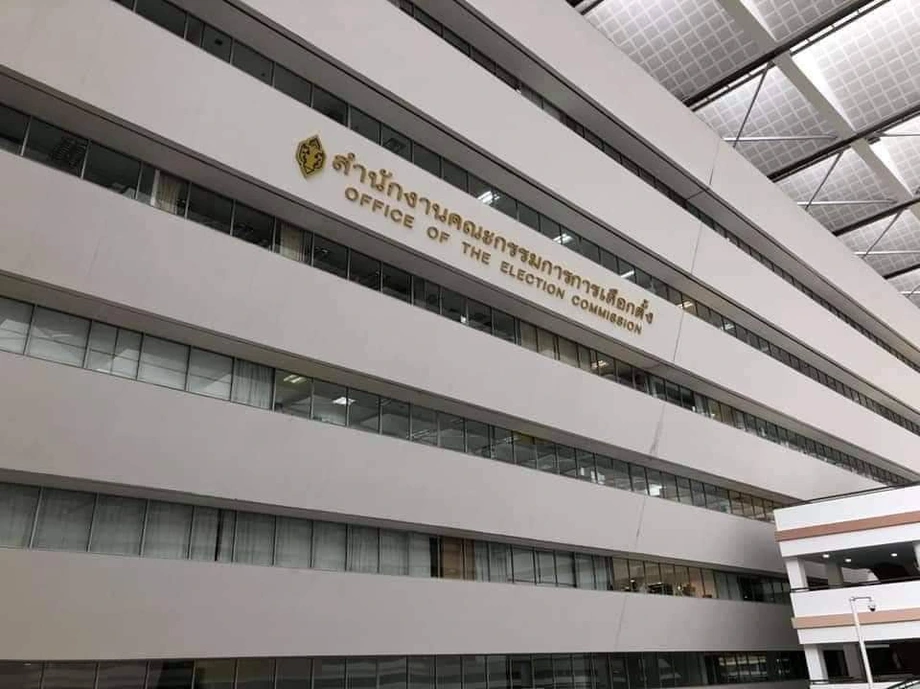
Flood relief accounts face election scrutiny
Thailand's Election Commission is examining flood relief fundraising linked to the People's Party after the Prime Minister's Office sent an inquiry on November 9, 2026. At the centre of the dispute is whether donations promoted by a political party were collected as party funds or through a separate volunteer operation.
Contents
- Flood relief accounts face election scrutiny
- What the commission is checking
- The party says volunteers controlled the money
- Where party donations must go
- A new regulation has a later start date
- Who can donate, and what must be disclosed?
- Why dissolution has entered the debate
- Relief spending also affects election accounts
- What the published donation figures show
- Key Points
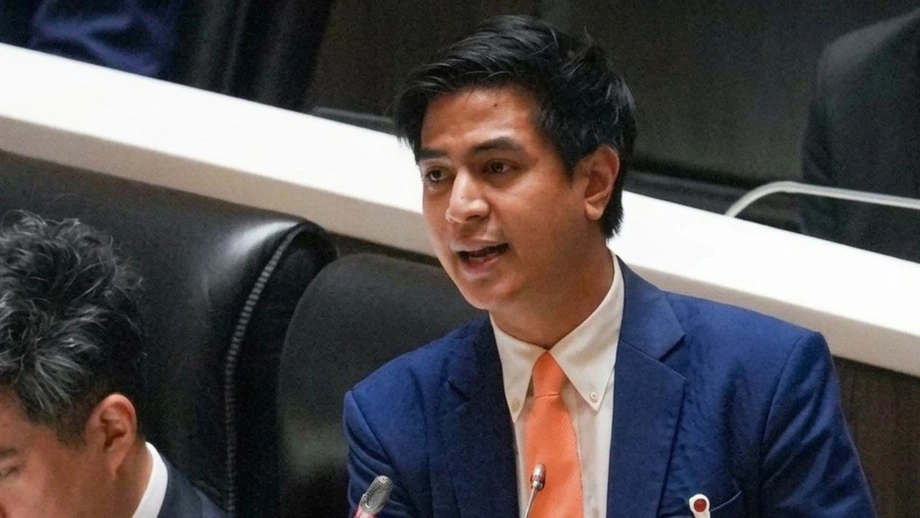
People's Party spokesperson and party list MP Phakhamon Nunanan said on November 12 that the receiving accounts belonged to three civilian volunteers and had been opened in 2025. She said the party helped publicise the accounts during flooding and could arrange for their owners to explain the money received and spent.
Accounts of the inquiry described three personal bank accounts, while Phakhamon described accounts belonging to three volunteers and referred to shared oversight. The ownership structure, amounts collected, permissions obtained and legal responsibility for the fundraising remain under examination. No date for completing the review or issuing a decision was given.
The stakes extend beyond accounting. Unnamed Election Commission sources have raised possible violations of political party and fundraising laws, including a potential route to party dissolution. Phakhamon has defended the spending records and warned that the issue could become a political effort to dissolve the party.
What the commission is checking
The Prime Minister's Office asked the Election Commission to examine whether the fundraising complied with the law. By November 12, commission staff were conducting preliminary checks into the Facebook page involved, whether it actually collected donations, whether collection continued and who operated it.
The fundraising was promoted for disaster assistance under the name People's Volunteers. Allegations attributed to unnamed commission sources included incomplete public disclosure of some donations and a failure to notify relevant authorities. Phakhamon said spending records were available and the volunteers were ready to explain the financial trail.
Three accounts were also described as still accepting transfers. The commission's checks cover both the online appeals and the people responsible for receiving the money. Those details matter because the party describes its role as publicising volunteer work, while the legal concerns concern fundraising conducted in a party's name.
The party says volunteers controlled the money
Phakhamon said the volunteers had worked with the party on forest fires and other disasters before the current flooding. Their accounts, she said, were established in 2025 rather than created specifically for this flood response. She described the operation as a group of citizens working together, rather than a foundation.
The party's explanation places its Facebook messages at the centre of the dispute. Phakhamon said their captions described cooperation between the party and civilian volunteers. She maintained that donations were used for the stated relief missions and that the party could connect investigators with the account owners.
Phakhamon, speaking as the People's Party spokesperson, said the party was willing to explain the spending if the matter became a legal case. In a statement translated from Thai, she said:
If this becomes a legal case, we are willing to prove it and confirm to the public how the money everyone transferred into the civilian volunteers' accounts was used. But please give the People's Party the opportunity to stand on the same standard as other political parties.
Her response combines a financial defence with a demand for equal enforcement. She argued that other parties had publicised relief accounts or worked with foundations and should face the same legal tests.
Where party donations must go
Thailand allows political parties to receive donations for disaster relief, including money used to operate community kitchens or assist affected residents. The account rules described in the dispute require donations collected for a party to enter a bank account held in that party's name.
A party must keep a dedicated donation account separate from its ordinary operating account. Its name must identify the party and the donation purpose. The party must notify the Election Commission's registrar of the account within seven days of opening it.
Personal accounts belonging to party executives or other individuals, and accounts associated with unofficial pages, are at the heart of the warnings about receiving party donations outside that system. A Facebook appeal can direct donors to an account, but the account's ownership determines who receives the money and who must keep the financial records.
Phakhamon's explanation therefore leaves investigators with a concrete issue to resolve: how the volunteers' operation was organised, what the party told donors and who controlled the receipts and spending. Her account places the money with volunteers; the legal warnings concern money raised on behalf of a party.
A new regulation has a later start date
The timing of the rules requires particular care. The Election Commission's 2026 Regulation on Political Parties was described as published in the Royal Gazette on November 2, with entry into force after 30 days. That waiting period would still be running during the November 11 and 12 scrutiny.
The new regulation is intended to replace the 2020 rules and amendments issued in 2022 and 2023. Investigators will need to assess transactions against the rules applicable when they occurred, including donations collected before the new regulation takes effect.
The relevant sequence is:
- 2025: The volunteer accounts were opened, according to Phakhamon.
- September 2026: The Election Commission recorded donations across 17 political parties.
- November 2, 2026: The new party regulation was published, with a waiting period of 30 days.
- November 9: The Prime Minister's Office sent its inquiry to the commission.
- November 11: Allegations concerning the relief accounts became public.
- November 12: Preliminary checks and the party's response were described publicly.
The 2026 regulation sets out a detailed paper trail. Recipients must prepare donation records within three days and send the records and money or property to the party within seven days. For specified donations involving property or benefits that cannot be delivered directly, recipients must notify the party and send the appropriate receipt within 15 days.
Cash donations must be deposited within seven days. Donations by cheque or bill of exchange count once payment is honoured. These procedures connect the original contribution to the party's accounts, rather than leaving money and paperwork with an intermediary.
Who can donate, and what must be disclosed?
Individual donors to political parties must be Thai nationals and provide their national identification number. Corporate donors must be registered in Thailand and have Thai shareholders holding at least 51 percent. Each donor can contribute no more than 10 million baht to a particular party in a year.
A company donating more than 5 million baht must inform its next shareholders' meeting. Parties must record the donor's name and address, the amount and purpose of the gift, with signatures from the donor and party treasurer, and submit reports and supporting evidence to the commission.
The public disclosure requirement described in the dispute covers donations exceeding 5,000 baht. The commission's September statistics use a category of donations of at least 5,000 baht. The wording differs at the exact threshold, so parties and donors need to check the applicable reporting requirement for a contribution of precisely 5,000 baht.
Why dissolution has entered the debate
Section 72 of the Organic Act on Political Parties is central to the warnings. The provision concerns a party or party officeholder accepting money, property or other benefits while knowing, or having reason to know or suspect, that their origin is unlawful.
Unnamed commission sources have raised potential exposure under that provision, the Fundraising Control Act of 1944, and criminal laws concerning public fraud and participation in money laundering. These remain allegations about possible legal exposure during a preliminary inquiry.
The financial questions involve several separate duties: permission to solicit donations, the identity of the recipient, disclosure of receipts and the use of the money. For donors, the practical concern is whether the promised relief was delivered and whether records show the full route from contribution to spending.
Phakhamon said she was unsure whether this volunteer arrangement required fundraising permission or notification to the Election Commission. She said the party's lawyers were ready to explain the details if formal proceedings followed. Her concern about political use of the case centres on the possibility that enforcement could ultimately threaten the party's continued existence.
Relief spending also affects election accounts
Political parties can use donations to provide disaster assistance, but the spending rules described in the dispute also connect relief work to election finance. An MP helping people in their own constituency has a limit of 300,000 baht per occasion, while a political party has a limit of 3 million baht per occasion.
The party amount is ten times the MP amount. Spending above the relevant threshold must be added to expenses for the next election. That creates an accounting consequence for relief activity beyond the immediate emergency: excess spending has to follow the party or MP into later election records.
Parties are also prohibited from soliciting money from government agencies. They may invite members of the public to donate through lawful channels, with money collected as party donations entering the party's account and being used for its stated purpose.
For the current inquiry, receipts for food, transport or other relief costs would address spending. Account records, appeal wording and any required permissions would address how the money was collected and managed. Phakhamon has offered to help the volunteers explain those transactions.
What the published donation figures show
The Election Commission's September 2026 donation summary recorded 13,450,851.26 baht across 17 parties from 360 donors in the category covering contributions of at least 5,000 baht. Bhumjaithai received 5,850,000 baht, Kla Tham received 2,568,000 baht, the People's Party received 1,635,383 baht and Palang Pracharath received 1 million baht.
The People's Party amount represented about 12.2 percent of the total. Bhumjaithai's share was about 43.5 percent, making its recorded receipts roughly 3.6 times the People's Party figure. The figures provide a measure of the regular party donation system that the commission monitors.
The People's Party was also listed as receiving 96,782,667.29 baht in Election Commission funding for 2026. Public funding, declared party donations and money collected through the volunteer accounts are separate financial streams, each requiring its own accounting.
The immediate next step is the commission's factual examination of the appeals, account operators and transactions. The party has offered access to the volunteers and their spending records, while asking that any enforcement apply the same standard to every political party conducting similar relief work.
Key Points
- The Prime Minister's Office asked the Election Commission on November 9, 2026, to examine flood relief fundraising linked to the People's Party.
- Phakhamon Nunanan says three civilian volunteers owned the receiving accounts and can explain the money collected and spent.
- Donations collected for a party must enter its designated party account and meet donor and disclosure requirements.
- The new party regulation published on November 2 has a waiting period of 30 days before taking effect.
- Unnamed commission sources have raised possible legal violations, while the party has warned against unequal enforcement.
- Preliminary checks cover the online appeals, account operators, collection of funds and compliance with political party law.