More than 1.8 million tonnes of plastic discarded each year
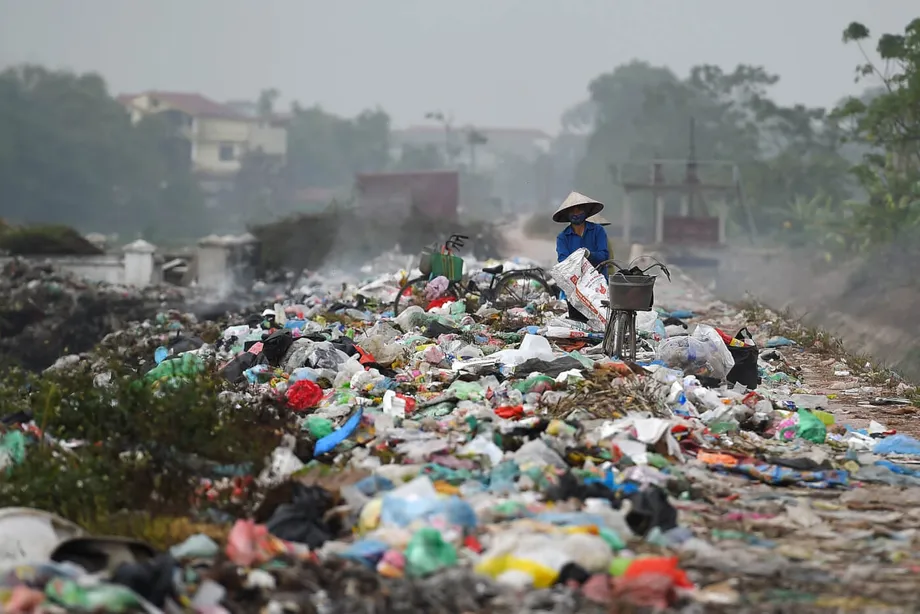
Vietnam discards more than 1.8 million tonnes of plastic a year, yet less than a third is recycled. The rest is buried, burned or left to pollute land, air and water. Plastic bags, polystyrene food containers and plastic cups dominate a waste stream that stretches from city supermarkets to rural markets and coastal islands.
Contents
- More than 1.8 million tonnes of plastic discarded each year
- Why disposable plastic remains the everyday choice
- From blocked drains to threatened island livelihoods
- What Vietnam's rules require, and when
- Making new habits easier to repeat
- Local projects connect waste reduction with daily work
- River cleaning technology and national coordination
- Vietnam's challenge sits within a wider regional problem
- Keeping materials in use requires more than substitution
- Key Points
Hanoi and Ho Chi Minh City alone discharge around 80 tonnes of plastic waste and plastic bags into the environment every day, according to official statistics. Across the country, each household uses about 1kg of plastic bags a month on average, and more than 80% of those bags are discarded after one use.
As of June 28, 2025, Vietnam's response combines national restrictions, mandatory household waste sorting, community projects and technology designed to keep rubbish out of rivers. Its targets include cutting marine plastic waste by 75% by 2030 and a timetable for ending the production and import of most disposable plastic products.
Those measures face a practical problem at the point where plastic enters daily life. Bags and containers are cheap, convenient and familiar. Alternatives can cost much more, while collection and recycling systems remain underdeveloped, particularly outside major cities.
Vietnam's challenge therefore reaches beyond collecting rubbish. It involves reducing unnecessary packaging, making reusable or less harmful options affordable, and ensuring that waste separated by households can be collected and processed. Local projects already show ways to connect those tasks, although many still operate separately.
Why disposable plastic remains the everyday choice
Plastic packaging is routinely supplied for purchases large and small. A loaf of bread may come in a large plastic bag. Traditional market vendors often give bags away free, while businesses selling food and drinks to take away commonly rely on polystyrene boxes and plastic cups. The same dependence appears in expensive shops, supermarkets, street stalls and rural markets.
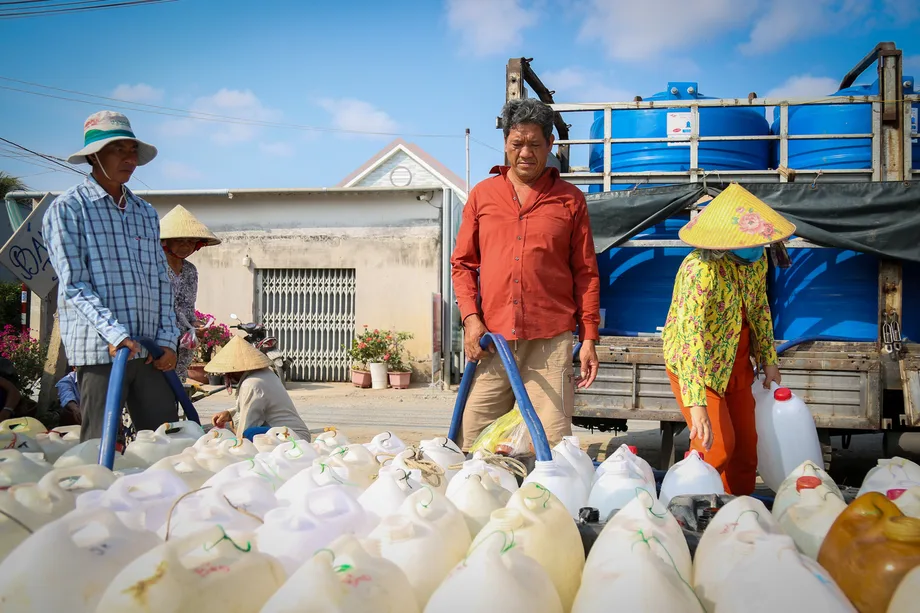
Some businesses have tried paper bags or biodegradable straws, but price and durability concerns have limited their use. Biodegradable bags cost 2.6 times as much as conventional plastic bags, while paper boxes can cost up to 10 times as much as plastic containers. For a small food seller or a household with little money to spare, that gap affects everyday spending.
Habit adds another barrier. Surveys of young people found that 67% cited convenience as their main reason for using disposable plastics, while 39% pointed to cost. Vietnamese youth are described as both major consumers of these products and a group with strong awareness of plastic pollution and motivation to act.
Tran Thi Hoa, director of the Centre for Green Support Development, known as GreenHub, identifies low prices and convenience as major obstacles. She also cautions that available alternatives are not always genuinely sustainable or affordable. Her priority is reducing consumption before a product becomes waste:
the most crucial factor lies in changing consumer behavior, starting with reducing unnecessary consumption at the source.
That approach puts an ordinary purchase at the centre of the response. Avoiding an unnecessary bag reduces the amount that must later be collected, sorted and treated. Replacing every disposable item with a more expensive disposable substitute leaves businesses and consumers facing the price problem.
From blocked drains to threatened island livelihoods
Plastic waste clogs drainage systems and pollutes rivers and canals, contributing to flooding in Hanoi and Ho Chi Minh City. Heavy rain can leave waterways choked with rubbish, connecting the problem of discarded packaging with the ability of cities to drain water.
Phu Quoc, Con Dao and Phu Quy face another pressure: plastic waste generated by both residents and tourists. These island destinations must manage the rubbish associated with daily life alongside the additional waste brought by visitors.
Beaches and surrounding waters are central to tourism and fishing livelihoods. Accumulating plastic debris damages their appearance, disrupts marine habitats and food chains, and threatens the communities that depend on them. Waste management in these places is therefore also a question of protecting work and income.
Microplastics add a less visible concern. These tiny fragments form when larger plastic items break down. They have been detected in rivers, marine life and the digestive systems of animals, raising concerns about lasting effects on wildlife and human health.
The waste figures also reveal gaps in treatment. Less than a third of Vietnam's plastic waste is recycled, while only about 27% of plastic bags are treated or recycled. Collection and recycling infrastructure is especially limited beyond the largest cities, making the route from a discarded item to proper processing difficult to complete.
What Vietnam's rules require, and when
Vietnam has set out a timetable that combines household responsibilities with restrictions on plastic production and imports. The Environmental Protection Law, revised in 2020, requires waste sorting at source and establishes a roadmap to phase out disposable plastics by 2030. Sorting at source means separating waste where it is generated, including in the home, before collection.
A National Action Plan on marine plastic debris, launched in 2020, set a target to reduce marine plastic waste by 75% by 2030. The principal milestones described in the national response are:
- 2020: The marine plastic action plan was launched, and the Environmental Protection Law was revised.
- January 2025: Waste sorting at source became mandatory for all households.
- 2026: A ban is scheduled on the production and import of certain plastic bags that are not biodegradable.
- 2030: The roadmap provides for production and imports of most disposable plastic products to cease, with an exception for products certified with the Vietnam Eco-Label.
The government is also introducing financial incentives and disincentives, including environmental taxes on disposable plastics. These measures seek to change the economic choices that currently favour cheap throwaway products.
Ho Chi Minh City and Da Nang illustrate the difficulty of turning rules into routine practice. Weak enforcement and insufficient supporting infrastructure have contributed to low compliance and public skepticism. A requirement to separate rubbish depends on households changing their routines and on a collection and processing system able to handle the separated waste.
The timetable sets clear ambitions, but details such as the exact products covered by the 2026 restrictions and the practical arrangements for applying each exemption are not specified here. For households and businesses, the immediate change as of June 2025 is the requirement to sort waste, alongside preparations for the later restrictions.
Making new habits easier to repeat
Rules and information campaigns form only part of the effort to change consumption. A Rare.org analysis describes how these approaches can work alongside behavioral science, which examines how people's surroundings, emotions and social relationships influence their choices.
Emotional messages can appeal to pride, responsibility or guilt. Social influence can make waste reduction a shared community expectation. Choice architecture means arranging options so that a preferable choice is easier to notice and select, such as making alternatives to disposable packaging more visible and accessible in a shop.
These approaches address the reasons people give for continuing to use plastic. Awareness of pollution may encourage someone to reduce waste, while a convenient alternative helps that intention survive a hurried purchase. Affordable substitutes matter for the same reason: a choice is harder to sustain when it repeatedly costs more.
Young people are a particular focus. Social media campaigns, school programmes and initiatives led by young people are being used to turn awareness into action. Incentives, recognition and continuing public education can support those efforts, especially where convenience and established habits still favour disposable products.
Community participation also connects individual behaviour with collection systems. Separating waste, reusing an item or declining a bag becomes more useful when neighbourhoods, schools, businesses and waste collectors can carry the same effort through to its next stage.
Local projects connect waste reduction with daily work
Projects supported by the United Nations Development Programme (UNDP) and the World Wide Fund for Nature (WWF) show how local action can address different parts of the waste problem. In Binh Duong province, waste management models reduced the use of 150,000 plastic straws and 72,800 plastic bags by replacing them with biodegradable alternatives.
Tourist boats in Quang Ninh have committed to reducing plastic waste. In Quy Nhon, informal waste collectors, many of them women, have received training and financial support to collect and separate material for recycling. That work brings people who already recover waste into efforts to improve how it is managed.
WWF-Vietnam has identified six successful models for reducing plastic. The examples described include fishing crews bringing rubbish ashore, market waste sorting and composting, reuse of old tarpaulins, and schools working to reduce waste.
In Dong Hoi city, an initiative encouraging fishermen to bring garbage back to land has reduced plastic dumping at sea and supported local charities. In Tuy Hoa and Ha Tinh, market projects recover organic waste through sorting and composting while helping change public attitudes toward rubbish management.
Rach Gia has taken a different approach by turning old tarpaulins into products that can be sold. Reusing material in this way combines waste reduction with social benefits. Each project starts with a particular local activity, whether fishing, trading or making goods, and changes what happens to its waste.
The Vietnam Zero Waste Alliance (VZWA) works with schools on waste reduction, recycling and more sustainable lifestyles. Its programmes involve students, teachers and parents, have reached thousands of people, and have encouraged change beyond school grounds. Bringing families into the same effort extends the work from classrooms to household routines.
River cleaning technology and national coordination
Can Tho is using technology to intercept rubbish before it travels farther through the water system. The Ocean Cleanup's Interceptor 003 has been deployed on the Can Tho River and is designed to collect up to 50 tons of waste a day.
The system provides a way to capture material already in the river. Automated collection, together with better waste collection and processing infrastructure on land, can help stop plastic reaching the ocean. Reducing the amount discarded in the first place remains another part of the same task.
Vietnam also participates in the National Plastic Action Partnership (NPAP), a platform led by UNDP and the World Economic Forum that brings together government, businesses and civil society. It coordinates work on the national roadmap for plastic waste reduction and supports circular economy solutions.
A circular economy keeps materials in use through reuse and recycling for as long as possible. For plastic, that means looking beyond disposal to how products are designed, used, collected and turned into useful material again.
The ASEAN Regional Action Plan for Combatting Marine Debris provides another channel for cooperation, including sharing knowledge and building capacity. Such coordination matters because many projects within Vietnam still operate in isolation, limiting how far their results can spread or last.
Vietnam's challenge sits within a wider regional problem
Indonesia, Thailand and the Philippines face similar problems with poorly managed waste and marine debris. Across Southeast Asia, rapid urban growth, rising consumption and limited waste management infrastructure have increased pressure on collection and treatment systems.
China's 2017 ban on plastic waste imports shifted more of the burden toward Southeast Asian countries, placing further strain on local systems. Vietnam's domestic waste problem therefore sits alongside changes in the movement of discarded plastic across borders.
Globally, only about 9% of plastic waste is recycled, and millions of tonnes enter the oceans each year. Microplastics have been detected in water, soil and food chains around the world, with risks for ecosystems and human health.
International cooperation, technology transfer and common standards for recycling and waste management are part of the response described for this wider problem. Within Vietnam, those efforts must connect with the practical work of households, vendors, collectors and local authorities.
Keeping materials in use requires more than substitution
Vietnam's circular economy ambitions include designing products so they are easier to recycle, promoting biodegradable materials, and developing chemical recycling and upcycling technologies. Upcycling turns discarded material into another useful product, an approach already visible in the reuse of tarpaulins in Rach Gia.
Extended Producer Responsibility (EPR) schemes are also gaining traction. Under this approach, manufacturers are held accountable for their products across their lifecycle, connecting the businesses that put goods on the market with responsibility for what happens after use.
The national roadmap combines restrictions, fees and eventual bans with support for innovation and startups developing alternatives. School programmes, public awareness campaigns and youth participation address the habits that determine how much packaging is used and discarded each day.
Cost, convenience and coordination remain the main barriers. A paper box costing up to 10 times more than a plastic one presents a different challenge from a missing collection service, but both affect whether waste reduction measures can become routine. Effective action needs affordable choices, reliable infrastructure and enforcement working together.
Vietnam's local projects show ways to reduce disposable items, recover useful material and bring communities into waste management. Extending those results requires connecting policy, technology, community action and measures that change prices and purchasing choices, rather than leaving individual projects to work alone.
Key Points
- Vietnam discards more than 1.8 million tonnes of plastic annually, with less than a third recycled.
- Households use about 1kg of plastic bags a month on average, and more than 80% of those bags are discarded after one use.
- Mandatory household waste sorting began in January 2025, with restrictions on certain plastic bags scheduled for 2026 and a broader phaseout planned for 2030.
- The national marine plastic action plan targets a 75% reduction in marine plastic waste by 2030.
- High alternative prices, convenience, limited infrastructure and weak enforcement continue to slow change.
- Community projects, river cleaning technology, producer responsibility and changes in consumption are all part of the response.