High Scores, Little Time to Be a Child
For 11-year-old Kim Min-jae, the day includes English study every morning, piano and taekwondo academies after school, and hours of homework before bed. Weekends bring little relief. When he skipped an English session, he was barred from joining friends in an online game. Time with friends had become something to earn through study.
Contents
- High Scores, Little Time to Be a Child
- Private Academies Extend the School Day
- Why the Pressure Starts So Early
- Families Pay in Money and Emotional Strain
- Free Time Is Shrinking, and Changing
- What Children Learn Through Play
- Academic Stress and Children's Mental Health
- When Effort Begins to Feel Pointless
- Teachers Face Pressure From Parents
- A Semester With Fewer Exams
- Other Reforms Meet Entrenched Expectations
- A Wider Decline in Outdoor Play
- Key Points
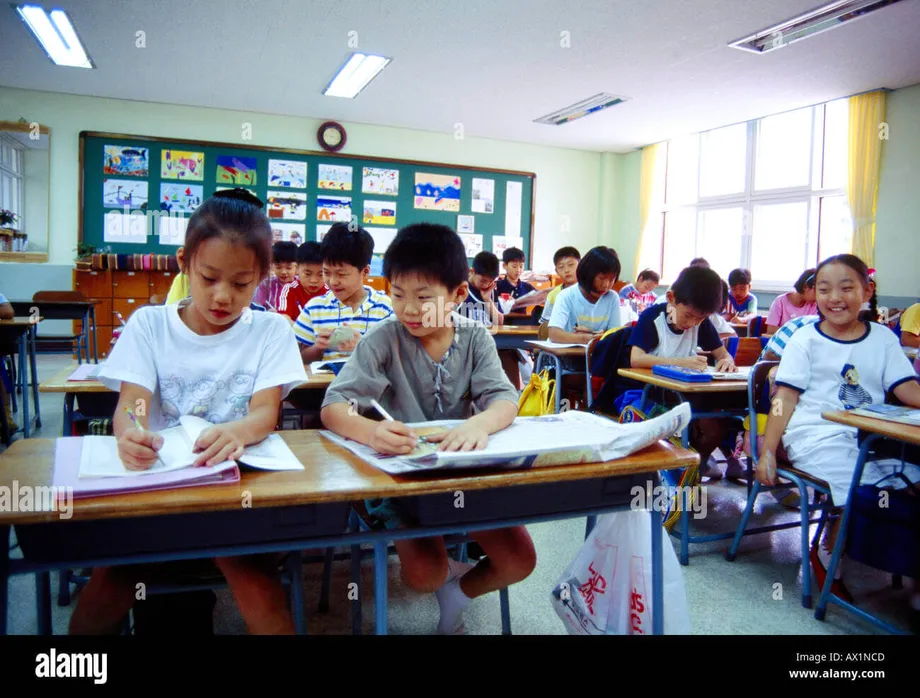
His routine reflects a wider squeeze on childhood in South Korea. A survey by the Korean Teachers & Educational Workers' Union found that 62 percent of children in fourth through sixth grades had less than two hours of free time each day. Nearly 16 percent had less than one hour. Much of that limited time went to screens or solitary activities rather than unstructured play with other children.
South Korea's education system has helped underpin the country's rise from poverty to a global economic powerhouse and consistently produces high scores in international assessments. Yet children face intense pressure to succeed, while international surveys place their happiness and life satisfaction near the bottom among countries in the Organisation for Economic Co-operation and Development (OECD).
As of June 28, 2025, the strain reaches beyond students. Parents face substantial education bills and anxiety about their children's prospects. Teachers describe harassment and fear of complaints. Reforms, including a semester without major exams, offer some relief, but face a culture in which academic achievement remains closely tied to ideas about future security.
Private Academies Extend the School Day
Hagwons, private academies offering subjects from mathematics and English to music and sports, sit at the centre of this competition. Nearly half of children younger than six attend them. By middle school, attendance is nearly universal.
For many families, hagwons function as a parallel education system alongside public schools. Lessons continue into the evening, and some students spend up to 12 hours a day studying. Rest and play must fit into whatever time remains.
Kim's schedule shows how academic and extracurricular commitments can fill the same day. Piano and taekwondo are different from English homework, but all require scheduled attendance and leave fewer hours for children to decide what they want to do.
South Korean families spend a substantial share of their income on private education. Wealthier households can spend more, giving their children access to additional instruction and widening educational inequality. Parents trying to keep pace with other families face both a financial burden and the fear that reducing lessons could leave their children behind.
Why the Pressure Starts So Early
South Korea's education fever has historical, cultural and economic roots. Confucian values place a high value on learning, academic achievement, social mobility and family honour. The country's rapid economic development in the late 20th century reinforced the belief that education opens the way to personal and national success.
The Suneung, the national college entrance examination held once a year, concentrates those expectations into a single major test. Its results can shape a student's future. The country comes to a near standstill on examination day to support those taking it, showing how much importance society attaches to the occasion.
Parents' concerns about that future can reach children long before they approach university. Insoo Oh, a former teacher and education expert at Ewha Womans University, describes pressure beginning in elementary school and growing as children move through the system.
Even at the elementary level, students feel pressure to study well due to parental expectations, which are so high. This pressure only increases as they approach middle and high school.
For children, the result is a long period in which everyday learning can feel connected to distant examinations and adult expectations. For parents, each decision about tutoring or activities becomes part of an effort to protect their child's prospects.
Families Pay in Money and Emotional Strain
Some families spend up to 20 percent of their income on private education. That means as much as one in every five units of household income goes towards these costs, placing education in direct competition with other family needs.
Research links the economic strain of private education to depression, particularly among fathers who feel responsible for paying for their children's educational ambitions. Anxiety about academic performance can therefore affect both the child doing the work and the parent financing it.
Parents' expectations also extend to teachers, who can face intense scrutiny and harassment when families are unhappy with a child's progress. Pressure travels through the relationships that are supposed to support children: between parents and children, between families and schools, and between teachers and students.
Education costs are also linked to South Korea's declining birth rate, as families limit the number of children they have to manage expenses. Together, the financial burden and emotional strain place pressure on family life and the country's longer term social stability.
Free Time Is Shrinking, and Changing
Children's play has declined in both quantity and quality. Smartphones, computers and television occupy much of the free time that remains after lessons and homework. Screen use and solitary activities often replace active play with friends.
According to the Welfare Ministry, more than a third of elementary school students are at risk of excessive smartphone use. The concern sits alongside the shortage of time: even when children have a break from study, they may have few opportunities for shared, active recreation.
School breaks do not necessarily open up the day. Many children stay indoors, completing assignments or attending online classes. The COVID-19 pandemic made this pattern worse when playgrounds closed. After they reopened, parental concerns about safety and academic progress continued to keep children inside.
Kim's punishment for missing an English session captures another part of the problem. Play can become conditional on academic compliance, rather than a regular part of childhood. Even contact with friends through an online game can be withdrawn when study expectations are not met.
What Children Learn Through Play
Play gives children practice in dealing with other people. They negotiate rules, adjust their ideas, recognise another person's feelings and cope when an activity does not go their way. Those experiences support emotional, social and cognitive development, alongside creativity and the ability to recover from setbacks.
Kim Jae-won, a child and adolescent psychiatrist at Seoul National University Hospital, explains how these everyday exchanges help children develop social skills and manage disappointment.
Play is inevitable for children's emotional and social development. When they lack play, it causes problems in social skills development. Through play, children learn how to adjust their opinions, show consideration, read and empathize with others, and emotionally communicate with others. They sometimes feel discouraged, but learn how to endure it. When they lack this emotional adjustment or capacity to endure discouragement, it could lead to depression or anxiety disorders.
A child settling a disagreement during a game is learning something different from the material covered in a lesson. The ability to listen, compromise and tolerate frustration develops through experience with others. Less time for play means fewer opportunities to practise those skills.
Academic Stress and Children's Mental Health
South Korean children rank at the bottom of international comparisons of happiness and life satisfaction among OECD countries. The country also has the highest youth suicide rate in the developed world, and suicide has remained the leading cause of death among young people for more than a decade.
Academic pressure is a major source of stress. A 2024 report by the National Assembly Research Service found that the proportion of elementary school students getting sufficient sleep had fallen, while suicide attempts among middle school students had surged.
The Korea Youth Risk Behavior Survey links stress about academic achievement to a greater risk of suicidal thoughts and attempts. The association is especially strong among adolescents who also experience stress at home or school. For these students, worries about grades sit alongside difficulties in the places where they spend most of their time.
Reduced sleep, limited recreation and academic expectations are therefore part of the same daily experience for many children. A timetable crowded with study leaves less space for rest and for the relationships and activities that support emotional well-being.
When Effort Begins to Feel Pointless
Academic helplessness describes the feeling that a student cannot meet expectations despite trying. Research links that feeling to depression and lower life satisfaction. A child may keep working while losing confidence that the effort will lead to success.
Physical activity can soften these effects. Adolescents who regularly take part in physical activity during their leisure time report higher self-esteem and a better body image, even when they face substantial academic pressure.
Sports and recreation offer another setting in which children can experience progress, enjoyment and connection with others. Yet academic demands are reducing opportunities for those activities. The same crowded schedule that contributes to stress can leave less time for something that helps children manage it.
Teachers Face Pressure From Parents
Teachers are also affected by the culture of competition. South Korea has seen a disturbing rise in teacher suicides in recent years, often linked to harassment and unrealistic demands from parents. Educators describe being overwhelmed by complaints and sometimes facing police investigations over minor incidents.
Primary school teacher Kim Min Jun describes how fear of a child abuse complaint has changed his approach to classroom discipline.
I try to do my job and role diligently. But now, to avoid doing anything that could potentially be reported as child abuse, I don't really discipline the students anymore.
His account shows how a breakdown in trust can affect everyday teaching. Teachers who fear complaints may pull back from managing behaviour, while strained relationships with parents make it harder to support children's development beyond test results.
Following public outcry, the government introduced measures that include legal support for teachers and penalties for parents who interfere with educational activities. The response seeks to protect teachers, while calls for deeper cultural change focus on restoring respect for educators and giving children's well-being greater priority.
A Semester With Fewer Exams
South Korean policymakers have begun testing ways to reduce academic pressure. One initiative is an exam-free semester in middle school, during which students do not take midterm or final examinations. Some academic instruction is replaced with career exploration and creative activities.
Early results have been encouraging. Students report better relationships with teachers, more enjoyment of learning and less stress. The change gives schools room to organise part of education around exploration rather than repeated preparation for tests.
The Hechinger Report described the reach of the initiative and the hope that it could encourage a broader shift in educational priorities.
Although the initiative can be considered 'small' in the sense that it focuses primarily on one grade level, in only a few years it has grown to reach all 450,000 seventh graders in South Korea. There is now at least a hope that support for a more humanistic education might find a foothold, and, eventually, begin to spread.
The programme's reach matters because it gives an entire grade an experience of school with fewer formal examinations for part of the year. Students can spend some of that time considering possible careers and taking part in creative work.
Other Reforms Meet Entrenched Expectations
Other efforts include limits on hagwon operating hours, support for vocational education, and changes to university admissions that give weight to extracurricular activities and personal growth alongside examination results.
Each addresses a different source of pressure. Limits on academy hours seek to shorten the extended study day. Vocational education offers another route through education. Broader admissions criteria recognise more of a student's experience than test scores alone.
Parents' resistance and deeply rooted beliefs about academic success complicate these changes. Families who see education as the main route to future security may be reluctant to reduce study, even when they recognise the strain. Changing a timetable is one task; changing the expectations that fill it is another.
The next steps and dates for further reforms were not specified. The initiatives already described show attempts to create more room for creativity, career exploration and personal development within a system still driven by competition.
A Wider Decline in Outdoor Play
South Korea is part of a broader decline in children's play. Globally, outdoor play has fallen by 50 percent in recent generations, alongside longer school hours, greater academic demands, rising screen use and the loss of safe places to play.
South Korea's particular challenge is the intensity of academic pressure and how early it begins. Nearly half of children younger than six already attend private academies, while many older children have less than two hours a day left for themselves.
The connection between play and development makes that loss consequential. Children need opportunities to make choices, build friendships, solve disagreements and recover from disappointment. Academic learning and those experiences serve different needs within the same childhood.
South Korea's experience brings the trade-off into sharp focus: a system associated with national prosperity and high test scores also leaves many children short of sleep, recreation and happiness. Efforts to reduce examinations and protect time outside lessons seek to make educational achievement compatible with a healthier daily life.
Key Points
- A teachers' union survey found that 62 percent of fourth through sixth graders had less than two hours of free time daily, and nearly 16 percent had less than one hour.
- Nearly half of children younger than six attend private academies. Some students study for up to 12 hours a day.
- Some families spend up to 20 percent of their income on private education, contributing to financial strain and unequal access to extra instruction.
- More than a third of elementary school students are at risk of excessive smartphone use, according to the Welfare Ministry.
- Academic stress is linked to mental health risks, while play and physical activity support social development and emotional well-being.
- Teachers face parental complaints and harassment. Government measures include legal support and penalties for interference with educational activities.
- An exam-free semester has reached 450,000 seventh graders, with early reports of less stress and greater enjoyment of learning.