A spectacular rally meets a sharp reversal
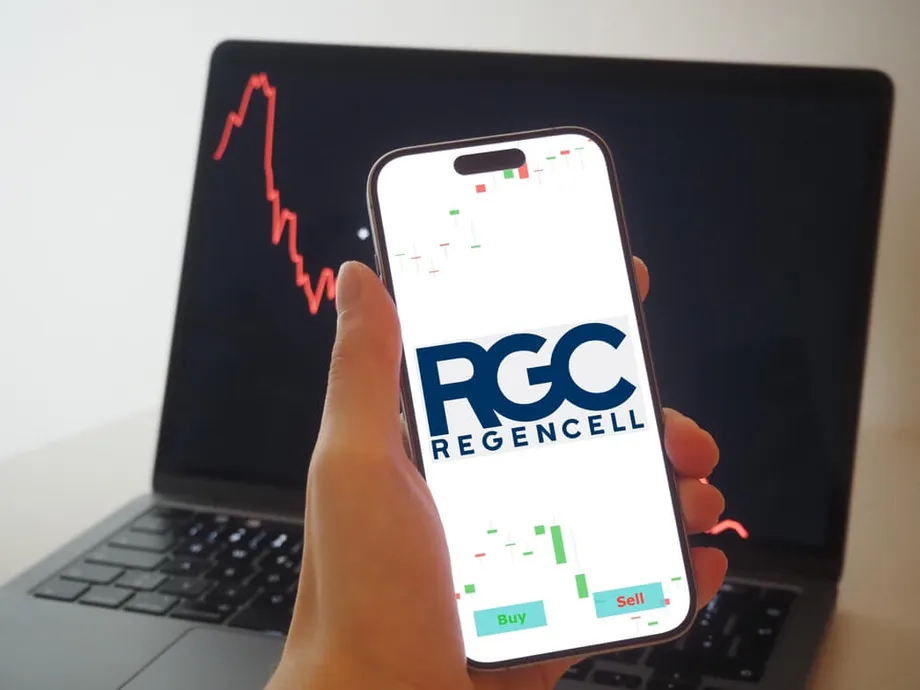
Regencell Bioscience Holdings Limited, a Hong Kong company developing treatments based on traditional Chinese medicine, became an extraordinary market story in June 2025. Its shares reached a gain of 82,000% for the year, its market value exceeded $30 billion, and founder and chief executive Yat-Gai Au briefly held a paper fortune estimated at $33 billion.
Contents
- A spectacular rally meets a sharp reversal
- What Regencell is trying to develop
- The ownership structure behind the price swings
- A stock split and a volatile June
- How expensive short selling added pressure
- Retail enthusiasm came with substantial skepticism
- The research and commercial gaps
- Regulators examine the wider market risks
- A law firm opens a securities investigation
- What the reversal means for investors
- Key Points
By June 28, the stock had fallen 74% from its peak, leaving Au's estimated paper wealth at about $8.6 billion. At the height of the rally, his fortune briefly exceeded those of some of Hong Kong's best known tycoons. The reversal showed how quickly wealth measured through a shareholding can disappear when the market price changes.
Regencell had never generated revenue. It had announced no scientific breakthrough, regulatory approval or major partnership to explain the surge. Its extraordinary valuation instead coincided with a stock split, concentrated ownership, costly short selling and intense attention from speculative traders.
The episode has drawn attention to the risks of small stocks with few shares available to trade. A securities law firm has announced an investigation, while the Securities and Exchange Commission (SEC) and the Financial Industry Regulatory Authority (FINRA) have declined to say whether they are investigating Regencell specifically.
As of June 28, the company had not answered media inquiries or supplied a business update explaining the rally. The central problem for investors was straightforward: a company without sales or approved products had briefly acquired a valuation greater than established businesses such as Lululemon and eBay.
What Regencell is trying to develop
Regencell was founded in 2014, is incorporated in the Cayman Islands and trades on Nasdaq under the symbol RGC. Its main office occupies an entire floor in Causeway Bay, a busy district of Hong Kong.
The company researches, develops and aims to commercialize treatments based on traditional Chinese medicine, commonly shortened to TCM. Its principal targets are attention deficit hyperactivity disorder (ADHD) and autism spectrum disorder (ASD), both conditions affecting development and everyday functioning.
Its core intellectual property consists of herbal formulas developed by Sik-Kee Au, the founder's father and a practitioner of traditional Chinese medicine. Those formulas are marketed under the "Brain Theory" trademark.
Regencell's ambitions have yet to produce commercial income. The company recorded a net loss of $4.4 million in the financial year ending June 2024, following a $6.1 million loss in the year ending June 2023. Its own SEC filings warn that it "may never be profitable."
The loss narrowed by $1.7 million between those two financial years, but Regencell still had no revenue. Its business therefore remained a research venture rather than a company earning money from treatments sold to patients.
Regencell also had a striking public profile for a business at that stage. Its Instagram following exceeded half a million, larger than those of established healthcare giants in the region. Viral promotions, including giveaways of Taylor Swift concert tickets, helped attract that attention.
The ownership structure behind the price swings
Yat-Gai Au owns an 86% stake in Regencell, giving him a dominant position in the company. The second largest shareholder is Digital Mobile Venture, controlled by Taiwanese investor Samuel Chen, who is known for an early investment in Zoom Video Communications.
More than 95% of Regencell's shares were held by insiders or affiliates. The figures describing the shares after the split put roughly 30 million shares available for trading out of about 500 million shares in total. Those approximate figures describe a very small public float, meaning the shares available for investors to buy and sell in the market.
A small float matters because the stock price is set by transactions involving the shares that actually trade. When buyers compete for a limited supply, the price can rise rapidly. When buying fades or holders rush to sell, the same limited trading pool can produce a steep decline.
The quoted share price is then used to value the entire company, including the large holdings that remain with insiders. Market capitalization is calculated by multiplying that price by the number of shares outstanding. Au's paper fortune rose with the price of his stake, rather than through an equivalent payment of cash.
Au has also personally financed share purchases, including a $6.2 million purchase from Digital Mobile Venture at a premium to the market price. Buying at a premium means paying more per share than the prevailing market quotation. Those transactions further concentrated ownership and reduced the shares available to other investors.
A stock split and a volatile June
Regencell had spent much of its trading history as a penny stock and traded below $1 a share as recently as April 2025. A forward stock split became the central event associated with its June surge.
The company announced a 38-for-1 split on June 2 and implemented it on June 16. Under that arrangement, each existing share became 38 shares. The split was intended to make individual shares more accessible to retail investors and, in theory, improve liquidity, or the ease of buying and selling.
Regencell's price had approached $950 before the split, while prices around $60 to $70 featured in trading after it. On the first trading day following the split, the shares quadrupled and triggered more than 10 volatility halts. Such halts temporarily interrupt trading when prices move sharply.
A stock split changes the number of shares, not the underlying business. For a shareholder, the arithmetic is like dividing the same holding into more pieces: the investor owns more shares, but the split itself adds no revenue, research result or approved treatment.
Regencell nevertheless reached a market capitalization described at the peak as about $33 billion, exceeding $30 billion and passing the valuations of Lululemon and eBay. Trading volume jumped, and online message boards filled with excitement and skepticism as the gain for the year reached 82,000%.
The key dates show how quickly the situation developed:
- April 2025: Regencell traded below $1 a share.
- June 2, 2025: The company announced its 38-for-1 forward stock split.
- June 4, 2025: The SEC sought public input on the definition of foreign private issuers.
- June 16, 2025: Regencell implemented the split, followed by a first trading day in which the shares quadrupled and experienced more than 10 volatility halts.
- By June 28, 2025: The shares had retreated 74% from their peak, and Au's paper fortune stood at about $8.6 billion.
Regencell announced no new clinical data or commercial deal alongside the rally. The split was the principal identifiable company event, while the scale of the price movement far exceeded a simple adjustment in the number of shares.
How expensive short selling added pressure
Regencell's limited share supply also affected short sellers. Short selling involves borrowing shares and selling them in the hope of buying them back later at a lower price. If the stock rises instead, the trader faces a loss and may have to buy shares to close the position.
EquiLend's measures showed Regencell's short squeeze score rising from 21 to 88 in a week. A short squeeze occurs when pressure on short sellers leads them to buy back shares, adding demand that can push an already rising price higher.
The utilization rate approached 86%, meaning a large proportion of shares available for lending had already been borrowed. Borrowing fees reached 60,000 basis points, equivalent to 600% on an annualized basis. A basis point is one hundredth of a percentage point.
Those fees made maintaining a short position exceptionally expensive. Annualized figures express a rate as though it applied for a full year; the cost of a particular position depends on how long it remains open and the applicable borrowing terms.
Rising prices and high borrowing costs could both encourage short sellers to close their positions. In a stock with relatively few available shares, that buying could add to an abrupt upward move.
Regencell's rally therefore combined several sources of pressure: a small trading pool, increased attention after the split and the potential for short sellers to become buyers. The company had no corresponding announcement of business progress to explain its new valuation.
Retail enthusiasm came with substantial skepticism
Retail traders were attracted by the lower price of an individual share after the split, alongside discussion on Reddit and X. Regencell acquired features associated with meme stocks, where online attention and trading enthusiasm become major parts of the market story.
The company's large Instagram following and celebrity ticket promotions added to its visibility. A cheaper looking share and a recognizable promotional campaign made Regencell easier to notice, while the small public float made changes in demand especially consequential.
Retail sentiment was far from uniformly positive. In a Stocktwits poll, 52% of respondents considered Regencell "too risky," while 31% identified themselves as buyers. Participants pointed to the absence of revenue, limited clinical evidence and lack of analyst coverage.
One Stocktwits user, a participant in the online discussion, expressed a particularly harsh view of the company and its prospects:
This reeks of a scam so bad. Hong Kong biotech with 12 full-time employees. Chinese medicine ancient herbs for ADHD. This will collapse.
The comment captured the intensity of skepticism accompanying the rally. Buyers pursuing momentum and traders expecting a collapse were reacting to the same unusual combination of spectacular price gains and a business still lacking commercial sales.
The research and commercial gaps
Regencell's clinical evidence was limited to small case studies that had not undergone peer review. Peer review means other specialists examine research before publication, assessing its methods and conclusions.
The company had no large clinical trials and had not filed for regulatory approval of any product. Its herbal formulas for ADHD and ASD remained supported by anecdotal evidence and small studies rather than a substantial body of clinical validation.
Regencell's chief medical officer position had been vacant since 2022. That absence raised concerns about its ability to advance medical research at a time when its market valuation was reaching billions of dollars.
The company had also secured no patents and established no commercial distribution channels. Its herbal formulas and "Brain Theory" trademark formed the core of its stated intellectual property, while patent protection and the practical means of distributing products remained absent.
Those gaps separated the company's research ambitions from a functioning treatment business. Developing a formula, testing whether it works, obtaining permission to market it and arranging distribution are different stages. Regencell had not announced the clinical or commercial milestones that would accompany progress through those stages.
At the market peak, investors were assigning more than $30 billion in value to a company with no revenue, continuing losses and unapproved products. The valuation depended heavily on the story surrounding the shares and expectations about the future, rather than measurable business advances announced during the rally.
Regulators examine the wider market risks
FINRA, which oversees broker dealers in the United States, has repeatedly warned that small stocks with thin trading can be vulnerable to manipulation. Its concerns include pump and dump schemes, in which promoters encourage buying to raise a price before selling their own holdings.
The SEC has also raised concerns about foreign private issuers, companies based overseas but listed on American exchanges. The category can allow reporting arrangements that differ from those applied to domestic issuers, making the rules governing regular financial disclosure part of the debate.
On June 4, the SEC called for public input on whether to tighten the definition of a foreign private issuer. A narrower definition could subject companies such as Regencell to stricter reporting requirements and greater transparency obligations.
The SEC initiative concerned the wider category of overseas issuers. Both the SEC and FINRA declined to comment on whether Regencell itself was under investigation. No specific regulatory investigation or enforcement finding against the company had been confirmed by June 28.
Large and unusual price swings are the kinds of movements that automated market surveillance can flag for review. Regulators increasingly use such tools to identify anomalies, while international listings and trading driven by social media complicate the work of following activity across markets.
The proposed review of issuer rules could make it harder for similar companies to access American listings without greater disclosure. As of June 28, the initiative remained a request for public input rather than an announced change to Regencell's reporting obligations.
A law firm opens a securities investigation
Levi & Korsinsky, a law firm specializing in securities litigation, announced that it had begun investigating possible violations of federal securities laws by Regencell.
The firm identified the extraordinary rise and subsequent collapse in the stock, along with the 38-for-1 split, as reasons for examining the company's actions and disclosures. Its inquiry seeks to determine whether investors were misled or suffered harm.
The law firm's investigation is separate from the question of whether a government regulator is investigating Regencell. Investors following the story faced an announced legal inquiry alongside regulators' refusal to discuss any company specific review.
Regencell remained silent in response to media inquiries and had provided no further business update. No date for an investigation outcome, hearing or company response was given.
What the reversal means for investors
Regencell's surge recalled the 2022 episode involving AMTD Digital, another company based in Hong Kong. AMTD Digital briefly reached a market value greater than Coca-Cola and Bank of America before its shares crashed.
Both episodes combined a small public float, speculative interest and a lack of fundamental business news matching the scale of the price rise. Such conditions can create a liquidity trap: investors buy into rapidly rising prices, then struggle to exit at an acceptable price when demand reverses.
Regencell's beta was estimated at -2.81. Beta measures how a stock's returns move relative to the wider market; a negative estimate indicates movement in the opposite direction over the period measured. The estimate accompanied a trading pattern already marked by extreme swings.
The 74% retreat left a shareholding worth only about 26% of its value at the peak. Au's paper fortune fell from roughly $33 billion to $8.6 billion, a decline of about $24.4 billion. Other investors' gains or losses depended on when they bought and sold.
Small public floats and concentrated insider ownership can magnify both rises and falls. For investors, assessing the available shares, borrowing conditions and ownership structure can be as necessary as examining a company's research plans.
Regencell also illustrated the limits of using viral popularity as a guide to a business. Half a million Instagram followers, concert ticket promotions and heavy online discussion existed alongside no revenue, unapproved treatments and limited clinical evidence.
Some traders could profit from the momentum, while others were left holding shares after the reversal. By June 28, the company's underlying research and commercial position had not caught up with the valuation briefly placed on it. Legal scrutiny and the wider SEC debate over overseas issuers added further uncertainty to an already volatile stock.
Key Points
- Regencell's gain for 2025 reached 82,000% during June, with its peak market value exceeding $30 billion and described at about $33 billion.
- Founder and chief executive Yat-Gai Au held 86% of the company and briefly had a paper fortune of $33 billion.
- A 38-for-1 stock split announced on June 2 took effect on June 16, alongside extreme trading volatility.
- Concentrated ownership, a small public float, costly share borrowing and speculative trading contributed to the market pressure.
- Regencell had no revenue, no approved products, limited clinical evidence and no chief medical officer since 2022.
- Levi & Korsinsky announced a securities investigation; the SEC and FINRA declined to discuss whether they were investigating Regencell.
- By June 28, the shares had fallen 74% from their peak, reducing Au's estimated paper fortune to about $8.6 billion.