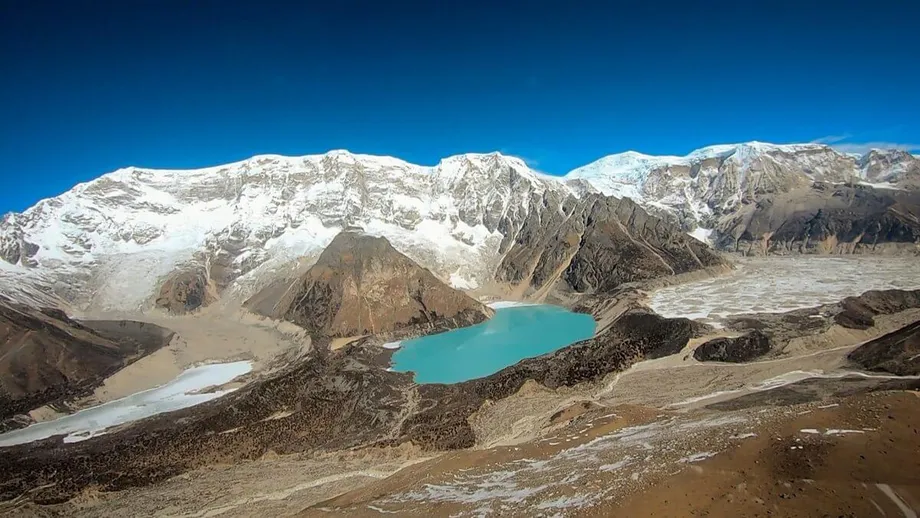
A climate crisis measured in ice, rain and water supplies
Bhutan has identified 17 glacial lakes as potentially dangerous, while nearly 69 springs and 149 sub-watersheds have already dried up. Another 1,586 water sources are drying. For a Himalayan country that depends on rivers for drinking water, farming and almost all its electricity, those figures describe pressures reaching far beyond the mountains.
Contents
- A climate crisis measured in ice, rain and water supplies
- Forest protection cannot shelter Bhutan from global warming
- Glaciers are shrinking as lakes expand
- When a mountain lake releases its water
- A monsoon can bring too little rain and damaging floods
- Water uncertainty reaches electricity generation
- Farms, health and wildlife face connected pressures
- Bhutan is adapting, with limits on monitoring and resources
- The wider Himalayas are losing their stores of ice
- Regional cooperation and the cost of protecting communities
- Key Points
The warning comes against a wider regional shift. The World Meteorological Organization (WMO) says Asia is warming at nearly twice the global average, with 2024 confirmed as one of its warmest years on record. Average temperatures across the region reached 1.04°C above the baseline for 1991 to 2020.
Record floods, heatwaves, accelerating glacier loss and rising seas are among the consequences. Sea surface temperatures across Asian waters have also reached unprecedented highs, with those waters warming at nearly twice the global rate. These changes contribute to more frequent and severe weather events, including droughts and floods, while glacier retreat increases the danger of sudden releases from mountain lakes.
Bhutan sits within the Hindu Kush Himalaya (HKH), where climate extremes can trigger connected disruptions across communities and ecosystems. A changing glacier can affect a lake, a river, a settlement and a power station farther downstream. Uncertain rainfall can bring damaging floods during one period and leave farms short of water during another.
As of June 28, 2025, Bhutan's experience illustrates a difficult reality: a country can protect its forests and absorb more carbon than it emits while remaining exposed to warming driven beyond its borders.
Forest protection cannot shelter Bhutan from global warming
Bhutan contributes almost nothing to global greenhouse gas emissions. Its environmental commitments are unusually extensive: forests cover more than 70% of its land, and more than half the country is designated as protected areas.
The constitution requires at least 60% of Bhutan to remain forested, a threshold the country has consistently exceeded. Its forests absorb more carbon than the nation emits, underpinning its recognition as the world's first carbon-neutral country.
Bhutan's geography nevertheless leaves it exposed to several kinds of climate danger. The country stretches from subtropical plains in the south to high Himalayan peaks in the north. Across that range, rising temperatures and changing rainfall affect water supplies, slopes, forests and settlements in different ways.
Environmental protection within Bhutan cannot control the global warming that melts its glaciers or changes regional weather. Its achievements therefore sit alongside growing needs for disaster protection, reliable water supplies and support for communities facing climate damage.
Glaciers are shrinking as lakes expand
Bhutan's glaciers feed 567 glacial lakes and supply water to five major and five minor river systems, as well as thousands of springs. They act as natural reservoirs, storing water as ice and releasing meltwater during the dry season. That supply supports drinking water, agriculture and hydropower, the backbone of the economy.
Scientific studies show glaciers in Bhutan shrinking at rates nearly twice those in central Himalayan regions. Glaciers covered with debris are retreating by 30 to 35 meters a year, while clean glaciers retreat by 12 to 15 meters a year. These measurements describe how far glacier fronts move back as ice is lost.
Lakes forming at the fronts of retreating glaciers, known as proglacial lakes, are becoming more common. The share of Bhutan's glaciers ending in lakes rose from 14% in 2000 to 22%. Water at the glacier front can speed retreat by warming the end of the ice and increasing melting at its base.
Forecasts under a warming scenario of 2.5°C predict a reduction of more than 50% in glacierized area and more than 90% in meltwater supply. No date is given for those projected reductions. Their scale points to a major change in the amount of water stored in ice and released into rivers.
Bhutan's challenge therefore has two connected parts: expanding lakes can create immediate flood dangers, while the loss of stored ice threatens the longer supply of water that communities and industries depend on.
When a mountain lake releases its water
Glacial lake outburst floods, commonly called GLOFs, happen when the natural barriers holding back mountain lakes fail. A large volume of water can then rush downstream, damaging communities and infrastructure and causing loss of life.
Bhutan has experienced 18 such events over the past 70 years. The most recent was in 2019, from Thorthormi glacier lake. With 17 lakes now considered potentially dangerous, monitoring changing conditions remains a central part of the country's disaster preparations.
River valleys concentrate much of Bhutan's population and infrastructure. Those locations put homes, public facilities and transport routes in the path of water moving down from higher ground. Heavy rain during the 2024 monsoon also triggered floods and landslides, displacing residents and damaging homes, schools and health facilities.
Several dates help trace the changes described across the country and region:
- 2000: 14% of Bhutan's glaciers ended in lakes, compared with 22% in the later assessment.
- 2019: Bhutan's most recent glacial lake outburst flood came from Thorthormi glacier lake.
- 2024: Asia recorded one of its warmest years, while Bhutan experienced a monsoon with rainfall below its normal baseline and damaging floods and landslides.
- 2035: The climate finance agreement reached at COP29 aims to bring annual support for developing countries to $300 billion.
A monsoon can bring too little rain and damaging floods
The South Asian monsoon delivers about 70% of Bhutan's annual rainfall between June and September. Agriculture and water systems depend heavily on that seasonal supply, making changes in its timing and intensity especially disruptive.
Bhutan received an average of 1,161 millimeters of rain during the 2024 monsoon, below the normal baseline of 1,269 millimeters. Despite that lower seasonal total, the country experienced roadblocks, landslides, flash floods and substantial disruption to daily life.
A seasonal rainfall total combines many days and places into one figure. Rain concentrated into intense bursts can cause destruction even when the season as a whole brings less water than normal. Periods of heavy precipitation followed by drought also make supplies harder to depend on.
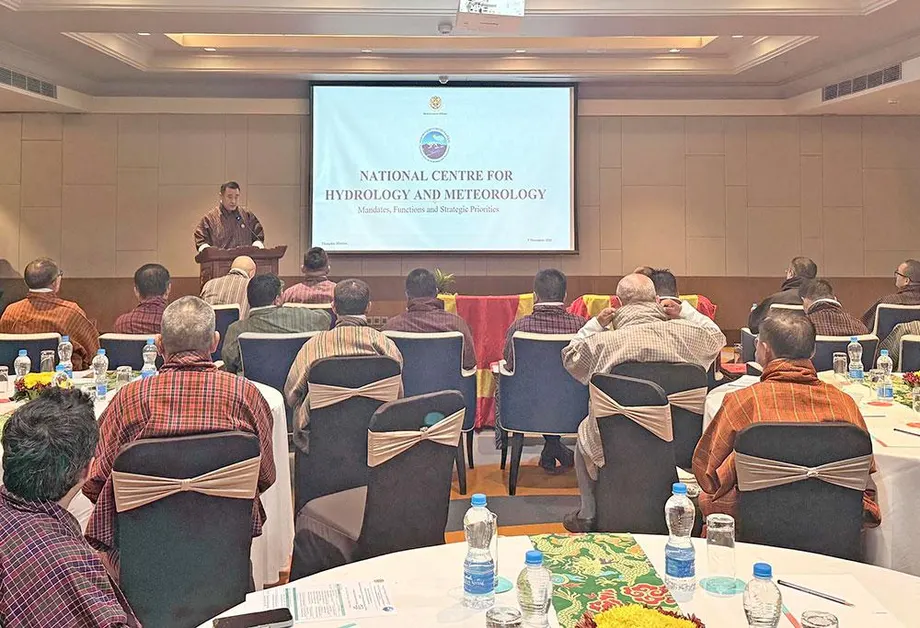
Bhutan's National Centre for Hydrology and Meteorology (NCHM) has reported that nearly 69 springs and 149 sub-watersheds have dried up, with another 1,586 water sources in the process of drying. Sub-watersheds are smaller drainage areas within a larger river system.
Farmers face pressure from both directions. Heavy rain can erode fertile soil, damage crops and interrupt access to communities. Dry periods can leave too little water for crops and households. Together, these changes threaten rural livelihoods, crop yields and food security.
Water uncertainty reaches electricity generation
Hydropower supplies 99% of Bhutan's electricity and is a major export to India. River water therefore supports both everyday electricity use and a central source of national income.
Reduced glacier melt and erratic monsoon rainfall can disrupt river flows, affecting electricity generation and the economy. The same water system must serve households, farms and power production, so changes in supply can reach several parts of daily life at once.
The government is exploring new hydropower projects and partnerships with India and Assam. The sustainability of those plans over time depends on stable water supplies, even as the sources feeding rivers become less predictable.
Prime Minister Tshering Tobgay has warned that glacier retreat and drying water sources endanger the 240 million people living in the Himalayas and the 1.6 billion people downstream who depend on Himalayan rivers. Bhutan's water pressures are part of that much larger regional concern.
Farms, health and wildlife face connected pressures
Agriculture employs more than half of Bhutan's population. Changes in temperature and rainfall can therefore affect the livelihoods of a large share of the country, with crop yields threatened by drought, floods and the loss of fertile soil through erosion.
Warmer conditions also increase the risk of diseases spread by insects, including malaria and dengue, reaching higher elevations. Health services face changing risks alongside the physical damage that floods and landslides can cause to facilities and access routes.
Bhutan's biodiversity is under pressure from changes in climate and land use. Altered habitats threaten plant and animal species found only in particular areas, while the danger of forest fires is increasing.
Mountain ecosystems are connected to places much farther downstream. Disruption can spread through river systems and landscapes, reaching from Himalayan forests to the mangroves of Bangladesh and India. Protecting a watershed therefore matters for both the communities within it and those receiving its water farther away.
Bhutan is adapting, with limits on monitoring and resources
Bhutan has introduced disaster management plans, flood and glacial lake warning systems, community forest fire management and measures to conserve water. These efforts seek to reduce harm from hazards already affecting the country.
The National Adaptation Programme of Action (NAPA) identifies vulnerabilities and gives priority to projects covering disaster risk management, freshwater supply, climate information services, agriculture, health and forestry. Climate information services help turn observations and forecasts into information that people and public agencies can use when making decisions.
Monitoring glaciers and lakes is difficult in Bhutan's rugged terrain. A shortage of trained glaciologists and limited resources adds to the challenge. Early warning systems have been installed in only a few river basins because of costs and maintenance difficulties.
International support and climate finance are critical to expanding those efforts. Monitoring a dangerous lake, maintaining warning equipment and preparing communities all require continuing resources, alongside the initial investment.
Bhutan is also investing in infrastructure designed to withstand climate pressures, wind and solar power, and organic agriculture. The government is raising public awareness and strengthening environmental laws. Internationally, it has joined the G-Zero alliance of carbon-neutral nations and is calling for greater climate finance and global action.
The wider Himalayas are losing their stores of ice
Scientific research places Bhutan's glacier retreat within a much longer change across the Himalayas. Himalayan glaciers have lost at least 40% of their area since the Little Ice Age, 400 to 700 years ago, while the rate of ice loss has accelerated tenfold in recent decades.
The eastern Himalayas, including Bhutan, are experiencing some of the fastest glacier retreat, driven by rising temperatures and changes in monsoon precipitation. The region is also warming faster than almost anywhere else on Earth.
The wider high mountain region spanning the Hindu Kush, Karakoram and Himalaya is known as the Third Pole because it holds the largest reservoir of glacier ice outside the polar regions. Even if global warming is limited to 1.5°C, one-third of Himalayan ice is expected to disappear by the end of the century.
Rivers originating in this mountain region, including the Brahmaputra, Ganges and their tributaries, sustain more than a billion people. Retreating glaciers and shifting monsoon patterns threaten the reliability of water used for agriculture, electricity and daily needs across South Asia.
Bhutan's melting ice therefore carries consequences beyond its borders. The issue is the changing reliability of a shared water supply, from mountain communities to densely populated areas downstream.
Regional cooperation and the cost of protecting communities
The Mountains to Mangroves initiative seeks to restore forests, protect watersheds and build resilience across Bhutan, Nepal, Bangladesh and India. Its geographic reach reflects the connections between mountain water sources, river basins and coastal ecosystems.
The International Centre for Integrated Mountain Development (ICIMOD) is working with member countries on action taken before disasters strike, solutions based on protecting and restoring nature, and responses led at community level. Those approaches connect regional coordination with practical work in places exposed to climate risks.
Dr. Pema Gyamtsho, ICIMOD's director general, has highlighted the injustice of vulnerable communities suffering climate impacts despite contributing little to the problem. He calls for coordinated regional and global efforts to achieve fair transitions and protect fragile ecosystems.
Warnings that the world is entering the last decade for action to preserve essential planetary resources, including glaciers, add urgency to those calls. Bhutan's needs include protecting communities from floods while preparing water, farming and energy systems for continued environmental change.
At COP29, world leaders agreed to triple climate finance for developing countries, aiming for $300 billion annually by 2035. Bhutan and other vulnerable nations are advocating for increased support for adaptation, measures to reduce emissions and efforts to build resilience. For Bhutan, the practical priorities include safer valleys, dependable water supplies and an electricity system able to withstand changes in river flows.
Key Points
- Asia is warming at nearly twice the global average, and 2024 was among its warmest years on record.
- Bhutan's glaciers support drinking water, farming and hydropower, but are retreating rapidly as lakes at glacier fronts become more common.
- Bhutan has recorded 18 glacial lake outburst floods in 70 years and has identified 17 lakes as potentially dangerous.
- The 2024 monsoon brought rainfall below the normal baseline alongside destructive floods, landslides and disruption.
- Nearly 69 springs and 149 sub-watersheds have dried up, while another 1,586 water sources are drying.
- Hydropower provides 99% of Bhutan's electricity, leaving the economy exposed to changes in river flows.
- Bhutan's extensive forests and carbon neutrality coexist with growing climate risks that require adaptation, regional cooperation and international finance.
- The COP29 agreement aims for $300 billion in annual climate finance for developing countries by 2035.