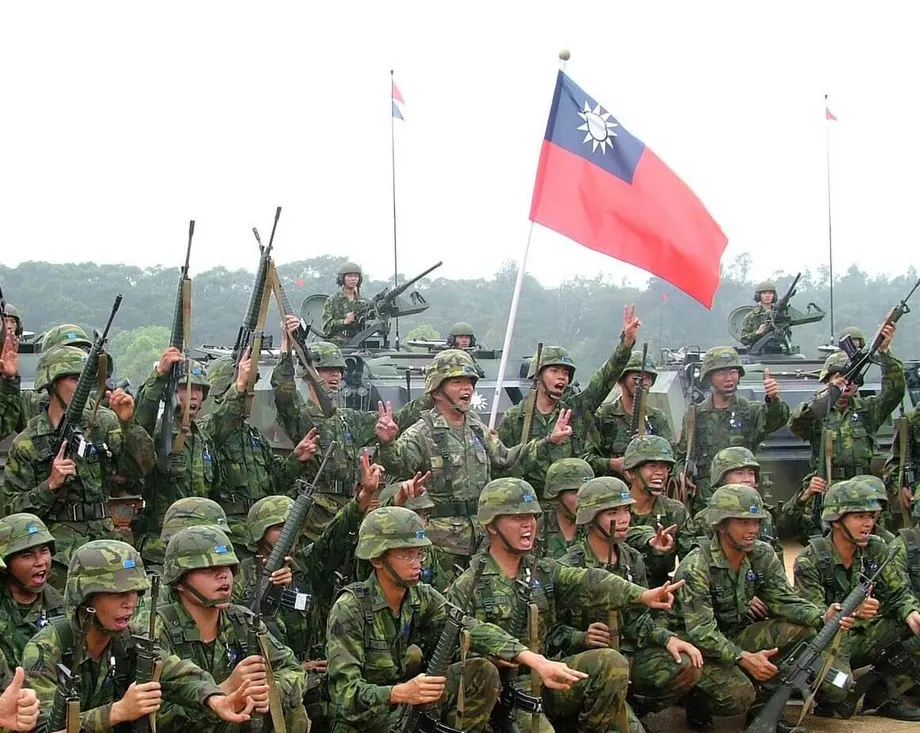
Two governments, one deepening confrontation
China and Taiwan are confronting each other over who has the right to decide the future of an island of 23 million people. Beijing claims Taiwan as its territory and has increased military pressure around it. Taiwan's President Lai Ching-te says its future belongs to its residents, whose government operates independently of the People's Republic of China.
Contents
- Two governments, one deepening confrontation
- How history became part of the dispute
- Why Lai challenges Beijing's historical account
- What the UN decision and One China policies mean
- Military pressure turns political claims into daily risks
- Domestic politics harden positions on both sides
- Washington's commitments and deliberate uncertainty
- Why assurances of peace face scrutiny
- Conflict risks extend beyond an invasion
- Key Points
As of June 26, 2025, the confrontation combines competing accounts of history, disputes over international agreements and the growing possibility that military pressure could produce an accidental clash. Leaders in Beijing and Taipei have hardened their language over sovereignty, meaning the authority to govern a territory, while the United States remains the most consequential outside power.
The central contradiction is straightforward: the Chinese Communist Party (CCP) established the People's Republic of China (PRC) on the mainland in 1949, but the PRC has never governed Taiwan. Beijing nevertheless regards bringing the island under its control as a matter of national unity. Taiwan, officially the Republic of China (ROC), points to its own government, constitution and historical development as grounds for its sovereignty.
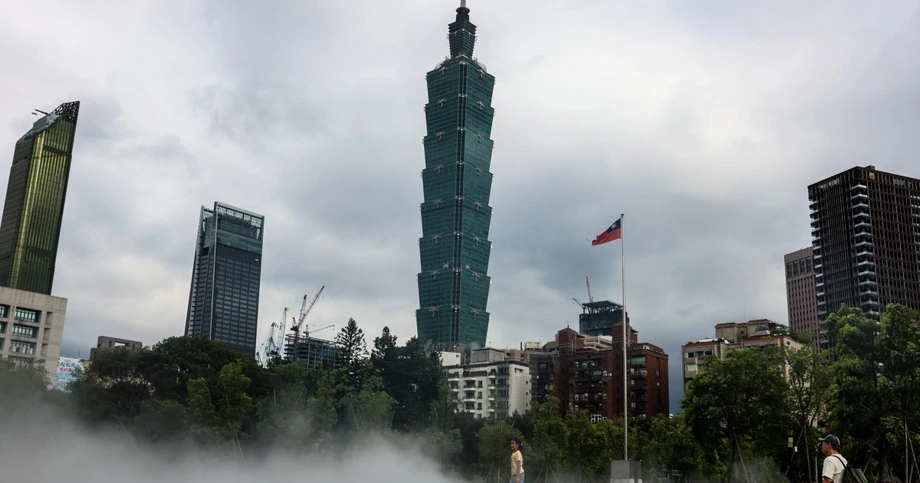
A war would carry consequences far beyond the Taiwan Strait. The island occupies a strategic location and plays a central role in semiconductor manufacturing, which supplies the chips used throughout the global economy. The immediate danger also extends beyond an invasion: military exercises, a blockade, cyberattacks or an encounter at sea could trigger a crisis involving China, Taiwan and the United States.
How history became part of the dispute
Beijing bases its claim on centuries of historical connections and agreements made during World War II. Chinese records dating to AD 239 describe expeditions to Taiwan. China's government presents those records as support for its account of ancient sovereignty over the island.
Taiwan subsequently experienced Dutch and Spanish colonial rule, followed by administration under the Qing dynasty. In 1895, after the First Sino-Japanese War, the Qing government ceded Taiwan to Japan. For Beijing, that loss remains part of a national story about foreign domination and the weakening of China.
The 1943 Cairo Declaration and the 1945 Potsdam Declaration called for territories taken by Japan, including Taiwan, to be returned to China. After Japan's defeat in World War II, the ROC, then the recognized government of China, took control of Taiwan in 1945.
The Chinese Civil War then divided political authority across the strait. Between 1945 and 1949, the CCP under Mao Zedong defeated the Nationalist Kuomintang (KMT) government. The KMT retreated to Taiwan and continued to claim that the ROC was the legitimate government of all China, while the CCP founded the PRC on the mainland.
The key dates show how the historical dispute developed:
- AD 239: Chinese records describe expeditions to Taiwan, which Beijing cites in support of its historical claim.
- 1895: The Qing dynasty cedes Taiwan to Japan after the First Sino-Japanese War.
- 1943 and 1945: The Cairo and Potsdam declarations address the return of territories taken by Japan.
- 1945: The ROC takes control of Taiwan following Japan's defeat.
- 1949: The CCP establishes the PRC, while the defeated KMT government retreats to Taiwan.
- 1971: The United Nations transfers China's seat from Taipei to Beijing.
Why Lai challenges Beijing's historical account
Lai presents Taiwan's history as more than an extension of the mainland's. He has pointed to the indigenous Austronesian roots of Taiwan's people and the island's experience under Japanese rule as evidence of a distinct identity and historical path.
The Taiwanese president also argues that the ROC predates the PRC. His position connects that institutional history to a present political claim: Taiwan's 23 million residents should decide their own future. Beijing instead treats the island's future as a question of Chinese sovereignty.
China's leadership places Taiwan within its account of the century of humiliation, a period associated with national weakness and foreign domination. The loss of Taiwan to Japan in 1895 is a central example in that narrative. Bringing Taiwan under Beijing's control is presented as part of restoring national dignity and territorial integrity.
Lai has challenged the consistency of that reasoning. He argues that a policy aimed at restoring historical borders would also involve seeking territories ceded to Russia and other powers in the 19th century. In his account, Beijing's focus on Taiwan is instead about changing the international order and establishing regional dominance.
What the UN decision and One China policies mean
The United Nations decision in 1971 remains a major point of disagreement. It transferred China's seat from the ROC government in Taipei to the PRC government in Beijing. China's government invokes that resolution as a legal basis for its claim to Taiwan.
Taiwan's leaders argue that the resolution settled who represented China at the UN, while sovereignty over Taiwan was a different question. The dispute therefore concerns both the wording and meaning of an international decision and the wider question of who can speak for the island.
Most countries, including the United States, do not formally recognize Taiwan as a sovereign state. Only a handful maintain official diplomatic relations with Taipei. Beijing has used its growing economic and diplomatic influence to press countries and international organizations to exclude Taiwan.
Washington recognizes the PRC as the sole legal government of China. Its One China policy acknowledges Beijing's position that there is only one China without explicitly recognizing Chinese sovereignty over Taiwan. The United States maintains unofficial relations with Taipei and sells it defensive weapons.
These arrangements leave Taiwan with its own government and institutions but limited formal diplomatic recognition. They also help explain why a statement about sovereignty, a foreign visit or an arms sale can become a major confrontation: each side sees such actions through a different understanding of Taiwan's status.
Military pressure turns political claims into daily risks
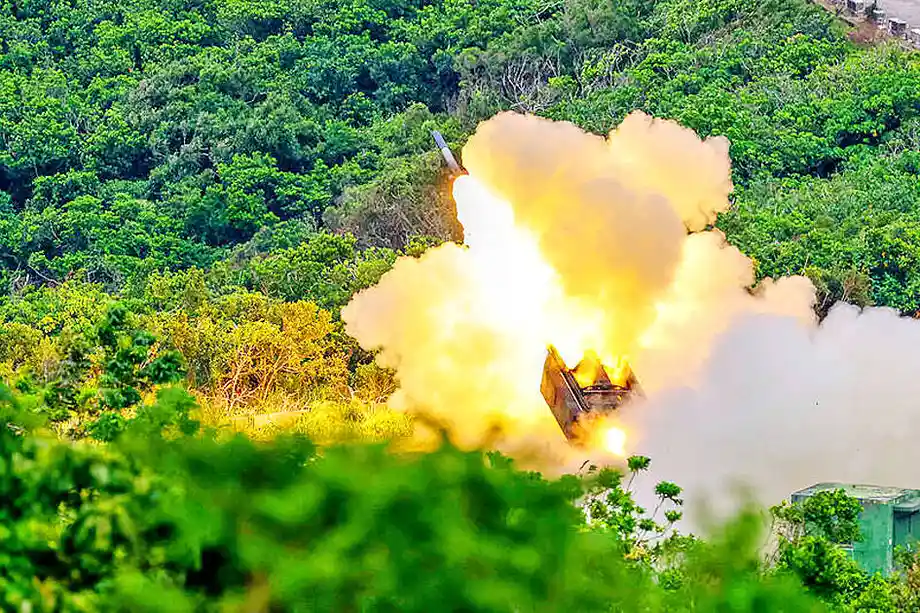
China has increased military activity around Taiwan in recent years through large military exercises, frequent entries by warplanes into Taiwan's air defense identification zone and naval maneuvers. An air defense identification zone is an area where aircraft are identified and monitored for security purposes.
Beijing presents these operations as a response to moves by Taiwan's government that it considers separatist. The exercises also signal its determination to achieve unification, using force if necessary. For Taiwan, the same operations are threatening actions that put pressure on its government and armed forces.
Chinese officials, including spokespersons for the Taiwan Affairs Office, have argued that it is impossible to invade territory they already consider Chinese. Their wording frames potential military action as an internal affair and rejects Taiwan's claim to a separate sovereign status.
Taiwan's Defense Minister Wellington Koo and other officials have warned that China's drills increase the danger of accidental encounters escalating into a wider conflict. Repeated operations by aircraft and ships create more occasions when a mistake or a misunderstood action could bring opposing forces into direct confrontation.
Taiwan's defense strategy draws on its mountainous terrain, advanced weapons and support from the United States and other partners. Geography matters because moving an attacking force across water and sustaining it after landing would be a demanding military operation.
A full invasion is generally assessed as unlikely in the near term because of those logistical challenges, the possibility of American intervention and the potentially catastrophic human and economic costs. The more immediate concern is that pressure intended to influence political decisions could produce an escalation that leaders did not initially seek.
Domestic politics harden positions on both sides
Taiwan's Democratic Progressive Party (DPP) has won three consecutive presidential elections. The party rejects the One China framework and asserts Taiwan's sovereignty. Lai, like his predecessor Tsai Ing-wen, stresses democratic values and the right of Taiwan's people to determine their future.
Public opinion on the island is more complicated than a simple choice between immediate unification and a formal declaration of independence. Most people favor maintaining the status quo: Taiwan continuing to govern itself in practice without formally declaring independence. Only a minority favor either immediate unification with China or a formal declaration that could provoke a military response from Beijing.
That preference places practical independence at the center of daily political life. Taiwan's residents already live under their own government, while a change in formal status could carry serious security risks. Maintaining the present arrangement means preserving that way of life amid pressure from across the strait.
Chinese President Xi Jinping has made unification with Taiwan a central national goal. He connects it to overcoming the century of humiliation and restoring China's standing as a global power. Xi has not ruled out force.
The year 2049, the centenary of the PRC's founding, serves as a symbolic target for the Chinese dream, which includes unification with Taiwan. The stated ambition links Taiwan to a much broader vision of China's national restoration; no date for military action is given.
Washington's commitments and deliberate uncertainty
The United States is Taiwan's most significant outside security partner. Under the Taiwan Relations Act, Washington is committed to providing defensive weapons and maintaining the capacity to resist force that would jeopardize Taiwan's security.
American policy also includes strategic ambiguity. In simple terms, Washington leaves uncertain whether it would intervene militarily if China attacked Taiwan. That uncertainty forms part of the security calculations in both Beijing and Taipei.
Both the Trump and Biden administrations deepened ties with Taiwan through increased arms sales and visits by senior officials. Beijing sharply criticized those moves, accusing Washington of interfering in China's internal affairs and encouraging actions it opposes.
China's objections reflect its view that relations with Taiwan belong within Chinese domestic affairs. Washington's support reflects its continuing unofficial relationship with Taipei and its commitments under the Taiwan Relations Act. Those positions place American actions at the center of many disputes across the strait.
Japan and members of the European Union have also expressed concern about the possibility of conflict. Taiwan's location and its role in semiconductor production connect its security to shipping, manufacturing and the supply chains on which other economies depend. A confrontation would therefore affect countries with no direct territorial claim in the dispute.
Why assurances of peace face scrutiny
Chinese officials have said that China has never invaded another country and describe its military actions as defensive. That account sits alongside a history of PRC military conflicts with Vietnam, India and others, as well as the use of force to assert territorial claims in the South China Sea.
Those precedents are part of the debate over Beijing's assurances that it seeks peaceful unification with Taiwan. China's continued refusal to rule out force leaves military coercion within the choices its leadership publicly preserves.
Beijing's claim that military action against Taiwan would be an internal matter also changes the language of the confrontation. Taiwan views the prospect as an attack on a separately governed society, while China describes it through its claim to sovereignty. The disagreement reaches beyond terminology because it shapes how each government explains its conduct to its own population and to other countries.
Taiwan's leaders face a related challenge: defending the island's democratic system and autonomy while responding to military pressure that can intensify after political statements. Beijing, meanwhile, has tied its position to national identity and restoration, giving the dispute substantial domestic political weight on the mainland.
Conflict risks extend beyond an invasion
A blockade is one possible form of coercion short of a landing operation. Restricting access to an island can put pressure on its people, economy and government. Cyberattacks, economic pressure and disinformation are other tactics discussed in connection with the growing confrontation.
These measures are often described as gray zone tactics, meaning pressure below the level of open war. They can disrupt ordinary life or influence political decisions while avoiding the immediate scale of a conventional military assault.
The weakening of political understandings that helped preserve peace for decades has added to the danger. More assertive nationalism on both sides and intensifying rivalry between China and the United States make a crisis harder to manage. A direct confrontation between Washington and Beijing over Taiwan would carry serious consequences for international security and the economy.
Efforts to reduce that risk focus on preserving the status quo, strengthening deterrence and encouraging dialogue. Deterrence means convincing a potential attacker that the costs of using force would be too high. Taiwan's defense preparations and support from its partners are central to that approach.
Proposed steps include China reducing military, economic and political coercion; Washington clarifying its commitment to its One China policy while supporting Taiwan's defense; and Taiwan investing in asymmetric defense and civilian resilience. Asymmetric defense means using capabilities suited to countering a stronger opponent rather than trying to match every part of its military. Civilian resilience means helping society continue functioning under pressure.
Rebuilding trust and avoiding actions that cross another side's stated limits are also central to crisis management. For Taiwan's residents, the concrete stakes are the ability to keep governing themselves and living without war. For the region, they include preventing military pressure from becoming a conflict that draws in other powers.
Key Points
- Beijing claims Taiwan through historical and legal arguments, while Taiwan points to its own government, constitution and distinct development.
- The PRC was founded in 1949 and has never governed Taiwan. Lai says the island's 23 million residents should decide its future.
- China and Taiwan disagree over whether the 1971 UN resolution supports Beijing's sovereignty claim or concerns representation alone.
- Chinese military exercises and naval activity increase pressure on Taiwan and the danger of accidental clashes.
- Most people in Taiwan favor maintaining practical independence without a formal declaration.
- The United States supplies defensive weapons while leaving uncertain whether it would intervene militarily in a conflict.
- Invasion, blockade and other forms of coercion carry risks for regional security and global supply chains, including semiconductor production.
- Reducing coercion, strengthening defenses and restoring dialogue are central to efforts to prevent war.