A Trillion Dollar Market Takes Shape
The global semiconductor market is projected to reach about $697 billion in 2025, an increase of 11% from a year earlier, as artificial intelligence and 5G networks drive demand for more powerful chips. Industry forecasts put the market on course to surpass $1 trillion by 2030, with compound annual growth of 7% to 9%.
Contents
- A Trillion Dollar Market Takes Shape
- What Is Driving Demand for More Chips?
- Who Controls the Most Important Technologies?
- Governments Turn Chips Into Strategic Assets
- Why New Factories Cannot Remove Every Supply Risk
- Smaller Chips Require More Than Smaller Components
- India Builds on Design Skills and Government Support
- Growth Brings Water, Energy and Security Pressures
- Workers and Factory Costs Limit the Pace of Expansion
- Key Points
As of June 16, 2025, that expansion is bringing an expensive challenge into focus: the world needs more chips, more sophisticated manufacturing and a supply network that can withstand disruption. Governments are spending billions to attract factories while restricting rivals' access to advanced technology. Companies must expand production while managing rising costs, shortages of skilled workers and growing environmental demands.
Semiconductors already sit inside smartphones, electric vehicles, cloud computing systems and military equipment. Their role across consumer products, industry and national security helps explain why decisions about where to build factories have become matters of government strategy as well as business.
The growth extends beyond finished chips. The electronics and semiconductor materials market, which supplies the essential building blocks for chip fabrication, is projected to reach nearly $120 billion by 2034. Demand for manufacturing materials is expanding alongside the need for the processors, memory and other components used in increasingly complex devices.
The central tension is between rapid technological progress and the difficulty of building enough reliable production capacity. A new chip design depends on manufacturers, equipment suppliers, materials producers and skilled workers to turn it into a working product. Weakness in any part of that network can affect companies and customers much further along the chain.
AI and 5G are the main growth catalysts, but connected devices, changes in transport and new forms of computing are widening the demand. The result is an industry pursuing faster innovation and greater supply security at the same time.
What Is Driving Demand for More Chips?
Generative AI is a major source of demand because it requires powerful chips in data centers, cloud computing systems and consumer devices. Companies are developing custom chips, neural processing units, known as NPUs, and graphics processing units, or GPUs, to handle these workloads.
Generative AI creates content, while the chips supporting it perform the calculations needed to run those systems. The demand reaches from large computing facilities to edge computing, where data is processed closer to the device using it.
5G networks are creating another large market for semiconductors that support faster and more reliable wireless communication. Their rollout is taking place alongside the spread of Internet of Things devices, the connected products and equipment that exchange information through networks.
Billions of connected devices need chips that use little power and process information in real time. That requirement makes efficiency as important as raw computing power for many applications.
Electric vehicles and advanced driver assistance systems are also increasing demand for specialized automotive semiconductors. The development of autonomous vehicles adds to the need for chips capable of supporting more complex functions.
Who Controls the Most Important Technologies?
Taiwan Semiconductor Manufacturing Company, or TSMC, holds a 62% share of the foundry market and produces 92% of the world's most advanced chips. A foundry manufactures chips for customers, making TSMC's position important to companies including Nvidia, Apple and Broadcom.
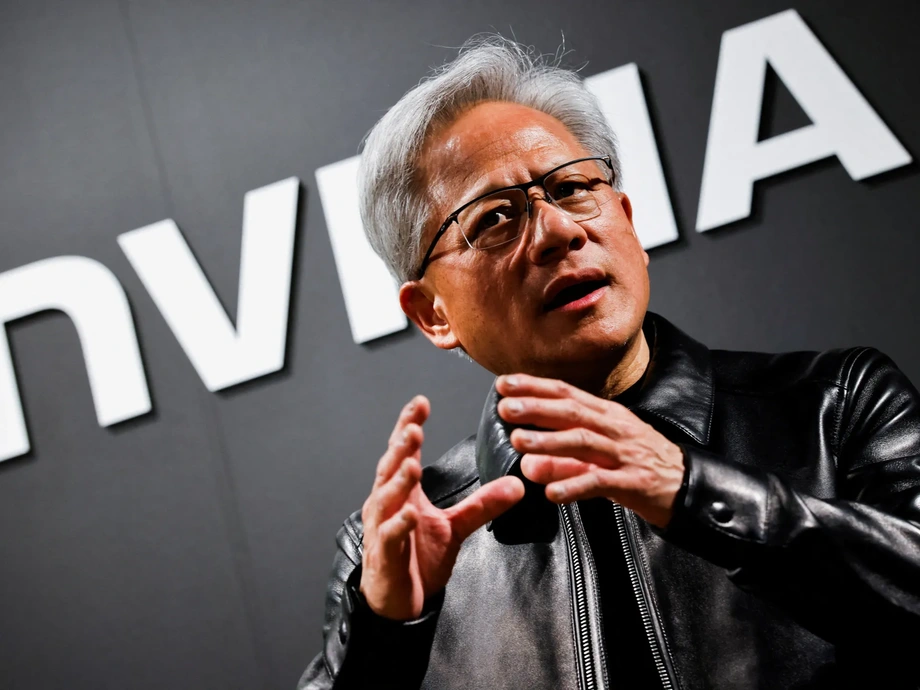
Nvidia leads the AI chip market, with an estimated share of 70% to 90%. Its GPUs have helped drive rapid growth in profits and market capitalization, the value investors place on its shares. Nvidia nevertheless relies on TSMC to manufacture its chips, linking the success of a leading designer to the capacity of a leading producer.
ASML occupies another critical position. The Dutch company is the sole supplier of extreme ultraviolet lithography equipment, known as EUV, used to produce the most advanced chips. The technology allows manufacturers to create smaller features and fit more transistors into a chip, supporting higher performance.
Samsung remains a major producer of memory and logic chips, but its foundry business has faced production delays. It has also faced challenges in separating its design and manufacturing units to build customer trust.
Intel, once the industry's undisputed leader, is investing billions to regain its technological edge. Its efforts include new advanced packaging plants and research and development centers.
Broadcom's shares have risen more than 120%, supported by its AI products and services. China's Semiconductor Manufacturing International Corporation, or SMIC, has become the third largest foundry by revenue despite export restrictions. Together, these companies show how the competition extends across chip design, manufacturing and the equipment needed to produce increasingly advanced components.
Governments Turn Chips Into Strategic Assets
The United States and China are competing for semiconductor capabilities because chips are central to economic growth and national security. Access to advanced processors and manufacturing equipment can shape what companies and countries are able to build.
The United States has imposed stringent export controls on advanced chips and manufacturing equipment to limit China's access to leading technology. China is investing aggressively in domestic production, including through its Made in China 2025 roadmap and a state investment fund worth $47.5 billion.
The United States is supporting domestic manufacturing and research through the CHIPS and Science Act. Funding announcements include $8.5 billion for Intel to expand American chip production, $6.6 billion in direct funding and $5 billion in loans for TSMC's new Arizona facility, and $6.4 billion for Samsung's expansion in Texas.
Europe is pursuing its own manufacturing ambitions. The European Chips Act aims to double the European Union's share of global chip production. India is also seeking a larger role through Semicon India and related incentives designed to attract investment and build a domestic semiconductor ecosystem.
Government support is changing where companies consider building capacity. At the same time, export restrictions affect which technologies can cross borders. Manufacturers must make investment decisions within both sets of rules while trying to meet customers' needs.
Why New Factories Cannot Remove Every Supply Risk
The COVID-19 pandemic, natural disasters and geopolitical tensions have exposed weaknesses in the semiconductor supply chain. Heavy reliance on a small number of production hubs, mainly Taiwan, South Korea and the United States, means a disruption in one place can affect customers across the world.
Taiwan's earthquake of magnitude 7.4 in April 2024 temporarily halted production at TSMC. The interruption demonstrated the practical risk of concentrating essential manufacturing capacity in a limited number of locations.
TSMC is investing in facilities in Japan, Germany and the United States to improve supply flexibility and meet regional demand. Other companies and governments are pursuing new fabrication plants in the United States, Europe, India and Japan to reduce reliance on any single region.
Manufacturers are also changing how they buy supplies. Plans call for domestic sourcing to rise from 40% to 47% over the next two years, alongside a 4% increase in nearshoring. Domestic sourcing means buying within a country; nearshoring brings supply closer to the market where it is needed.
Only two in five semiconductor companies express confidence in the strength of their supply chains. Customers further along the production chain expect demand to rise 29% by 2026, twice the rate manufacturers anticipate. That gap creates a planning problem: customers and producers are preparing for different levels of growth.
The industry's dates and forecasts show how immediate disruptions and longer investment plans overlap:
- April 2024: An earthquake of magnitude 7.4 in Taiwan temporarily halted TSMC production.
- 2025: The global semiconductor market is projected to reach about $697 billion.
- 2026: Companies using semiconductors expect demand to be 29% higher.
- 2030: The global chip market is forecast to surpass $1 trillion.
- 2034: The electronics and semiconductor materials market is projected to approach $120 billion.
Smaller Chips Require More Than Smaller Components
Semiconductor research and development budgets are expected to rise by 10% over the next two years. Manufacturers need new designs, materials and production techniques to deliver more computing power while controlling energy use.
TSMC is on track to begin volume production using its 2 nanometer process. It is also developing the next generation of processes based on nanosheets for high performance computing applications. These changes form part of the continuing effort to improve how transistors are built and arranged.
Advanced packaging offers another route to better performance. Chiplet integration combines smaller chip components, while three dimensional stacking places components above one another. Both approaches aim to improve performance and efficiency through the way parts are brought together.
Silicon carbide, or SiC, and gallium nitride, or GaN, are among the materials being adopted for chips that need high performance and efficient power use. EUV lithography remains central to making smaller process nodes and increasing transistor density.
AI is also becoming a tool within the industry that supplies it. Companies are using AI and machine learning to speed up chip design, discover materials, improve manufacturing and manage supply chains. Improving yield, the share of production that results in usable chips, is another priority.
Nvidia continues to develop AI chip designs, while Intel and Samsung are investing in advanced packaging and research. Across the industry, companies are pushing the boundaries of Moore's Law and exploring quantum and neuromorphic chips as new computing approaches. The pressure is to make progress in design and manufacturing together.
India Builds on Design Skills and Government Support
India's semiconductor market was valued at $52 billion in 2024 and is expected to double by 2030. That forecast would put the market at about $104 billion, illustrating the scale of demand that government and industry are preparing to serve.
The India Semiconductor Mission and a $10 billion incentive package are supporting efforts to attract international investment. NXP Semiconductors, Analog Devices and Micron Technology are among the global companies investing in the country's semiconductor ecosystem.
India brings a large pool of chip design engineers and a growing electronics manufacturing base to that effort. State policies are also contributing, with projects and policy frameworks in Gujarat, Karnataka and Tamil Nadu helping to develop activity across the country.
The government's focus includes innovation, research and development, and skills. Those priorities connect India's existing design strengths with its ambition to take a greater role in manufacturing and the wider supply chain.
For companies seeking production and supply options in more locations, India is positioning itself as a partner. Its opportunity sits within the industry's broader effort to spread capacity, while its domestic market provides another reason for investment.
Growth Brings Water, Energy and Security Pressures
Semiconductor fabrication consumes large amounts of energy and water. Expanding production therefore brings environmental responsibilities alongside the task of supplying more chips.
TSMC and Intel have committed to carbon neutrality and are investing in renewable energy, water recycling and pollution prevention. These measures address the resources used by factories as companies increase capacity and adopt more complex production processes.
Security is another growing priority because chip development and manufacturing depend on interconnected organizations. Companies need to protect intellectual property, the designs and knowledge behind their products, while ensuring the integrity of the chips they supply.
Nearly three in five semiconductor design organizations are prioritizing cryptographic protections. Cryptography uses mathematical methods to protect information. Industries buying chips are also demanding stronger cybersecurity features as semiconductors take on more functions in connected products and systems.
Environmental performance and security are becoming part of the same investment decisions as speed, cost and capacity. Manufacturers have to deliver the required computing capabilities while meeting customers' expectations for resource use and protection.
Workers and Factory Costs Limit the Pace of Expansion
The semiconductor industry needs to add more than one million skilled workers by 2030. Recruiting and training that workforce is a major challenge as companies expand manufacturing and increase research spending.
Advanced fabrication facilities often cost billions of dollars to build and maintain. Those costs limit participation to a handful of major players and raise concerns about consolidation and reduced competition.
Technological complexity adds to the expense. New manufacturing processes, advanced packaging and unfamiliar materials require continuing investment, while companies also have to improve supply reliability, sustainability and security.
The industry's growth therefore depends on more than rising orders. The $697 billion market projected for 2025 and the trillion dollar outlook for 2030 require factories, equipment, materials and trained people to be ready together. The mismatch between customers' demand expectations and manufacturers' forecasts makes coordinating those investments more difficult.
AI, 5G, connected devices and changes in transport are providing strong reasons to expand. Whether companies can meet those needs efficiently will depend on how they manage the practical constraints already facing production.
Key Points
- The global semiconductor market is projected to reach about $697 billion in 2025, up 11%, and surpass $1 trillion by 2030.
- AI, 5G, connected devices, electric vehicles and driver assistance systems are increasing demand for specialized chips.
- TSMC holds 62% of the foundry market and produces 92% of the world's most advanced chips; Nvidia holds an estimated 70% to 90% of the AI chip market.
- Export controls and government investment are reshaping production plans in the United States, China, Europe and India.
- Only two in five semiconductor firms express confidence in their supply chains, while customers expect demand to rise 29% by 2026.
- India's semiconductor market, valued at $52 billion in 2024, is expected to double by 2030.
- Advanced packaging, new materials and AI tools are supporting innovation as manufacturers face water, energy and security demands.
- The industry needs more than one million additional skilled workers by 2030, alongside substantial investment in factories and research.