A growing burden beyond the cities
Bangladesh produces an estimated 87,000 tonnes of plastic waste from items designed for a single use each year, with nearly 22 percent originating in rural areas. That share amounts to about 19,140 tonnes annually, reaching places where formal rubbish collection, recycling services and designated dumping grounds are often absent.
Contents
- A growing burden beyond the cities
- How discarded packaging disrupts rural life
- Billions of bottles and a large collection gap
- Awareness and health risks extend beyond visible litter
- Why bans and packaging laws have fallen short
- Waste workers and local markets offer a starting point
- Faridpur, schools and new recycling ideas
- Cox's Bazar shows the scale of the challenge
- Stopping waste before it reaches the sea
- Alternatives and funding must reach local communities
- What coordinated action would change
- Key Points
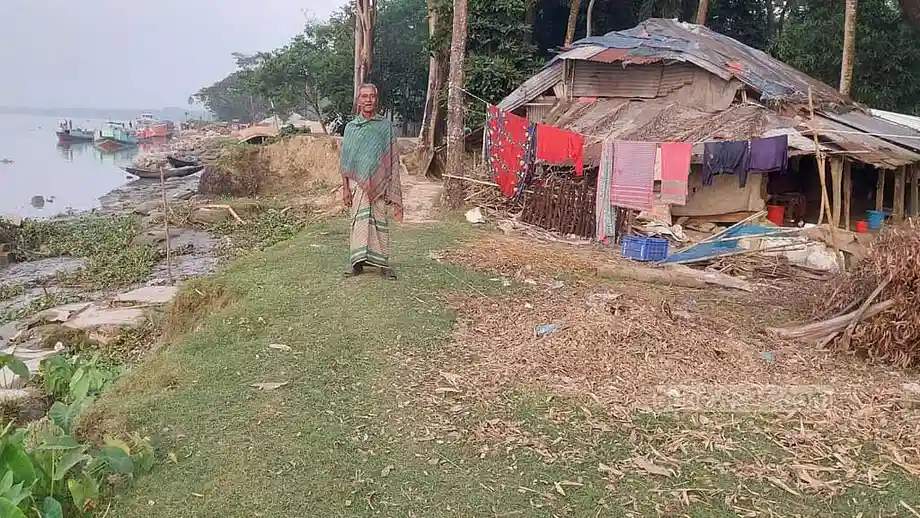
For Sumon, a tea stall owner, the problem means wading through plastic waste reaching his ankles each morning. Across rural and periurban Bangladesh, discarded bags, bottles and wrappers are disrupting businesses, blocking irrigation channels and collecting in fields and rivers. Periurban areas, where towns meet the countryside, face many of the same gaps in waste services.
Dhaka and Chattogram draw attention for overflowing bins and clogged drains, and cities generate most of the country's plastic waste. Rural communities, however, depend directly on land and water for farming, fishing and daily needs. Plastic that obstructs a canal can interrupt an income as well as pollute the surroundings.
Bangladesh has introduced bans, packaging laws and recycling initiatives, yet these measures have struggled to reach many communities outside major cities. Local projects show possible ways to collect and reuse more waste, but expanding them requires money, reliable services, affordable alternatives and participation from the people who use and collect plastic.
How discarded packaging disrupts rural life
Bottles, wrappers and bags accumulate in open spaces, drains and irrigation channels. When rain arrives, blocked outlets can leave markets and farmland flooded. Traders face interruptions to business, while farmers struggle to move water where crops need it or drain water away when fields become saturated.
Plastic mixed with crop residues can obstruct the supply of water to crops. Debris around sluice gates, which regulate water flow, worsens persistent waterlogging. The same waste can therefore contribute to a shortage of irrigation water in one place and excessive standing water in another.
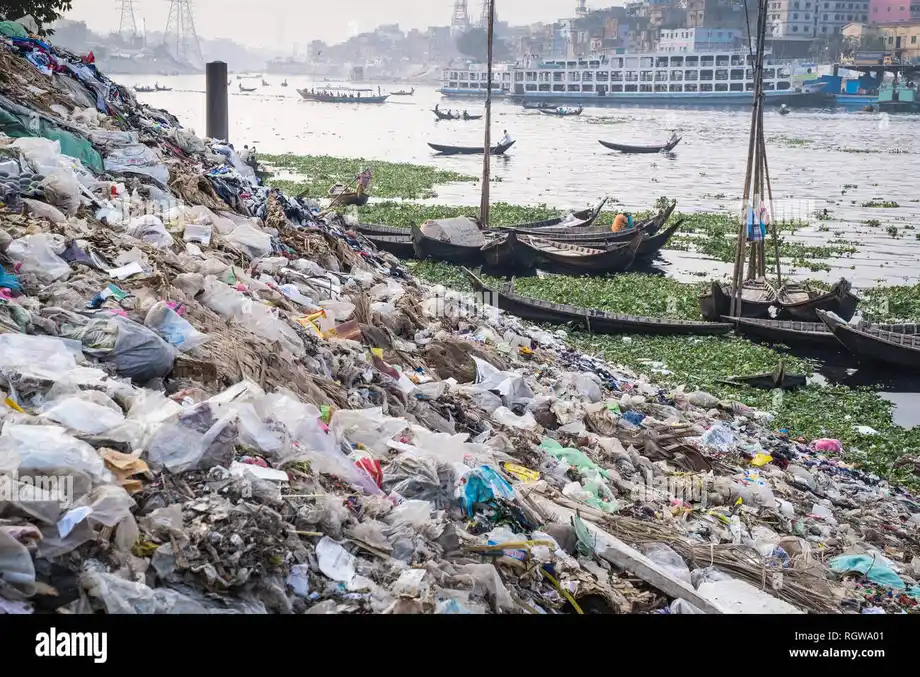
Rural communities often lack basic collection services, designated disposal sites and facilities for separating or recycling rubbish. Plastic is discarded where it is used, burned, buried or dumped in open spaces. From there, it enters canals, rivers and agricultural land, affecting soil fertility and water quality over time.
Rainy season flooding and waterlogging also increase the spread of waterborne diseases. Rivers carry inland plastic towards the Bay of Bengal, making the sea a major recipient of waste generated upstream and exposing marine life and coastal ecosystems to pollution.
Billions of bottles and a large collection gap
A 2024 study by the Environment and Social Development Organisation, or ESDO, estimated that Bangladesh uses up to 3.84 billion plastic bottles intended for a single use annually. Only 21.4 percent are recycled. The remainder end up in landfills, rivers and the sea, where they can persist for up to 450 years while releasing chemicals and tiny plastic particles.
The bottle figures sit alongside a broader national estimate that about 36 percent of plastic waste is recycled. Much of the remainder accumulates in open dumps, water bodies and agricultural land. Both figures point to substantial quantities escaping recycling, although one measures bottles and the other covers plastic waste more widely.
Consumption has also changed. Baskets made from cane or bamboo have given way to polythene bags and plastic packaging, including in remote villages. The use of plastics designed for a single use has increased by 200 percent over the past decade, adding pressure to places with little capacity to handle discarded packaging.
Cheap, convenient products reach villages more easily than collection systems do. Once packaging has served its purpose, households and traders may have nowhere organised to send it. Rural dependence on agriculture, fisheries and local water supplies makes the resulting environmental damage an immediate economic and social concern.
Awareness and health risks extend beyond visible litter
Only 5.5 percent of rural consumers are aware of the health risks associated with plastics intended for a single use, compared with 18.4 percent in urban areas. That gap accompanies widespread improper disposal and reuse of plastic items. Limited access to healthcare adds to rural vulnerability.
As larger pieces break down, they release microplastics, tiny fragments that can enter water, soil and food. These particles are being detected in the food chain, including fish and crops consumed by rural populations, and have also been detected in human blood.
Plastic degradation can release toxic chemicals such as Bisphenol A, known as BPA. Such substances have been linked to disruption of hormones, cancer and other health problems over the longer term. Hormones are chemical signals that help control how the body works, so interference with them can affect normal bodily processes.
Dr. Md Abul Hashem, a senior technical adviser to ESDO, warned about chemicals and plastic particles entering food and affecting living organisms:
The risks associated with chemicals like BPA and microplastics cannot be ignored as they infiltrate our food chain and harm biodiversity.
Soil degradation, contaminated water and damage to biodiversity connect environmental harm with rural livelihoods. A household relying on locally grown crops and caught fish depends on the same waterways and land that receive poorly managed waste.
Why bans and packaging laws have fallen short
Bangladesh became the first country in the world to ban plastic shopping bags in 2002. Later measures included the Plastic Waste Management and Conservation Rules in 2008 and the Jute Packaging Act in 2010. More recently, bans on plastics intended for a single use in supermarkets and coastal areas have been announced.
Several policy milestones frame the response:
- 2002: Bangladesh introduced its ban on plastic shopping bags.
- 2008: The Plastic Waste Management and Conservation Rules followed.
- 2010: The Jute Packaging Act added another measure to the policy framework.
- 2024: ESDO's bottle study and a BRAC study of Cox's Bazar documented continuing waste problems.
Enforcement remains weak, especially outside major cities. Monitoring is limited, penalties for violations are few, and local authorities often lack the resources to turn national policies into daily practice. Announcing restrictions also leaves consumers and businesses needing practical substitutes.
Affordable alternatives are not widely available. A trader who needs packaging and a customer carrying purchases both require something accessible and reasonably priced. Without those options, changing habits becomes harder even when people understand the environmental cost.
Union parishads and municipalities face shortages of funding, technical capacity and structured waste plans. Limited public engagement adds another obstacle: rules depend on households, shops, collectors and authorities participating in the same system. Stronger monitoring, stricter penalties and greater community involvement are among the proposed responses.
Waste workers and local markets offer a starting point
The informal sector collects around 1,000 tonnes of plastic waste daily, making waste pickers and recyclers central to existing recovery efforts. Their work is constrained by limited formal recognition, support and access to resources.
Integrating these workers into organised waste services would involve training, practical support and recognition of their role. Collection already happens through their labour; better connections to local authorities and recycling businesses could help communities build on that activity.
In Dhaka, Standard Chartered Bank has launched a programme allowing community members to exchange plastic waste for cash or essential goods. Extending such exchanges to rural areas could give households a reason to gather discarded plastic while creating opportunities for local income.
Development platforms are also working with private businesses to establish collection hubs centred on markets. Traders receive incentives to separate plastic and deposit it for recycling. Markets bring sellers, customers and packaging together, making them practical places to organise collection where wider infrastructure is limited.
Community hubs and separation at the point of disposal are proposed as foundations for more structured services. Keeping recyclable plastic apart from other rubbish helps direct it towards collection and processing rather than leaving it mixed with waste in drains or open land.
Faridpur, schools and new recycling ideas
In Faridpur, Practical Action uses a circular economy approach to process plastic of low quality collected from the Padma River into oil of high quality and black carbon through pyrolysis. A circular economy aims to recover value from discarded materials instead of simply throwing them away. Pyrolysis uses heat to break material down into other products.
The initiative reduces waste while creating jobs and improving livelihoods for waste workers. It offers one example of linking environmental work with income, an important consideration in communities where people rely directly on natural resources.
Schools in Cox's Bazar have introduced collection systems that teach children to separate rubbish and compost organic waste. The WaterAid–Swisscontact consortium has involved students in cleanup campaigns and educational activities in climate hotspots including Naogaon and Satkhira.
These programmes aim to establish sustainable habits early. Environmental education in school curricula and community activities, alongside creative approaches to understanding plastic, is among the proposed ways to improve awareness beyond occasional cleanup drives.
Bangladeshi young people and entrepreneurs are also developing floating robots that collect waste and digital platforms that reward recycling. Support for research into sustainable materials and waste technologies could help develop these ideas further. Technical training and seed funding are proposed for local entrepreneurs establishing small recycling units that make useful products, including eco-bricks or compost bins.
Cox's Bazar shows the scale of the challenge
Cox's Bazar, a coastal municipality and major tourist destination, illustrates how weak collection and disposal affect waterways and the sea. A 2024 BRAC study found that 34.5 tonnes of plastic waste were mismanaged daily in the municipality, much of it ending up in canals, drains and the sea.
Only 18 percent of the population practises waste separation at the point of disposal, while formal collection services remain limited. Those conditions leave substantial work for any programme seeking to intercept rubbish before it enters waterways.
The Plastic Free Rivers and Seas for South Asia project, known as PLEASE, is piloting responses with World Bank funding and support from multiple partners. Its activities include communal bins, a proposed recycling facility and support for local green entrepreneurs promoting recycled and upcycled products. Upcycling turns discarded material into a useful product with greater value.
The project has achieved a reported 15 percent improvement in waste separation at the point of disposal and noticeable reductions in plastic waste hotspots. No date was given for the proposed recycling facility. The combination of collection points, processing plans and local businesses illustrates how several parts of a waste system can be addressed together.
Stopping waste before it reaches the sea
At a recent national dialogue, AKM Tariqul Alam, Additional Secretary of the Local Government Division, called for stronger systems to intercept plastic along rivers and streams before it flows downstream into the sea. His comments connected local waste collection with protection of the coast.
Alam also called for Bangladesh to draw on experience from abroad while expanding innovations developed within the country:
"Bangladesh can benefit from both studying international best practices and scaling up homegrown, locally-led innovations in waste management," said AKM Tariqul Alam.
Government agencies, municipalities, private businesses and communities each have a role in that coordination. Collection in one settlement affects the waste reaching another downstream, while recycling businesses depend on a dependable supply of separated material.
Plastic arriving from upstream countries adds a challenge across national borders. Bangladesh's participation in the Basel Convention and the forthcoming Global Plastic Treaty offers avenues for international cooperation. Proposed policy changes also include addressing the spread of products designed for a single use and strengthening responses to pollution moving across borders.
Alternatives and funding must reach local communities
The Sonali Bag, made from jute cellulose and invented by Bangladeshi scientist Dr. Mubarak Ahmad Khan, is one proposed alternative to conventional plastic packaging. Reusable bags, biodegradable packaging and traditional materials could also help reduce dependence on disposable plastics.
Price and availability will shape whether these alternatives become routine. A replacement must be accessible and competitive in cost for households and traders to adopt it widely. Promoting a product and ensuring that village shops can obtain it are both parts of changing consumption.
Waste infrastructure needs investment at the same time. Collection services, facilities for separating rubbish and recycling operations are especially limited in rural areas. Partnerships between public authorities and private businesses can bring funding and technical knowledge, while green finance initiatives supported by Bangladesh Bank can fund environmentally responsible investment.
The Coca-Cola Foundation's $15 million grant to the United Nations Development Programme supports plastic waste management in Asia, including Bangladesh. It illustrates the role international funding and collaboration can play alongside domestic public spending and private investment.
For union parishads and municipalities, proposed support includes targeted funding, technical training and structured plans that place plastic waste management within local development agendas. Education campaigns, community cleanup drives and support for waste workers would accompany physical infrastructure.
What coordinated action would change
Rural Bangladesh's immediate needs are concrete: clear irrigation channels, functioning drains, reliable collection and somewhere for separated plastic to go. Isolated projects address parts of that task, while a lasting service requires collection, transport, processing and public participation to work together.
The proposed response combines stronger enforcement with affordable alternatives, community recycling hubs, support for entrepreneurs and recognition of informal waste workers. Partnerships involving government, businesses, nongovernmental organisations and international donors can help build infrastructure and expand models already being tested.
Farmers, fishers, traders and households all have a stake in reducing pollution. With practical support, rural communities can organise local recycling, reduce waste and adopt sustainable practices while protecting the land and water on which their incomes depend.
Key Points
- Bangladesh generates an estimated 87,000 tonnes of plastic waste from items intended for a single use annually, nearly 22 percent of it in rural areas.
- Discarded plastic blocks irrigation and drainage, contributes to waterlogging and reaches rivers, farmland and the Bay of Bengal.
- ESDO's 2024 study estimated annual use of up to 3.84 billion disposable plastic bottles, with only 21.4 percent recycled.
- Rural communities face limited collection services, low awareness of health risks and weak enforcement of restrictions.
- Informal workers collect around 1,000 tonnes of plastic daily, while local projects are testing exchanges, collection hubs, recycling technology and school programmes.
- Cox's Bazar mismanages 34.5 tonnes of plastic daily, according to a 2024 BRAC study; the PLEASE project is testing collection and recycling responses.
- Proposed action combines local government funding, affordable alternatives, education, support for workers and entrepreneurs, stronger regulation and international cooperation.