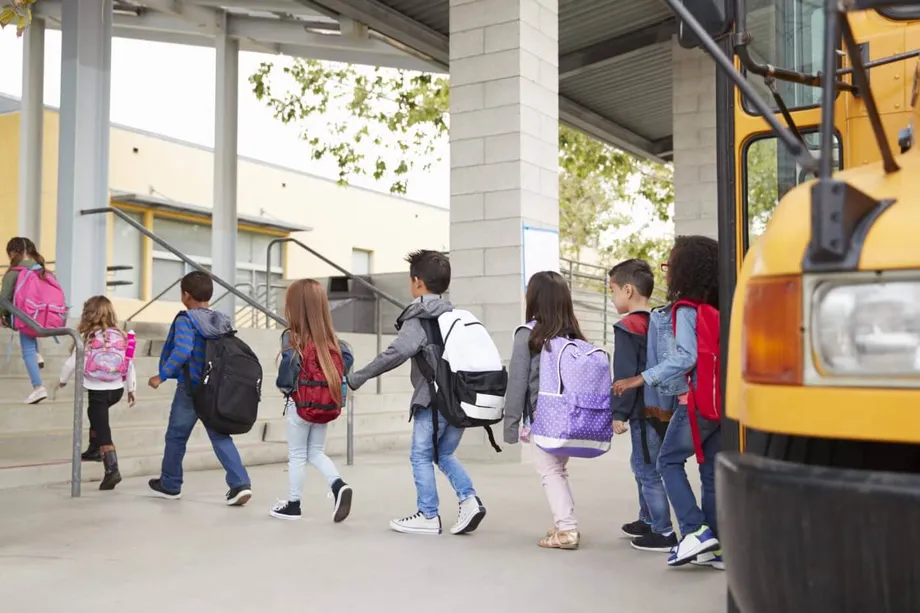
An Earlier Bell Raises Concerns About Student Health
West Java plans to begin school at 6:30 a.m. from mid-July, bringing the province's drive for student discipline into conflict with research on sleep, attention and adolescent development. Governor Dedi Mulyadi supports the change as part of an effort to curb youth delinquency and build healthier habits.
Contents
- An Earlier Bell Raises Concerns About Student Health
- What the Governor Wants to Change
- Which Schools Would Follow the Circular?
- Why Teenagers Struggle With Earlier Bedtimes
- What Brain Activity Shows About Morning Lessons
- Long Journeys Make the Schedule Harder
- How Other Education Systems Handle Start Times
- Can Curfews and Early Starts Work Together?
- Benefits Beyond the Opening Bell
- Why Changing School Hours Is Difficult
- Key Points
As of June 13, 2025, the proposal has drawn objections from educators, a neuroscience communicator and an education consultant. Their concerns reach beyond whether children dislike waking early: teenagers need eight to 10 hours of sleep, while biological changes during puberty make it difficult for many to fall asleep before 11 p.m.
The policy is described as covering kindergarten through senior high school. Its administrative reach is narrower, however. The Indonesian Ombudsman says it applies to schools supervised by the provincial education agency, rather than those managed by the Religious Affairs Ministry or city and regency administrations. The Ombudsman also describes the circular as a notification rather than a regulation carrying enforceable sanctions.
Students travelling more than 10 kilometers to school could face particularly demanding mornings. An arrival time of 6:30 a.m. means waking earlier still to wash, eat and travel, reducing the hours available for sleep unless bedtime also moves forward.
West Java's debate therefore involves three connected questions: what the provincial government wants school schedules to achieve, which schools its circular actually reaches, and whether an earlier bell fits the way children and teenagers learn. The answers matter to families arranging daily travel and to teachers expecting students to arrive ready to concentrate.
What the Governor Wants to Change
Dedi's administration presents the schedule as part of its ambition to develop a "Pancawulya generation." Rooted in Sundanese cultural wisdom, the term brings together five values: kindness, health, righteousness, intelligence and skillfulness.
The administration also wants to address street brawls, gang activity and addiction to online gaming. Earlier school attendance sits alongside other measures, including night curfews and sending students who misbehave to boot camps using military methods. Child development experts have criticised those accompanying measures as well.
The official circular gives another reason for starting earlier: making up time for an additional weekly day off on Saturdays, in alignment with government regulations. The governor initially proposed a 6:00 a.m. start before the time was adjusted to 6:30 a.m.
The length of the school day would vary by education level. Preschool provision would require at least 195 minutes a day, while high school schedules could run for up to 10 hours daily. The discussion therefore concerns both the opening bell and how much of a student's day school occupies.
Which Schools Would Follow the Circular?
The Indonesian Ombudsman's clarification is central to understanding the policy. Although the plan has been presented as a change spanning all education levels, provincial supervision determines which schools fall within its stated reach.
Schools managed by the Religious Affairs Ministry and local city or regency administrations fall outside that scope, according to the Ombudsman. Families therefore need to distinguish the broad description of the initiative from the authority responsible for their particular school.
The Ombudsman says the circular functions more as a notification than as a regulation with enforceable penalties. It has also called for education reforms to rest on reliable data and logical reasoning. A province seeking a common routine still faces questions about how that routine fits different schools, journeys and student ages.
The policy's main dates and schedule changes are:
- Initial proposal: Dedi proposed starting school at 6:00 a.m., before the proposed time moved to 6:30 a.m.
- June 13, 2025: The planned change was drawing debate over discipline, sleep and the limits of provincial authority.
- Mid-July 2025: The new school start time was scheduled to take effect. No exact starting date was given.
Why Teenagers Struggle With Earlier Bedtimes
The American Academy of Sleep Medicine recommends eight to 10 hours of sleep each night for adolescents. Sleep supports brain development, helps the brain retain memories, regulates emotions and contributes to physical health. For a student, those processes affect both learning during lessons and remembering material afterward.
Puberty changes the timing of the body's natural sleep cycle, known as its circadian rhythm. Teenagers tend to become sleepy later at night, making it difficult to fall asleep before 11 p.m. An instruction to go to bed earlier can therefore run against a biological change rather than simply a preference for staying awake.
Trisa Triandesa, a neuroscience communicator, explains why this matters when schools require an early arrival:
This biological change makes it difficult for teens to fall asleep before 11 p.m. Forcing them to wake up early to go to school will only result in chronic sleep deprivation.
Triandesa also warns that insufficient sleep can damage academic performance, mood and mental health. Chronic sleep deprivation means repeatedly getting less sleep than the body needs, rather than having an occasional short night.
A teenager who falls asleep at 11 p.m. reaches eight hours of sleep at 7 a.m., already later than the proposed opening bell. That simple comparison shows the pressure created by a 6:30 a.m. start, even before allowing time to prepare for school or travel there.
What Brain Activity Shows About Morning Lessons
Research from the National Institutes of Health adds a direct measure of classroom attention to the discussion. Studies using electroencephalograms, or EEGs, examined high school students' brain activity and found adolescents were least attentive during early morning lessons.
An EEG records electrical activity in the brain. In the studies described, alpha brain activity was highest in the early morning and declined as the day progressed. Higher alpha activity was associated with lower attentiveness.
Quiz scores and engagement were also highest during the middle of the morning, suggesting that this period was better suited to learning. The classroom findings fit broader research showing that adolescents with restricted sleep experience greater sleepiness, weaker cognitive performance and poorer memory retention early in the day.
The American Psychological Association also links later school starts with improved mood, better attendance, higher grades and fewer car accidents among young people. Together, the findings connect school scheduling with students' ability to pay attention, manage emotions and function beyond the classroom.
Long Journeys Make the Schedule Harder
Satriwan Salim, national coordinator of the Association for Education and Teachers, known as P2G, argues that the government should concentrate on improving the learning environment rather than changing school hours. He points to the distances many West Java students travel: more than 10 kilometers between home and school.
Limited transport infrastructure can make those journeys harder, particularly when families need to reach school so early. A single provincial start time can therefore produce different demands depending on where a student lives and what transport is available.
The West Java Education Agency has responded to criticism with technical directions intended to improve learning. These include removing written homework for certain students and replacing it with reflective activities.
Changing homework could alter what some students do after school, but concerns about the schedule's wider effects persist. Families still have to fit travel, meals, rest and school attendance into the same day, while older students face the later sleep cycle associated with adolescence.
How Other Education Systems Handle Start Times
Finland and South Korea provide contrasting examples to West Java's proposed direction. In Finland, where schools typically begin around 9 a.m., the later schedule contributes to lower stress and better student focus.
South Korea moved school starts from 7:30 a.m. to 9 a.m. in 2015 to address sleep deprivation and encourage families to spend time together in the morning. That change moved the opening bell later by an hour and a half.
Studies in Singapore and England found that delays of as little as 45 minutes could improve student alertness, well-being and academic performance. Those findings suggest that the size of a schedule change matters alongside the choice between earlier and later starts.
In the United States, more than 500 school districts have shifted starting times later in response to evidence of benefits. The American Academy of Pediatrics recommends that middle and high schools begin no earlier than 8:30 a.m., two hours after West Java's proposed start. California and Florida have also passed laws requiring later starts for secondary schools.
Can Curfews and Early Starts Work Together?
West Java's night curfew and earlier school bell share an intended aim: encouraging more orderly daily routines. The concern is that restricting evening activity and requiring an early arrival address different parts of a teenager's day.
A curfew can bring children home earlier. Their ability to fall asleep still depends on biological timing as well as social habits. When bedtime remains late and waking moves earlier, the period available for sleep becomes shorter.
Ina Liem, an education observer and consultant, supports the night curfew because it encourages parental involvement. She opposes the early school start, describing the move as "populist" and arguing that it lacks urgency and a foundation in data.
Liem identifies budget efficiency, school governance and teaching quality as more pressing education concerns. She also disputes the idea that an earlier arrival necessarily builds genuine discipline. Her position separates support for parents' involvement in evening routines from support for making the school day begin sooner.
Benefits Beyond the Opening Bell
Research on later school starts associates them with longer sleep, improved mood and stronger social and emotional health. Findings also include better cognitive and behavioural outcomes, higher academic performance and improved attendance.
Studies further connect later starts with reduced rates of depression, substance use and car accidents. These outcomes give school scheduling a public health dimension: the effects extend to how students feel, behave and travel, as well as what happens during lessons.
Teachers and parents have also reported better sleep and daytime functioning when school schedules more closely match natural sleep cycles. A change to the opening bell can affect household routines and adults' mornings alongside students' rest.
West Java's stated goals of health, intelligence and skillfulness therefore overlap with the outcomes discussed in sleep research. The dispute concerns which daily timetable best supports those goals, particularly for adolescents whose sleep timing differs from that of younger children.
Why Changing School Hours Is Difficult
School systems considering later starts often face resistance over transport, activities after school and family routines. Bus arrangements and the timing of different schools are connected, so moving secondary schools later can mean moving elementary schools earlier.
Working parents may find those changes difficult to manage. Younger children are generally better able to adapt to earlier schedules because they do not face the same biological pressure toward later sleep as adolescents, but families still need workable arrangements for care and travel.
Districts that have changed their schedules have responded by adjusting sports timetables and child care provision. Research has not found that later starts substantially disrupt teenagers' participation in extracurricular activities or employment after school.
West Java faces its own practical choices over travel, lesson time and the additional Saturday break. The strongest criticism of the 6:30 a.m. plan is that discipline and learning depend partly on students arriving rested enough to participate. The policy's next scheduled step is its introduction in mid-July, with debate continuing over health, implementation and the schools covered.
Key Points
- West Java plans a 6:30 a.m. school start from mid-July 2025, following an initial proposal for 6:00 a.m.
- Governor Dedi Mulyadi links the policy to discipline, the five Pancawulya values and efforts to curb youth delinquency.
- The Indonesian Ombudsman says the circular covers schools supervised by the provincial education agency and functions as a notification without enforceable sanctions.
- Adolescents need eight to 10 hours of sleep, while puberty commonly shifts their natural sleep timing later.
- Critics cite risks to attention, memory, mood and mental health, alongside difficult journeys for students living more than 10 kilometers from school.
- Research and examples from other education systems favour later starts, while transport, child care and family routines remain practical challenges.