Online Campaigns Are Changing Who Reaches Voters
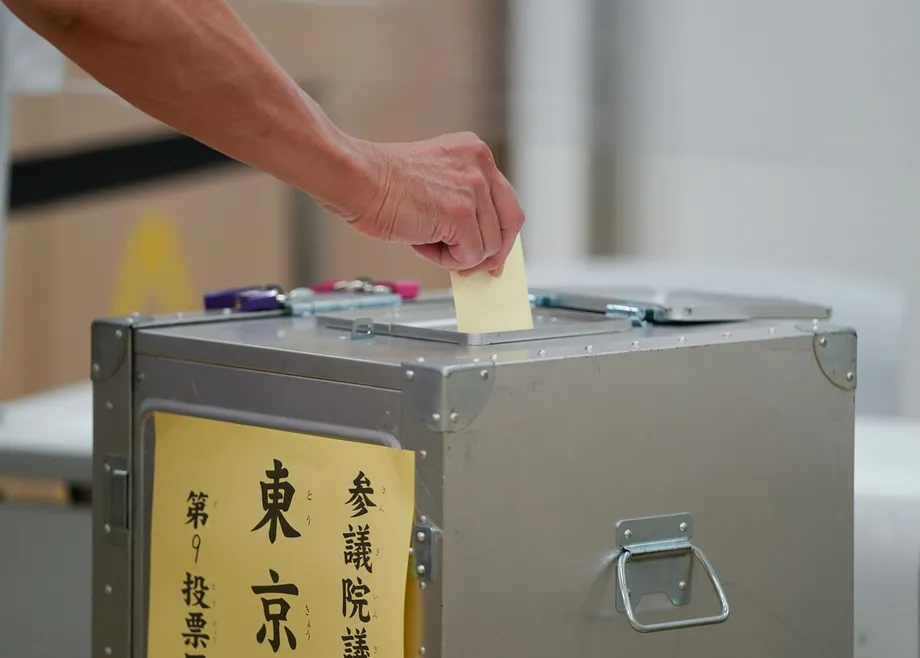
Taro Yamada won approximately 540,000 votes in Japan's 2019 House of Councillors election. The Liberal Democratic Party (LDP) politician attributes much of that success to a campaign strategy focused on social media. His experience points to a change that has since become harder for established parties to ignore: political influence increasingly depends on reaching people through their phones.
Contents
- Online Campaigns Are Changing Who Reaches Voters
- From Local Networks to Livestreams
- Three Elections Show the Political Rewards
- False Claims Can Travel Faster Than Corrections
- Why Platforms Keep Showing Familiar Views
- When Election Attention Becomes Income
- Lawmakers Disagree Over How to Respond
- Platform Responsibilities Remain Unsettled
- Generations Are Finding Politics in Different Places
- Key Points
Japan's elections in 2024 brought that change into sharper view. Motohiko Saito won reelection as Hyogo governor despite a motion of no confidence and allegations of misconduct. Shinji Ishimaru, a relatively unknown former mayor without backing from a major party, finished second in the Tokyo gubernatorial election. Both benefited from strong online campaigns.
The Democratic Party for the People (DPFP), Reiwa Shinsengumi and Sanseito also increased their seats in the 2024 House of Representatives election while making use of social media. Yuichiro Tamaki, the DPFP leader and an active YouTuber, acknowledged studying Ishimaru's methods. His party quadrupled its seats.
As of June 13, 2025, these successes have sharpened a difficult debate. Social media gives candidates a direct route to people who feel distant from established politics. It also allows misleading claims to spread quickly, rewards attention with advertising income and can surround voters with messages that repeat their existing beliefs.
A Kyodo News survey found that 85.5% of respondents were concerned about false information spreading on social media during election campaigns. Political parties acknowledge the problem, but disagreements over regulation and freedom of expression have slowed their response.
From Local Networks to Livestreams
Japanese politicians traditionally built support through personal contact, appearances at local festivals and relationships with industry groups. Those methods connected candidates with organised communities and gave voters familiar people and institutions through which to understand politics.
YouTube, X, formerly Twitter, and TikTok have opened another route. Candidates can livestream speeches, share campaign events and speak directly to viewers without waiting for a newspaper article or television appearance. Short videos can carry selected moments from a speech far beyond the people who attended it.
Yamada's approximately 540,000 votes in 2019 became an example of what a strategy centred on social media could achieve. The appeal is especially strong among younger voters and people disillusioned with mainstream politics, for whom direct communication can feel more immediate and authentic.
The LDP now faces competitors that have often moved faster online. The DPFP, Reiwa Shinsengumi and Sanseito outpaced the more traditional party in digital engagement during the 2024 House of Representatives campaign. Recognising the challenge, the LDP has begun featuring prominent members on its YouTube channel and experimenting with videos intended to spread widely.
Three Elections Show the Political Rewards
Saito's reelection in Hyogo showed how an online narrative could compete with coverage of a candidate's conduct. Despite the motion of no confidence and misconduct allegations, supportive social media posts presented him as a reformer fighting entrenched interests. That portrayal appealed to many voters and overshadowed traditional media coverage.
Ishimaru's Tokyo campaign demonstrated the reach available to a candidate without support from a major party. Live YouTube broadcasts and short TikTok videos helped the former mayor secure second place, ahead of established politicians. His performance made his methods a subject of interest for other political leaders.
Tamaki openly acknowledged learning from Ishimaru's approach. The DPFP's subsequent increase to four times its previous number of House of Representatives seats illustrated why parties were paying attention. Online communication had become part of their efforts to turn public interest into electoral support.
The developments span several elections:
- 2019: Yamada won approximately 540,000 votes in the House of Councillors election, crediting much of his success to social media.
- 2024: Ishimaru finished second in the Tokyo gubernatorial election after a campaign built around online video.
- 2024: The DPFP, Reiwa Shinsengumi and Sanseito increased their seats in the House of Representatives election.
- 2024: Saito won reelection as Hyogo governor amid strong support on social media.
False Claims Can Travel Faster Than Corrections
Itsunori Onodera, chairman of the LDP Policy Research Council, experienced the speed of an online backlash when a remark he made on an NHK programme was taken out of context and spread widely on X. He later explained that his comment had been misunderstood, after criticism had already gathered momentum.
For candidates and voters, the difficulty is practical. A short remark can circulate separately from the discussion around it. People encountering that fragment may form an opinion before seeing an explanation, while the person targeted has limited ways to reach everyone who saw the initial post.
The survey finding that 85.5% of respondents feared false election information reflects broad public concern about this environment. Unverified or misleading material can change perceptions of a candidate and affect the fairness of a campaign, particularly when emotionally appealing claims receive rapid attention.
Yoshiaki Hashimoto, professor emeritus in social psychology at the University of Tokyo, described how people can become attached to information that fits their views:
Once users resonate with a message, whether true or false, they tend to accept only information they are willing to regard as fact, blocking out anything that contradicts their perceptions.
Hashimoto's explanation connects individual habits with a wider democratic problem. When people repeatedly accept agreeable messages and reject conflicting information, voters can become more divided over the basic account of what has happened.
Why Platforms Keep Showing Familiar Views
Social media platforms use algorithms, automated systems that select and rank content, to decide what users see. They analyse browsing histories and other signs of interest, then present material tailored to those preferences. Their business depends on attracting views and interactions that generate advertising revenue.
The result can be a filter bubble: a stream of information shaped around what a person already likes or believes. An echo chamber describes a related experience, in which similar opinions are repeated and reinforced while competing views receive less attention.
For voters, this can make political information easy to find but harder to assess in balance. A person who responds strongly to one account of a candidate may receive more content taking the same position. Repetition can strengthen confidence in that account while leaving other evidence outside the person's usual feed.
Platforms designed to maximise engagement therefore influence more than the popularity of individual videos. Their selection systems help determine which political arguments people encounter, how often they encounter them and whether they meet information that challenges their first impression.
When Election Attention Becomes Income
Jun Iio, a professor at the National Graduate Institute for Policy Studies, identifies a financial incentive behind some election content. People can earn money by attracting attention to political posts, creating a reason to publish material that draws large audiences.
Iio described the gap between that activity and Japan's legal framework:
What's important is that some people are using elections to make money by posting related information online, and Japan's legislation does not prohibit it.
Takashi Tachibana, head of the NHK Party, released hundreds of videos during the Hyogo gubernatorial election. They attacked traditional media and promoted unverified claims. The videos attracted millions of views, reaching far more people than official campaign channels.
Election discussion can therefore become a source of income for people whose immediate reward comes from audience size. Content that provokes anger, loyalty or suspicion can draw repeated viewing and interaction, blurring the boundary between political argument and material produced to earn advertising revenue.
Tatsuhiko Yamamoto, professor of constitutional and information law at Keio University, argues that the present system makes reliable information difficult for voters to access. He supports mechanisms that provide balanced content grounded in evidence during elections, instead of leaving access to political information primarily to algorithms driven by engagement.
Lawmakers Disagree Over How to Respond
Japan's Diet has struggled to agree on measures addressing confusion caused by social media during elections. Major parties recognise the need to counter misinformation, but they differ over whether existing laws are sufficient and how far new rules should reach.
Ichiro Aisawa, chairman of the LDP's Research Commission on the Election System, argued during a televised debate for using existing legislation, including the Public Offices Election Law and the Penal Code. That approach would address harmful conduct through legal tools already available.
Hiroshi Ogushi of the Constitutional Democratic Party takes a different position, arguing that new regulations are needed for the particular challenges created by social media. The disagreement concerns how the law should respond to a communications environment in which posts can spread quickly and reach audiences beyond formal campaign channels.
Harumichi Yuasa, a professor at Meiji University, points to the strict limits that the Public Offices Election Law already places on campaign materials and media conduct. He questions why social media platforms remain largely unregulated alongside those controls.
Freedom of expression complicates the debate. Lawmakers are wary of restrictions that could be seen as censorship and of the public backlash such measures could produce. Voters and candidates need room to argue, criticise and organise, even as false information threatens the quality of election debate.
Platform Responsibilities Remain Unsettled
Proposals under discussion include clearer responsibilities for social media companies, greater transparency about algorithms and mechanisms to identify and counter false information. Transparency would give the public a better understanding of how platforms select and distribute political content.
No significant legislative progress had been made by the end of the Diet session described in the debate. The lack of concrete action has left Japan vulnerable to manipulation and foreign interference of the kinds seen in other democracies.
Political parties and regulators face connected decisions. They must consider what platforms should explain about their systems, how harmful claims should be addressed and how political expression should be protected. Agreement that misinformation is a problem has yet to produce agreement on those responsibilities.
News organisations also have a role in the response. One proposal is for them to investigate and check false claims circulating online more actively, rather than allowing excessive restraint in the name of fairness to limit their reporting.
Generations Are Finding Politics in Different Places
Older Japanese voters continue to rely on newspapers, middle aged voters favour television, and younger people increasingly turn to the internet and social media for news and analysis. Candidates trying to reach all three groups must operate across different information habits.
Business associations, labour unions and religious groups once played a central role in shaping political identities and behaviour. Their declining influence means more people are navigating political choices without those traditional intermediaries, often turning instead to online communities and influencers.
That change creates room for more voices and can bring people into political discussion who previously felt excluded. It also increases the risk that voters become separated into communities receiving very different accounts of candidates and events.
Information literacy and civic education are among the responses proposed. Information literacy means learning to examine a claim, consider its evidence and seek information beyond a familiar feed. Civic education helps people understand how politics works and how their choices connect with public decisions.
Japan's coming elections place pressure on parties, news organisations and regulators to adapt. Proposed responses combine education, active checking of online claims and clearer platform rules. Deepfakes generated by artificial intelligence and increasingly sophisticated misinformation campaigns add to the need for vigilance, while the immediate task remains helping voters reach reliable information.
Key Points
- Yamada's approximately 540,000 votes in 2019 and several prominent campaigns in 2024 show the growing importance of social media in Japanese elections.
- Saito won reelection in Hyogo, Ishimaru finished second in Tokyo, and the DPFP quadrupled its House of Representatives seats.
- A Kyodo News survey found 85.5% of respondents were concerned about false information spreading during campaigns.
- Algorithms and advertising income reward attention, while repeated exposure to agreeable messages can deepen political divisions.
- Lawmakers disagree over using existing laws or introducing new rules, with freedom of expression central to the debate.
- Proposed responses include platform transparency, information literacy, civic education and more active checking of online claims.