New taxes target selected goods and six service sectors
Malaysia will expand its Sales and Service Tax (SST) on July 1, 2025, bringing six additional service categories into the system and revising sales tax rates on selected goods. Essential items will remain exempt, while goods classified as non-essential or luxury items will face rates of 5% or 10%.
Contents
- New taxes target selected goods and six service sectors
- Why the government is widening SST
- Which everyday goods remain exempt?
- Which goods will attract 5% or 10%?
- Rental and construction face different rates
- Financial services taxed through fees and commissions
- Citizenship shapes healthcare and education exemptions
- Beauty services enter the tax system
- How businesses will manage the transition
- Why costs may still move through businesses
- Key Points
The changes, announced in the 2025 Budget and confirmed by the Ministry of Finance, are intended to broaden the tax base and strengthen public finances. The government says the additional revenue will support public services, infrastructure and direct cash assistance, while protecting most Malaysians from a heavier cost of living.
Rental and leasing, construction, financial services, private healthcare, education and beauty services are the six categories covered by the service tax expansion. Rates will range from 6% to 8%, with exemptions based on factors including citizenship, the type of service and business size.
Businesses will have a transition period. Companies working to meet the new requirements will face no legal action or penalties until December 31, 2025. The Royal Malaysian Customs Department will provide guidance on assessing tax obligations and registration.
The main dates are:
- June 10, 2025: The announced changes are due to take effect the following month.
- July 1, 2025: The revised sales tax rates and expanded service tax coverage begin.
- December 31, 2025: The announced period without legal action or penalties for companies working toward compliance ends.
Why the government is widening SST
The SST expansion forms part of the Madani Economy framework, which seeks to improve Malaysia's public finances while strengthening social support. Broadening the tax base means collecting tax from a wider range of goods and services, rather than relying only on those already covered.
Finance Minister II Datuk Seri Amir Hamzah Azizan said the aim was to raise revenue without placing an additional burden on most people:
The additional revenue can benefit the whole country without burdening the majority of the people.
Malaysia's fiscal deficit target is 3.8% of gross domestic product, down from 4.1% the previous year. That is a reduction of 0.3 percentage points. A fiscal deficit occurs when government spending exceeds its revenue; measuring it against gross domestic product shows its size relative to the economy.
The government sees the SST expansion as a key part of reaching that target. It intends to use the wider revenue base to support improvements in public services, infrastructure upgrades and cash assistance. Industry stakeholders have also been consulted to make the changes practical and reduce disruption for businesses.
Which everyday goods remain exempt?
Essential goods will remain exempt from sales tax, at a rate of 0%. The exemptions cover a broad range of food, healthcare products, reading materials and inputs used in construction and agriculture.
The goods listed as remaining exempt are:
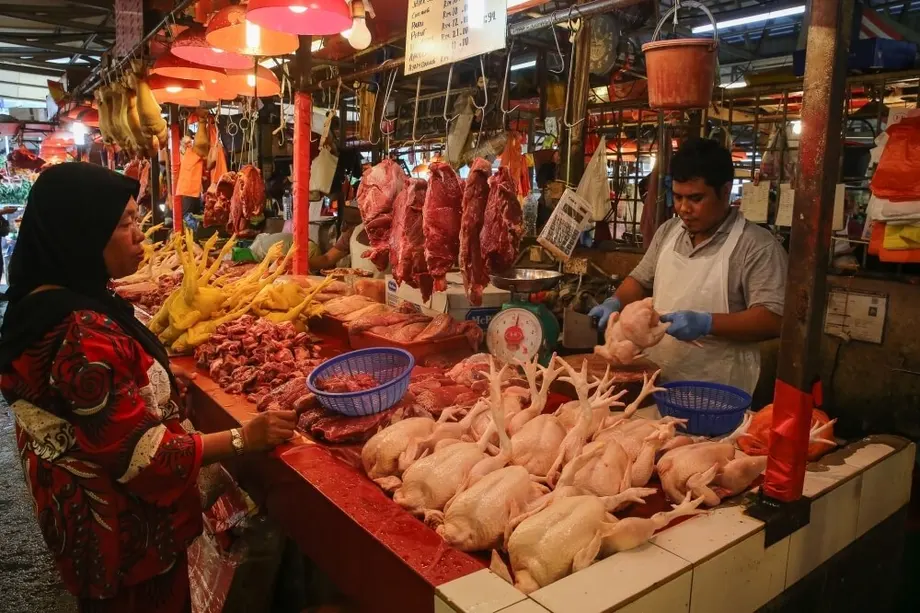
- Unprocessed foods: chicken, beef, mutton, fish, prawns, squid, vegetables, local fruits, rice, barley, oats and wheat.
- Processed foods: flour, canned sardines, sugar, salt, white bread, pasta, noodles, instant noodles, milk, malt drinks and cooking oil.
- Medicine and medical devices.
- Books, journals and newspapers.
- Livestock feed and pet food.
- Basic construction materials: cement, stones and sand.
- Agricultural inputs: fertilizer, pesticide and farming machinery.
For households, the central protection is that these necessities will not attract sales tax under the revision. For farmers and construction businesses, the listed exemptions also cover materials and equipment used in their work.
The government's stated approach is to concentrate the new burden on discretionary purchases and higher value services. Keeping staple foods and other basic goods outside sales tax is intended to limit the direct effect on daily spending.
Which goods will attract 5% or 10%?
Selected goods classified as non-essential or luxury items will face sales tax of either 5% or 10%. The lists extend beyond expensive food to include consumer products, industrial goods and materials.
The announced categories are:
- 5% sales tax: abalone, lobster, quinoa, cheese, fruit jams, smartphones, king crab, salmon, cod, truffles, imported strawberries, essential oils, silk fabric and industrial machinery.
- 10% sales tax: caviar, shark fins, alcoholic beverages, cigarettes, cigars, leather products, tungsten scrap waste, racing bicycles and antique hand paintings.
Shoppers will therefore encounter different tax treatment across food and other purchases. Local fruits remain exempt, for example, while imported strawberries are listed at 5%. Fish is included among exempt essentials, while salmon and cod are specifically listed at 5%.
Businesses will also need to distinguish between the listed categories. Farming machinery remains exempt, while industrial machinery appears in the 5% category. The particular product matters when assessing which rate applies.
Rental and construction face different rates
Rental or leasing services will attract service tax of 8%. Residential housing, reading materials, financial leases and assets outside Malaysia will be exempt. Micro, small and medium enterprises (MSMEs) with annual turnover below RM500,000 will also be exempt.
Annual turnover is the amount a business earns from sales over a year, before deducting its costs. The exemption for smaller enterprises is intended to limit the burden on businesses operating below the stated threshold.
Construction work services will be taxed at 6% for infrastructure, commercial and industrial projects. Residential buildings and facilities related to public housing will be exempt.
Contractors must register when their taxable services reach RM1.5 million over 12 months. Taxable services are the services covered by the tax rules, so the registration test concerns the value of those services during that period.
The construction rules draw a line between housing and other projects. Commercial premises, industrial developments and infrastructure fall within the new coverage, while the stated residential exemptions protect the specified housing work.
Financial services taxed through fees and commissions
Financial services will attract an 8% service tax on services charged through fees or commissions. Providers with more than RM500,000 in annual fees or commissions will be required to register.
A fee is a charge for a service, while a commission is a payment linked to arranging or completing a transaction. The registration threshold for this category is therefore expressed in those charges.
Exemptions will cover basic banking, shariah-compliant financing, foreign exchange gains, capital market activities and certain insurance services. These exclusions are intended to protect key financial activities while extending tax to the specified services that carry fees or commissions.
Financial businesses will need to identify which services fall within the new coverage and which qualify for an exemption. Customers' exposure will depend on the service they use and how it is treated under those rules.
Citizenship shapes healthcare and education exemptions
Private healthcare services will be taxed at 6% only when provided to people who are not Malaysian citizens. Malaysians will be exempt.
The healthcare coverage includes private traditional and complementary medicine and allied health services. The citizenship rule therefore applies across the listed private healthcare categories, rather than being limited to one type of treatment.
Education services will also attract a 6% tax under the announced expansion. The coverage includes private preschools, primary and secondary schools, and higher learning institutions for people who are not citizens. Malaysian students and disabled persons will be exempt.
Schools charging more than RM60,000 per student each year will be required to register. The education rules combine the stated fee threshold with exemptions for Malaysian students and disabled persons.
For families, citizenship and the type of institution or service will be central to understanding the new charges. For healthcare providers and education institutions, applying the exemptions will be part of meeting their tax obligations.
Beauty services enter the tax system
Beauty services will attract service tax of 8% when providers have more than RM500,000 in annual taxable services. The activities listed include facials, manicures, hairstyling, tattoos, make-up and body slimming.
The threshold makes the value of a provider's taxable services central to registration. The measure brings the listed personal care services into the expanded system while setting a threshold for the businesses covered.
Across all six new categories, the rates and exemptions vary. Rental and leasing, financial services and beauty services carry an 8% rate. Construction, private healthcare and education carry a 6% rate.
Businesses cannot apply one threshold or exemption across every category. Rental and leasing include an exemption linked to MSME annual turnover; construction uses RM1.5 million in taxable services over 12 months; financial and beauty services use the stated RM500,000 thresholds. Education has a registration rule linked to annual fees per student.
How businesses will manage the transition
Business-to-business (B2B) exemptions and group relief will be available for certain services to reduce repeated taxation. B2B refers to transactions between businesses. Group relief concerns qualifying transactions within a corporate group.
Non-reviewable contracts will receive a 12-month exemption from the effective date. These are contracts whose terms cannot be revised, making it harder for a business to adjust an agreed price when tax rules change.
Companies working toward compliance will have until December 31, 2025, without legal action or penalties under the announced transition arrangement. The tax changes themselves still take effect on July 1.
The Royal Malaysian Customs Department will provide guidance and support to help businesses assess their obligations and register where necessary. Businesses will need to check their service category, applicable rate, threshold and eligibility for exemptions.
The transition arrangements are intended to ease the adjustment for companies, especially smaller businesses. The rules combine registration thresholds, targeted exemptions, relief for certain business transactions and temporary protection for specified contracts.
Why costs may still move through businesses
Malaysia's SST differs from the previous Goods and Services Tax (GST). GST used an input-output tax credit system, allowing businesses to account for tax paid on purchases against tax collected on sales. SST has no equivalent general mechanism.
Without that mechanism, a business can face tax in its costs and then pass some of those costs into the price charged to its next customer. This is the risk of cascading taxation, sometimes described as tax on tax.
The government intends B2B exemptions and targeted relief to reduce that effect. Those measures matter for companies buying services from other businesses, as well as for consumers who may eventually pay prices that reflect business costs.
Households buying exempt necessities will retain the stated sales tax protection. People purchasing the listed non-essential goods or using newly taxable services may face additional charges, depending on the exemptions and thresholds that apply.
Malaysia's expansion comes as countries seek broader tax bases to pay for social programmes and infrastructure amid global economic challenges. The government's intended balance is to raise revenue for public services, cash assistance and infrastructure while limiting pressure on most households and supporting the country's longer term economic resilience.
Key Points
- Malaysia's revised sales tax rates and expanded service tax coverage begin on July 1, 2025.
- Essential goods remain exempt, while selected non-essential and luxury goods face sales tax of 5% or 10%.
- Six new service categories will be covered, with rates of 6% or 8% and targeted exemptions.
- Malaysians are exempt from the stated private healthcare tax, while education exemptions cover Malaysian students and disabled persons.
- Certain business transactions qualify for relief, and non-reviewable contracts receive a 12-month exemption.
- Companies working toward compliance face no legal action or penalties until December 31, 2025.
- The government targets a fiscal deficit of 3.8% of GDP, down from 4.1% the previous year, with additional revenue intended for public services, assistance and infrastructure.