More Than 30,000 Screenings Across Two Major Health Risks
Brunei Darussalam has showcased an artificial intelligence system for nationwide health screening through BruHealth, with more than 16,000 people participating in cardiovascular disease screening and more than 14,000 undergoing colorectal cancer screening. Developed by researchers at Universiti Brunei Darussalam (UBD), the system was presented as a world first at an exhibition following the university's 36th Convocation Ceremony.
Contents
- More Than 30,000 Screenings Across Two Major Health Risks
- How BruHealth Assesses Disease Risk
- BruHealth 5.0 Broadens the Platform
- AI Screening Extends to Diabetic Eye Disease
- Supporting Older People Through Community Partnerships
- Mekar Sets a National Efficiency Record
- Bruneian Landscapes and Folklore Find New Forms
- Key Points
His Majesty Sultan Haji Hassanal Bolkiah and other dignitaries attended the event, which brought together projects covering public health, support for older people, sustainable engineering and Bruneian cultural heritage. The health screening initiative placed the university's research within a national digital platform already familiar to people across the country.
Cardiovascular disease and colorectal cancer are among the leading causes of death globally and in Brunei. The screening system aims to identify people at greater risk so that they can receive earlier attention, treatment and support for lifestyle changes.
The two participation figures describe the scale of screening for each condition. Through BruHealth, the university's predictive model analyses a range of health data to produce an assessment of a person's risk. This gives the screening programme a practical purpose: helping identify who may need earlier intervention.
Brunei's exhibition also showed how technology is being applied beyond this national screening programme. An AI service for detecting diabetic eye disease, community work supporting healthy ageing, an efficient electric vehicle and creative projects drawing on local history all formed part of the wider picture.
How BruHealth Assesses Disease Risk
UBD's screening technology is integrated into BruHealth, Brunei's national digital health platform. Artificial intelligence is used to analyse health information and predict the risk of cardiovascular disease and colorectal cancer. In simple terms, the system uses a person's health data to help identify whether they face a greater chance of developing these conditions.
The AI model is reported to be more accurate than the World Health Organization's current risk calculators. That comparison is central to the programme's promise of providing a more precise assessment for people in Brunei. No numerical measure of the reported improvement was given.
A risk assessment helps direct attention towards people who may benefit from earlier care. The intended benefit is timely action: identifying higher risk individuals, supporting treatment when needed and encouraging lifestyle changes that may help protect health.
The participation figures show that this work has already reached thousands of people. More than 16,000 have taken part in screening for cardiovascular disease, while more than 14,000 have undergone colorectal cancer screening through the platform. Both programmes address conditions identified as major causes of death in Brunei and worldwide.
BruHealth 5.0 Broadens the Platform
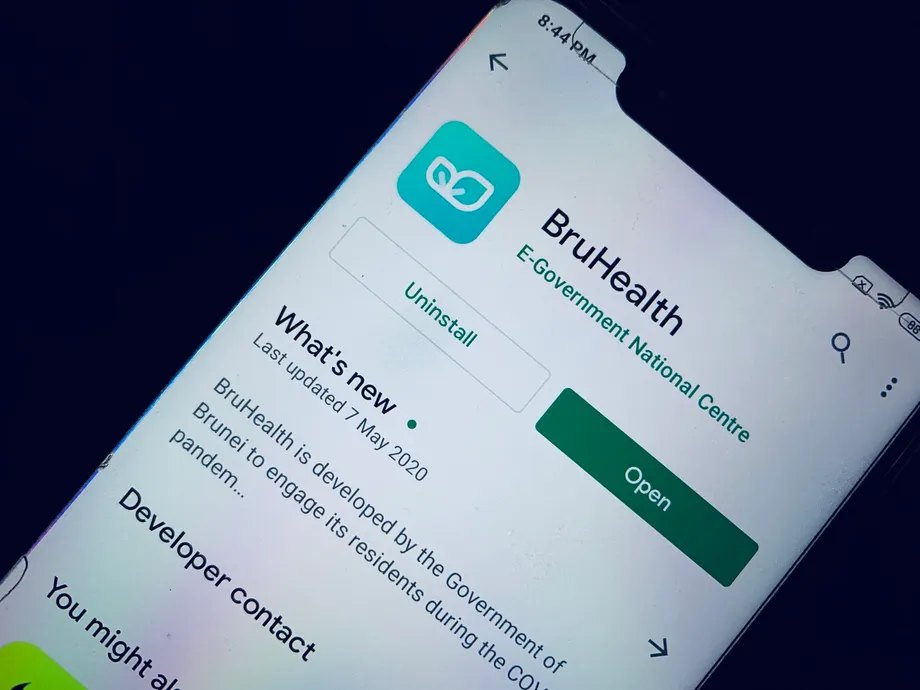
BruHealth became widely used during the COVID-19 pandemic and has since developed into a broader digital health platform. The recent launch of BruHealth 5.0 added health indices powered by AI, personalised wellness recommendations and expanded screening programmes that now include cervical and breast cancer.
The app also allows users to track everyday routines, including diet, sleep and whether they take medication as prescribed. Challenges that use elements of games are intended to encourage healthy habits. Together, these functions connect screening with the daily choices and routines that form part of managing health.
Yang Berhormat Dato Seri Setia Dr Haji Md Isham bin Haji Jaafar, Brunei's Minister of Health, described BruHealth as a foundation for using information and technology to guide care. He said the platform:
lays the foundation for a healthcare system driven by data and innovation, with artificial intelligence soon transforming data into actionable insights for personalized care, efficient resource utilization, and better decision-making.
The minister's statement sets out several intended uses for the platform: care adapted to individuals, better use of healthcare resources and decisions informed by health data. The screening system gives a concrete example of that approach, using information already central to the platform to help identify health risks.
AI Screening Extends to Diabetic Eye Disease
Jerudong Park Medical Centre (JPMC) introduced Brunei's first diabetic retinopathy screening service powered by AI in April 2024. The service represents another application of artificial intelligence in preventive healthcare, alongside the screening work presented at UBD.
Diabetic retinopathy is a leading cause of vision loss among people with diabetes. Early detection is crucial because it creates an opportunity to address the condition before severe complications develop. JPMC's system provides rapid, non-invasive screening, supporting preventive care and efforts to reduce the risk of serious harm to vision.
Dr Hjh Helena POKSJ DP Hj Hurairah, a visiting consultant ophthalmologist at JPMC, welcomed the opportunity to use the technology in eye care. She said:
We are excited to be part of this innovation and explore the endless possibilities of improving our diagnosis as ophthalmologists, allowing better health for our patients.
The two healthcare initiatives focus on different needs. BruHealth assesses risks linked to major diseases through a national digital platform, while JPMC's service screens for an eye condition affecting people with diabetes. Both place earlier identification at the centre of their intended benefit to patients.
Supporting Older People Through Community Partnerships
UBD's exhibition also featured work responding to the needs of Brunei's ageing population. The Centre for Advanced Research (CARe) team collaborates with healthcare organisations and community groups to develop programmes supporting older people.
The work focuses on successful ageing and social inclusion. Its scope brings community participation into the discussion alongside healthcare, recognising that support for older people includes opportunities to remain connected with others.
CARe's partnerships give this part of the exhibition a different emphasis from the digital screening projects. Healthcare organisations and community groups are working together on programmes designed around the particular needs of elderly people, making support for ageing another area in which UBD's research connects with everyday life.
Mekar Sets a National Efficiency Record
UBD's Shell Eco-Marathon team, Belia Tabah, presented its prototype electric vehicle, Mekar. At the Shell Eco-Marathon Asia Pacific and Middle East 2024, the vehicle achieved an energy efficiency result of 285.5 kilometres per kilowatt-hour, setting a new national record.
The figure describes how far the vehicle travelled for each kilowatt-hour of electrical energy used. It gives a concrete measure of the team's engineering achievement and the efficiency of the prototype presented at the exhibition.
Belia Tabah also won a top prize for carbon footprint reduction. The efficiency record and the award placed sustainable engineering alongside healthcare among the university's featured achievements.
The dated developments highlighted across the health and engineering projects included:
- April 2024: JPMC introduced Brunei's first diabetic retinopathy screening service powered by AI.
- 2024: Mekar achieved 285.5 kilometres per kilowatt-hour at the Shell Eco-Marathon Asia Pacific and Middle East, setting a national record.
Bruneian Landscapes and Folklore Find New Forms
Artist Afiq Rafiqin Faiz Al-warits presented work combining photography, AI artistry and historical research. His approach aims to reconnect audiences with Bruneian landscapes and narratives, placing local places and stories at the centre of a creative use of technology.
Nur Azreen Adauwiyah Muhammad Tony Razzaq brought another form of cultural preservation to the exhibition by reimagining the traditional Bruneian folktale Si Kuning as a modern comic. The project carries a traditional story into a contemporary medium.
The two contributions showed different ways of bringing cultural heritage to audiences. Afiq combined visual art with historical research, while Nur Azreen adapted folklore into comic form. Alongside the health, ageing and engineering projects, their work made cultural preservation part of the exhibition's account of innovation.
Key Points
- UBD showcased a nationwide AI health screening system through BruHealth, presented as a world first.
- More than 16,000 people have participated in cardiovascular disease screening and more than 14,000 in colorectal cancer screening.
- BruHealth 5.0 adds AI health indices, personalised wellness recommendations and screening programmes that include cervical and breast cancer.
- JPMC introduced Brunei's first AI diabetic retinopathy screening service in April 2024.
- CARe works with healthcare organisations and community groups to support healthy ageing and social inclusion.
- Belia Tabah's electric prototype Mekar achieved a national record of 285.5 kilometres per kilowatt-hour and won a top prize for carbon footprint reduction.
- Creative projects used photography, AI artistry, historical research and comics to reconnect audiences with Bruneian heritage.