A Warning Wrapped in Reassurance
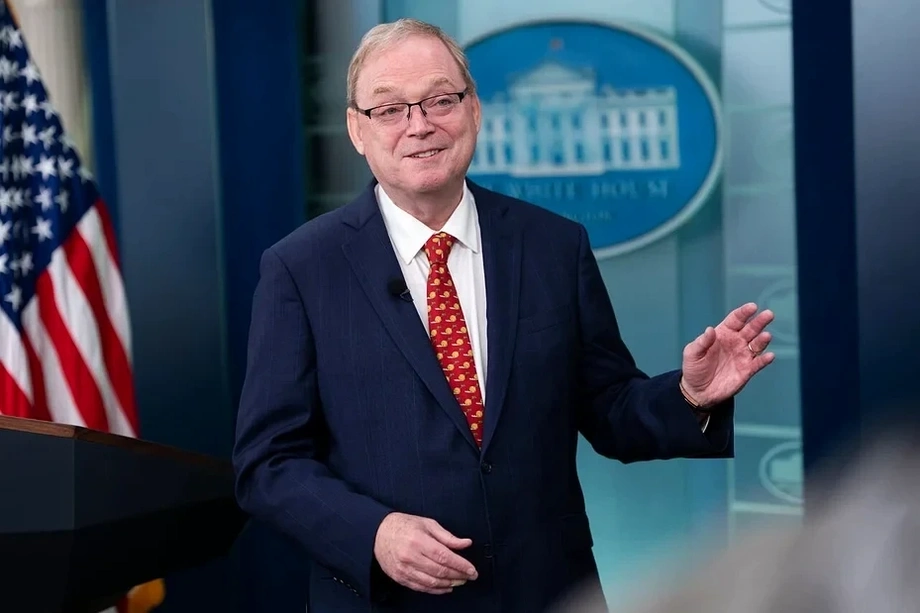
Kevin Hassett, director of the White House National Economic Council, spent Sunday morning explaining why the possible arrival of Nvidia's most powerful chips in China would be a problem the United States can absorb. On CNN's State of the Union on Nov. 29, he said export controls on advanced semiconductors would be tightened if the most advanced chips are confirmed to have reached China, and that the approval process for the next generation of chips would be stricter.
Contents
- A Warning Wrapped in Reassurance
- An Affair, a Boardroom Reversal and Two Sunday Shows
- What Was Found in Shanghai
- Lawmakers Line Up Before the Hearings
- Two California Partners With Chinese Parents
- The Loophole Washington Closed in November
- The Revenue Line Under Argument Is Already Zero
- The Larger Bill Comes Due in 2028
- Chips That Can Say Where They Are
- What Is Still Unresolved
- Key Points
Hassett stopped short of confirming that any of Nvidia's current top models have arrived in China. That distinction matters, because the White House is describing a response to a possibility while three House committees and the Senate Banking Committee prepare to question Nvidia chief executive Jensen Huang about what actually left the country.
The adviser's case rests on speed. Nvidia brings out faster hardware roughly every year, so a chip that slips out today is overtaken soon, and its replacement arrives with more conditions attached.
Those chips are actually soon going to be outdated and reproduced with better chips that are going to have even closer scrutiny.
He applied the same reasoning to the newest hardware, and to the indirect route through rented computing.
To the extent that the greatest chips, the latest chips, did, a few of them, get over into bad hands or through data centers, that they indirectly got them into bad hands, is something that absolutely has to be tightened up if that's true.
Hassett added that even if "some previous-generation chips were to end up in the wrong hands," the effect would be "a short-term closing of a big advantage that the U.S. has." He also said Washington could still win the artificial intelligence race, because it has now recognised "that there is something that could have been done better."
An Affair, a Boardroom Reversal and Two Sunday Shows
The scrutiny began with a personal revelation rather than a shipping record. Nvidia's board dismissed Huang on Nov. 12 after it emerged that he had a relationship with Alice Huang, a former executive at Megaspeed, a Singapore company whose operations are under investigation. American officials suspect she worked for Chinese intelligence, a claim Beijing has denied. Twelve days later the board reinstated him, after an unusual intervention by President Donald Trump. Trump said afterwards that the board did "what we wanted them to do."
Asked on CBS's Face the Nation about that intervention, Hassett defended it in terms of facts rather than loyalty.
You don't want the government telling everybody who should be CEO, but you also don't want people getting fired because they have the wrong facts.
Hassett said the vast majority of Nvidia's chips are sold inside the United States, and that Huang has "a very special skill set" the company judged crucial for winning in AI. Nvidia did not respond immediately to a request for comment on his remarks.
What Was Found in Shanghai
The specific allegation is narrow and concrete. Two Chinese companies installed Nvidia's Blackwell systems, the GB300 NVL72 and the GB200, in a data center in Shanghai tied to Alice Huang. One of the systems was pledged as collateral for a $14 million loan. A fully equipped GB300 rack weighs about 3,300 pounds, a figure Jensen Huang had previously used to argue that the equipment was too bulky to smuggle in a bag.
Blackwell is Nvidia's current generation of chips designed for training and running AI models, and the GB300 NVL72 is a rack that holds 72 of its graphics processors wired together. Buying one legally requires an export licence in most of the world, which is why the Shanghai installation drew attention: the hardware is not supposed to be there at all.
Investigators are already moving on the company at the centre of the story. The Justice Department and the Commerce Department are examining whether Megaspeed violated export controls, and Megaspeed and its subsidiaries in Thailand and Malaysia were added to the American trade blacklist in the past week, which effectively stops shipments to them. Nvidia said it stopped selling to Megaspeed in June 2025.
Lawmakers Line Up Before the Hearings
Huang's week on Capitol Hill starts with private transcribed interviews before three House committees on Tuesday, Dec. 1, followed by a public hearing at the Senate Banking Committee on Thursday, Dec. 3. Republicans criticised him before he had said a word in either room.
Pete Ricketts of Nebraska, a member of the banking committee, told Fox News Sunday that Huang "has no credibility" and should have been dismissed permanently.
We need to know what sorts of information might have been passed along to the Communist Chinese. We need to know what Nvidia has done with regard to export controls, if they've been able to account for the chips that have apparently gone missing here.
Michael McCaul, a Texas Republican and former chairman of the House Foreign Affairs Committee who is retiring at the end of this term, told ABC's This Week that pressure from the president to restore Huang created a "national security risk," and questioned whether the FBI is investigating the diversion of chips to China thoroughly. He said Huang's sale of "tens of billions of dollars" of advanced AI chips to a shell company controlled by Alice Huang "has already done enough damage to our national security." McCaul expects the new Congress, with Democrats in control from January, to push for tighter controls, predicting broad support from China hawks in both chambers.
Jim Himes of Connecticut, who becomes chairman of the House Intelligence Committee in January, said he has been receiving intelligence briefings and still wants to ask Huang what information he passed to Alice Huang, to gauge "how much of a risk he really was."
And, of course, the question is, what influence went in the other direction? Did Alice Huang pressure you, or God only knows what, to do certain things, maybe simply sell chips to companies that are handing them on to the Chinese?
Himes added that Congress does not have all the facts. He is not alone in saying so.
Two California Partners With Chinese Parents
The hearings follow reporting that Nvidia's American partner network has its own gaps. An investigation into the company's distribution found at least two partners based in California that are controlled from China, and that hardware sold to them later reached Southeast Asian operators serving Chinese customers.
RiCloud AI, a data center operator in San Jose, is listed by Nvidia as a priority partner, which brings earlier access to high-end chips, software and technical support. Its parent, Yuxing InfoTech Investment Holdings, is headquartered in Shenzhen and listed in Hong Kong under the stock code 8005. Its chief executive and co-owner, Cong Yu, studied defence mobilisation at a college tied to the Chinese military. RiCloud qualified as a partner about ten weeks after it was founded, in December 2025. This year it signed a $120 million agreement with Agencia Comercial Spirits, a Taiwanese company that was a whisky importer with net profit of about $609,000 last year before listing on Nasdaq as an AI business, to rent out 300 servers carrying Nvidia's B300 chips.
Aivres, another Californian company, sits on Nvidia's top Elite tier of partners. It was previously named Inspur, matching its Chinese parent, and renamed itself in March 2023 after entities linked to the Inspur group were placed on a US blacklist on security grounds. Aivres itself was never listed. Trade records show it exported at least $5.6 billion of advanced technology to Southeast Asia between April 2024 and February 2026, of which about $3 billion involved Nvidia Blackwell hardware, with goods moving on to Megaspeed and Aolani in Malaysia, which supply cloud AI services to Alibaba and ByteDance.
A third Elite partner, 2CRSi, appears in a smuggling case: a California businessman, Greg Lui, was charged this year over shipments of restricted chips to China through Malaysia and Singapore in 2023 and 2024, including 100 Nvidia H100 servers worth more than $22 million bought by a company on 2CRSi's authorised partner list. He denies the charges. 2CRSi said it received a federal subpoena and has not been accused of wrongdoing. Super Micro, a server maker, was named by Lui as a customer, and in March federal prosecutors charged its co-founder over servers worth $2.5 billion routed to Chinese buyers through Southeast Asian companies. Those charged deny the allegations, and Super Micro says they are no longer connected to the company.
Nvidia has also changed how it counts sales. It once reported revenue by the location of the customer's billing address, which put the United States at just under half of 2024 sales, Singapore at 18% and China at 13%. After switching in November to the location of the customer's headquarters, it found a further $7.9 billion of 2024 revenue came from firms headquartered in China. Under the new method, American-headquartered customers were 69% of 2025 sales and China 9%. The company acknowledges that end users and shipping destinations may differ from a customer's headquarters.
The Loophole Washington Closed in November
The rules have been rewritten repeatedly since 2022, which is why the current argument turns on dates as much as on hardware.
- October 2022: Washington issues sweeping restrictions on advanced chips sold to China, the broadest change in decades to US technology export policy.
- A year later: more chips are covered, workaround models designed just under the performance thresholds are blocked, and the rules extend to the Middle East and to overseas firms headquartered in China.
- January 2025: the Biden administration extends licence requirements worldwide.
- May 2025: days before that rule takes effect, the Trump administration says it will not enforce it, leaving a gap in which data centers in countries such as Singapore expanded rapidly and Chinese firms rented computing power remotely.
- Nov. 16, 2026: a replacement rule is published, adding Malaysia, Singapore, Thailand and two other countries to licence requirements and restricting sales to data centers outside the United States that serve companies headquartered in China. Operators must show within 90 days that end users do not include restricted entities.
The commercial effects are already visible. Nvidia asked Dell and Super Micro to pause server shipments to Malaysia, Singapore, Thailand and Indonesia to comply with the new rule. In Singapore, the cloud operator Aolani had planned to supply computing power to ByteDance; when the deal stalled, some banks withdrew roughly $500 million in loans and ByteDance signalled it may walk away.
The Revenue Line Under Argument Is Already Zero
Nvidia's own numbers show how the company has insulated itself from the threat Hassett described. In its fiscal third quarter, which ended Oct. 25, revenue reached $115.84 billion, up 103% from a year earlier and 20% from the previous quarter. Data center sales were $107.6 billion, or 92.9% of the total, and net income under standard accounting rules was $65.3 billion. China produced $11.05 billion of revenue, about 9.5% of the total.
Guidance for the current quarter is $130 billion, plus or minus 3%, with gross margins of 71% to 72%, and management said the forecast assumes no data center computing revenue from China at all. The quarter also contains an extra week, which lifts the comparison with the previous three months.
A parallel channel matters for the region. Nvidia booked $104 billion of 2025 revenue through its Singapore subsidiary, up 72% from a year earlier, a figure that reflects where goods are invoiced rather than where they end up. Managing Asian demand while satisfying American licensing is now a balancing act the company runs quarter by quarter.
The Larger Bill Comes Due in 2028
The financial risk that does not bend sits further out. Nvidia's supply commitments for fiscal 2028 total $203 billion, up 130% from three months earlier, an obligation to buy capacity and components whatever happens to demand in China or anywhere else.
Fixed purchase promises grow faster than revenue in the company's own forecasts, and a large share of sales comes from a small group of customers building AI data centers. A shortfall in orders would land on a cost base the company cannot switch off, which is a different kind of exposure from a shipment that slips across a border.
Chips That Can Say Where They Are
Nvidia confirmed in December 2025 that it has built location verification technology able to identify the country in which its chips are running, and offered it to customers as an optional software feature. The company has opposed legislation that would make such verification mandatory for advanced AI processors and require reporting of diversions.
That bill, the Chip Security Act, is one of several export measures that regained momentum after the Huang affair and could be folded into the National Defense Authorization Act, which Congress aims to pass next month. Lawmakers also have licensing figures to work with: data published by the House Foreign Affairs Committee shows that between December 2025 and May 2026 the administration approved exports of nearly 900,000 advanced AI chips made by Nvidia and AMD to Chinese companies. Licences have been reviewed case by case since the spring, and Nvidia's older H200 chip was allowed to China a year ago with conditions and a share of proceeds going to the government, a decision critics said would speed Chinese military modernisation.
Elizabeth Warren, a Democratic senator, has asked Huang and other Nvidia executives to explain to Congress whether the company complied with export controls, and Senator Chris Coons is preparing to examine whether firms used indirect channels to get around the China ban. Kondi, a senior analyst at the Washington security nonprofit C4ADS, said the case shows the United States needs to put more resources into enforcing export controls, and that technology companies should audit their partners and supply chain risks.
What Is Still Unresolved
No finding has been published on whether the newest chips reached China, and neither the Justice Department nor the Commerce Department has given a date for concluding its inquiry into Megaspeed. Hassett's remarks set out a policy direction, not a confirmed breach. The next fixed points are the House interviews on Dec. 1 and the Senate Banking Committee hearing on Dec. 3, where Huang will answer under oath in public for the first time since his reinstatement.
Key Points
- National Economic Council director Kevin Hassett said on CNN's State of the Union that export controls would be tightened if the most advanced Nvidia chips are confirmed in China, and that next generation sales would face stricter approval.
- Hassett did not confirm that current top models have reached China, and argued that leaked chips become obsolete quickly.
- Two Chinese firms installed Nvidia Blackwell GB300 NVL72 and GB200 systems in a Shanghai data center linked to Alice Huang, with one system pledged against a $14 million loan.
- Huang was dismissed on Nov. 12 and reinstated 12 days later after intervention by President Trump, who said the board did what the White House wanted.
- Huang faces private House interviews on Dec. 1 and a public Senate Banking Committee hearing on Dec. 3, with senators Ricketts and Himes and Representative McCaul raising national security questions in advance.
- Megaspeed and its Thai and Malaysian subsidiaries were added to the US trade blacklist; Nvidia said it stopped selling to the firm in June 2025.
- A rule published Nov. 16 added Malaysia, Singapore, Thailand and two other countries to licence requirements and requires overseas data centers to prove end users within 90 days.
- Nvidia's fiscal third quarter revenue was $115.84 billion, with China at $11.05 billion, or 9.5%, and fourth quarter guidance assumes no China data center computing revenue.
- Supply commitments due in fiscal 2028 stand at $203 billion, up 130% from the previous quarter.
- The Chip Security Act, which would mandate location verification, may be attached to the National Defense Authorization Act expected to pass next month.