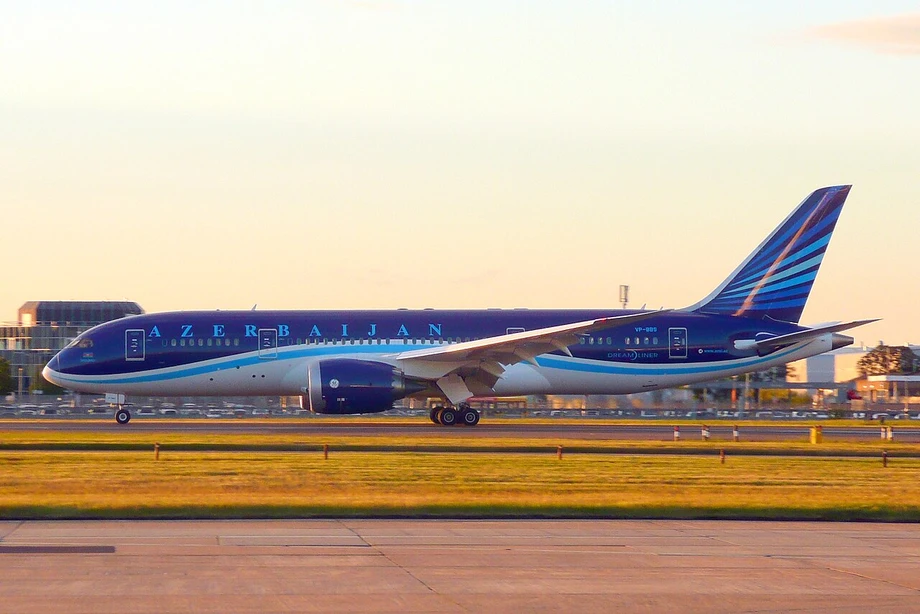
Security Alert Forces In-Flight Diversion
An Azerbaijan Airlines passenger jet carrying 189 people was ordered to turn back mid-flight after Israeli security authorities detected a crew member on board from Tunisia, a country without diplomatic relations with Israel. The alert came from the National Security Council of Israel and forced the aircraft to return to its departure point in Baku for a crew change before resuming its journey to Tel Aviv. The incident highlights the rigorous and rapidly evolving security protocols that Israeli authorities have implemented since a terror attempt in September.
Contents
Flight AHY321, operated by an Airbus A321, had taken off from Baku late on Sunday evening. The crewmember in question was identified as a Tunisian citizen during the flight. According to government protocol, staff on incoming Israeli flights must come from nations with which Israel maintains relations. The alert was triggered while the plane was already airborne, rather than before takeoff as the security mechanism dictates. The Defense Ministry subsequently ordered the aircraft to return to Baku's Heydar Aliyev International Airport to replace the crew member before the flight could continue.
The National Security Council issued the specific alert that the crew member was Tunisian. The protocol bars crew members from states without relations with Israel from staffing incoming flights. This alert was supposed to be triggered before departure rather than after the plane was already airborne. The order reflects stricter security measures introduced after a September terror attack on a flydubai flight. The incident demonstrates how quickly security rules can change and how specific screening mechanisms are being applied to international carriers.
Travelers booking flights into Tel Aviv on carriers that operate with foreign crews may face added screening and possible delays or reroutes. Security rules for international flights can change quickly after an incident, so travelers should confirm crew and screening requirements with their carrier before departure. The alert was activated by the National Security Council, and the alert was triggered while the plane was already airborne, not before takeoff.
The specific timing of the alert relative to the Flydubai attack is notable. The incident comes less than two months after the Flydubai incident. The National Security Council identified one of the crew members as a Tunisian citizen and issued an alert. A decision was then made not to allow the plane to continue to Israel with its original crew. The alert came later than required. According to the information provided, the National Security Council's screening mechanism should have flagged the Tunisian crew member's presence before takeoff, rather than after the plane was already en route to Israel.
Flight AHY321 turned back toward Baku after it was determined that one of its crewmembers was Tunisian, a country with no relations with Israel, according to sources familiar with the matter. The Transportation Ministry discovered that the crewmember's details did not match those provided to Israel in advance, identified the issue after the aircraft had already taken off, and then directed the flight to return to Baku. Flight-tracking website Flightradar24 showed flight AHY321 turning back toward Azerbaijani airspace shortly after crossing into Armenia, eventually entering a holding pattern in the vicinity of Baku's Heydar Aliyev Airport before beginning its final approach.
Aircraft often enter holding patterns before landing when they arrive at an unscheduled time, with the procedure meant to keep them clear of other planes until they receive approval to enter the airport's airspace. According to the flight schedule, AHY321 was set to arrive at Ben-Gurion Airport at 10:50 p.m. after departing Baku at 9:25 p.m. local time, but Flightradar24 showed it departed nearly 20 minutes behind schedule. The Jerusalem Post confirmed that the flight has been removed from the Ben-Gurion Airport website after it initially showed a delayed arrival. The incident is currently under investigation.
Context of the September Flydubai Attack
The incident follows the attempted hijacking of flydubai flight FZ1073, which occurred approximately two months prior. The attacker, one of the aircraft's pilots, was an Omani national, with Oman having no relations with Israel. The issue of pilots from such countries operating flights to Israel came into the spotlight after the flydubai incident. The agreement between Israel and the United Arab Emirates stipulates that no such pilots may operate flights to Tel Aviv.
Emirati airline flydubai has resumed ticket sales for flights between Dubai and Tel Aviv starting next Thursday, December 3, nearly two months after suspending operations following an attempted terror attack aboard one of its planes.
Flydubai suspended its operations to Israel after the incident, with flights set to resume on December 3 following approval from Israeli authorities. The move comes after a delegation of senior Israeli security officials and Transportation Ministry figures returned from talks in Dubai with Emirati aviation officials on implementing security measures that would let both flydubai and Israeli carriers resume flights between the countries.
Flydubai's flights to Israel were suspended on September 30 after an Omani co-pilot on a Tel Aviv-bound flight full of Israelis assaulted his Indian captain and tried to crash the plane and kill everyone on board before the captain and several Israeli passengers thwarted him. Flydubai previously operated 10 daily flights from Tel Aviv, making Dubai a hub for many Israelis heading to popular Asian destinations, including Thailand, the Philippines, China and Japan.
An Israeli source with knowledge of the details confirmed that the return of the airline was approved following Transportation Minister Miri Regev's decision this week to let flights resume, subject to clearance from the Shin Bet, Mossad and National Security Council. The source added the approval was made under new security arrangements, while Israeli carriers remain unable to fly to Dubai.
Stricter Screening Protocols for Incoming Flights
Israel has imposed stricter security screening requirements on pilots and crew of foreign airlines flying to or over the country in the wake of the flydubai near-disaster. The security issues have also delayed Israeli airlines El Al, Arkia and Israir from resuming flights to the United Arab Emirates, making Etihad, which flies to Abu Dhabi, the only carrier flying between the UAE and Israel. The Israeli airlines' flights to and from Dubai were halted by Emirati authorities at the outbreak of the US-Israel war with Iran in late February and have yet to resume.
The National Security Council's alert system is designed to flag crew members from countries without diplomatic relations with Israel before they board. However, in this instance, the alert was triggered after the plane had already taken off. This delay suggests a potential gap in the pre-departure screening process for Azerbaijan Airlines or a discrepancy in the data provided to Israeli authorities.
The Transportation Ministry discovered that the crewmember's details did not match those provided to Israel in advance. The crewmember's identification details were verified against the list submitted by the airline. When the discrepancy was noted, the authorities instructed the flight to return to Baku. The aircraft entered a holding pattern near Baku's Heydar Aliyev Airport before beginning its final approach to the terminal. The specific aircraft type was an Airbus A321, and the departure time was 9:25 p.m., with a scheduled arrival of 10:50 p.m., placing the flight about 20 minutes behind schedule.
The incident underscores the importance of accurate data transmission from airlines to Israeli security services. Any mismatch in crew member details can trigger a security alert, even if the risk level is deemed low. The authorities are not taking any chances with the safety of incoming flights, especially given the recent history of security incidents.
Impact on Airlines and Travelers
The decision to turn back the flight has significant implications for Azerbaijan Airlines and the passengers on board. The flight must replace its crew before it can take off again, which may cause further delays for the 189 passengers. The rerouting and holding pattern near Baku added time to the journey, demonstrating the logistical complexity of mid-flight security decisions.
Travelers booking flights into Tel Aviv on carriers that operate with foreign crews may face added screening and possible delays or reroutes. Security rules for international flights can change quickly after an incident, so travelers should confirm crew and screening requirements with their carrier before departure. The alert system is dynamic, and passengers should be aware that their flight could be diverted at any point during the journey if a security concern is identified.
The incident also affects the broader relationship between Israel and its neighboring aviation hubs. The agreement between Israel and the United Arab Emirates stipulates that no such pilots may operate flights to Tel Aviv. This restriction has been strictly enforced, leading to the suspension of flydubai's operations and the careful review of other carriers. The approval for flydubai's return is subject to clearance from the Shin Bet, Mossad and National Security Council, ensuring that all security arrangements are in place.
The Israeli authorities have been proactive in updating their security protocols. The new arrangements for flydubai include enhanced screening for crew members from countries without diplomatic relations with Israel. The approval was made under these new security arrangements, which aim to prevent a recurrence of the September terror attempt. The source added the approval was made under new security arrangements, while Israeli carriers remain unable to fly to Dubai.
Timeline of the Incident
September 30: Omani co-pilot attempts to crash flydubai flight FZ1073 into Tel Aviv. Flydubai suspends operations.
October to November: Israeli authorities review security protocols for foreign airlines. Stricter screening requirements are imposed.
November 29: Report publication date of the Azerbaijan Airlines incident details.
November 29 (Local Time): Flight AHY321 departs Baku at 9:25 p.m., nearly 20 minutes behind schedule.
Mid-Flight: National Security Council identifies a Tunisian crew member. Alert is triggered after takeoff.
Late Evening: Flight turns back toward Baku, entering a holding pattern near Heydar Aliyev Airport.
Late Night: Crew member replaced. Flight prepares to resume journey to Tel Aviv.
December 3: Flydubai resumes ticket sales for flights between Dubai and Tel Aviv.
Investigation and Future Implications
The incident is currently under investigation. Authorities are examining why the alert was not triggered before takeoff and what steps can be taken to prevent similar occurrences in the future. The focus is on the data exchange between the airline and Israeli security services. The specific aircraft type, an Airbus A321, is commonly used for regional flights, and the incident has raised questions about the efficiency of its screening process.
The Transportation Ministry is reviewing the case. The crewmember's details did not match those provided to Israel in advance. The issue identified after the aircraft had already taken off led to the direction of the flight to return to Baku. The Jerusalem Post confirmed that the flight has been removed from the Ben-Gurion Airport website after it initially showed a delayed arrival.
The incident has sparked discussions among travel experts about the likelihood of further mid-flight diversions. With security rules changing quickly, airlines are advised to update their screening procedures. The alert system is dynamic, and passengers should be aware that their flight could be diverted at any point during the journey if a security concern is identified. The incident underscores the robustness of the Israeli security apparatus, which is willing to act decisively to protect its citizens.
The relationship between Israel and the UAE remains complex. While flydubai is set to resume operations, the security arrangements are tight. The source added the approval was made under new security arrangements, while Israeli carriers remain unable to fly to Dubai. The strict enforcement of these rules ensures that only vetted crew members operate on flights to and from Israel.
What to Know
Azerbaijan Airlines flight AHY321 was turned back to Baku due to a Tunisian crew member.
The alert from the National Security Council came after takeoff, causing a 20-minute delay.
The incident follows the September 30 flydubai terror attempt by an Omani co-pilot.
Flydubai resumes Tel Aviv flights on December 3 under new security arrangements.
Travelers should confirm crew screening requirements with their carriers before departure.
The Transportation Ministry is investigating the discrepancy in crew member data.