Why Eight Plants After a Decade and a Half?
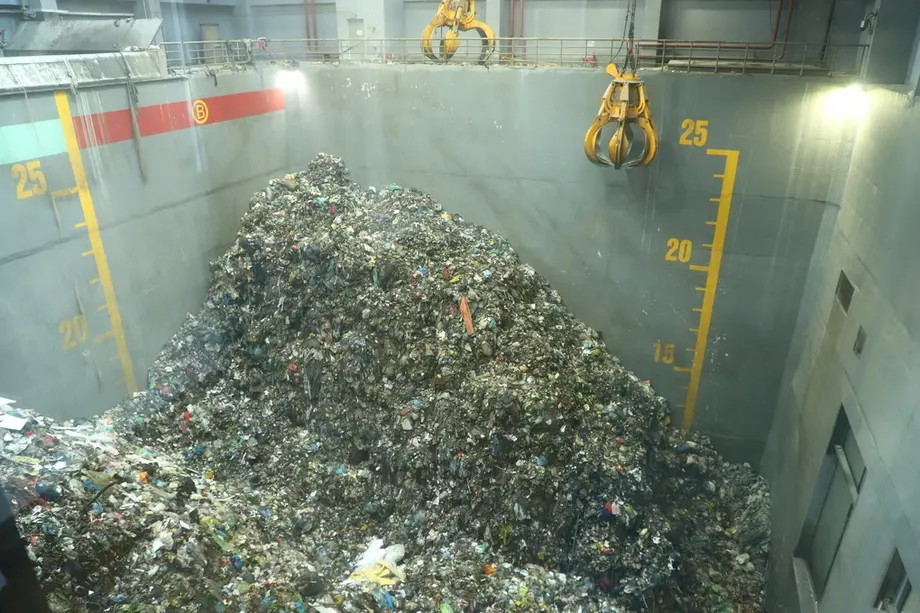
Vietnam generates nearly 68,000 tons of household waste daily. Despite this massive daily volume, the country has only eight commercially operational waste-to-energy plants after 12 years of preferential electricity pricing. The Environment Department under the Ministry of Agriculture and Environment cites World Bank research showing that approximately 76.1 percent of this waste still goes to landfills. These landfills occupy substantial land resources and pose significant environmental risks. The Politburo's Resolution No. 70-NQ/TW dated August 20 2025 on ensuring national energy security calls for specialized mechanisms and policies to accelerate the development of waste treatment systems with energy recovery. These power sources are permitted to develop without capacity restrictions under power development planning.
Contents
Nguyen Huy Hoach a member of the Scientific Council of Vietnam Energy Magazine said waste-to-energy technology offers significant environmental and energy benefits. With household waste volumes increasing landfill space becoming increasingly limited and pollution risks growing transitioning toward waste treatment technologies that recover energy is an appropriate development direction. These technologies reduce the volume of waste requiring landfill disposal mitigate soil and water pollution risks and curb methane emissions while promoting environmental industries and the circular economy.
The value of waste-to-energy lies in combining environmental solutions with energy recovery. Waste-to-energy plants use readily available domestic feedstock and can operate approximately 6,500 to 7,000 hours annually provided that sufficient waste supplies are secured. Unlike weather-dependent renewable energy sources such as wind and solar power waste-to-energy plants can generate electricity relatively continuously and are less exposed to international fuel price fluctuations. This is particularly advantageous in major urban areas where both waste generation and electricity demand are concentrated.
The ministry's report on developing waste-to-energy technology highlights the role of the Ministry of Science and Technology in technology transfer. The plan established by Decision No. 4353/QD-BKHCN focuses on low-carbon and carbon-neutral solutions. It integrates scientific institutions training centers and businesses to ensure that technology transfer supports enterprises investing in energy-efficient systems.
previous analysis of renewable energy noted that Vietnam's renewable energy sector has seen rapid growth in solar and wind but waste-to-energy lags behind despite similar support mechanisms. The disparity highlights the unique challenges of the waste-to-energy sector which involves complex logistics and high capital costs compared to simpler generation methods.
Earlier coverage of Da Nang's waste crisis detailed the long-standing issues with the Khanh Son waste-to-energy plant. The investor has requested another delay to the second quarter of 2028. The plant original investment registration date was June 2010. This delay underscores the administrative hurdles that plague even large projects.
Review of Dong Nai's new infrastructure highlighted the groundbreaking of the first waste-to-energy plant in the province. The Dinh Quan plant represents a significant step forward for a region with rapid urbanization. The project aims to process 950 tons of waste daily and generate 18.5 MW of power.
Update on Da Nang's international partnership described the collaboration with the Korea Environmental Technology Institute (KEITI). The partnership focuses on converting waste to energy and source segregation. Da Nang generates 2,300 to 2,600 tons of waste daily. The cooperation aims to utilize ODA and advanced technology from South Korea to solve the waste management puzzle.
Summary of regional waste management trends indicates that northern and central provinces are prioritizing waste-to-energy to reduce landfill dependence. The trend reflects a broader national shift toward sustainable urban development.
Insight into investment barriers explained that high initial costs and long payback periods deter many investors. The sector needs clear long-term policies to attract sustained investment.
Price Wars and the Cost of Stability
Waste-to-energy electricity purchase prices are relatively competitive compared with other emerging power sources. The preferential feed-in tariff of 10.05 US cents per kilowatt-hour approximately VND2,600 per kWh is considerably lower than the maximum 2026 price for liquefied natural gas LNG-fired electricity at VND3,453.72 per kWh 13.1 US cents and offshore wind power at nearly VND3,975 per kWh 15.1 cents.
However with approximately 30 percent of local areas generating less than 500 tons of waste daily making investment commercially unviable Vietnam's potential waste-to-energy capacity is estimated at only around 700 MW. As a result the sector is unlikely to exert significant upward pressure on average electricity prices.
Despite its environmental and energy benefits Vietnam's waste-to-energy sector has developed relatively slowly. Twelve years after the introduction of preferential policies under Decision No. 31/2014/QD-TTg Vietnam had only around eight commercially operational waste-to-energy plants as of 2026. Their combined installed capacity stands at approximately 130 MW accounting for just 0.13 percent of the country's total power generation capacity.
Notably similar FIT mechanisms have produced dramatically different results across renewable energy sectors. With a FIT of 9.35 US cents per kWh under Decision No. 11/2017/QD-TTg Vietnam developed approximately 16,500 MW of solar power capacity in less than four years. Meanwhile wind power supported by a FIT of 8.5 US cents per kWh under Decision No. 39/2018/QD-TTg reached 4,126 MW by the end of 2021.
Despite receiving a higher preferential tariff waste-to-energy has attracted relatively few investors over the past 12 years because of its challenging commercial economics. If the sector has struggled to expand even with preferential tariffs further reductions in electricity purchase prices could create additional obstacles.
According to a group of Vietnamese waste-to-energy investors the fundamental differences between these energy sources must be recognized. Solar power projects typically take six to 12 months to develop while wind power projects require one to two years. Waste-to-energy projects however can take seven to 10 years involving dozens of administrative procedures. Pre-construction expenditure alone can reach VND100 to 200 billion 3.8 to 7.6 million.
While wind and solar power primarily serve commercial electricity generation purposes waste-to-energy projects prioritize public environmental services and must operate around the clock to process municipal waste. Applying a uniform pricing approach to waste-to-energy wind and solar power could undermine opportunities to address urban waste pollution effectively.
Energy expert Nguyen Huy Hoach identified four major challenges facing the sector. The first involves high capital requirements lengthy payback periods and demanding technological standards. Much of the equipment must be imported while the costs of treating exhaust gases managing ash and complying with environmental standards are substantial. According to investors waste-to-energy projects require capital investment of approximately VND120 to 155 billion 4.56 to 5.89 million per MW four to five times that of coal-fired power plants. Equipment accounts for 70 to 80 percent of total investment costs.
The second challenge concerns waste feedstock. In many localities household waste remains unsorted has high moisture content and inconsistent calorific values. Waste collection and delivery arrangements do not always guarantee the quantity and quality required by plant design specifications.
The third obstacle involves electricity pricing mechanisms and power purchase agreements which Hoach said remain insufficiently attractive to investors. Preferential tariffs introduced in 2014 no longer fully reflect changes in investment costs exchange rates and technological requirements. Meanwhile businesses require long-term contracts and transparent payment mechanisms to secure financing for project development.
The fourth bottleneck is the lack of coordination between planning and investment procedures. A December 2024 report by the Vietnam Chamber of Commerce and Industry VCCI also identified this issue as a major factor complicating and prolonging investment processes.
Analysis of VCCI report findings confirmed that planning coordination remains a key issue. The report highlighted the need for better integration between waste treatment planning electricity development planning land use environmental regulations and grid connections.
According to Hoach these challenges demonstrate that the sector's difficulties extend beyond technology and electricity pricing to the allocation of risks among the central government local authorities and businesses. To address these barriers Hoach recommended developing a comprehensive policy framework that fully recognizes both the environmental value of waste treatment and the economic value of energy recovery.
Local authorities should provide long-term commitments regarding the quantity and quality of waste supplied to plants while establishing reasonable waste treatment fees. Regarding electricity pricing maintaining the stability of previously committed tariffs remains essential while Vietnam's competitive electricity market is still developing.
For projects that have already received investment policy approval and are under development any policy adjustments should respect the principle of avoiding retroactive changes detrimental to businesses in accordance with Resolution No. 68-NQ/TW.
Alongside appropriate pricing policies the sector requires long-term power purchase agreements transparent payment arrangements and incentives involving green financing land access and taxation. In particular two revenue streams should be clearly separated waste treatment fees and electricity sales revenue. This distinction reflects the fundamental nature of waste treatment as a public environmental service.
A specialized reasonable and stable policy framework would not only strengthen investor confidence but also ensure the continued development of waste treatment projects. After 12 years of preferential policies Vietnam's waste-to-energy sector stands at a crossroads becoming an important component of national energy security and green urban development as envisioned under Resolution No. 70-NQ/TW or remaining stalled by policy bottlenecks and risking premature decline.
Overview of investor petitions detailed the specific requests from the investor group. They seek to maintain the 10.05 US cent per kWh FIT for 20 years for approved projects. The internal rate of return is estimated at 9 to 12 percent requiring 3,020 VND per kWh to achieve a 12 percent target.
Legal perspective on pricing stability provided by lawyer Nguyen Thanh Ha emphasized the importance of legal principles in investment law. She noted that reducing FIT without transitional provisions could affect the financial plans of approved projects leading to stagnation disputes or difficulty in repaying loans.
Summary of Dong Nai plant details included specific information on the Dinh Quan plant. The plant uses moving-grate incineration technology suited to Vietnam's household waste. The investor Nguyen Van Vinh cited difficulties with power planning transport infrastructure and site preparation.
Details of Da Nang's administrative delays highlighted the five revisions to the project timeline. The investor Vietnam Environment Joint Stock Company proposed repurposing the ash and slag landfill area and postponing project completion.
Context on Da Nang and KEITI cooperation outlined the specific goals of the partnership. The cooperation aims to manage waste from source to sea. The inspection of Tam Xuan 2 waste treatment site by Korean experts was a key step in this process.
Project Spotlights: Dong Nai and Da Nang
Dong Nai City has begun construction of its first waste-to-energy plant worth more than VND 2.6 trillion (USD 100 million). The Dong Nai People's Committee and Dong Nai Environmental Energy Joint Stock Company part of AMACCAO Group held a groundbreaking ceremony for the first phase of the Dinh Quan waste-to-energy plant in La Nga Commune on November 15.
The plant will process 950 tons of waste daily and have a power generation capacity of 18.5 MW helping reduce landfill dependence and promote a circular economy. Covering more than 9.4 hectares the facility is designed to handle 750 tons of household waste and 200 tons of non-hazardous industrial waste per day.
Nguyen Van Vinh Chairman and General Director of AMACCAO Group said the plant would use moving-grate incineration technology suited to Vietnam's household waste which is often unsorted high in moisture and low in calorific value. The technology will recover heat from incineration to generate electricity while reducing the volume of waste sent to landfills.
Vinh said the project would improve waste treatment capacity environmental conditions and support the local circular economy. The investor cited difficulties with power planning transport infrastructure and site preparation urging local authorities to resolve issues over road access waste supply treatment fees and investment procedures to keep the project on schedule.
Speaking at the ceremony Nguyen Tuan Anh Vice Chairman of the Dong Nai People's Committee said rapid urbanization industrial development and population growth were increasing pressure on waste management infrastructure. Dong Nai's population is projected to exceed five million by 2030 generating around 3,000 tons of household waste daily.
Demand for waste collection and treatment is expected to rise further as Long Thanh International Airport begins operations and urban areas industrial parks and logistics services expand. Anh said the plant would help shift waste treatment from landfilling to modern energy-recovery technology supporting greener and more sustainable development.
He urged the investor to speed up construction ensure quality and meet environmental standards while asking authorities to resolve infrastructure and administrative issues.
The first phase of the Dinh Quan plant is expected to become a key environmental infrastructure project supporting Dong Nai's long-term development.
Timeline of Dong Nai plant milestones outlined the key dates from groundbreaking to expected completion. The project aims to address the specific challenges of the region's waste composition.
Technical specifications of the Dinh Quan plant provided detailed data on capacity and technology. The moving-grate incineration technology is specifically chosen for its robustness against variable waste quality.
Community impact in Dong Nai discussed the benefits for local residents. The plant will reduce odors and improve air quality in the La Nga Commune area.
Da Nang waste-to-energy plant seeks another delay after 16 years. The investor of the Khanh Son waste-to-energy plant in Da Nang City central Vietnam has requested another deadline extension to the second quarter of 2028 raising concerns over the city's waste treatment capacity and mounting environmental pressure.
The project first granted an investment registration certificate in June 2010 had undergone five revisions and was originally scheduled under its existing timeline to become operational in the third quarter of 2026.
In July 2026 the Da Nang People's Committee asked the investor Vietnam Environment Joint Stock Company to expedite administrative procedures and construction to begin operations no later than January 2027.
However on October 16 the company submitted another application seeking changes to investor information the plant's design and treatment capacity and its completion deadline.
The proposed changes include replacing the existing design capacity of 900 metric tons of municipal solid waste and 200 metric tons of non-hazardous industrial solid waste per day with a flexible design that includes an option to treat 1,150 metric tons of municipal solid waste daily.
The investor also proposed repurposing the ash and slag landfill area and postponing project completion until the second quarter of 2028.
The supervisory delegation warned that repeated changes to key aspects of the project reflected unresolved issues and posed a risk of further delays potentially undermining efforts to expand the city's waste treatment capacity and ease pressure on existing facilities.
Another waste treatment plant with a daily capacity of 1,000 metric tons planned under a public-private partnership PPP model is also behind schedule. The project has yet to secure an environmental permit or complete the review of its feasibility study which was initially scheduled for August 2026.
The plant was previously expected to begin operations in late 2028 at the earliest.
The local authority's review also highlighted persistent environmental problems at existing landfill sites. Residents living near the Khanh Son Dai Hiep and Tam Nghia waste treatment facilities have continued to complain about unpleasant odors and landfill leachate affecting nearby agricultural fields.
Waste collection services remain inadequate across urban rural and mountainous areas with some remote communities receiving collection services only once every two weeks.
The delegation warned that infrequent waste collection could lead to garbage accumulation environmental pollution and deteriorating living conditions.
Calls for accountability over project delays emerged as the supervisory delegation urged the municipal administration to review all waste treatment projects identify priority investments investigate the causes of prolonged delays and clarify the responsibilities of investors and relevant agencies.
It also called for measures to prevent administrative bottlenecks involving investment construction land use and other procedures from holding up project implementation.
The delegation recommended that the Vietnam Environment Joint Stock Company mobilize resources to accelerate construction submit regular progress reports and promptly address outstanding obstacles to prevent further delays.
Regional Partnerships and Future Outlook
Da Nang has entered a new phase of international cooperation to address its waste crisis. The Da Nang Department of Agriculture and Environment and the Korea Environmental Technology Institute KEITI officially signed a memorandum of understanding on November 25 in the field of resource circularity and municipal solid waste management.
According to the Da Nang Department of Agriculture and Environment the volume of municipal solid waste generated in the city ranges from 2,300 to 2,600 tons per day. In the context of the city's push for the "Da Nang - Environment City" project from 2021 to 2030 finding modern solutions for source segregation recycling and waste-to-energy conversion is a top priority.
The cooperation is a well-prepared process with the role of the IRBM Project Coordination Team. From April 2025 to September 2026 teams of KEITI experts from the Environment Department and the IRBM Project have surveyed the field multiple times including a working visit to the Tam Xuan 2 waste treatment site to accurately identify local needs.
Tran Le Anh a representative of the Environment Department said the management approach the two sides aim for is a comprehensive waste management approach from source to sea. The cooperation content goes beyond improving water quality or maintaining environmental flow but builds a sustainable management mechanism where controlling waste from land to sea plays a crucial role.
Nguyen Van Lam Deputy Director of the Da Nang Department of Agriculture and Environment emphasized that the memorandum was signed in accordance with the 2020 International Agreement Law. Lam expected the cooperation framework to help Da Nang effectively mobilize technical resources advanced technology and non-refundable aid ODA from the Korean government.
Through this the city will have more momentum to solve end-to-end problems regarding landfill leachate floating garbage and improving water quality in the Vu Gia - Thu Bon river basins.
Kim Young Sik Deputy Director of the Korea Environmental Technology and Industry Institute KEITI expressed his impression at the sustainable development vision of Da Nang. Kim affirmed that KEITI pledges to closely accompany share experience and promote the transfer of green environmental technology to realize the content of the cooperation agreement contributing practically to the sustainable development of Da Nang.
Impact of KEITI partnership on Da Nang highlighted the potential for technological transfer and funding. The partnership is seen as a catalyst for modernizing the city's waste management infrastructure.
Comparison with Korean waste management models drew parallels between Da Nang and Korean cities. The Korean model emphasizes source segregation which Da Nang aims to adopt.
Long-term benefits of the cooperation outlined the expected outcomes over the next decade. The cooperation is expected to reduce dependency on landfills and improve public health.
Technological specifics of the Korean partnership detailed the specific technologies to be transferred. These include advanced incineration and leachate treatment systems.
Community engagement in Da Nang discussed the role of local residents in the new system. Education and awareness campaigns will be part of the KEITI-supported projects.
Summary of the MOU details provided a breakdown of the financial and technical commitments. The agreement includes a five-year action plan with clear milestones.
Key Points
- Vietnam generates nearly 68,000 tons of household waste daily with only eight commercial waste-to-energy plants after 12 years of preferential pricing.
- The sector faces high capital costs of VND 120-155 billion per MW and long project timelines of 7-10 years compared to solar and wind.
- Investors petition for a stable feed-in tariff of 10.05 US cents per kWh for 20 years to ensure profitability.
- Dong Nai has broken ground on its first 18.5 MW waste-to-energy plant valued at VND 2.6 trillion.
- Da Nang's Khanh Son plant seeks further delay to 2028 amidst administrative hurdles and environmental concerns.
- Da Nang partners with KEITI to modernize waste management and leverage South Korean technology and ODA.
- The Ministry of Science and Technology promotes low-carbon solutions through Decision No. 4353/QD-BKHCN.
- Resolution No. 70-NQ/TW calls for specialized policies to accelerate waste-to-energy development.
- Stable pricing and long-term contracts are critical to attracting investment and preventing project stalling.
- The sector's growth is essential for national energy security and green urban development.