A Lead That Appeared Early and Held to the End
Ho Hsin-chun, a Democratic Progressive Party legislator who has won four consecutive terms, took the Taichung mayoral election on Saturday with 776,310 votes, or 50.68 percent of valid ballots, Central Election Commission figures show. Johnny Chiang of the Kuomintang, the incumbent deputy speaker of the Legislative Yuan, received 741,231 votes, or 48.39 percent. The final margin was 35,079 votes, or 2.29 percentage points, in a city the KMT had governed since 2018.
Contents
- A Lead That Appeared Early and Held to the End
- Three Small Neighbourhoods That Pointed to the Result
- A Campaign Built Around Buses, Traffic and Childcare
- A City That Split Along Its Own Map
- Eight Years, Two Landslides and a Reversal
- The Pledge That Now Meets the Budget
- Chiang Says Sorry and Turns to the Review
- Changhua Follows Taichung Into DPP Hands
- Six Flips, a Capital Held and a Referendum Passed
- What the Result Changes for 2028
- Key Points
Hung Li-hua of the Law Justice Party finished third with 14,113 votes, or 0.92 percent. Ballot numbers were drawn on Oct 27 by the Taichung City Election Commission, with Ho taking number one, Hung number two and Chiang number three. Counting at Taichung's 1,980 polling stations began at 4 p.m. on Nov 28, and the Central Election Commission has announced Ho as the winner.
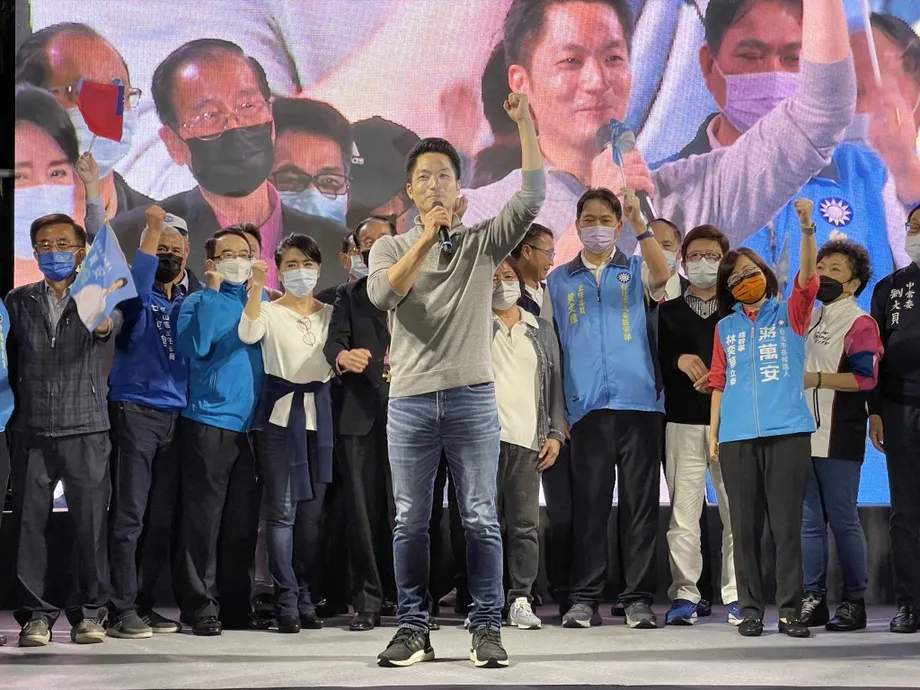
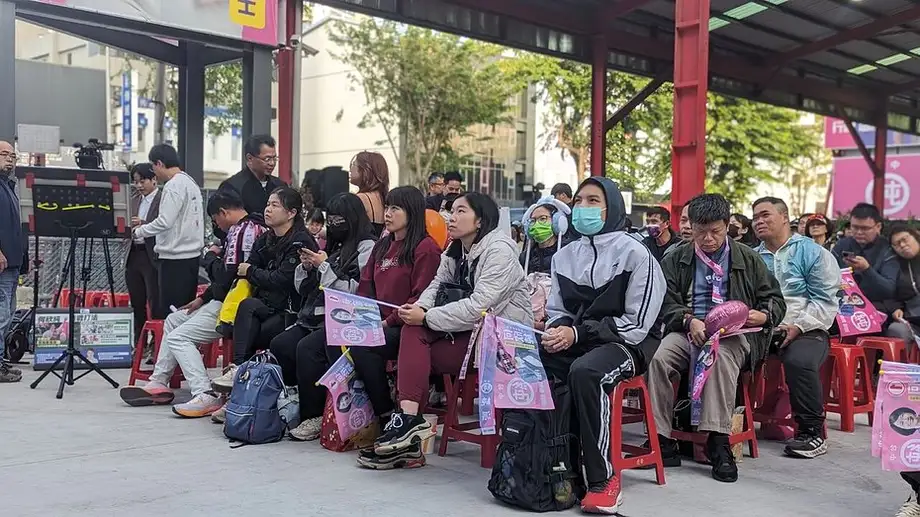
The first hours were tight. Ho was first past 35,000 votes with Chiang roughly 1,000 behind, and the gap moved back and forth as boxes arrived through the evening. Outside Ho's campaign headquarters, supporters chanted "Taichung's number one mayor, Ho Hsin-chun" and "change Taichung, seize this chance", with drumming loud enough to compete with the results being read out.
Chiang conceded at about 8:30 p.m. and Ho spoke to her supporters at about 8:50 p.m. "Today's election result is not a personal victory for me, but a victory for all Taichung residents," she said, thanking Lu Shiow-yen, the outgoing KMT mayor, and Chiang for the race.
Three Small Neighbourhoods That Pointed to the Result
Election watchers in Taiwan keep lists of "octopus neighbourhoods", polling districts whose vote shares have landed within about one percentage point of the final result for the whole city or the whole island. Because their ballots are counted early, they offer a preview of the night.
Chonglun Li in Taichung's South District earned that reputation in 2022, when it gave Lu Shiow-yen 58.41 percent against her citywide 59.35 percent, a gap of 0.94 percentage points, and Tsai Chi-chang 39.56 percent against his citywide 38.93 percent, a gap of 0.63 points. Its two polling stations finished counting at 5:05 p.m. on Saturday, and Ho led there 736 votes to 635, a margin of 101. One station split 370 to 320 for Ho, the other 366 to 315.
Shalu District's Luochun Li was closer still, with Ho on 365 and Chiang on 363, two votes apart.
Fengyuan District pointed the other way. Two polling stations at Fu Chun Elementary School in Fengxi Li had matched the national result in the 2016, 2020 and 2024 presidential elections, and their mayoral tally ran 249 for Chiang, 226 for Ho and 8 for Hung, with 229 ballots still to be counted and turnout at about 68 percent.
Three neighbourhoods gave three answers. The citywide count settled between them, and the 101 vote win in Chonglun Li came much nearer the final gap than the 23 vote loss in Fengxi Li.
A Campaign Built Around Buses, Traffic and Childcare
Ho, 52, was born in Taichung's Dali District and began in local politics with two terms on the former Taichung County Council before winning a seat on the merged city council in 2010, the year the city and county were combined. She entered the Legislative Yuan in 2012 and has held the seventh district, covering Taiping and Dali, ever since. She holds a master's degree in women's studies from the University of York in Britain and has worked on gender equality legislation, including amendments to the Gender Equality in Employment Act. She was previously director-general and secretary-general of the DPP's legislative caucus.
Her campaign stayed close to daily complaints. She criticised the replacement of articulated buses that can carry up to 141 passengers with electric buses that take about 60, arguing the swap made crowding worse. Her proposals included more bus capacity, reworked routes, an upgraded official bus app and better conditions for drivers. She also raised the poor road access at the Shuinan Transit Center, which opened in August, and promised faster metro construction, a youth affairs department to support jobs and startups, and childcare that runs into the evening and at weekends.
Chiang, 54, a Fengyuan native and former KMT chairman, won his party's nomination after an internal contest with legislator Yang Chiung-ying, and Lu then joined him on the trail. He campaigned on continuity, promising to carry on the large infrastructure projects and welfare programmes of the Lu years while turning Taichung into a manufacturing base for artificial intelligence and robotics, with a smart manufacturing park and training for workers. He also pledged to speed up the metro Blue and Orange lines, free bus rides for city residents and a public safety network built with AI.
A City That Split Along Its Own Map
Ho's home district delivered. She took 57.8 percent in Dali, the seat she has represented at council and national level. Chiang passed 70 percent in Heping District, the mountain area at the city's eastern edge. The two results sat side by side in a city of about 2.87 million people whose economy runs on machinery, precision manufacturing and technology.
The council moved with the mayoralty. The DPP won 29 of the 65 seats and the KMT 28, the first time the DPP has held a larger caucus than the KMT in Taichung. Four years ago the KMT took 32 seats and the DPP 24. Ho will face a friendlier chamber for her budget requests, though no party holds a majority on its own.
Eight Years, Two Landslides and a Reversal
Taichung became a special municipality in 2010 when the city and county merged, and the KMT's Jason Hu, who had governed the old city, became its first mayor. Hu lost to the DPP's Lin Chia-lung in 2014, and Lu beat Lin four years later, opening the KMT's latest stretch in power. The city has changed hands between the two parties repeatedly over the past two decades, which is why its result is read across the island as a signal.
Lu's 2022 re-election made the city look safe for her party. That night she beat Tsai Chi-chang by 274,883 votes, 799,107 or 59.35 percent to 524,224 or 38.93 percent, and finished ahead in all 29 administrative districts. The flip of Taichung four years later came by 2.29 points, and it ended a run that began with her own win.
Lu is finishing a second consecutive four year term and is barred from a third by term limits. Ho takes office on Dec 25 in one of Taiwan's six special municipalities, a post her party has not held since 2014.
The Pledge That Now Meets the Budget
Ho campaigned on a universal cash payout of NT$50,000, and on Sunday morning, Nov 29, she set out on a motorcade tour of the city to thank voters with the promise still ahead of her. "Please let me take stock properly," she said of the city's finances. "Through the proper procedures of the council, I think as long as the council passes it, everyone can look forward to it."
Her plan is to review Taichung's accounts after she takes office and put a supplementary budget to the city council in its first session. A supplementary budget is an extra spending plan a government sends to its legislature outside the annual budget cycle, and it needs council approval before any money moves. No figure for the total cost of the payout has been published, and no date has been given for when the review will finish.
Chiang Says Sorry and Turns to the Review
Chiang apologised to his supporters in a Facebook post on Saturday evening and congratulated Ho. "Elections are temporary, but this great city that we are so proud of must continue to move forward," he wrote.
On Sunday he toured with Lu and several KMT legislators to thank voters, and accepted that the shortfall was his. "We will still review the places that need reviewing," he said. "Where we did not do enough, we will find ways to make up for it in the future. Today the most important thing is to thank everyone for their support." He said he had tried to contact Ho. Lu, who congratulated Ho at the same event, said her attention returns to city hall: "After the election, until the last second before I step down on Dec 25, I will focus on city affairs."
Changhua Follows Taichung Into DPP Hands
Changhua County, south of Taichung, changed hands on the same night. The DPP's Chen Su-yueh won, ending eight years of KMT rule under Chang Li-shan. On Nov 29 Chen toured the county to thank voters and promised to listen to people who did not back her, saying she would push county affairs without regard to party or political colour. "We will consider things according to local needs, and major construction will come first," she said.
The KMT's Wei Ping-cheng spent the day thanking supporters with his wife and daughter. He said he had no other plans for now and would keep serving if Changhua needed him, leaving open whether he would enter a legislative by-election. No decision on that race has been announced.
Six Flips, a Capital Held and a Referendum Passed
Across Taiwan's nine in one local elections, the DPP flipped six leadership seats, including Taichung, Yunlin County, Hsinchu County, Changhua County, Chiayi City and Yilan County, and won 10 of the 22 city and county posts. The KMT won 11, and independent Kao Hung-an retained one. The DPP kept Tainan and Kaohsiung, two of the six largest municipalities, and failed to take Taipei, where KMT mayor Chiang Wan-an withstood a grassroots campaign around DPP candidate Puma Shen that had been expected to lift candidates elsewhere.
The KMT held New Taipei and Taoyuan and flipped Penghu, an offshore county the DPP had held for single terms at intervals over 12 years. Party chairwoman Cheng Li-wun called the outcome a setback from four years ago, when the KMT won 14 leadership posts. "Whether we won or lost, we will conduct the most comprehensive and thorough review in every city, county, and constituency across Taiwan," she said.
Chen Shih-min, an associate professor of political science at National Taiwan University, said Cheng's stance toward China made it hard for the party to win centrist voters, and pointed to the KMT's obstruction of government initiatives and delays in reviewing the central government's general budget as further drags on its campaign.
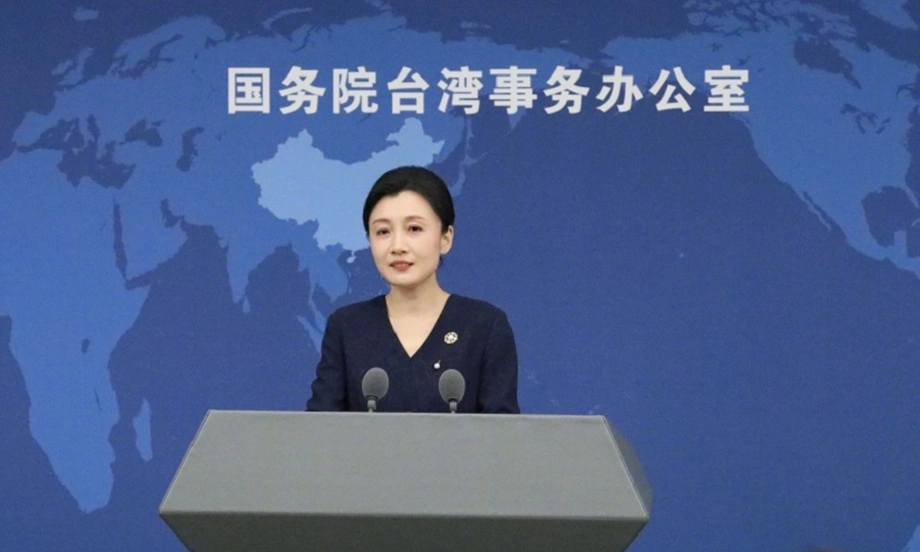
The Taiwan People's Party won no mayoralty or magistracy. Its only candidate in those races, Chang Chi-kai, lost Chiayi City to the DPP's Wang Mei-hui despite KMT backing, while the party took more than 30 council and township seats. The victories in Yunlin and Hualien were narrow enough that recounts could change them. A national referendum held alongside the vote passed, opening the way for nuclear power to return to the island's energy mix after its last operating reactor shut in May 2025. Beijing's response came the next day, when the Taiwan Affairs Office said the changes in Taiwan's political map cannot stop what it calls the historical trend toward reunification.
What the Result Changes for 2028
Taichung is the seat both parties watch to read the island's mood, and it has alternated between KMT and DPP control over the past two decades. Ho's win gives President Lai Ching-te's ruling party a base in central Taiwan, a region where it had been shut out of the largest city since 2018, ahead of the 2028 presidential race.
For Lu, the timing is sharp. She leaves office on Dec 25 after two terms and had been widely named as a leading contender for the KMT's presidential nomination. Losing the city she governed for eight years weakens that standing inside a party now reviewing a national result in which it slipped from 14 leadership posts to 11.
Several things remain open. The cost of the NT$50,000 payout and its legal path through the council are unsettled, the Central Election Commission has not set a date for certifying the mayoral result, and the first session of the new city council will decide how quickly Ho's budget reaches a vote.
Key Points
- Ho Hsin-chun of the DPP won Taichung with 776,310 votes, or 50.68 percent, against 741,231, or 48.39 percent, for the KMT's Johnny Chiang.
- The margin was 35,079 votes, 2.29 percentage points, ending eight years of KMT control of Taiwan's second most populous city.
- Hung Li-hua of the Law Justice Party took 14,113 votes, or 0.92 percent, in the three candidate race.
- Chonglun Li, an indicator neighbourhood, gave Ho 736 votes to Chiang's 635, while Fengxi Li in Fengyuan went to Chiang by 23 votes.
- The DPP also won 29 of the 65 city council seats, one more than the KMT, its first larger caucus in Taichung.
- Ho says she will review city finances and seek a supplementary budget in the council's first session to fund her NT$50,000 payout pledge.
- Chiang apologised and said he had tried to contact Ho; Lu Shiow-yen said she will focus on city affairs until she leaves office on Dec 25.
- Nationwide, the DPP flipped six seats and won 10 of 22, the KMT won 11 and held Taipei, and a nuclear power referendum passed.