A flood of accounts before Taiwan votes
Taiwanese authorities have reported nearly 2,700 suspicious Threads accounts to Meta, describing them as part of an attempt to influence the local elections on November 28, 2026. Almost all were created during the previous four months, and many appeared to have been registered in batches. A second network of about 260 accounts distributed more than 2,150 videos generated with artificial intelligence, drawing approximately 2.35 million comments, shares and other interactions.
Contents
- A flood of accounts before Taiwan votes
- How the suspected networks were built
- What artificial intelligence changed
- Why Puma Shen became a focal point
- Pressure that moved beyond social media
- What Meta and Beijing said
- The wider objective: distrust and lower turnout
- Why local results matter during a crisis
- The everyday election behind the geopolitics
- How Taiwan is trying to protect the vote
- Key Points
About 19.65 million eligible voters are due to choose more than 11,000 local officials across 22 cities and counties. The contests include mayors, county magistrates and council members, while a referendum on nuclear power is being held alongside the vote. The results will also be read as a measure of President Lai Ching-te and his Democratic Progressive Party (DPP) before the 2028 presidential election.
Threads is an especially attractive place to reach Taiwanese voters. The island has only 23 million people, yet estimates cited during the campaign ranged from more than 10 percent of global website traffic to Threads to 21 percent of its global users and traffic. The platform, owned by Meta, functions for many Taiwanese users like a giant public chat room where entertainment, personal news and politics mix together. Officials said they had not found a network of comparable size on Instagram.
Taiwanese security officials suspect the purpose extends beyond helping any single candidate. Their working theory is that manufactured conversations can make fringe claims appear popular, deepen social divisions, weaken confidence in democratic institutions and persuade disappointed voters to stay home.
How the suspected networks were built
An internal Taiwanese government assessment examined 2,400 of the flagged Threads accounts. It found that 74 percent listed China as their location, about 25 percent listed no location and roughly 1 percent listed Russia. Investigators sorted them into 27 groups whose similar Chinese names and varying numerical endings suggested batch registration.
Officials described a patient routine. An account might first present itself as an ordinary Taiwanese user, posting about food, daily life, fortune telling or horoscopes. After building a believable history, it would begin criticizing the government, attacking candidates and expressing disappointment with the DPP. The final step was often an appeal to abandon voting rather than an explicit request to support a particular opponent.
Civil investigators found similar behavior elsewhere. Doublethink Lab identified 549 accounts that it traced to the Chinese content operation Borderless Group. Collectively, they had published more than 460,000 posts and comments. Lifestyle and entertainment material helped maintain the accounts before their content turned political, including posts that portrayed Taiwanese military exercises as a public nuisance.
In October, Watchout investigators observed 22 Threads accounts, several associated with Hong Kong telephone numbers, circulating similar graphics within six hours. The graphics credited the opposition Kuomintang (KMT) with securing access to Chinese markets and urged voters to remove the DPP from office. The timing and repetition suggested coordination, although the people directing the accounts were not publicly identified.
What artificial intelligence changed
The account named noxparable illustrates the scale that inexpensive synthetic media can provide. Investigators connected it and videos carrying its watermark to more than 500 fabricated videos about the DPP during the past year. The material accumulated tens of millions of views across several platforms after appearing in May 2025, with more than half of those views recorded during the four months before the election. Some clips carried labels indicating that AI had been used, while some viewers treated them as jokes and others repeated their claims as facts.
Several claims were specific and damaging. Videos alleged that President Lai held a US green card and would abandon Taiwan during a war, an assertion his office called completely false. Manipulated footage appeared to show Taipei mayoral candidate Puma Shen using drugs, which he denied. Other videos dressed politicians in children's clothing or inserted them into film scenes. A recurring claim that former President Tsai Ing-wen had fraudulently obtained her doctorate from the London School of Economics also resurfaced, despite the university confirming in 2019 that it had awarded her the degree.
Researchers at Vanderbilt University, working with Doublethink Lab, used a tool designed to detect subtle differences in tone and word choice between people and AI systems. They found accounts mixing political messages with food, animals, celebrity gossip and sexualized images. One account pretended to support the DPP while deliberately engaging with struggling accounts favorable to Beijing, helping their messages attract algorithmic attention. Others combined synthetic images with writing and scheduling by human operators. Posts sometimes appeared during ordinary office hours, and accounts claiming to be Taiwanese occasionally used simplified Chinese characters, which are standard in mainland China but not in Taiwan.
Brett Benson, a Vanderbilt University associate professor of political science and Asian studies, said the campaign's patience distinguished it from cruder influence efforts.
Synthetic personas sometimes spend months posting nonpolitical content, cultivating followers and establishing an apparently authentic social media presence before introducing political messaging. AI is making it easier to construct and maintain synthetic identities that can establish credibility within social networks before being mobilized for political purposes.
An earlier Vanderbilt study examined GoLaxy, a Chinese technology company developing tools for highly tailored persuasive messages. The research team had not found evidence that such precise targeting was operating in Taiwan, but said its monitoring would continue.
Why Puma Shen became a focal point
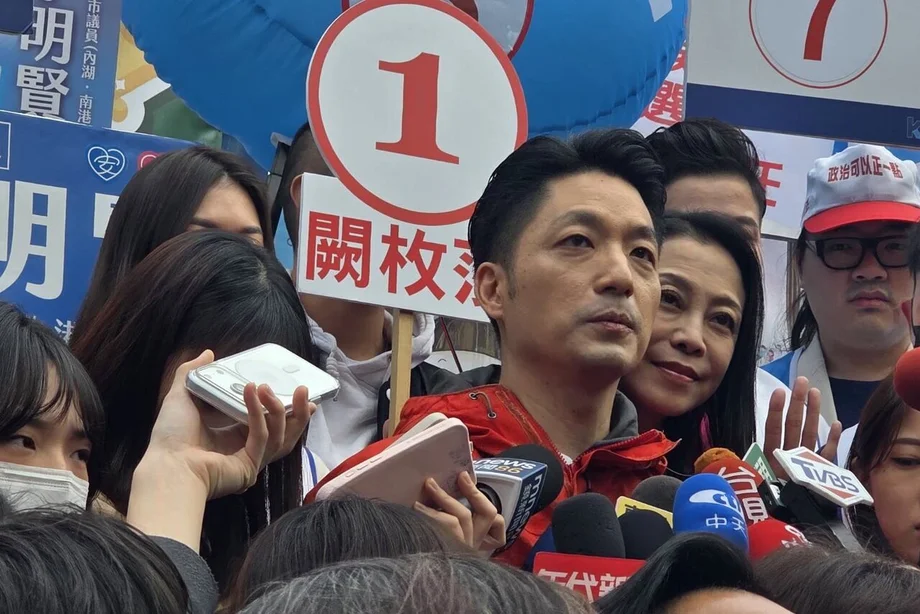
The Taipei mayoral contest concentrates many of these pressures in one race. Shen, a DPP legislator and former chief executive of Doublethink Lab, is challenging KMT incumbent Chiang Wan-an. The DPP has not held the Taipei mayoralty for nearly three decades, and the office has previously served as a route to the presidency. Shen also cofounded Kuma Academy, which trains civilians in first aid, disaster planning and preparedness. Beijing designated him a diehard separatist in 2024, making him the first candidate under Chinese sanctions to run for mayor of the capital.
Shen has said he would attend the Twin City Forum between Taipei and Shanghai if China imposed no political preconditions and the event delivered practical benefits. China's Taiwan Affairs Office rejected that offer and said he was in no position to discuss exchanges and cooperation. On October 13, two Hong Kong newspapers run by the state accused Shen's father of using another company to evade Chinese sanctions. The Taiwan Affairs Office repeated the allegation and sanctioned that company the following day. Taiwan's Mainland Affairs Council called the sequence election interference.
The Australian Strategic Policy Institute's election analysis also documented fabricated drug images circulated through a Facebook page with at least one administrator in China. The page had previously paid to promote posts about Mazu, a widely worshipped sea goddess, attracting followers who might avoid an openly political page. In another case, Taiwan's Ministry of Justice Investigation Bureau confirmed that an audio clip purporting to capture Shen admitting to bribery was synthetic. Investigators identified a man in Taoyuan as having posted it on Threads, and legal action followed.
Shen's campaign said foreign internet addresses also flooded its supporter registration system with more than 70,000 fake entries in one hour. It said both that intrusion and an accompanying server attack were contained. Chiang, meanwhile, received favorable treatment from at least six Facebook pages in September, several administered from Hong Kong. Two misspelled his wife's name in the same way, suggesting shared material. No connection to Chiang's campaign has been verified, and he has publicly opposed foreign influence.
- February 2026: Taiwan's National Security Bureau launched its election security project.
- June: Fabricated images purporting to show Shen using drugs circulated on Facebook.
- October 4: Television host Kevin Tsai attended Shen's campaign launch, followed by commercial and online pressure in China.
- October 13 and 14: Allegations against Shen's father were published and the named company was sanctioned.
- November 4: President Lai publicly warned about suspicious accounts flooding comment sections with misleading claims.
- November 18: Police said they were investigating 30 suspected foreign interference cases and more than 250 reports of election disinformation.
- November 28: Voters are scheduled to cast their ballots.
Pressure that moved beyond social media
After Kevin Tsai attended Shen's campaign launch, Chinese electric vehicle manufacturer Leapmotor removed promotional material featuring him, and content disappeared from his Weibo account. Two days later, Jun Zhengping, a media account affiliated with China's armed forces, criticized his attendance without naming him. Taiwanese commentators viewed the episode as a warning to other entertainers with commercial interests in China.
Shen Yu-chung, deputy head of Taiwan's Mainland Affairs Council, warned that facial recognition systems and personal data could help operators construct convincing fake profiles that evade platform defenses. Research by the Institute for the Study of War and the American Enterprise Institute also described Shanghai public security officials recruiting a Taiwanese private investigator to monitor YouTubers Wen Tzu-yu and Chen Po-yuan, known for exposing Chinese influence activities.
Public wanted lists, disclosure of personal information and surveillance add an intimidating physical dimension. Separately, the head of the Taiwan People's Communist Party was detained over suspected funding and direction from Beijing. Taiwanese officials have also cited allegations of campaign financing for candidates supporting unification, subsidized travel from China and payments to help Taiwanese voters based there return home.
What Meta and Beijing said
Meta said it had removed the reported accounts and that many had already been suspended by its own systems. The company described them as low quality fake accounts, said none had posted about the elections and noted that most had no followers. It pledged to continue acting against accounts that violated its rules. Taiwanese officials confirmed that at least some of the accounts they identified had been taken down.
Beijing rejected the broader accusations. Zhu Fenglian, a spokeswoman for China's Taiwan Affairs Office, called the interference allegations completely fabricated and said they were intended to stir hostility toward China to win votes. Chinese officials have also accused the DPP government of conducting its own cognitive warfare to conceal poor governance.
Summer Chen, founder of the Taiwanese investigative organization FactLink, drew a distinction between production and distribution. She said investigators could identify Chinese accounts among the principal spreaders of recent video and audio material, but could not directly establish that the files themselves were made in China. No public estimate establishes how many voters were persuaded, and whoever produced several of the fabricated clips has not been publicly identified.
The wider objective: distrust and lower turnout
Taiwan's National Security Bureau recorded about 2.5 million disputed posts on Facebook and Threads during the first nine months of 2026, covering energy policy, food safety and defense. That compares with approximately 1.69 million during the same period a year earlier, an increase of about 48 percent. The subjects provide material for narratives about unsafe food, unreliable power, inadequate defense and a government detached from daily hardships.
Austin Horng-En Wang, a cognitive warfare specialist at the University of Nevada, Las Vegas, said Beijing could use local victories to create the appearance of broad opposition to Taiwanese independence and increase pressure for political negotiations over unification. The US-China Economic and Security Review Commission similarly warned in November that China could treat the local elections and the 2028 presidential contest as testing grounds for measuring which pressure tactics work.
Andrew Yeh of the China Strategic Risk Institute argued that weakening the quality of democratic debate can serve Beijing regardless of which party wins.
China's information operations succeed not just by backing one candidate or opposing another, but by diluting Taiwan's policy debates, driving polarisation and degrading Taiwanese citizens' trust in their democratic processes. Regardless of whether the KMT or DPP comes out on top, a more fractured and more divided Taiwan is in Beijing's interests.
Why local results matter during a crisis
Mayors and county officials control practical services that would matter immediately during a blockade, natural disaster or military emergency: shelters, evacuations, medical coordination, emergency supplies and communications. Taiwan's national government sets priorities for defense resilience across society, but local administrations decide how to spend many of the relevant civil defense budgets and whether residents receive effective training.
Katie Sizemore, a US national security and crisis management specialist, made that case in a Council on Foreign Relations analysis. She wrote that Taiwan's Urban Resilience exercises had tested deliberate slowdowns of mobile networks, sharing resources between jurisdictions and civilian coordination alongside military drills. Taichung, governed by KMT Mayor Lu Shiow-yen, participated in the 2025 exercise, showing that preparedness need not follow party lines.
The online threat also has a numerical backdrop. The National Security Bureau estimated an average of 2.6 million attempted cyber intrusions each day against government and critical infrastructure networks in 2025. During a crisis, false instructions or attacks on public confidence could make it harder for local officials to direct evacuations, distribute supplies or counter panic. Sizemore argued that resilient Taiwanese institutions would also protect supply chains important to the United States and make outside assistance more effective.
The everyday election behind the geopolitics
China may dominate security warnings, but candidates are still arguing about housing, transport, welfare, wages and the environment. Taiwan's economy grew by more than 14 percent in the first nine months of the year, its fastest pace in 50 years, helped by semiconductor demand associated with AI. Yet nearly 70 percent of workers earned less than the average monthly wage of 49,152 Taiwan dollars during that period, exposing a wide gap between headline growth and household experience.
Lai's government has proposed a record 18 percent increase in defense spending, taking it above 1 trillion Taiwan dollars for the first time. Some voters want more spent on immediate economic needs instead. William Yang, a senior analyst at the International Crisis Group, identified stagnant wages, high housing costs and the uneven distribution of the technology boom as central voting concerns.
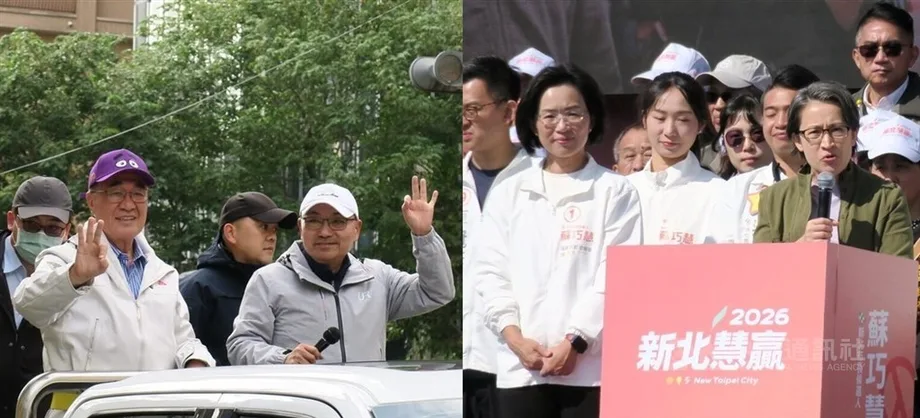
Lev Nachman, a political scientist at National Taiwan University, observed that national party leaders had been comparatively absent from mayoral campaigns because the contests remained focused on local government. Strong performances by Shen in Taipei or Su Chiao-hui in neighboring New Taipei City could give the DPP momentum, but support for those candidates would not automatically transfer to Lai in 2028.
How Taiwan is trying to protect the vote
The Central Election Commission has broadcast warnings about deepfake videos, while police created a mechanism through which candidates can report manipulated material and request removal. A dedicated task force is coordinating election security. Alongside the November 18 figures on active investigations, the National Security Bureau's chief had reported nearly 100 interference cases in October. During the 2024 presidential and legislative elections, 71 alleged violations of the Anti-Infiltration Act resulted in indictments.
MyGoPen, the Taiwan FactCheck Center, Doublethink Lab and FactLink are tracking rumors and manipulated media across Threads, TikTok and Facebook. Their work includes exposing coordinated accounts, explaining fabrication techniques and giving residents practical ways to check videos, images and screenshots before forwarding them. Taiwan ranked 28th among 180 countries and territories in Reporters Without Borders' 2026 World Press Freedom Index, but its open media environment also gives fabricated material ample room to circulate.
Cabinet spokeswoman Michelle Lee said the government intended to strengthen the legal framework against collaboration with hostile foreign forces.
We are considering amendments to the Anti-Infiltration Act to strengthen its provisions. Once the amendment process is complete we will submit the draft to the legislature as soon as possible.
Individual users have become part of the response as well. Taiwanese Threads users regularly challenge suspicious posts, request evidence and circulate corrections. One user in China who crossed the country's internet controls wrote admiringly about Taiwan's local election process, prompting a Taiwanese reply that described the exchange as the value people wanted to protect. That kind of direct conversation offers a different measure of resilience: not the absence of manipulation, but a public willing to question it.
Key Points
- Taiwan reported nearly 2,700 suspicious Threads accounts to Meta before the November 28, 2026 local elections.
- Of 2,400 accounts examined, 74 percent listed China as their location, while investigators identified 27 groups with signs of batch creation.
- About 260 additional accounts spread more than 2,150 videos generated with AI, attracting roughly 2.35 million interactions.
- False or manipulated material targeted President Lai Ching-te, Taipei candidate Puma Shen and other DPP figures.
- Shen faced sanctions, fabricated media, pressure on relatives and supporters, and an attack involving 70,000 fake campaign registrations.
- Meta removed the reported accounts but said they had not posted about the elections and mostly had no followers; Beijing denied interfering.
- Taiwan recorded about 2.5 million disputed posts in the first nine months of 2026, roughly 48 percent more than a year earlier.
- The elections will fill more than 11,000 local offices and shape preparedness, public trust and political momentum before the 2028 presidential vote.