A Second Wedding, Four Years After a Divorce
Hiro Chihara, a Japanese businessman, and his wife Shizu married each other for the second time on 23 November 2026 at the Radha-Krishna Temple in Vivek Khand, Gomti Nagar, a residential district of Lucknow in Uttar Pradesh. Pandit Janardan conducted the ceremony on a Monday afternoon, chanting Vedic verses while the couple went through the rites that make a Hindu marriage. Their three children sat among the guests, together with relatives and friends.
Contents
The couple divorced in 2022 and came back together in 2023, encouraged by Indian friends they had made along the way. Their second wedding was held neither in Japan, where both were born, nor in Thailand, where the family now lives. It took place in the home city of one of those friends.
Hiro described the day to the news agency ANI, in a clip that has since been watched and shared widely on Indian social media.
It was a very precious experience that we could have such a beautiful wedding. We divorced in 2022 and remarried each other, we wanted to do it in India.
He returned to the same thought a moment later: "We love India... We wanted to do it in India."
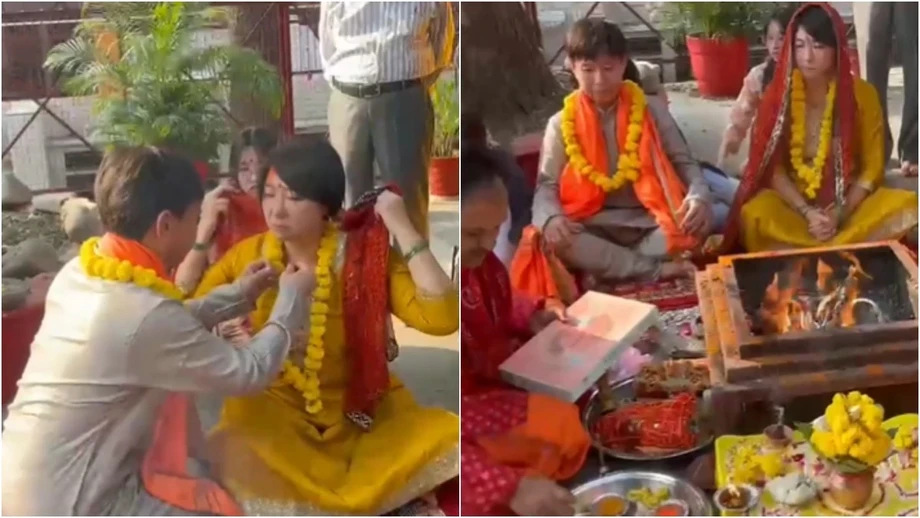
Footage from the temple shows the pair in Indian dress, Hiro in a kurta and pyjama, Shizu in a salwar and kurta, as they looped marigold garlands around each other's necks. Hiro then applied sindoor, the red powder a Hindu husband marks in his wife's hair parting, before the two walked seven times around a fire lit for the ceremony. Friends threw flower petals over them once the rites were finished, and older guests stepped forward to give their blessings.
A Friend's Wedding Set the Plan in Motion
Pankaj Joshi, the friend at the centre of the story, met Hiro in Dubai, where the Japanese businessman works in real estate and provides services for companies setting up there. Joshi was working in the emirate at the time. Accounts of when the two met place it about a year before the India trip, or about three years earlier.
Over that friendship Hiro spoke of wanting to see India. The family eventually made the journey, moving through Himachal Pradesh and Punjab before reaching Lucknow. All three children took to the country as quickly as their parents did, drawn to its food, its clothing and its traditions.
On 21 November 2026 the family arrived in Lucknow for Joshi's own wedding. What they saw there, the garlands, the fire, the priest's chanting, the relatives crowding in to bless the pair, made an impression strong enough to change their plans. Hiro and Shizu told their hosts they wanted a ceremony of the same kind for themselves.
Joshi, his family and their friends set about arranging it, and the temple was booked. Two days after watching their friend marry, Hiro and Shizu were bride and groom. Hiro later said the choice of Lucknow was simple: it is the home town of a friend, and a wedding on Indian soil had been a wish he had held for a long time.
Garlands, Red Powder and Seven Steps Around a Fire
The rites at the Radha-Krishna Temple followed the order most Hindu weddings in northern India use. The first visible moment is the exchange of garlands, called jaimala or varmala, in which bride and groom drape loops of flowers over each other while relatives crowd around with phones. At this ceremony the garlands were of marigold, the orange flower strung into curtains and backdrops at Indian celebrations.
The sindoor comes next. Hiro applied the red powder along the parting of Shizu's hair, a mark worn by married Hindu women in many communities. The seven rounds, or pheras, are the heart of the ceremony: the couple circles a sacred fire seven times, each circuit tied to a promise about home, family and duty, while the priest recites Sanskrit verses. Under the Hindu Marriage Act of 1955, a Hindu marriage is solemnised by the performance of these rites and ceremonies.
Pandit Janardan led the ritual with the chanting that holds it together. Gomti Nagar, where the temple stands, takes its name from the river that runs through Lucknow. For the three children, the afternoon offered a close view of a wedding built on customs unlike those of their own upbringing, and they watched their parents take vows they had taken once before, in another country and another language.
Who Are Hiro Chihara and Shizu?
Hiro holds business interests in Dubai that include real estate and services for companies looking to establish themselves in the emirate. The family lives in Thailand. Shizu appears in accounts of the wedding by her first name only, and the couple have kept the rest of their family details private.
The India trip was not their first taste of the country. Before Lucknow the family had travelled through Himachal Pradesh and Punjab, and Hiro said in the ANI interview that a wedding in India had been something he wanted for years.
Their children became part of the story in their own right. They came to the temple as guests and left as witnesses to a marriage between their own parents, an event that turned a religious ceremony into a family reunion. Relatives and friends filled the courtyard, and the flower petals thrown over the couple came from people who had helped put the ceremony together in a matter of days.
From Divorce to Pheras: How It Happened
The sequence that ended at a temple in Gomti Nagar runs across four years and three countries.
- 2022: Hiro Chihara and Shizu divorce. Neither has said why.
- 2023: The couple reconcile, encouraged by advice and support from Indian friends.
- Around a year before the India trip, or about three years earlier according to the account given by Joshi: Hiro meets Pankaj Joshi in Dubai, and the acquaintance becomes a friendship.
- Before November: the family tours India, including Himachal Pradesh and Punjab, and the children fall for Indian food and dress.
- 21 November 2026: the family reaches Lucknow for Joshi's wedding.
- 23 November 2026: Hiro and Shizu marry at the Radha-Krishna Temple in Gomti Nagar, with Pandit Janardan officiating.
- 24 and 25 November 2026: video from the ceremony circulates on social media and is picked up by outlets across India.
The gap between the friend's wedding and their own was two days. Joshi had invited the family to his celebrations, and the invitation turned into the occasion for a second wedding nobody had planned when the trip began.
Why the Ceremony Drew So Much Attention in India
Clips of the wedding spread on Indian social media within a day. The reaction dwelt on two things: a couple who had separated and found their way back, and visitors from abroad who chose a temple ritual for the celebration rather than a party of their own design.
Indian weddings are known for ceremonies that run for days and pull in entire families, with Vedic chanting and the pheras at the centre. Hiro and Shizu had seen that up close at Joshi's wedding two days earlier, and they asked for the same for themselves. Videos of the couple sitting together, exchanging garlands and completing the rounds around the fire drew messages of congratulation from users who treated the ceremony as proof of how far the appeal of Indian customs reaches.
The presence of the children gave the event a second life online. A remarriage is usually an adult affair, handled quietly. This one was staged in front of the couple's sons or daughters, who watched their mother and father circle the fire and then received the blessings of guests alongside them.
What Has Not Been Said
The couple did not disclose the reason for their divorce in 2022, and they have not described what brought them back together beyond the encouragement of friends. They also have not said whether the temple ceremony was registered as a marriage in India or whether it requires any step in Japan to be recognised there. No plans after Lucknow have been made public.
What is clear is the setting of the event. The Radha-Krishna Temple in Vivek Khand sits in a district built on the eastern bank of the Gomti, and on 23 November it held a ceremony in Sanskrit for a family that had travelled from Thailand by way of a friend's wedding, a divorced couple who decided in the space of two days to become husband and wife again.
Key Points
- Hiro Chihara and Shizu, a Japanese couple, remarried on 23 November 2026 at the Radha-Krishna Temple in Vivek Khand, Gomti Nagar, Lucknow.
- They divorced in 2022 and reconciled in 2023 with encouragement from Indian friends.
- Pandit Janardan officiated with Vedic chanting; the couple exchanged marigold garlands, Hiro applied sindoor and they took seven pheras around a sacred fire.
- Hiro wore a kurta and pyjama, Shizu a salwar and kurta.
- Their three children, relatives and friends attended; guests threw flowers and elders offered blessings.
- The family arrived in Lucknow on 21 November for the wedding of Pankaj Joshi, a friend Hiro met in Dubai, and arranged their own ceremony two days later.
- Hiro told ANI the wedding was "a very precious experience" and that they chose India because "we love India".
- The family lives in Thailand, and Hiro's business interests in Dubai cover real estate and company establishment services.
- The couple has not said why they divorced, or whether the ceremony was registered in India.