One Car at 7:30 a.m., 200 More to Come
At 7:30 a.m. on Nov. 30, a test vehicle designated Vehicle No. 1 pulled onto the arterial roads around Gwangju Songjeong Station, and South Korea's first attempt to run autonomous cars across an entire city moved from preparation into live traffic. The Ministry of Land, Infrastructure and Transport said the car marks the end of manufacturing, modification, safety checks and the building of operating infrastructure, and the start of testing the software on public streets.
Contents
- One Car at 7:30 a.m., 200 More to Come
- Where the Cars Drive, and When
- What System Priority Means for the Person in the Seat
- Three Companies, Three Different Bets
- Hyundai's Other Job: Building the Cars and the Platform
- The Permit Queue Behind the Fleet
- Money, Rules and a New Ministry Team
- From One City to Six, and 3,000 Cars
- Seoul Prepares for the Same Wave
- What Is Not Settled
- Key Points
Gwangju was named the country's first autonomous driving demonstration city in January. The project carries 61 billion won (about $45.7 million) in state funding and runs for three years, from 2026 to 2028, inside a demonstration zone of 500.97 square kilometers, the first such zone drawn around a whole city rather than a set of fixed routes.
Cities and provinces have set aside parts of their urban areas as pilot zones before, running fewer than 10 autonomous vehicles on specific roads. The Gwangju program is built to reach 120 cars by the end of this year and 200 by January, the base for a national fleet of about 3,000 vehicles next year.
The fleet is being assembled by Hyundai Motor and Kia, which signed a memorandum of understanding with the ministry, the Gwangju city government and two technology startups at a ceremony in the city about 270 kilometers southwest of Seoul. Ministry officials describe the next few months as a test of whether software trained on limited routes can cope with a city's hills, bus lanes, delivery trucks and pedestrians.
Where the Cars Drive, and When
The first operating zone follows major arterial roads around Gwangju Songjeong Station, the Pyeongdong Industrial Complex and the Cheomdan District. The ministry will widen it in stages, judging each step by the technical level of the vehicles and the conditions on the ground.
Cars run from 7:30 a.m. to 6 p.m. on weekdays and weekends alike, and the hours will stretch once the system settles. Outside the zone, data collection vehicles driven by humans travel the rest of Gwangju, recording road layouts, traffic flows and the unusual cases that a handful of fixed routes would never produce.
Everything gathered inside and outside the zone is processed under AI data standardization guidelines written jointly by the Korea Transportation Safety Authority and the autonomous driving developers, then fed back into the software to improve its performance. Park Jeong-hwan, director general of the AI Mobility Bureau at the Jeonnam-Gwangju Special Metropolitan City government, said the city is managing field infrastructure and the operating environment so Gwangju can serve as a practical testing ground, with safety watched throughout the demonstration.
What System Priority Means for the Person in the Seat
Through the first half of next year, a test driver sits in the driver's seat. The autonomous system reads the road and the traffic around it, makes the decisions and works the steering and pedals, while the human takes over in an emergency or when a safety call has to be made.
The arrangement shows how far the industry still has to travel. Driver assistance systems now common in new cars, known as Level 2, can hold a lane and keep a distance on a highway but expect the person behind the wheel to keep watching the road. Level 4, the target here, means a car handles every part of driving inside a mapped area with nobody needed for the task. Gwangju is testing the ground in between, with the machine in charge and a person as the fallback.
Control also sits elsewhere. Transport platform companies file weekly operating plans broken down by company and purpose, and may dispatch cars only under approved schedules. A control system watches each car's location, speed, battery charge and system status in real time, and will adjust or suspend a run if something looks wrong, or if a road closes, a construction crew arrives or a crash blocks the way.
Three Companies, Three Different Bets
Hyundai Motor, Autonomous A2Z and RideFlux were chosen through a competition run by the Korea Transportation Safety Authority, judged on written submissions and on real driving at K-CITY, a test ground built for autonomous vehicles. Each brings a different plan to the same 500 square kilometers.
Hyundai is developing Level 2+ driver assistance and Level 4 autonomy together, with the aim of putting Atria AI, the software built by its subsidiary 42dot, into cars sold at home and abroad. Autonomous A2Z builds shuttles with no driver's seat and has run autonomous shuttles, on-demand transport and buses for 14 local governments nationwide. RideFlux is running what it describes as the country's first unmanned autonomous vehicle trial and holds a permit for paid freight haulage on highways, which gives it a foothold in both passengers and cargo.
The split matters for how the data gets used. Hyundai wants software good enough for mass-market cars. A2Z wants to replace drivers on public transport routes. RideFlux wants to move goods without a cab. All three are collecting from the same streets, under the same standardization rules, which is what makes the results comparable across companies.
Hyundai's Other Job: Building the Cars and the Platform
Kia takes the transport platform role and will handle dispatching and fleet control on Shucle, a mobility platform the group has already used in 33 local governments and more than 82 service areas, where it combines AI with live traffic data to plot routes and manage pickups and drop-offs.
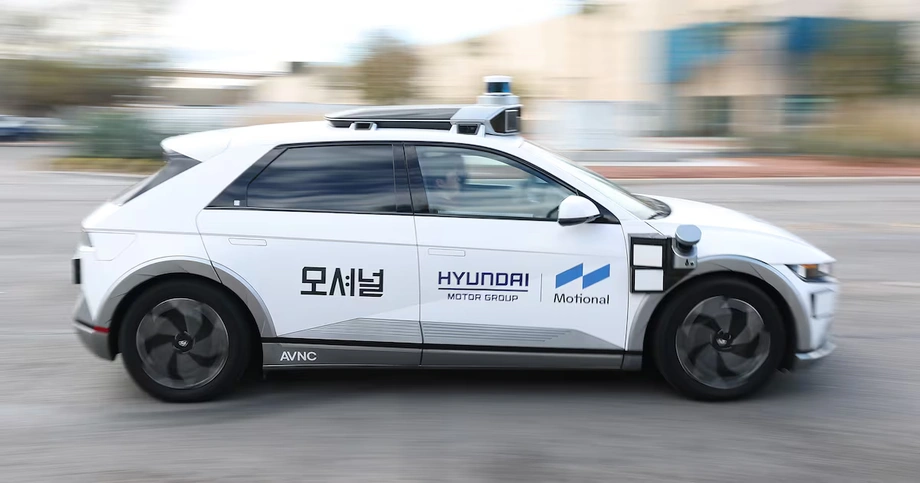
The vehicles are dedicated development cars based on the Ioniq 5 electric crossover, with steering, control and sensors duplicated so a single failure does not take a car out of service. Hyundai has supplied Ioniq 5 based autonomous cars to Motional, its autonomous driving joint venture, and to Waymo, the robotaxi business linked to Google, a role its executives call an autonomous vehicle foundry.
Kim Soo-young, head of the Mobility Business Division at Hyundai Motor and Kia, framed the Gwangju work as a problem of connecting three things rather than of perfecting one car.
We will focus on advancing technology to build a system where vehicles, autonomous driving technology, and platforms are organically linked, ensuring that the verification results lead to scalable standards.
The Permit Queue Behind the Fleet
Of the software-defined vehicles assigned to the demonstration, 105 had been delivered to the three companies for retrofitting and inspection by the time Vehicle No. 1 rolled out. Deliveries accelerated sharply: 67 had reached the companies as of Nov. 15, meaning 38 arrived in a little over ten days.
Each company's first demonstration vehicle must pass a preliminary verification test so faults are found before other drivers and passengers are exposed to them. The Korea Transportation Safety Authority set up a task force on Nov. 18 to handle temporary operating permits and raised the staff who check safety requirements from two to five. The ministry is also pursuing rule changes to simplify permits for vehicles with identical performance, a step that matters once hundreds of similar cars need paper clearance.
Money, Rules and a New Ministry Team
Gwangju's selection came with a promise to run the city as the lead case for what the government calls a mega special zone for AI autonomous vehicles. Seven support packages are tied to it: fiscal, financial, tax, talent, infrastructure, technology and startups, and institutional change.
On Nov. 26 the ministry created the Autonomous Driving Demonstration Promotion Team, a division-level unit that will review progress city by city and project by project, clear obstacles such as vehicle deployment and permits, and coordinate agencies and companies. A meeting with participating companies was set for Nov. 29, bringing together automakers, insurers, transport platform operators and the city government.
Kim Yun-duk, the transport minister, has set the stakes in national terms, saying the country cannot afford to fall behind autonomous driving frontrunners such as the United States and China. He has described the goal as making South Korea one of the world's top three players in autonomous mobility, and said the ministry will back the demonstration city so it can become a base for future strategic industries.
Park Jun-hyung, director general of the ministry's Mobility and Automobile Bureau, put the priority on safety while the fleet grows.
The Gwangju demonstration city has entered the full-scale demonstration stage with the first vehicle in operation. Centered on the newly launched promotion team, we will speed up the deployment of follow-up vehicles and the expansion of the demonstration, and actively support efforts to accelerate the development and commercialization of autonomous driving technology, with safety as the top priority.
From One City to Six, and 3,000 Cars
Next year the ministry plans to widen the program to five or six demonstration cities, including Gwangju, and to lift the fleet to about 3,000 vehicles. That is roughly fifteen times the 200 cars planned for Gwangju in January. It also intends to introduce autonomous demand-responsive transit, buses or vans routed by algorithm on request rather than by fixed timetable, on 50 routes and zones nationwide.
Permits, safety checks and insurance for that volume are the reason the ministry is rewriting its permit process now rather than later. If the number of cities rises to five or six and the fleet reaches about 3,000, talks between authorities and industry over temporary operating permits and safety standards are expected to become far more concrete.
Level 4 driverless operation on public roads is the ministry's stated goal for late 2027 to early 2028. With large numbers of cars spread across a city and logging data in ordinary traffic, safety verification and the regulatory groundwork for that step are meant to advance together, with Gwangju acting as the trial ground for whether the technology is commercially viable.
Seoul Prepares for the Same Wave
Seoul is working on the consequences rather than the cars. On Nov. 27, Choi Jin-seok, head of the city's Disaster and Safety Management Office, gave an internal lecture on how autonomous driving will reshape urban space, the second in a series that began with the transport office.
Choi sketched a city where alleys freed from parked and passing cars become walkways and green space, where curbs turn into hubs for drop-offs, parcel pickups and mobile vending, and where roads change purpose by time of day. He also warned of side effects: purpose-built vehicles chasing profit might cluster in core commercial districts and leave older low-rise neighborhoods without service, sensor demands for clear sightlines and legible signs might collide with the look residents want, and empty cars circling to avoid parking fees could add congestion. His answers included rules requiring vehicles to rotate through non-core districts and reserving the lower levels of buildings as machine-readable "mobility ports" while parks and views sit above.
Power is a constraint. Seoul produces only about 10% of the electricity it uses, while autonomous cars draw heavily, so Choi pointed to geothermal, sewage heat and water-source energy. He also cited concerns that travel speeds could fall by up to 40% during the transition as driverless and human-driven cars interfere with each other, and called for lanes reserved for autonomous vehicles and new traffic signal systems.
It seems the era of autonomous driving may arrive faster than we think, and I feel there are hardly any areas that autonomous driving will not affect.
Around 200 officials attended, including Mayor Oh Se-hoon, who said the shift reaches well beyond transport.
The commercialization of autonomous driving demands the redesign of road and underground infrastructure as well as the entire urban space beyond transportation.
Seoul's own plans include expanding autonomous buses to 500 units by 2030 under the G3 Seoul Plan, launching Level 4 robotaxi demonstrations in the second half of this year, and nighttime autonomous bus runs along Cheonggyecheon that began last month.
What Is Not Settled
The ministry has not said when the person in the driver's seat will be removed in Gwangju, and no date has been given for a fully driverless passenger run there. The 200 vehicles by January is a target, against 105 delivered for conversion by the end of November. Which five or six cities join next year, and on what terms, will be decided later.
For the residents of Songjeong, Pyeongdong and Cheomdan, the change is concrete: cars with sensors on the roof joining the morning traffic on their commute, and a control center somewhere in the city watching the speed, charge and software state of each one. For the companies, the first months will show where the software fails and how much of the city still needs to be mapped before the driver can step out.
Key Points
- The Ministry of Land, Infrastructure and Transport put Vehicle No. 1 into service in Gwangju on Nov. 30, starting live road testing in South Korea's first citywide autonomous driving demonstration.
- The first zone covers arterial roads around Gwangju Songjeong Station, the Pyeongdong Industrial Complex and the Cheomdan District, with cars running from 7:30 a.m. to 6 p.m. daily.
- A test driver stays in the seat through the first half of next year while the autonomous system controls the car.
- Targets are 120 vehicles by the end of 2026 and 200 by January, then about 3,000 nationwide across five or six cities next year.
- Hyundai Motor, Autonomous A2Z and RideFlux were selected as participants; 105 development vehicles based on the Ioniq 5 have been delivered.
- The demonstration zone covers 500.97 square kilometers, and the project has 61 billion won (about $45.7 million) in state funding from 2026 to 2028.
- The Korea Transportation Safety Authority set up a permit task force on Nov. 18 and raised safety verification staff from two to five.
- A new ministry unit, the Autonomous Driving Demonstration Promotion Team, was created on Nov. 26 to oversee expansion and 50 routes for autonomous demand-responsive transit.
- The ministry aims for Level 4 driverless operation on public roads between late 2027 and early 2028.