Ten Million Yen for a Third Child
Japan's ruling Liberal Democratic Party has drafted a package that would give families 10 million yen, about $63,000, for a third or subsequent child, the boldest piece of a plan to lift a birth rate that has worried policymakers for years. Members of the party's Population Strategy Headquarters settled the draft at a meeting on Friday, 27 November 2026, after about six weeks of discussion. Some descriptions of the plan call it a cash payment made at the birth of a third child. Others describe benefits and services worth about 10 million yen, a difference that leaves room for one lump sum, payments spread over time, or a bundle of money and help in kind.
Contents
- Ten Million Yen for a Third Child
- A Birth Rate That Briefly Turned Up
- A New Agency to Run Population Policy
- Free Childcare From an Earlier Age
- Rewriting the Age of Old Age
- Foreign Workers, Without an Immigration Policy
- What 7,700 Extra Babies Would Mean
- Why Families Stop at Two Children
- The Hungarian Lesson
- Cash Against Cribs and Clinics
- What Has Not Been Decided Yet
- Key Points
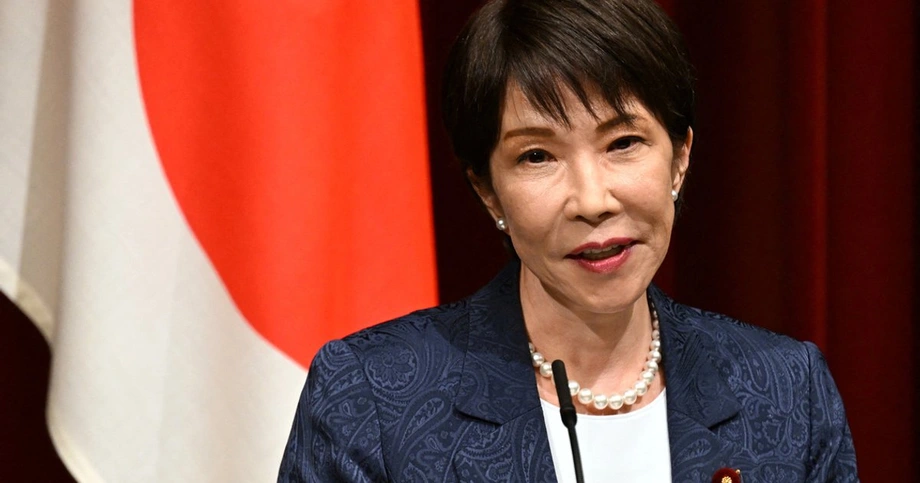
The draft also proposes large tax reductions for families with children and a new agency to run population policy across the government. The party intends to hand the proposals to Prime Minister Sanae Takaichi as early as next week, once internal party procedures are complete, so that they can feed into a Population Comprehensive Strategy her government aims to adopt by the end of 2026.
Hakubun Shimomura, who chairs the headquarters and is a former education minister and former LDP policy chief, told reporters after the meeting that the package should read as a promise from the state rather than as a subsidy.
I want to issue a message convincing people that the government is serious about the idea of letting the entire society support child-rearing.
The scale sets the proposal apart. The existing national lump sum paid at a birth is generally 500,000 yen per child, so 10 million yen is 20 times that amount. The party frames the money as part of a wider change in thinking: the cost of raising children should be carried by society at large, rather than by parents alone.
A Birth Rate That Briefly Turned Up
Data from the Ministry of Health, Labour and Welfare shows births to Japanese nationals rose by 1,379 in the first half of 2026 compared with the same months a year earlier, passing 320,000. It was the first increase in 11 years. Officials linked the rise to a jump in marriages in 2024, after several years of decline during the pandemic.
Other figures in the same release point the other way. Marriages between January and June fell by 708 to about 230,000 couples. Preliminary births through September fell 0.3% to about 523,000. The nine month count covers a longer period and a different set of months than the six month count, so a half year of growth and a nine month slip can be reported together without contradiction.
A census taken on 1 October 2025 put Japan's population at 122,972,528, a fall of 3,173,571 from 2020 and the largest drop in a count that began in 1920. People aged 65 and older made up 29.4% of residents, and children under 15 made up 10.9%. Tokyo was the only one of the 47 prefectures to gain residents.
A New Agency to Run Population Policy
The draft's machinery may matter as much as its money. The LDP wants a Population Strategy Agency, a tentative name, to act as a command centre coordinating measures now scattered across ministries. The agency would be in charge of carrying out the related policies, giving one office responsibility for a subject that touches health, education, labour, tax and local government.
The same part of the draft proposes a learning account, a record of a person's education and vocational training that would follow them through working life. The idea is that someone who retrains or changes trade in their forties should be able to show what they have studied and what they can do, in a labour market short of workers.
The headquarters set two broad goals for the whole strategy: slowing the pace at which the population declines, and building a society that works with a smaller number of people rather than pretending the shrinkage will reverse on its own.
Free Childcare From an Earlier Age
Childcare is free in principle in Japan for children aged 3 to 5. The draft asks the government to extend that to younger children, so that the cost of a nursery place stops being a reason to delay a second or third child. It also asks for national funding so that medical care, nursery fees and school lunches cost parents the same wherever they live, instead of varying with the budget of the local authority.
Support for fertility treatment appears in the draft alongside the childcare measures, an acknowledgement that some couples who want more children need medical help rather than money alone.
Members at the meeting also called for reducing the financial burden of higher education, an item that did not become a firm proposal in the text. University costs weigh on Japanese families later than nursery fees but arrive at about the age when parents are deciding whether a third child remains affordable.
Rewriting the Age of Old Age
The draft reaches well beyond families with young children. It asks the government to raise the threshold that official statistics use to define someone as elderly, currently 65 and older, and to revise the definition of the working age population, now counted as everyone between 15 and 64. Neither new number has been set.
Employment policy for older people would be reviewed, including a higher statutory retirement age, so that people who can and want to keep working are not pushed out at a fixed date. The headquarters also wants a social security system in which people contribute according to what they can afford, whatever their age, rather than according to a line drawn at 65.
For the people already in work, the draft suggests promoting different ways of working, such as regular employees on shorter daily hours. The aim is to free up time for care at home while keeping skilled staff in jobs, at a moment when labour shortages are spreading through services and small manufacturing.
Two smaller items sit in the same section. One is legislation to support people in hikikomori, the condition of withdrawal from work, school and social contact that keeps a share of working age adults outside the labour market. The other is a set of population decline countermeasures zones, offering tax relief, looser regulation and fiscal support to residents of remote islands on the national border, where shrinking numbers threaten the viability of a community.
Foreign Workers, Without an Immigration Policy
The draft takes a careful position on the question that splits the party. It accepts that Japan needs workers from abroad and rules out taking them without limit. The text reads:
Foreign workers should not be accepted without limits but should be accepted to the extent necessary to maintain socioeconomic activities.
It adds that Japan should keep a clear distance from what it calls a so-called immigration policy, a phrase that signals continuing resistance to any framework presented as permanent settlement. In practice the draft asks for a stricter look at the fields and the numbers of people admitted under two programmes: the Specified Skilled Worker route for people who arrive ready to work, and the Employment for Skill Development system, which is due to start in fiscal 2027 and is designed to train workers while they are employed.
What 7,700 Extra Babies Would Mean
Ryohei Mogi, a population scholar who studies the falling birth rate, worked through what such a payment might produce. About 1.42 million couples in Japan have two children and a wife under 40, he estimates, and they are the group the policy would target. In Saga City, where he took part in a survey, 54% of parents with two children said three or more was their ideal. Applied across the country, that points to roughly 770,000 couples who would like another child.
If one couple in 100 of those 770,000 decided on a third child because of the payment, Japan would record about 7,700 additional births. Mogi notes that births are spread over several years, so the figure would not appear as a one year jump in the statistics.
He ran the question from another direction as well. In 2024, a woman with two children had about a 27% chance of going on to have a third, according to figures from the Human Fertility Database. If more than half of women with two children had a third, Japan's fertility would improve by about 12%, roughly returning it to the level of 2021.
A cash transfer on this scale, if it were carried out, would be the first attempt of its kind at national level anywhere, Mogi writes, which is why the results would be watched closely outside Japan. He is not uncritical of it.
I have hopes for it, but I am also worried.
Why Families Stop at Two Children
The 2021 National Fertility Survey asked couples whose ideal number of children was three or more but who planned fewer why they would fall short. Money came first: 59.3% said raising and educating children costs too much. Another 42% said they did not want to give birth at an older age, 24% cited the psychological and physical burden of caring for children, and 20% said a child would interfere with their work.
The answers mark out the ground a payment can cover and the ground it cannot. Cash can steady a household that is held back mainly by cost. Age, health, the daily load of caring for small children and the pressure of a career do not respond to a transfer of money.
Mogi doubts that a 10 million yen offer would persuade couples who want two children to want three. The useful effect, in his reading, is to help people who already want a third child to actually have one, which is a narrower goal than raising the number of children people say they desire.
The Hungarian Lesson
Hungary has gone further than most countries in paying people to have children. Mothers with three or more children pay no income tax there, part of a set of pronatalist measures introduced over more than a decade. Research on those policies found that they brought births forward, with a limited effect on the number of children women have over a lifetime.
Hungarian fertility rose after the measures and then began to slip again after 2021. One reading of that arc is that families who had always intended to have children moved them earlier because they feared the support would be withdrawn, which lifts the figures for a few years and then leaves them where they were.
Applied to Japan, the Hungarian experience suggests a temporary rise followed by another decline. The distinction Mogi draws is between a fertility rate that climbs because births have been rearranged in time and a rise in the number of children people have across their lives.
Cash Against Cribs and Clinics
The cost of each additional baby is the hardest question for the proposal. Research on Japan's child allowance found that adding one child took about 100 million yen of public spending. Building more nursery places produced a similar effect on fertility for a fifth or less of that money, according to the same work. A payment of 10 million yen per birth sits closer to the cheaper end of that range than the child allowance does, and no published estimate yet covers a one off sum of this size.
Mogi argues that the cheapest step available is to make people aware of what already exists. Japan runs support schemes at national, prefectural and municipal level, and the range is wide enough that few parents can hold it all in mind. In one local survey he worked on, only two or three of more than 10 programmes were known to half the residents or more.
However good a scheme is, if the people it is meant for do not know it exists, they cannot use it.
Non-marriage is the larger force behind the decline. Between 70% and 90% of Japan's falling fertility is explained by the growing share of people who never marry, Mogi writes. About 70% of unmarried people have no partner and 30% to 40% have never had one, while about 75% say they want to marry. Policy has little grip on how people meet, which is why he argues for a mix: measures aimed at the long term, alongside measures that help people who are already in a couple reach the family size they want now.
His own conclusion is that Japan's birth rate can be improved, and that the method matters more than the size of the cheque.
What is needed is not simply more budget. The aim should be a society where people can have the number of children they hope for, rather than raising the fertility rate as an end in itself.
What Has Not Been Decided Yet
The proposal is a party recommendation, not a government programme. No cabinet decision has been taken and no legislation exists to create the payment. No start date, funding source, income condition or detailed eligibility rule has been announced, and the draft does not settle whether families already raising three or more children would qualify or whether help would go only to births after a programme begins. Without those details and a count of eligible families, the total cost cannot be calculated.
The calendar from here is short and crowded.
- 27 November 2026: the LDP's Population Strategy Headquarters compiles the draft at a meeting in Tokyo.
- Early December 2026: the proposals go to Prime Minister Sanae Takaichi after internal party procedures.
- End of 2026: the government aims to adopt its Population Comprehensive Strategy.
- 2027: the party wants concrete measures written into the Basic Policy on Economic and Fiscal Management and Reform, the annual document that sets spending and reform priorities.
- Fiscal 2027: the Employment for Skill Development system for foreign workers is due to begin.
The size of the offer has already changed the terms of the debate inside the party. A payment of this scale forces the government to explain where the money would come from, what it would count as success, and how it would be checked, questions that smaller expansions of child benefits never raised. Shimomura has said the results should be verified, and the draft carries no figure for how many births the party expects to gain.
Key Points
- The LDP's Population Strategy Headquarters adopted a draft on 27 November 2026 offering 10 million yen, about $63,000, for a third or subsequent child.
- The package includes large tax reductions, a new Population Strategy Agency and a learning account that records education and training.
- Free childcare, now offered in principle from ages 3 to 5, would extend to younger children, with national funding so costs do not vary by region.
- The draft would raise the age that defines someone as elderly above 65, revise the working age definition and lift the statutory retirement age.
- Foreign workers would be accepted only to the extent needed, with tighter scrutiny of numbers under the Specified Skilled Worker route and the Employment for Skill Development system starting in fiscal 2027.
- Births to Japanese nationals rose 1,379 in the first half of 2026 to more than 320,000, the first increase in 11 years, while preliminary births through September fell 0.3% to about 523,000.
- Population scholar Ryohei Mogi estimates the payment could add about 7,700 births if one in 100 of roughly 770,000 willing couples acted on it.
- Cost of raising children was cited by 59.3% of couples in the 2021 fertility survey who had fewer children than they wanted.
- Hungary's pronatalist policies moved births earlier but had limited effect on lifetime family size, and its fertility has fallen again since 2021.
- The proposals go to Prime Minister Sanae Takaichi next week, ahead of a national strategy due by the end of 2026.