Seven truckloads and a house nobody could walk through
Crews from the PPSU, Jakarta's public infrastructure and facilities unit, began pulling rubbish out of a house in Gang Senggol, RT 13 RW 12, Cengkareng Timur, West Jakarta, on Tuesday, November 24, 2026. Five days later, seven truckloads had been driven away to the city environment agency's disposal points and the work was still not finished.
Contents
- Seven truckloads and a house nobody could walk through
- What the crews found behind the door
- A month to fix a roof, a staircase and the wiring
- The order in which things had to happen
- Who pays, and where the family sleeps meanwhile
- A sister who stopped being able to sit up
- Why the family was never on the social assistance list
- Hoarding, and why a cleanout is not a cure
- One alley, and a national programme behind it
- Key Points
Kris Sardo Elmondo, who heads RW 12 in Cengkareng Timur, said residents, mosquito control officers known as Jumantik and members of the local family welfare movement (PKK) joined the clearing. Rubbish was carried out by hand, loaded onto vehicles and driven away in repeated trips.
This morning I stopped by again, the residents were working together with PPSU, Jumantik and the PKK chair.
The house has two floors and, by Elmondo's account, no corner was spared. The family who lives there is made up of four siblings: Yena, 41, Hengky, 40, Yesi, 37, and Helman, 35. They stayed on in the house their parents left them, and the clutter built up until the rooms could no longer be used.
Inside it is all rubbish, the living room and the kitchen. The second floor is also all rubbish.
Neighbours in the alley have said the family earns a living as waste collectors, sorting through what the city throws out and selling whatever still has value. The same trade brought much of the contents of their home back through the front door.
What the crews found behind the door
The clearing began in the bedroom, and a single room took more than an hour to empty. What came out reads like an inventory of a whole neighbourhood's discards: serving dish covers, clocks, bottles, umbrellas, laptops, ride hailing helmets, mattresses and dolls, along with cardboard, plastic and strips of used tyre.
- Serving dish covers, clocks, bottles and umbrellas
- Laptops, ride hailing helmets and mattresses
- Dolls, cardboard, plastic and strips of used tyre
When the piles were pushed into the yard, cockroaches ran out across the ground and the smell followed them. Hengky has described what the clutter did to ordinary rest long before any official arrived.
We sleep and cockroaches crawl all over our bodies. Until it itches.
In an earlier interview he said the insects reached his head and hands while he slept, and that he lay on a cloth on the floor rather than a bed because the bed was gone under the stacks.
Elmondo said the house was small for its two floors, which is why the cleanout took days rather than hours. On Wednesday, November 25, a joint team moved in: the social affairs unit, the social task force of the sub district social office, the sub district health office, PPSU officers and the local neighbourhood administrators. They sorted as they went, setting aside items that could still be sold to help the family's daily needs.
A month to fix a roof, a staircase and the wiring
The housing ministry sent a team to the address on Saturday, November 28, 2026, to inspect and measure the building and to deliver materials. Kiki Sidabutar, a special staff member to the Minister of Housing and Residential Areas, said the structure would be repaired rather than torn down.
Only renovated without demolition, because the structure is still good. The foundation is strong, it is more the interior condition.
The faults the team recorded run from the top of the building to the ground floor. The asbestos roof sheets leak and the roof frame is damaged. The second floor is laid with boards in a badly deteriorated state. The stair treads have rotted, the ceiling is brittle, and doors and their frames have been eaten by termites. Some walls are cracked and crumbling, part of the electrical system no longer works, and ventilation and daylight are both poor. The bathroom plumbing still functions, though its door is broken.
- Leaking asbestos roof and a damaged roof frame
- Deteriorated timber boards on the second floor
- Rotten stair treads and a brittle ceiling
- Doors and frames damaged by termites
- Cracked and crumbling walls
- Parts of the electrical system not working
- Very little ventilation or natural light
Sidabutar said openings would be widened to let air and light into a house that has had almost none. The target for completion is about one month after the start, around December 28, 2026.
The order in which things had to happen
The repairs could not begin on the day the team first surveyed the building. On November 18, Sidabutar's team could not fully inspect the upper floor because rubbish and rubble blocked the way up.
- November 18: a first survey stalls because the upper floor cannot be reached
- November 24: PPSU crews start carrying rubbish out of the house
- November 25: a joint team of social, health and sanitation officers joins the clearing
- November 28: the housing ministry's team measures the building and delivers materials
- December 28: target date for the renovation to be finished
Once the house is empty, five builders will be able to work through the job properly. Until then, the rubbish is the obstacle.
Who pays, and where the family sleeps meanwhile
The household has been moved into a rented room for two months while the work goes on, with the rent covered by the housing ministry. The point, in the ministry's words, is to let Hengky and his younger sister rest without dust or builders around them.
The money behind the renovation is not coming from the government's regular home improvement grant, the Bantuan Stimulan Pembangunan Swadaya (BSPS), which pays a fixed sum to low income households who manage their own repairs. Sidabutar said this job is direct support from Minister Maruarar Sirait, who is funding it from his own pocket while acting in the ministry's name.
Today all the building materials have been delivered straight to the site so that the repairs can begin immediately.
That line comes from the ministry's own video narration about the handover, in which officials described the house as unfit to live in and the family's situation as a priority.
A sister who stopped being able to sit up
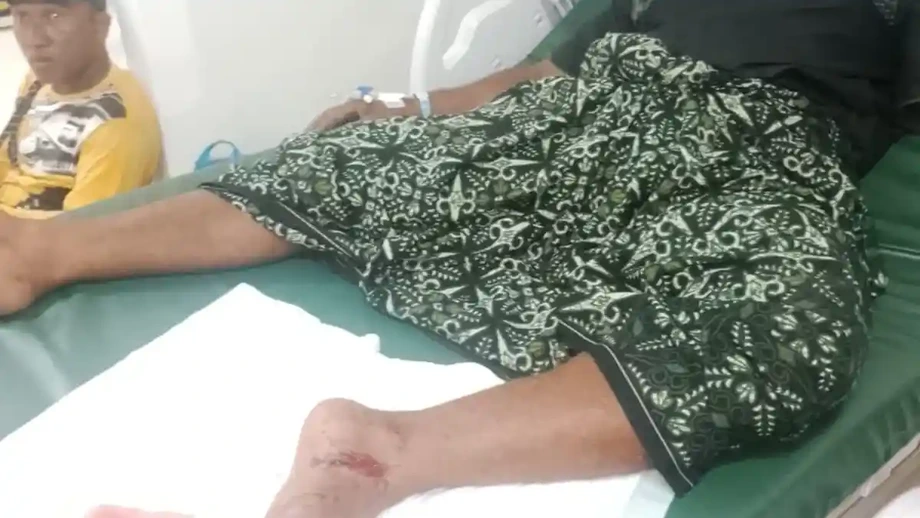
Yesi, the third of the four siblings, has been bedridden since 2023. She cannot sit unaided, let alone walk, and needs help to drink and to use the toilet. Her brother described the routine.
If she wants to drink it has to be poured into a baby bottle. For the toilet, it is there too, I clean it up.
Hengky said the problem started when Yesi woke up in pain in 2023. The family took her to the Cengkareng regional general hospital, where doctors found a deformity in her spine, with one section bent and a vertebra fractured. Surgery was recommended, with the warning that without it she might never walk again. She refused and went home.
She was taken for the operation, but my sister did not want it. She refused, so we went home again.
The family holds a BPJS Kesehatan card, the national health insurance that would have covered the treatment. Medical staff from the Cengkareng community health centre have since examined her, scheduled a follow up and are still trying to persuade the family to accept a referral to hospital. Hengky gave up steady work to care for her and the household now leans on scavenging.
Why the family was never on the social assistance list
The four siblings were not receiving welfare payments, and the reason sits in a database rather than in their house. They are recorded in the seventh decile of the Data Tunggal Sosial dan Ekonomi Nasional (DTSEN), the national single social and economic dataset that ranks households by welfare level and decides who qualifies for aid.
The scale runs from decile 1, the poorest, to decile 10. Households in the 6 to 10 band are classified as middle and upper income, which in practice removes them from the priority list long before a case officer ever visits.
Suhardin, the head of Cengkareng sub district, said the social welfare team from Cengkareng Timur has already collected data on the family and submitted a correction through two channels: the Jakarta provincial government's integrated complaint system and the SILADU application, which routes requests to amend DTSEN records.
On social assistance, the social assistance mentoring team from Cengkareng Timur has carried out data collection.
No date has been given for a decision on the family's new classification, and none of the officials involved has said whether the household will be moved into a lower decile or added to a programme.
Hoarding, and why a cleanout is not a cure
Residents in the alley say the accumulation is not simply a matter of tidiness. Helman is widely believed to have hoarding disorder, and neighbours describe repeated requests to sort through what he brings home and repeated refusals. Hengky has said both an older sibling and a younger one are suspected of having mental health conditions, and that items with no resale value kept appearing inside the house.
Hoarding disorder is a recognised psychiatric condition, listed in the DSM-5 diagnostic manual of the American Psychiatric Association, and it affects roughly 2 per cent to 6 per cent of the population. It is defined by a persistent difficulty in discarding possessions whatever their real worth, a strong urge to keep things, and clutter that makes rooms unusable. It often starts in adolescence or early adulthood and frequently goes unnoticed until the living space has failed.
The condition commonly occurs alongside depression, anxiety or obsessive compulsive disorder, and family history raises the risk. The recommended treatment is cognitive behavioural therapy, which works on the beliefs attached to objects and trains decision making and sorting skills, sometimes with antidepressants from the SSRI group for the anxiety and low mood that come with it. Clinicians warn that forced clearances cause severe distress and rarely solve the underlying problem on their own.
Nothing in the record says whether Helman has been assessed by a mental health professional, and no treatment plan for the household has been announced. The renovation and the cleanout address the building.
One alley, and a national programme behind it
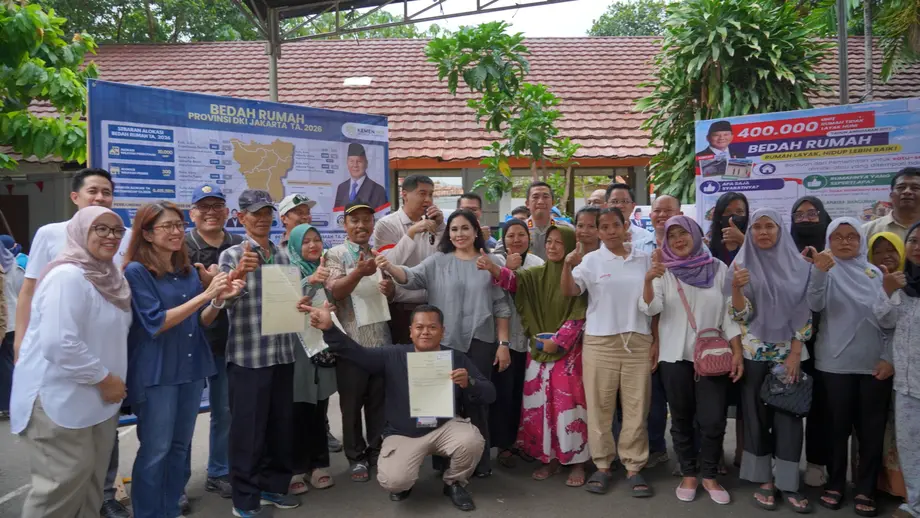
The same Saturday that builders reached Gang Senggol, Minister Maruarar Sirait was across the city in Kelurahan Manggarai, South Jakarta, meeting residents who have received home repairs, microloans and land certificates. His argument there was that physical repairs alone do not hold.
When we do something, do not do it in pieces. It has to be a complete package. The house is repaired, the land legality is helped, and the economy must also be strengthened.
According to the ministry's announcement, the day brought together home improvement works, micro financing through PT Permodalan Nasional Madani (PNM) under its Mekaar scheme, the KUR Perumahan housing credit and the handing over of land titles, run with the agrarian and spatial planning ministry and the national police.
PNM has cut the interest rate on its micro loans from 22 per cent to 8 per cent, following a directive from President Prabowo Subianto, and is applying the new rate to customers in stages. In Manggarai alone there are 491 PNM Mekaar customers, about 10 of whom attended the event as beneficiaries. Housing sector credits under KUR Perumahan carry 6 per cent a year.
Daniel, head of PNM's Jakarta branch, said the company also works with the Metro Jaya police on community programmes, reaching the families of ride hailing drivers and factory workers. The police force has around 20,000 drivers and 50,000 workers under its guidance.
PNM and the police encourage the families of these groups to access economic empowerment opportunities, in line with programme requirements.
Deputy Metro Jaya police chief Adex Yudiswan said the force would back the housing programme on security and follow up suspected violations within its authority. Maruarar also used the event to warn residents against illegal charges by anyone handling their paperwork.
If someone asks for money improperly, do not be afraid. Document it, photograph or video it, and report it through the official complaint channel so it can be followed up.
For the family in Gang Senggol, the immediate measure of all this is smaller and more concrete: a roof that keeps the rain out, stairs that carry weight, and a sister with somewhere clean to lie while she waits for the operation she has so far refused.
Key Points
- PPSU crews began clearing the Cengkareng Timur house on November 24, 2026, and had removed seven truckloads by the weekend
- The four siblings are Yena, 41, Hengky, 40, Yesi, 37, and Helman, 35, living in Gang Senggol, RT 13 RW 12
- The housing ministry surveyed and delivered materials on November 28 and expects to finish repairs around December 28, 2026
- Five builders will work on the roof, stairs, ceiling, termite damaged frames, walls, wiring and ventilation without demolishing the structure
- The renovation is funded personally by Minister Maruarar Sirait and is separate from the BSPS home improvement grant
- The family has been housed in a rented room for two months at the ministry's expense
- Yesi has been bedridden since 2023 with a bent spine and a fractured vertebra and has declined the surgery doctors recommended
- The household is listed in decile 7 of the DTSEN welfare database, which has kept it off social assistance lists, and an update has been filed through SILADU
- Helman is believed by residents to have hoarding disorder, a condition in which forced cleanouts rarely resolve the underlying behaviour