Bitter decisions and a mountain of debt
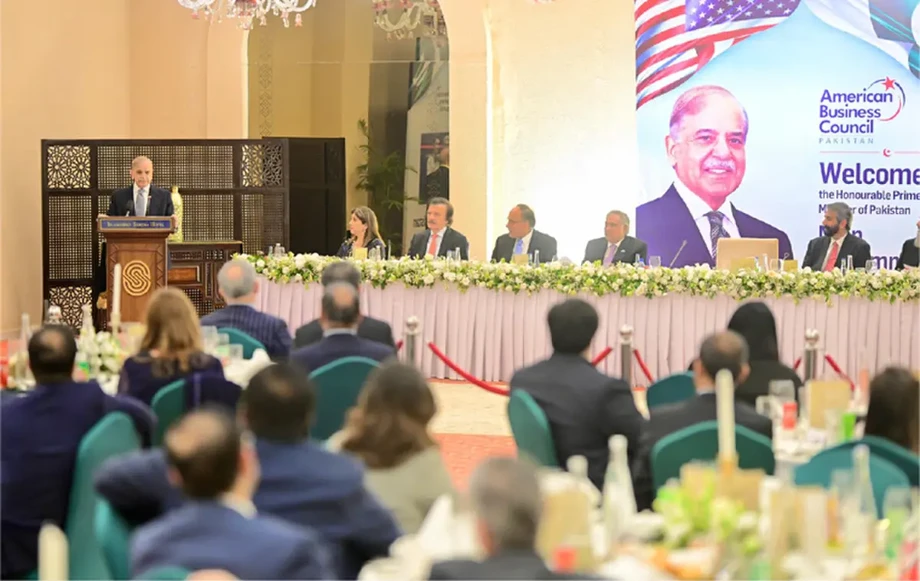
Prime Minister Shehbaz Sharif told a National Security Workshop in Islamabad on Sunday, November 29, 2026, that Pakistan can escape its foreign loans only if its political parties and its people accept painful choices together. The workshop is a course that brings military officers and civil servants into the same room, and the prime minister used it to deliver a message about money rather than about security.
Contents
- Bitter decisions and a mountain of debt
- Two closed departments and trillions in state losses
- The tax board and a recovery the prime minister calls a first
- Record reserves and a target of 6 percent
- The other speech: bowing heads for money
- Agriculture, young people and a population warning
- Wars, pacts and a deadline to turn them into trade
- PIA, fuel relief and the case for selling state firms
- Schools with artificial intelligence, and minerals kept at home
- What the speech did not settle
- Key Points
His promise came with a condition attached. If the country's parties and institutions settle on one plan, he said, the borrowing can end.
There are solutions to this, but we will have to take bitter decisions [..] the nation, all political parties, segments of society, if we collectively decide, I guarantee you without any fear of contradiction that we will rid Pakistan of this mountain of loans.
Sharif described the debt as the product of eight decades of habit, in which governments shielded consumers and industries with subsidies paid for out of tax money and borrowed to cover the difference.
These loans have been increasing for the past 80 years [..] We could have moved the engine without any crutches, without any tablet or subsidy [..] the subsidy came from the people; it is tax revenue. This has made our nation impoverished.
He said he was not assigning blame to any single government. "I am not here to point fingers; the aim is to try to understand where the problem lies and solve it," he told the participants. Sharif also revisited a theme he has carried through his term in office: that his coalition has governed alongside other parties in parliament for two and a half years, that the arrangement settled many disputes, and that others slipped through.
He named merit as one test of reform, saying jobs and opportunities should turn on hard work, honesty and integrity rather than on a person's background.
Two closed departments and trillions in state losses
The Pakistan Public Works Department served as the first exhibit. The federal construction and maintenance arm was shut down, and Sharif said the decision drew criticism from some quarters but ended "Rs100bn in corruption". The Utility Stores Corporation, the state chain that sold subsidised flour and rice through its outlets, followed it.
Every year, people lined up to receive substandard rice and flour, and there was massive corruption [..] we saved the nation from corruption of hundreds of billions of rupees.
Payments to poor households moved instead to digital wallets built on verified beneficiary data. Sharif said the Benazir Income Support Programme had transferred Rs27 billion to eligible families during the current year.
State companies that lose money formed the second drain. Sharif said successive governments borrowed for years to keep them running, with accumulated losses running into trillions of rupees. Finance ministry figures cited by his adviser on privatisation, Muhammad Ali, put the losses of state companies at Rs342.8 billion ($1.23 billion) in the first half of the current fiscal year, while government support to them rose 31 percent to a record Rs804 billion ($2.88 billion). The government has placed 27 state companies into a sale programme arranged in three phases, and officials were told at a review meeting in Islamabad days before the workshop to finish each transaction inside its own timetable.
The tax board and a recovery the prime minister calls a first
Sharif spent much of the address on the Federal Board of Revenue, the agency that collects federal taxes. He said his government had taken what he called long overdue steps over two and a half years to remove what he described as corrupt elements from the board and to strengthen enforcement, and he pointed to a single number.
For the first time in the history of Pakistan, we were able to recover Rs900 billion through enforcement [..] when was the last time FBR or government was able to recover even Rs9bn lost to these nefarious designs.
The recovered Rs900 billion was collected during the 2025-26 fiscal year. Sharif said about Rs2 trillion had previously been lost through corruption, collusion and evasion. The largest share of evasion sits in indirect taxes such as sales tax, which is charged on goods and passed along in the price, rather than in direct taxes on income.
Salaried employees, whose tax is deducted before their pay reaches them, carry a share of the load out of proportion to other sectors, the prime minister said. He tied the shortfall to a wider failure of the state to tax the economy evenly, which forces the government into the borrowing cycle he opened the speech with.
Record reserves and a target of 6 percent
Sharif put growth in gross domestic product, the value of everything the country produces, at a projected 3.5 percent for the current year. He wants at least 6 percent.
We have to touch minimum 6pc as early as possible.
Foreign exchange reserves, the dollars a central bank holds to pay for imports and steady its currency, are at their highest level in the country's history in the prime minister's account. He attached a warning to that figure.
Our reserves are at the highest level in history, but there is a caveat: Do we want to live a life of asking for alms or do we want to live with honour and dignity, and the latter requires hard work and honesty.
Exports rose 8 percent in the first quarter of the current fiscal year. Information technology exports reached $4.6 billion, against about $1.5 billion three years earlier, a rise the prime minister linked to young workers selling services abroad by wire rather than shipping goods by sea. He said the totals are still too small.
A meeting in September gave him a line he repeated twice. In New York, he said, the managing director of the International Monetary Fund told him that "Pakistan is a changed country". Pakistan is on its 23rd programme with the fund, and those disbursements, along with rollovers from Gulf capitals and Beijing, have kept its external accounts from breaking.
The other speech: bowing heads for money
The call for sacrifice in Islamabad followed a blunter admission made to exporters and business leaders in the capital, when Sharif described what asking foreign governments for deposits and deferred payments costs him.
We feel ashamed when Field Marshal Asim Munir and I go around the world begging for money. Taking loans is a huge burden on our self-respect. Our heads bow down in shame. We cannot say NO to many things they want us to do.
Field Marshal Asim Munir is the chief of defence forces, and his presence in those conversations has drawn comment. Critics argue it tells creditors that the military stands behind the debt, blurring the boundary between civilian and military authority.
Sharif named China, Saudi Arabia, the United Arab Emirates and Qatar as the friends who kept Pakistan solvent. China has rolled over deposits worth about $4 billion projected for 2024-25 under arrangements linked to the China-Pakistan Economic Corridor, which has drawn more than $60 billion into energy and infrastructure. Saudi Arabia placed a $3 billion deposit with the State Bank of Pakistan in December 2024 and offered deferred oil payments worth around $1.2 billion in 2025. The UAE rolled over a $2 billion loan in early 2025, and Qatar signed a protocol to realise $3 billion of investment in aviation, agriculture and hospitality, while remaining a key supplier of liquefied natural gas.
The scale of the problem is published. Public debt crossed Rs76,000 billion in March 2025, nearly double the level four years earlier. External debt reached $135.107 billion at the end of 2025, up from $68.673 billion in 2015, and payments on it absorbed the equivalent of 33 percent of export earnings last year. Unemployment stands near 7.1 percent, with more than eight million people without work, and poverty is estimated to affect up to 45 percent of the population.
Agriculture, young people and a population warning
Sharif turned to farming with an admission rather than a boast.
Let me say with a heavy heart that we have not been able to do what we needed in agriculture.
Farming employs a large share of the workforce and supplies cotton, rice and other crops to the export basket. The prime minister said the sector could be turned around inside six months if the work were done properly, and he pointed to livestock as a resource nobody has tapped.
We have the potential to transform our economy through agriculture within a short period if we adopt the right policies and work diligently.
"The only thing lacking is hard work," he added. About 60 percent of Pakistan's population is young, and Sharif called that fact both a challenge and an opportunity. He wants young people trained in education, information technology, artificial intelligence and vocational trades, and said money spent on their skills would be worth more than the minerals buried under the country's mountains. He closed that passage with the poetry and philosophy of Allama Muhammad Iqbal, whose writing on self reliance and effort he held up as a guide.
Rapid population growth, he told a questioner, is a "ticking time bomb" that could hold back economic development unless it is tackled with decisive measures.
Wars, pacts and a deadline to turn them into trade
The workshop heard a list of diplomatic wins. Sharif credited Field Marshal Asim Munir and Deputy Prime Minister and Foreign Minister Ishaq Dar with bringing Iran and the United States to the table in Islamabad after a gap of 47 years, talks that produced the Islamabad Memorandum of Understanding in June 2026. Pakistan signed a Strategic Defense Agreement with Saudi Arabia in Riyadh last year and a trilateral defence agreement with Saudi Arabia and Turkiye this year. He said the agreements are not directed against any country and carry no aggressive intent.
The prime minister also recalled the four day conflict with India in May 2025 and the operation named Marka-e-Haq, and praised the sacrifices of security personnel, particularly in Khyber Pakhtunkhwa. The military record, he argued, has to be spent on something.
I think it is time to convert these achievements into economic gains because time and tide wait for none.
He used the same phrase on 26 November 2026, when the two governments set a target of starting direct flights between Pakistan and the Maldives by May 2027.
- December 2024: Saudi Arabia places a $3 billion deposit with the State Bank of Pakistan.
- May 2025: a four day conflict with India, which Sharif says Pakistan answered under the leadership of the field marshal.
- 2025: a Strategic Defense Agreement with Saudi Arabia is signed in Riyadh.
- 2026: Pakistan, Saudi Arabia and Turkiye sign a trilateral defence agreement.
- June 2026: the Islamabad Memorandum of Understanding is signed after Iran and the United States meet in Islamabad for the first time in 47 years.
- September 2026: the prime minister meets the IMF managing director in New York, and the targeted fuel subsidy scheme is launched.
- 26 November 2026: direct flights to the Maldives are targeted for May 2027.
- 29 November 2026: the prime minister asks the National Security Workshop for bitter decisions.
- December 2026: the first school equipped with artificial intelligence tools is due to open in Bhimber.
PIA, fuel relief and the case for selling state firms
Pakistan International Airlines loses about Rs30 billion a year, and Sharif defended its planned sale on those grounds. The same logic, he said, applies to the rest of the sale list: the treasury cannot keep funding companies that do not earn.
Mian Kashif Ashfaq, chief executive of the Pakistan Furniture Council, made the industry case at a board of directors meeting in Islamabad the same Sunday. Selling inactive and inefficient state entities, he said, would cut the burden on the national treasury and open financial room for welfare, public health, education and priority infrastructure. Handing them to private management would raise their operating performance, sharpen competition in the market and draw fresh private investment, he added.
Fuel subsidies show the other side of the ledger. The government launched a targeted scheme in September to stop rising oil prices, driven by the situation in the Middle East, from passing straight to consumers. It covers motorcycles, chingchi rickshaws and cars of up to 800cc, which the prime minister described as support aimed at working families. The Prime Minister's Office said the same Sunday that payouts had crossed Rs52 billion, that individual beneficiaries had passed 18.4 million and that more than 100 million subsidy tokens had been used, with about 150,000 new users signing up each day. Earlier in November, when the scheme was extended to December, the totals stood at about Rs28 billion and 15 million people.
Sharif told the workshop that the government had absorbed an initial burden of Rs28 billion in the early weeks of the energy crisis and spent around Rs50 billion on fuel subsidies for the four provinces, Azad Jammu and Kashmir and Gilgit-Baltistan. The scheme has stumbled on the ground: petrol pumps in the twin cities stopped giving the discount after a fuel price cut, which led to disputes with motorists. He ordered tighter monitoring and more facilities for people who qualify.
Schools with artificial intelligence, and minerals kept at home
Two school projects in Azad Jammu and Kashmir carry the government's education pitch. The first, in Bhimber, is due to be completed in December, with a second to follow in Bagh. The schools will run workshops on artificial intelligence and admit talented children from poor backgrounds, orphans included, on merit.
On minerals, Sharif set out a rule for the sector he wants to build.
Mine in Pakistan, process in Pakistan, manufacture in Pakistan.
Raw exports can continue for a while, he said, while smelters and factories that turn ore into metal are built, but companies will have to meet contractual commitments to put those plants up within agreed timelines. Illegal gold mining in Khyber Pakhtunkhwa has been stopped and the cartels behind it restrained through legal measures, he said, as the government moves toward a regulated mining sector.
What the speech did not settle
The address set targets rather than timetables. No date was given for the bitter decisions themselves, and the government has not published which subsidies it intends to cut or by how much. The 6 percent growth goal carries no deadline, and the prime minister did not say how much of the Rs900 billion recovered through enforcement is money that would otherwise have gone uncollected this year and how much is recovered arrears.
Three dates are fixed. The Bhimber school is due in December 2026, direct flights to the Maldives are targeted for May 2027, and each privatisation transaction carries its own deadline, which officials were told to meet rather than let legal disputes delay.
Key Points
- Prime Minister Shehbaz Sharif asked for political unity and bitter decisions in an address to the National Security Workshop in Islamabad on November 29, 2026.
- He said loans have grown for 80 years and that subsidies paid from tax revenue have left the nation impoverished.
- The Federal Board of Revenue recovered Rs900 billion through enforcement in the 2025-26 fiscal year, against about Rs2 trillion lost earlier to corruption and evasion.
- Growth is projected at 3.5 percent, with a target of at least 6 percent, and reserves are described as the highest in the country's history.
- Exports rose 8 percent in the first quarter of the fiscal year, and IT exports reached $4.6 billion, up from about $1.5 billion three years earlier.
- Public debt passed Rs76,000 billion in March 2025, and external debt reached $135.107 billion at the end of 2025.
- The government has closed the Pakistan Public Works Department and the Utility Stores Corporation and defended the sale of Pakistan International Airlines, which loses about Rs30 billion a year.
- A targeted fuel subsidy has paid out more than Rs52 billion to 18.4 million beneficiaries since September.
- Diplomatic gains cited include the Islamabad Memorandum of Understanding between Iran and the United States in June 2026, defence agreements with Saudi Arabia and Turkiye, and a May 2027 target for direct flights to the Maldives.