A record field takes over the old city
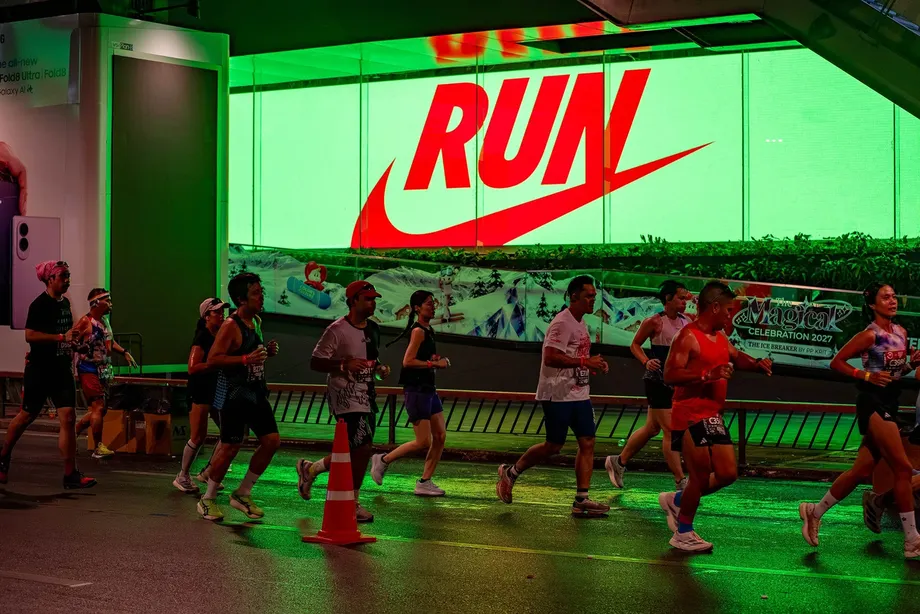
Bangkok handed its most famous avenues to runners for two mornings on November 28 and 29, and the ninth Amazing Thailand Marathon Bangkok 2026 presented by TOYOTA drew 71,435 entrants from 92 countries, the largest field in the race's history. Every distance sold out, from the 42.195 km marathon to the 4.5 km family run.
Contents
- A record field takes over the old city
- How the weekend was split
- Kenya's photo finish on the opening morning
- Ethiopia sweeps the marathon podium
- Kipchoge returns and forecasts 100,000
- Tuntivate spends 20 minutes with his idol
- A course built on landmarks
- 95 roads closed and a city rerouted
- Two billion baht and a prize purse to match
- Keeping 71,000 phones connected
- What the weekend changes for the region
- Key Points
The field breaks down into 62,463 runners from Thailand and 8,972 from abroad. Organisers Thailand Tri-League, working with the Ministry of Tourism and Sports, the Sports Authority of Thailand, the Tourism Authority of Thailand, the Bangkok Metropolitan Administration and the Metropolitan Police Bureau, split the programme across a Saturday and a Sunday to fit everyone onto the start lines. Race pack collection and the ATMBKK 2026 EXPO ran at the Queen Sirikit National Convention Center from November 25 to 28.
World Athletics granted the race Elite Label status this year, a classification that reflects the depth of the elite field, the accuracy of course measurement and the standard of organisation. The event's stated aim is to establish Bangkok as a World Running Capital for Asia, and the government projects at least 2 billion baht in tourism and economic circulation from the weekend.
The finishers' numbers show how many actually got round: 7,391 in the marathon, 26,091 in the half marathon and 22,430 in the 10 km.
How the weekend was split
Two mornings carried four races, with the longest starting in darkness and the shortest closing the programme in daylight. All four categories finished at Sanam Luang, the broad field in front of the Grand Palace that has become the event's ceremonial centre.
- November 25 to 28: race pack collection and expo at the Queen Sirikit National Convention Center.
- Saturday November 28, 04:00: half marathon over 21.1 km starts outside MBK Center on Phaya Thai Road.
- Sunday November 29, 02:00: marathon starts near the Supreme Court at Sanam Luang.
- Sunday November 29, 06:00: 10 km starts at Sanam Luang.
- Sunday November 29, 06:45: 4.5 km family run starts at Sanam Luang.
Roads along the route were barred to traffic from 00.01 and reopened as the last runners cleared each section, with the final stretches back in use by 09.30. The result was a city that woke up in stages, one district at a time.
Kenya's photo finish on the opening morning
Minister of Tourism and Sports Surasak Phancharoenworakul presided over the Saturday start and the prize ceremony, flanked by Sports Authority of Thailand governor Proporan Samanmit, deputy governor Somjarod Mingkhamlert and Bangkok governor Chadchart Sittipunt. The governor ran the half marathon himself and lined up again in Sunday's 10 km.
More than 30,000 runners, Thai and foreign, took on the 21.1 km course. The elite race came down to the final straight on Ratchadamnoen Nok Avenue, where Kenya's Collins Kipkosgei and Uganda's Abel Chebet matched each other stride for stride. Kipkosgei found an extra gear on the closing bend into Sanam Luang and took the title, with both men credited with the same official time of 1:03:25. Kenya's Evans Kipkorir completed the podium in 1:03:42, and Margret Gati Chacha won the women's race in 1:13:11 as Kenya swept that podium too.
Thai runners had a race of their own inside the field. Natthavut Innum finished in 1:08:19 as the fastest Thai man, and Parinya Somsaem was the first Thai woman in 1:24:52. Those times leave almost five minutes between Natthavut and Kipkosgei, and nearly 12 minutes between Parinya and Chacha, a measure of the distance the domestic front pack still has to close.
Ethiopia sweeps the marathon podium
Sunday belonged to Ethiopia. Kure Ebisa Takele won the 42.195 km race in 2:17:27, with Birhanu Teshome Demise second in 2:19:02 and Habtemariam Tekle Girma third in 2:19:38, filling the men's podium in one flag. Seble Tadese Wondimu made it a double for Ethiopia in the women's race in 2:43:11. The official results list records gun times of 2:17:28 and 2:43:12, a second away from the chip times.
A winners' list issued during the weekend named Ari Yimer as men's marathon champion in 2:21:36 and Shelmith Nyawira as women's champion in 2:39:38, before the final results settled on Takele and Wondimu.
The 10 km produced faster running still. Ethiopia's Gosa Eyob Habtesilasse won the men's race in 29:16, an average of 2 minutes 56 seconds per kilometre, and Kenya's Evangeline Makena Kathenya took the women's title in about 35:39, or 3 minutes 34 seconds per kilometre.
Kipchoge returns and forecasts 100,000
Eliud Kipchoge, winner of two Olympic marathon titles and a former world record holder, came back for a third consecutive year in his role as Thailand's tourism, sports and culture ambassador. He had run the 10 km in 2024 and the half marathon in 2025. This time he jogged the 10 km beside Thai record holder Kieran Tuntivate and governor Chadchart, greeting runners along the way, and the pair crossed the line together in 1:10:19, about 41 minutes behind the race winner.
Kipchoge, who is 42, said the growth of the event across the three years he has watched it had left a strong impression, and he offered a forecast for the next edition. No date has been announced for the 2027 race.
I am very impressed with the growth of the Amazing Thailand Marathon Bangkok over the three years I have taken part as Thailand's tourism, sports and culture ambassador. I believe next year's race could pass 100,000 participants.
Tuntivate spends 20 minutes with his idol
Kieran Tuntivate holds the Thai and Southeast Asian marathon records and describes Kipchoge as the model for his own career. The two spent more than 20 minutes talking before and after the 10 km, and Tuntivate said the conversation fed a target he has already set: the 2028 Olympic Games in Los Angeles.
I had the chance to talk and exchange experience with Kipchoge, who is my role model, for more than 20 minutes. Learning from a legend like this is another source of inspiration to develop my potential for the 2028 Olympic Games in Los Angeles.
Governor Chadchart addressed the runners on the start line before the 04:00 gun on Saturday, wishing them a race free of injury.
I wish every runner a race without injury and a safe finish.
A course built on landmarks
The route is the reason many runners travel. Saturday's half marathon left MBK Center and passed Sam Yan, Rama IV Road, Ratchadamri, Wireless Road and Victory Monument before turning onto Ratchadamnoen Nok Avenue past Phan Fa Lilat Bridge, Democracy Monument and the Giant Swing. The marathon, 10 km and family run started at Sanam Luang this year, a change from the previous layout, and the long course circled the Grand Palace area, Rama VIII Bridge, Victory Monument, Lumphini Park, Siam, Silom, Sathorn and King Power Mahanakhon before returning to the old city.
Sunday opened with a sport that has nothing to do with running shoes. Twenty one roller skiers from the Thai Ski and Snowboard Association set off before the marathon field, among them winter Olympians, national team members and younger athletes in the development squad, adding a second discipline to the morning.
95 roads closed and a city rerouted
Closing the centre of a capital is the price of that route. Bangkok's chief traffic officer signed a regulation covering 95 roads, 45 on Saturday and 50 on Sunday, published in the Royal Gazette on November 20, with bans starting at 12.01 on both mornings. The event's own summary described the closures as covering 30 major routes, from Phaya Thai Road and Rama I to Ratchadamnoen Nai and Sanam Chai.
Reopening times varied by district. Roads in Pathum Wan, Ratchaprasong, Silom and Phaya Thai came back from 06:30 and 07:00, Dusit and Nang Loeng from 08:00 and 08:30, and the last stretches on Rattanakosin Island at 09:30. Police and municipal crews reopened lanes progressively as the tail end of the field passed, and sanitation teams and lighting checks were deployed along the route before the pre-dawn starts.
Public transport absorbed part of the load. BTS Skytrain services began at 02:00 on Saturday and from midnight on Sunday, and the MRT Blue Line ran continuously from 02:00 on Saturday into the early hours of Sunday morning. Complaints still came from late night motorists, commuters and street vendors who cited lost earnings, while supporters of the race pointed out that marathons in Tokyo, Berlin and New York demand the same kind of urban coordination and that the spending the event draws in reaches hotels, restaurants and transport operators.
Two billion baht and a prize purse to match
The government's projection of at least 2 billion baht rests on the spending of 71,435 runners and their companions across a race weekend that filled hotels and restaurants in the Pathum Wan, Silom, Sathorn and Rattanakosin districts. Prize money was set at 8,000 US dollars for the marathon, paid down to eighth place, with 50,000 baht for the leading Thai finisher. The half marathon carried 5,000 US dollars to eighth place and 30,000 baht for the top Thai. The 10 km offered 50,000 baht in total, with 15,000 baht for the best Thai runner.
The depth of the mass field shows in the Fast Runner figures: 121 men broke 3:20 in the marathon, 2.0% of male finishers, and 85 women broke 4:00, 6.3% of female finishers. Those are the runners who turn a city race into a competitive event rather than a procession.
Keeping 71,000 phones connected
True Corporation strengthened its 5G network for the weekend, concentrating capacity and Wi Fi coverage on Sanam Luang, which served as the start for three categories and the finish for all four. Chief network officer Khurrum Ashfaque and Thongchai Kwanphut, head of network rollout and field operation, led engineers on readiness checks at the finish area, and the company built up coverage around the Queen Sirikit National Convention Center for the race pack days.
The operator put two pieces of artificial intelligence to work. Cell Outage Detection and Compensation watches base station cells, and when one fails it widens the signal from neighbouring cells to cover the gap while alerting engineers, which reduces the chance of a dropped connection in a crowd. Intent Based Routing Cost Control monitors fibre links and reroutes traffic automatically when it detects early signs of degradation, protecting video and voice from interruption. Both sit inside an autonomous network that TM Forum, the industry body, recently validated at Level 4.0 in two more areas. A Business Network Intelligence Center tracks 5G, 4G and home broadband traffic around the clock.
What the weekend changes for the region
Bangkok's race now sits among the biggest city marathons in the world by entries, and the numbers behind it explain the pull: a flat course, a start two hours by plane from Singapore and most of ASEAN, and a route that runs past the Grand Palace rather than an industrial park. Organisers counted a large contingent from Singapore and across Southeast Asia among the 8,972 international entrants.
Minister Surasak framed the event as a test of the capital's capacity and of the country's sports tourism strategy, and he tied Kipchoge's visit directly to that goal.
This event is an important test and a challenge for Bangkok in hosting such a large number of runners from around the world. Every agency involved worked together, bringing in officers to look after cleanliness, safety and order along the whole route, to build confidence and promote Thailand's image. The presence of Eliud Kipchoge is an important part of pushing Thailand's sports tourism policy into the eyes of the world, and it helps stimulate travel and create income in the area.
For Thai runners, the gap to the African front pack remains the competitive story, with the fastest Thai man 4 minutes 54 seconds behind the half marathon winner and the fastest Thai woman nearly 12 minutes back. For the organisers, the next question is capacity, since Kipchoge's forecast of more than 100,000 entrants would test start areas, road closures and transport links well beyond this year's field.
Key Points
- A record 71,435 runners from 92 countries entered the ninth Amazing Thailand Marathon Bangkok 2026 on November 28 and 29.
- Thailand supplied 62,463 entrants and 8,972 came from abroad, with every distance sold out.
- Collins Kipkosgei of Kenya won the half marathon in 1:03:25 after a photo finish with Uganda's Abel Chebet, who was given the same time.
- Ethiopia's Kure Ebisa Takele won the marathon in 2:17:27 and Seble Tadese Wondimu won the women's race in 2:43:11, as Ethiopia swept the men's podium.
- Eliud Kipchoge ran the 10 km with Kieran Tuntivate and governor Chadchart Sittipunt in 1:10:19 and predicted more than 100,000 runners next year.
- Race finishers numbered 7,391 in the marathon, 26,091 in the half marathon and 22,430 in the 10 km.
- A traffic regulation published in the Royal Gazette on November 20 closed 95 roads across the two mornings, from 12.01 until as late as 09.30.
- The government projects at least 2 billion baht in tourism and economic circulation from the weekend.