A club put up for sale, then taken back
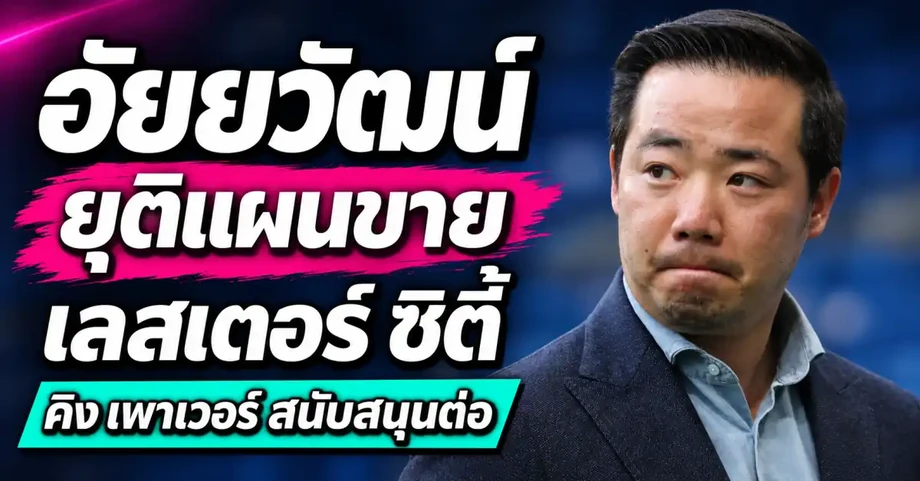
Leicester City are no longer for sale. Aiyawatt Srivaddhanaprabha, the club's chairman, ended a search for new investors or a new owner on 25 November 2026, saying in an open letter to supporters that the talks had produced no agreement and that he had decided to stop the process so the club could refocus on the work of moving forward.
Contents
- A club put up for sale, then taken back
- The letter that ended the process
- Why nobody met the price
- A top division cost base on third tier income
- From title winners to the third tier
- Changes in the boardroom
- What the manager and the team need
- Pressure at home for King Power
- OH Leuven stays in the family too
- What the decision changes for Leicester
- Key Points
The search had begun in the summer, when King Power, the Thai duty free group controlled by the Srivaddhanaprabha family, appointed the US investment bank Citigroup to prepare a sales brochure. The document sought more than £200 million, about 8.95 billion baht, for a club that had just dropped into League One, the third tier of English football. Figures discussed during the process went as high as £225 million. Leicester never publicly confirmed that the club was on the market, and Jon Rudkin, the chief football officer, said in an October interview that he "cannot comment on speculation" when asked about a sale.
King Power bought Leicester in 2010 for about £35 million, when the club was in the Championship. Sixteen years later the same owners preside over a side that has been relegated three times in four years, falling from the Premier League to the Championship and then to League One, a level Leicester had reached only once before in their 142-year history.
The reversal follows months of complaint from parts of the support, with falling attendances and a protest during a home win over West Bromwich Albion earlier in the season. Leicester won the Premier League in 2016 at odds of 5,000-1 and the FA Cup in 2021, and supporters have watched that team come apart in the years since.
The letter that ended the process
The chairman's letter, published by the club on its website and its Facebook page, described a "structured process" designed to test whether outside money or a change of ownership would serve Leicester better. It ended without a deal, and Aiyawatt said the point was to return attention to the rebuild.
Those discussions have not resulted in an agreement, and I have decided to conclude the process to enable us to refocus on the work needed to move the club forward.
Aiyawatt, who is 41, framed the decision around the club's place in the city rather than its balance sheet, and around a future that outlasts his family's involvement.
Leicester City is an institution that belongs to its city and its communities. It was here long before my family became involved, and it will be here long after all of us. Our decisions must reflect that.
He addressed the money question head on, saying King Power's support would continue while the club worked towards a model that does not depend on rescue funding every year.
The Club's financial position remains secure with the support of King Power, which will continue alongside the work needed to put Leicester City on a more sustainable footing.
Trust from the stands, he wrote, would have to be earned through results rather than promised in a statement.
Confidence in that direction among our supporters must come from the decisions we make and the progress we achieve over time.
In an earlier interview with English media, his first in nearly a decade, he had already rejected the idea that a sale was the answer, and compared the club to a child who needs looking after whatever happens.
Selling the club is not the way out. I have to be sure everything I set out to do here is complete before I think about leaving. Right now the important thing is to get the club into a good position.
Leicester is like my son. I have a duty to look after it as best I can. A son can be stubborn, fail an exam or give you a headache, but the love and the responsibility stay the same.
He joked that a huge offer from a "prince" might have to be considered, while saying that such a scenario was far off. He also spoke of the vision he shared with his father, Vichai Srivaddhanaprabha, of building something that lasts rather than chasing a single good season, and described the club's path as a drama worthy of a streaming series.
Why nobody met the price
Steve Howard, a former Leicester striker, said he was asked to look for investors more than a year before the process became public, and that two interested parties approached him asking for a meeting with the owners. He spoke about the episode on a local radio podcast after the chairman's letter appeared.
I got a whiff of this probably a year ago. I was asked if I could find some investors for the club and I went through that process where I would try to talk to possible investors.
Howard's reading is that the valuation, not the club, was the obstacle, and that buyers compared Leicester with cheaper options one division up, where a takeover would cost a fraction of the price.
He's asked for far too much money and all the investors say, 'well why would I buy that when there's better options in the Championship and it'll cost a quarter of the price'.
He also said the timing of the sale was wrong, because publicity works against a seller seeking a high price, and called the outcome a way out of a difficult position.
I think putting the club on the market was a bad move for the ownership, if he wanted to sell it. I just thought, that's just a get out.
The club's own books show why the gap between what King Power wanted and what buyers would pay was so wide.
A top division cost base on third tier income
The last full set of filed accounts covers the year to June 2025, Leicester's final season in the Premier League and the most revenue a buyer could expect for years. Revenue was £186.5 million. Wages were £152.9 million. The operating loss was £61.3 million.
King Power converted £124 million of club debt into shares that year. Even so, running the business used £37.8 million in cash and Leicester finished the year with £4.5 million in the bank.
The balance sheet is where a buyer would have stopped. Leicester owed £209.9 million inside 12 months against about £86 million it could draw on. The two largest items were £69.7 million of bank loans and £53.2 million still owed to other clubs for past transfers, a form of debt that football's rules protect and that no restructuring can wipe out.
Running costs were built for the top division. The club has a £100 million training ground, a Category 1 academy, a women's team in the top flight and 447 staff in roles away from the pitch. Those costs come to roughly £40 million a year before a player is paid, against League One income estimated at around £20 million once the parachute payments that soften relegation stop at the end of this season.
Estimates of what Leicester are worth follow the same slide: about £350 million in the Premier League, £80 million to £90 million in the Championship and £25 million to £30 million in League One. The asking price was roughly seven times the top of that last range.
Other figures published around the club put the most recent loss at £71 million, with earlier losses close to £90 million, bank borrowing of £103.6 million and cumulative losses above £180 million. In the 2022/23 season, before relegation from the Premier League, staff costs reached 117.9% of revenue, meaning the club paid out more in wages than it earned from every source combined and went down anyway. An independent commission in February 2026 recommended a six-point deduction, with permitted losses of £83 million across the assessment period, and Leicester were hit with a points penalty last season for breaking spending rules.
From title winners to the third tier
The decline has been rapid enough to be hard to follow. These are the dates that explain how a champion came to be valued as a third tier club.
- 2010: King Power buys Leicester for about £35 million, with the club then in the Championship.
- 2016: Leicester win the Premier League under Claudio Ranieri, finishing ten points ahead of Arsenal and losing three of 38 matches, with Jamie Vardy, Riyad Mahrez, N'Golo Kante and captain Wes Morgan at the centre of it.
- 2017: The club reach the quarter-finals of the Champions League.
- October 2018: Vichai Srivaddhanaprabha dies, aged 60, when his helicopter crashes outside the King Power Stadium after a match against West Ham United. All five people aboard are killed.
- 2021: Leicester win the FA Cup for the first time, beating Chelsea 1-0 at Wembley through a Youri Tielemans goal.
- 2023: Relegation from the Premier League, seven years after the title.
- 2024: Promotion as Championship winners under Enzo Maresca, who then leaves for Chelsea.
- 2025/26: Back in the Championship, Marti Cifuentes is sacked after six months with the club 14th and six points off the play-off places, and Andy King takes interim charge. Leicester are relegated to League One in April 2026, and Aiyawatt apologises to supporters.
- Summer 2026: Citigroup prepares a sales brochure with an asking price of more than £200 million.
- 25 November 2026: The sale process is formally closed.
Changes in the boardroom
Kevin Davies, the chief executive, will step down at the start of December. He took the job in March after a reshuffle of senior roles and leaves less than a year later. Kamonthip Netthanomsak, the managing director, will lead the club's business operations with the existing senior leadership team until a new chief executive is appointed. No successor has been named.
The decision had been passed down before it was made public. Earlier in the week King Power instructed senior management that the club was off the market, and the managing director told executives the sale was over.
Aiyawatt tied the boardroom change to a structure introduced over the previous 12 months, meant to bring sporting ambition and financial planning into line, and to what he called organisational discipline and the ability to absorb financial shocks. The stated aim is a responsible plan for growth rather than another round of spending that has to be covered later.
What the manager and the team need
Russell Martin, the manager, said the public statement had removed a distraction that followed the squad into every press conference, including talk of deadlines that passed and buyers who never appeared.
Clarity on any situation is really good and I'm really grateful to the chairman for providing it. The best thing is that you don't have to ask me about it every press conference and we can move on from that.
Leicester sit seventh in League One, one place and three points outside the play-off places. After 13 games of the campaign they had 19 points and were 11th, with 22 goals scored and 19 conceded, ten points behind Huddersfield Town at the top. Michael Emenalo has joined as a consultant, Ben Nelson is in contract talks and Emil Riis Jakobsen has six league goals.
Getting out of the division matters more than the league table usually suggests. This is the last season in which parachute payments from the Premier League arrive, and another year in League One would leave a club with top division overheads paying for them out of third tier income. Reports suggest funds have been set aside for signings in the January 2027 window.
Pressure at home for King Power
King Power's own business has been under strain, which matters because the club's security rests on it. The group's duty free operation depends on concessions at Thai airports. A revision that took effect on 1 October 2025 cut the minimum guarantee at Suvarnabhumi airport by 37% and at three regional airports by 30%, lowering the payments the company must make to the airport operator.
The family has kept putting money in. In September, King Power converted a further £8.5 million of funding into equity, reducing what the club owed and adding to the capital behind it. Aiyawatt said earlier in 2026 that he shoulders the blame for the decline, and that the club needs to make better decisions and keep learning from its past.
OH Leuven stays in the family too
The letter covered more than Leicester. King Power had also been exploring a sale of OH Leuven, the Belgian club it bought in 2017 and in which it holds about 99% of the shares, and the same process ended without a buyer for either club.
With a view to the future of our football clubs, King Power has in recent months examined the possibilities for new investment, including at OH Leuven. That process has now been completed without an agreement being reached.
Under Thai ownership the Leuven men's team became an established side in the Belgian top flight, if an inconsistent one, while the women's team has won two national titles and played in the Champions League. The commitment given to supporters there mirrors the one at Leicester: continued funding alongside work on a more durable model.
We will keep working towards a financially more sustainable club, with enough stability to meet our sporting ambitions and to grow further in the long term.
What the decision changes for Leicester
For supporters, the immediate change is that the club has an owner who says he is staying, with no deadline and no buyer to speculate about. For the squad and the manager, it means planning for January and beyond without the possibility of a takeover reshaping the club mid-season. For the city, it means the family that financed the greatest achievement in the club's history remains in charge of the recovery.
The harder question is what happens if Leicester do not go up this season. The club would then carry a Premier League cost base into a second year of League One income, with King Power covering the difference at a time when its retail business is working through its own pressures. Aiyawatt's letter promised support and discipline in the same breath, and the accounts show how much of the first the club has needed.
His own summary of the record was blunt about the shape of it: five trophies and three European campaigns across 16 years, set against relegations and a long climb back. He has said he wants the climb finished before he considers walking away, and the next few months of results will show whether the club can start it.
Key Points
- Aiyawatt Srivaddhanaprabha ended the sale process on 25 November 2026, saying talks with investors produced no agreement.
- Citigroup prepared a brochure seeking more than £200 million for a League One club, with figures discussed reaching £225 million.
- King Power bought Leicester for about £35 million in 2010 and has owned the club for 16 years.
- Leicester's 2024/25 accounts showed £186.5 million revenue, £152.9 million wages, a £61.3 million operating loss and £209.9 million owed within 12 months.
- Kevin Davies steps down as chief executive at the start of December, with Kamonthip Netthanomsak leading business operations until a successor is named.
- Leicester sit seventh in League One, one place outside the play-off places, in the last season of Premier League parachute payments.
- King Power also ended the sale of Belgian sister club OH Leuven, in which it holds about 99% of the shares.
- Former striker Steve Howard said investors regarded the asking price as too high and saw cheaper options in the Championship.