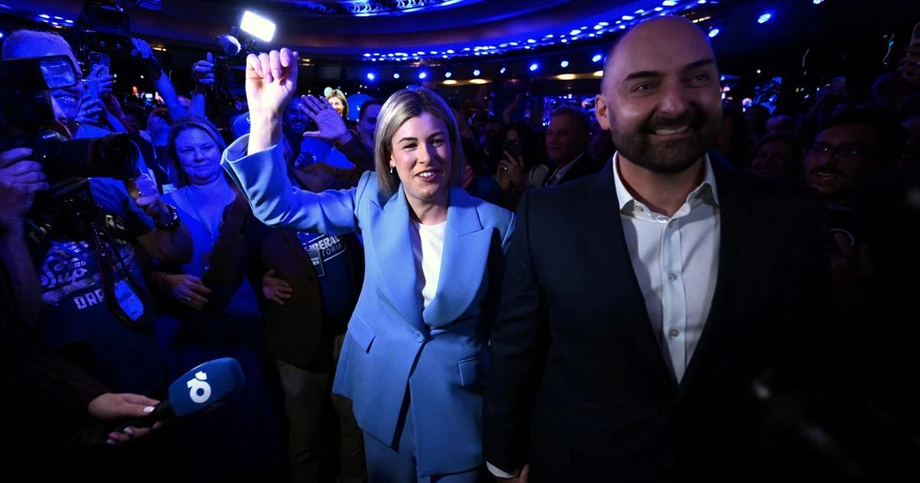
A Historic Shift in Victorian Power
Victorians delivered a decisive verdict on Saturday, ending 12 years of Labor rule and installing Jess Wilson as the state's first elected female premier. The Liberal National Coalition secured a landslide victory in the state lower house elections, with early results showing 63 seats for the Coalition against just 11 for the Greens, 7 for Labor, and 2 for One Nation. Wilson, a 36-year-old Liberal leader, is set to become the youngest premier since Federation, taking over a state weary of rising debt, crime, and cost of living pressures.
Contents
The defeat for Labor is considered one of the worst in the state's history. The party, which had won three consecutive elections under leaders Dan Andrews and Jacinta Allan, saw its support crumble. Labor leader Ben Carroll conceded defeat, a rare move for a sitting premier, after losing his own seat of Niddrie to Liberal candidate Samantha Byrne. Carroll became the first premier in Australian history to lose his seat at a state election and the shortest-serving modern premier, having held office for just 123 days.
ABC News reported that the Coalition's victory was driven by a significant swing in the primary vote. Voters expressed a clear desire for change, viewing the election as a mandate to reset the government's direction. Wilson acknowledged this in her victory speech, describing the result as a "loan" from the public that her party must work daily to justify.
Leadership and the Rise of Jess Wilson
Wilson's rapid rise to power has been described as hard to believe yet entirely fitting for a moment of change. At 36, she is not only the first female premier but also the youngest leader since Federation. Her background as a former Young Liberal president and a consultant with experience at KPMG and the Business Council of Australia has positioned her as a pragmatic, modern leader. She is married to Aaron Lane, a former Young Liberals president, and they have a two-year-old son.
Her ascent was not without internal party turbulence. Wilson replaced Brad Battin, who had previously ousted John Pesutto, just over a year ago after Battin's own leadership came undone. She has managed to unite a party that was deeply divided, promoting a slate of diverse candidates and winning over first-time voters. Her ability to reach beyond the traditional Liberal base was a key factor in the landslide.
The Guardian noted that Wilson's approach is relatable and approachable. She has positioned herself as a small-l Liberal who cares more about economic management and crime than culture wars. Her first day as premier-elect was filled with symbolic and practical steps, starting with a visit to a local coffee shop in her electorate of Kew, followed by a meeting with Victoria Police Chief Commissioner Mike Bush at his headquarters.
Wilson has announced she will appoint herself treasurer for the first three months, a move that consolidates her authority over the state's finances. She has promised to reduce the state's debt by $20 billion over four years, a goal that relies on significant structural reforms, including the privatization of state assets.
The State of the Economy and Key Reforms
The Coalition's victory comes with a clear mandate to address the state's financial challenges. Labor's 12-year tenure left Victoria with rising government debt and alleged corruption on construction sites. Wilson has outlined a comprehensive plan to restore economic confidence and business trust.
A central pillar of the new government's strategy is the privatization of $13 billion in state assets. The most controversial of these is the 90-year lease of Melbourne's sewerage system, a move Wilson believes is necessary to reduce interest repayments by $4 billion. This plan, however, faces potential hurdles in the upper house, where Labor, the Greens, and One Nation are recorded as opposing the lease. Wilson has indicated that she will need to navigate these political realities carefully to pass the enabling legislation.
In her first 100 days, Wilson has pledged to repeal the First Nations treaty, a key policy of the outgoing Labor government. The treaty gives First Nations people a greater say in laws affecting their lives, but the Coalition argues it is divisive and expensive. Gellung Warl, the democratically elected First Nations body, has welcomed the new government's approach, stating that they agree on the destination of economic participation and improved health outcomes. Other immediate priorities include abolishing the emergency services tax and the schools tax, which are collected via council rates.
The government is also focused on crime reduction. Wilson has promised to recruit 3,000 additional police officers and repair one million potholes across the state's roads. New legislation will introduce harsher sentencing laws for child offenders and a one-strike bail rule, mirroring youth offending laws in Queensland. The government also plans to reinstate "move-on laws" for protesters and impose a permit system for demonstrations.
One Nation Surge and Greens' Potential Role
While the Coalition dominated the lower house, the One Nation party experienced a significant surge in support. The far-right party secured over 20 percent of the first-preference vote, outperforming Labor in the primary count. One Nation leader Warren Pickering, a former army combat engineer, celebrated what he described as a breakthrough result, despite losing his own seat of Pakenham to Liberal candidate Radmila Dyson.
One Nation is projected to gain up to three lower house seats in traditionally Labor areas such as Lara, Melton, and Sunbury, and is expected to secure eight upper house spots. This strong presence in the upper house means the Coalition may need to negotiate with One Nation to pass certain legislation. National leader Pauline Hanson hailed the Victorian result as a sign of the party's growing influence across the nation.
The Greens also emerged stronger than expected, potentially winning more lower house seats than Labor. Green leader Ellen Sandell suggested that her party could become the official opposition, a significant shift in the state's political landscape. The Greens have capitalized on progressive voters who feel disconnected from the traditional major parties, focusing on environmental and social justice issues.
ABC News highlighted that the electoral outcome was complex, with the Victorian Electoral Commission describing the count as unusually difficult. The two-candidate preferred count required careful analysis to determine the final seat allocations. As of late Sunday night, the Coalition had confirmed 50 seats, well above the 45 needed for a majority.
Challenges Ahead for the New Government
Despite the victory, Wilson faces the daunting task of governing a state that has grown accustomed to Labor's long presence. The Coalition is described as having a relatively shallow pool of experienced politicians, with many new members entering parliament for the first time. Wilson has promised a consultative cabinet but has also shown a willingness to make decisive decisions quickly.
Managing internal party dynamics will be a key challenge. Wilson has won the support of the party room, but balancing the ambitions of new members and veteran politicians will require skill. She has acknowledged that rebuilding Victoria will take years of hard work and that she does not own the public's trust but must earn it daily.
The new government is also preparing to face the fallout from its policy announcements. The plan to cut taxes while increasing spending on police and infrastructure will be scrutinized closely. Wilson has committed to transparency, promising to be upfront about the state's financial position and the challenges ahead. She has called for a bureaucratic reset, aiming to address the inefficiencies that have accumulated over the last 12 years.
The Coalition's victory has also sent ripples to the federal level. Liberal senator James Paterson expressed optimism that the state result could be replicated in the 2028 federal election, citing the damage to Labor's brand due to federal tax changes. The new government's first major test will be translating its election promises into actionable legislation within its first 100 days in office.
Key Points
- Liberal National Coalition wins majority with 63 seats, ending 12 years of Labor rule.
- 36-year-old Jess Wilson becomes Victoria's first elected female premier.
- Labor leader Ben Carroll loses his seat, becoming the first premier to do so.
- One Nation surges with over 20 percent of the vote, gaining upper house seats.
- Coalition plans to lease sewerage assets for 90 years to reduce debt by $20 billion.
- First 100-day agenda includes repealing the First Nations treaty and cutting taxes.
- Greens potentially become official opposition as Labor falls to crossbench.