A physicist trying to read the universe from its furthest edge
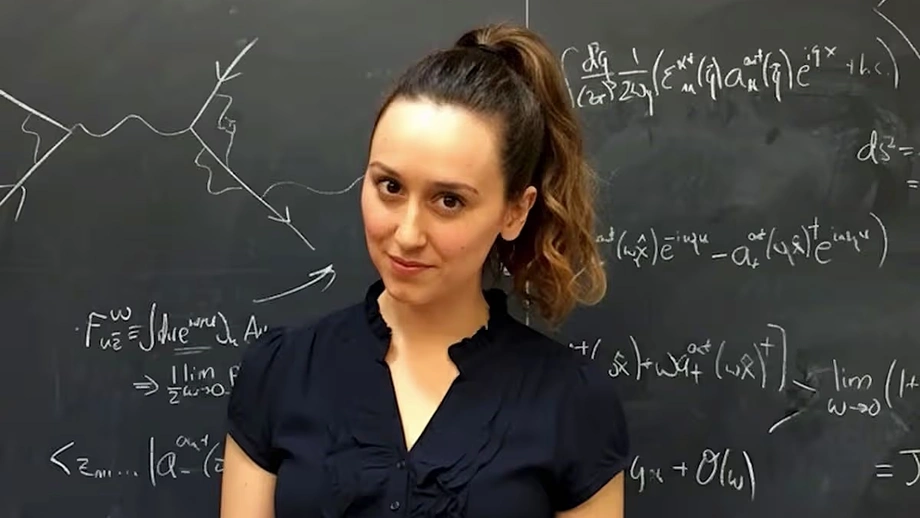
Sabrina Gonzalez Pasterski spends her working days taking particle collisions apart on paper. The theorist, born in Chicago in 1993 to a Cuban family, imagines the debris of a collision spraying outward and marks every quantum fragment as a point on a sphere at the far edge of space, each piece tagged with its energy and direction. From that flat pattern she and her colleagues attempt to rebuild the physics inside the sphere. At the Perimeter Institute for Theoretical Physics in Waterloo, Ontario, where she has held a faculty post since 2021, she founded and leads the celestial holography initiative, described by the institute as a map from "four-dimensional scattering matrix elements to correlators in a two-dimensional conformal field theory living on the night sky".
Contents
- A physicist trying to read the universe from its furthest edge
- The garage in Chicago and the propeller that turned
- Why gravity and the quantum world sit at different tables
- What a hologram has to do with the night sky
- From one particle to a crowd of them
- Could an experiment ever catch the theory out?
- The Einstein label she keeps handing back
- A working life arranged around staying clear headed
- Key Points
Two phrases in that sentence carry most of the weight. A scattering matrix is the bookkeeping of what flies into a particle collision and what flies out of it. A conformal field theory is a quantum theory built without a preferred length scale, the sort physicists use to describe matter at its smallest. Together they pose the question the programme is named for: can everything that happens across four dimensions of space and time be recorded, without loss of information, on a two-dimensional sky?
The prize behind the question is a theory of quantum gravity, a single framework in which gravity and the quantum world stop contradicting each other. Pasterski calls the target "the source code of the universe". Physics has been stuck on it for the better part of a century, and a working answer would count as the holy grail of the field: a basic description of nature that covers nearly everything. Her own summary of the appeal is blunt. "I like hard things," she said.
The garage in Chicago and the propeller that turned
A flight did the recruiting. At nine years old Pasterski was taken up in a small plane, and the trip fixed her attention on aerospace. She worked through books and manuals on flight theory, aerodynamics and mechanical systems, then asked her parents for the gift she had read about in a story. "I wanted to get a flying broomstick," she said. "My dad got my grandpa to get me a Cessna instead."
A Cessna is a small single-engine aircraft. The family chose something more practical than lessons: a kit. Pasterski began assembling a plane in her father's garage outside Chicago, encouraged by a man who worked as both a lawyer and an electrical engineer. She started at 12 or 13 depending on which profile of her life you read, and about 363 days of work went into the airframe and engine, with modifications added for safety. When the engine caught on the first test, she shouted: "It spun. It was amazing!" Two years after starting, she was flying the aircraft herself, and she did that before she could drive a car. Published profiles place her first solo flight over Lake Michigan at 14 and describe her as the youngest person to have flown a private aircraft she built.
Her application to university began badly. MIT put her on a waiting list and Harvard rejected her outright. Pasterski sent the admissions office a video of herself assembling, wiring, testing and flying the plane. Allen Haggerty, an engineering professor there, watched it and described the reaction of the faculty.
We were gobsmacked after watching it. Her potential far exceeded every expectation.
Haggerty and a colleague, Earll Murman, pressed her case with the admissions committee, and she was let in.
MIT suited her. "First of all, they always had you working hard," she said. "I do better under pressure. They were hard courses, they could get you up to speed. And I really loved that. I love MIT." She arrived planning to study aerospace engineering. Internships at Boeing Phantom Works and at NASA's Kennedy Space Center showed her the limit of that path: building a plane taught her how the parts joined together, not why flight happens at all. She moved into physics, which she describes as elegant and, at the same time, useful. "If you understand how things work," she said, "you can do things with that knowledge."
She finished her MIT degree in three years with a perfect 5.0 average and left as the first woman to graduate at the top of its physics department. Harvard took her for a PhD under Andrew Strominger, one of the most influential theoretical physicists of his generation. She won a Hertz Fellowship worth $250,000, awarded to 12 graduate students a year, and drew further support from the Smith Fund and the National Science Foundation. Scientific American put her on its 30 under 30 list in 2012, when she was 19, Forbes followed in 2015, and in 2018 she returned to Forbes as a judge on its first all-female science panel.
Why gravity and the quantum world sit at different tables
Two of the most tested ideas in physics refuse to be friends. General relativity, Albert Einstein's theory of gravity, treats space and time as one smooth, bendable fabric, and it works beautifully for planets, stars and black holes. Quantum theory describes matter in chunks, with energy arriving in discrete amounts, and it predicts the behaviour of particles with extraordinary accuracy. Set the two together where both should matter, at the centre of a black hole or in the first instant of the universe, and the equations produce nonsense.
The standard route around the problem has been string theory, which replaces point particles with tiny vibrating loops and needs extra dimensions to work. Pasterski works on a neighbouring idea that grows out of the strange information behaviour of black holes. A black hole appears to carry an amount of entropy proportional to the area of its surface rather than to its volume, a hint that the information inside a region of space might be stored on its boundary. That hint became a research programme of its own: the holographic principle, the proposal that a volume of space and its outer surface are two descriptions of the same thing, in the way a hologram printed on a banknote holds a three-dimensional image on a flat sheet.
Holography matters to Pasterski's field because it offers a trade. Gravity, which is notoriously hard to turn into a quantum theory, can be swapped for a quantum theory without gravity that lives on the boundary. Solve the easier problem on the boundary, translate back, and you have answers about the harder one. The difficulty is that nobody has shown the trade works for the universe we actually inhabit.
What a hologram has to do with the night sky
In 1997 the Argentine theorist Juan Maldacena built the first working example. His model described a volume of curved spacetime with gravity inside it, matched to a quantum theory on its boundary, and he showed the two were equivalent, two languages for one thing. Physicists call the correspondence AdS/CFT, after the two kinds of theory involved. It became one of the most cited results in the field. Its catch was that it required a particular kind of curved space with a negative cosmological constant, a shape quite unlike the flat, expanding universe we live in.
Celestial holography takes the boundary and moves it to infinity. Pasterski pictures the sphere of directions around an observer, the sky at night with every star pushed out to an unreachable distance, and treats that sphere as the place where information about a collision is written. "You see the stars, you think of them as being infinitely far away, like a sphere around you," she said. "That 2D sphere is the celestial sphere." A collision in ordinary space produces a pattern of points on that sphere, and the pattern should obey the rules of a two-dimensional quantum theory.
The institute's researchers highlight three features of the map. It exposes symmetries of infinite dimension that are usually hidden in the mathematics of particle scattering, it reorganises the behaviour of particles that travel almost parallel into the operations of a conformal field theory, and it entangles the physics of very short distances with the physics of very long ones, which lets theorists make general claims about scattering that ordinary approximation methods cannot reach.
From one particle to a crowd of them
Pasterski began laying the mathematical foundations during her PhD at Harvard, around 2018, and has been extending them since. Early work dealt with the behaviour of a single particle, which is the easy case. With Justin Kulp at Stony Brook University in New York she has since shown how to make the translation work for systems of many particles, the situation any real experiment produces.
A second line of work concerns entanglement, the quantum link by which measuring one particle instantly tells you something about its partner, however far apart the two sit. In Maldacena's model, physicists have shown that entanglement between particles on the boundary generates the fuller dimensional world inside it, so that geometry emerges from quantum links. Pasterski has started on the same question for the celestial sphere, where the mathematics is messier because the boundary sits at infinity and gravity will not stay out of it. "That's really well understood in AdS/CFT," she said of the entanglement result. "It's harder to generalise to flat space." In the models she and her colleagues studied, the flat-space region corresponded to less entanglement on the boundary than the AdS/CFT version produces.
She describes the accumulated rules and equations as a grammar for celestial holography, and the translation between the sphere and ordinary space as a dictionary. The dictionary is filling in fast. It is also incomplete, and she is direct about one simplification at its base: the real universe is expanding at an accelerating rate, and her model is not. "I also cheat," she said.
Could an experiment ever catch the theory out?
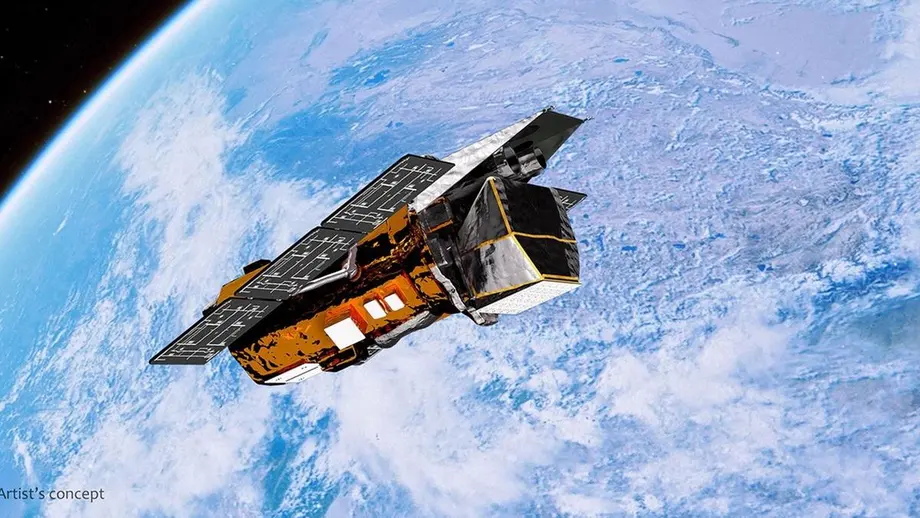
Theories of quantum gravity are hard to test. The energies needed to see quantum effects of gravity directly sit far beyond any machine built, which is why the field runs on mathematical consistency rather than measurement. Pasterski's programme has candidate testing grounds. Gravitational wave observatories record the ripples that merging black holes send through space, and the proposed Laser Interferometer Space Antenna, LISA, would listen from orbit at frequencies ground detectors cannot reach. Data from the CMS detector at the Large Hadron Collider near Geneva, which records the spray of particles from proton collisions, offers another route.
Part of her earlier work points the same way. At Harvard she and colleagues identified the spin memory effect, a lasting displacement in space left behind by passing gravitational waves, and the related Pasterski-Strominger-Zhiboedov result on symmetries of the scattering matrix. Stephen Hawking cited the work in 2016. A separate paper of hers on asymptotic symmetries and electromagnetic memory entered Harvard's graduate curriculum. Those results matter because a memory effect is the kind of permanent trace an experiment can hunt for, even when the underlying theory is out of reach.
Celestial holography has not yet produced a prediction that an experiment can check, and no measurement has confirmed it. The work sits with dozens of research groups rather than in one person's hands. Pasterski is vice-director of an international collaboration on the subject funded by the Simons Foundation, and the Perimeter programme pulls together researchers in scattering amplitudes, mathematical physics and quantum gravity.
The Einstein label she keeps handing back
Newspapers started calling Pasterski the next Einstein while she was still a graduate student, and she has spent years declining the comparison. Asked about the label, she did not soften her answer.
It's bullshit. I don't think I deserve it, first of all. The positive I try to turn it into now is that hype gets you a platform.
In other interviews she has put it more simply: there is only one Einstein and nobody will ever be like him.
The comparison has a logic to it, since both physicists work on the nature of space, time and gravity, and both chase questions with no immediate answer. It also misreads how the field operates. Theoretical physics in 2026 runs on collaborations, shared data and results that take years to assemble, and Pasterski describes her own place in that machinery in collective terms. "You're building something much bigger than yourself," she said.
She reaches for an unusual comparison to explain duality, the principle at the core of her work, in which two apparently different descriptions turn out to be two faces of one thing. The idea reminds her of the doctrine she grew up with.
Duality is almost like the Trinity. I'm not religious, but I was raised Catholic. It's the sense that there can be different manifestations of something equivalent.
A working life arranged around staying clear headed
Pasterski's habits are as unusual as her schedule. She does not use social media or a smartphone, does not date, and avoids coffee, alcohol and tobacco, saying she wants to stay alert enough to judge what she should and should not do. She has a taste for chocolate. She estimates that only a couple of thousand people in the world can hold a real conversation about her research, a smallness she treats as an invitation rather than a limitation. Work, when it goes well, swallows whole days. "You forget the time," she said. "It's nice to feel compelled to keep working."
The career offers came early. Jeff Bezos, whom she counts as an early supporter after he wrote her an encouraging letter when she was a child, tried to recruit her to Blue Origin, and NASA made an approach too. Brown University offered her a post. She turned all of them down to join the Perimeter Institute in 2021, drawn by a place built for exactly the kind of problem she wanted to attack. Her view of Elon Musk, another childhood hero, has cooled without turning hostile. She notes that many more people have now seen his flaws and that he has still done remarkable things, and takes from it a question about ambition rather than a verdict on the man.
Public work runs alongside the equations. Pasterski has spoken at conferences about drawing girls into science, technology, engineering and mathematics, and she was invited to the White House during Barack Obama's presidency to discuss Let Girls Learn, an initiative aimed at keeping girls in school around the world. Her argument about attention has sharpened as screens multiply. "I don't use social media because I want to spend time talking with the universe," she said. "We are too busy looking at phone screens and forget to look at the stars. AI can help us calculate faster but it cannot replace human compassion and pure curiosity."
Her own account of how she got here avoids rankings and rivals. She measures herself against the teenager in the garage, not against the people around her. "Many years of effort to push past my own limits brought me to this field," she said. "Physics is elegant and also full of applications."
Key Points
- Sabrina Gonzalez Pasterski, born in Chicago in 1993, is a high energy theorist at the Perimeter Institute for Theoretical Physics in Ontario and founder of its celestial holography initiative.
- Celestial holography tries to rewrite the physics of four-dimensional space and time as a two-dimensional theory on a sphere at infinity, the night sky.
- The programme extends Juan Maldacena's 1997 AdS/CFT correspondence from a special curved space to the flat space we inhabit.
- Pasterski built and flew a single-engine plane as a teenager, then graduated from MIT in three years with a perfect 5.0 average, the first woman to top its physics department.
- She completed a PhD at Harvard in 2019 under Andrew Strominger and a postdoctoral fellowship at Princeton before joining Perimeter in 2021.
- Her work on the spin memory effect and scattering symmetries was cited by Stephen Hawking in 2016.
- With Justin Kulp she extended the celestial translation from single particles to systems of many particles.
- No experiment has yet confirmed a prediction of celestial holography; candidate tests involve the proposed LISA gravitational wave observatory and CMS data from the Large Hadron Collider.
- She rejects the next Einstein label, saying hype is useful mainly because it gives her a platform, and stresses that the research is a collective effort.