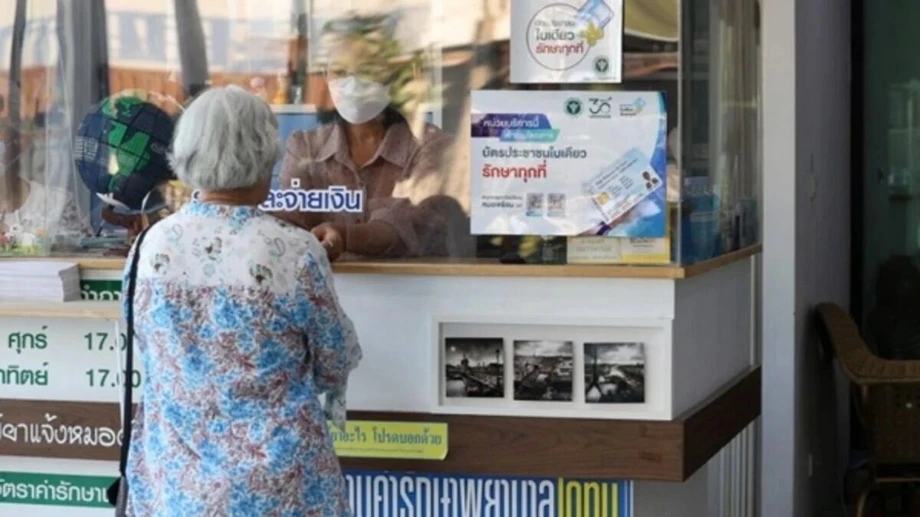
The Hidden Cost of 30-Baht Healthcare
For over two decades, Thailand's Universal Coverage Scheme, known as the 30-baht scheme, has been a pillar of public health, ensuring that citizens do not go bankrupt from medical bills. Today, that system faces a quiet but deep financial crisis. A major study by the Health Intervention and Technology Assessment Program (HITAP) reveals that 82 percent of public hospitals under the Ministry of Public Health are operating at a loss. The situation has worsened to the point where hospital reserve funds, once enough to last two months, have shrunk to just 11 days of liquidity. This means that if revenue flows slow down even slightly, hospitals risk running out of cash to keep their doors open.
Contents
Dr. Yottana Tiyavanich, a senior researcher at HITAP, emphasized that this deficit is not caused by poor management alone but by structural flaws in how the budget is allocated. While total hospital revenue has grown, the money that actually reaches hospitals to cover treatment costs has not kept pace with rising expenses for drugs, staff salaries, and the needs of an aging population. The study suggests that without immediate intervention, the system could face a long-term decline, requiring an injection of 10 to 12 billion baht annually to stop the bleeding.
Dr. Anunchai Asawamahaphun, an advisor to the Senate Public Health Committee, stated that the proposed amendments to the National Health Security Act are essentially a governance reform. The goal is to ensure that every baht spent produces measurable health outcomes for the public. The committee's proposals align closely with HITAP's findings, focusing on adjusting budgets to reflect real cost drivers and ensuring fair payment rates for services.
Why Hospitals Are Losing Money
The core of the problem lies in a mismatch between rising costs and stagnant income. Over the past ten years, the average annual inflation rate in Thailand has hovered between 1.5 and 2 percent. Simultaneously, the population aged 60 and older has increased by an average of 2.6 percent per year. Older patients require more complex and expensive care, leading to a 4.1 percent annual increase in the disease burden measured in lost healthy years. Despite this, the funding for the 30-baht scheme has grown at only 2.9 percent annually.
A significant factor is the payment rate for inpatient care, which has consistently fallen short of actual costs. Since 2022, the actual payment rate per Relative Weight (RW) unit has been 5 to 10 percent lower than the target. For example, in 2025, the target payment was 8,776 baht per RW, but the actual payment was only 8,350 baht. By 2028, the target was 9,113 baht, while the actual payment dropped to 7,887 baht. Research indicates that the efficient cost for inpatient care should be around 13,000 to 13,475 baht per RW, a level rarely achieved.
Furthermore, the growth in the health fund has been misdirected. While the total budget for the 30-baht scheme has grown, the increase has largely gone into non-capitation funds rather than the main capitation funds that support community hospitals. Non-capitation funds have grown by 18.5 percent annually, while capitation funds have grown by only 2.3 to 2.4 percent. Additionally, a larger portion of capitation funds is now being deducted to cover civil servant salaries, leaving hospitals with only about 40 percent of the funds to actually purchase services and manage operations.
Dr. Sopon Manomay, vice chairman of the Senate Public Health Committee, highlighted that the issue extends beyond just the budget amount. It involves the structure of administration, allocation criteria, and payment mechanisms. He noted that the National Health Security Office (NHSO) has delayed payments to the Pharmaceutical Organization, forcing the latter to borrow approximately 5 billion baht from banks and pay interest. This highlights how delays in the core system create ripple effects across the entire healthcare network.
The CARE Model: A New Approach
To address these structural issues, a new payment model called CARE (Collaborative Area-based Reimbursement with Excellence) is set to begin in the 2027 fiscal year. This model aims to provide hospitals with more predictable income and incentives to control service volume. Under the CARE model, hospitals will receive a fixed rate of 9,860 baht per RW for services within their allocated quota. The quota for each of the 14 health zones is determined based on historical data and population projections.
The model creates a tiered payment system for services exceeding the quota. If a hospital provides up to 5 percent more than its quota, it is paid at the full rate. For the next 5 to 10 percent excess, the rate drops to 80 percent. Any excess beyond 10 percent is paid at 60 percent. Conversely, if a hospital provides fewer services than its quota, it still receives the remaining budget, adjusted by a quality indicator. This quality indicator ensures that hospitals are rewarded for maintaining high standards of care, such as low infection rates, rather than just treating more patients.
Dr. Jaroenporn Sukhumane, a HITAP researcher, explained that this design encourages hospitals to manage their resources efficiently. It prevents the financial penalty of treating complex cases, which often have higher costs but lower relative weight values in the old system. The total quota for inpatient care in the 2027 budget is estimated at 10.51 million RW, with Zone 9 receiving the highest allocation of approximately 1 million RW.
Debate Over Siriraj Hospital's Deficit
The financial crisis is not limited to small community hospitals. A recent disclosure from Siriraj Hospital, one of the country's largest and most prestigious teaching hospitals, has sparked a public debate. Assistant Professor Dr. Sanan Visutesakchai, advisor to the director of Siriraj Hospital, revealed that the hospital is losing approximately 2 billion baht annually from the 30-baht scheme. This figure has risen from 1.5 billion baht in previous years due to increased costs for inpatient care.
Nimitr Tienn-Amid, a board member of the NHSO, responded by questioning the calculation of these costs. He noted that Siriraj Hospital receives significant funding from other sources, including government grants, private sector income, and donations. He urged the hospital to disclose its total revenue and expenses to clarify whether the deficit is specific to the 30-baht scheme or a reflection of its overall financial health. Nimitr emphasized that the goal is to find a fair solution where both the public and the hospitals can thrive, rather than assigning blame to one side.
The debate highlights a broader concern among the public. Advocacy groups, including the 4-Region Slum Network, have gathered over 100,000 signatures against potential changes to the health law, fearing that the narrative of hospital deficits will be used to introduce co-payments or reduce benefits for the poor. Network leader Teunjai Kasemsri demanded that hospitals provide clear financial disclosures to prove that the deficit is systemic and not just a result of internal mismanagement.
Proposed Reforms and Governance Changes
The Senate Public Health Committee has proposed amendments to the National Health Security Act to address these challenges. The proposals cover five key areas: the definition and scope of benefits, the structure of the NHSO board, financial and auditing mechanisms, service unit payments, and special provisions. A major focus is on adjusting the composition of the NHSO board to ensure balanced representation from the public and service providers.
Dr. Anunchai Asawamahaphun noted that the amendments aim to strengthen governance and ensure that funds are used effectively. The committee proposes delaying non-urgent new benefits and reviewing low-value care services to control costs. They also advocate for controlling the volume of unnecessary services alongside price controls. Dr. Pornchai Tansee-giatikul, chairman of the Senate Public Health Committee, affirmed that there is no intent to cancel the 30-baht scheme. The goal is to create a sustainable system where hospitals can continue to provide quality care without financial collapse.
The government and the Bureau of Budget are expected to take joint responsibility for adjusting the funding formula. This includes reviewing the capitation payment rates and ensuring that the budget reflects the true cost drivers, such as inflation and the aging population. The reforms are designed to be implemented over time, with some measures, like the CARE model, starting in the 2027 fiscal year.
What Happens If No Action Is Taken
If the current trends continue, hospitals will continue to draw down their reserve funds. Research indicates that hospitals with a history of deficits have a 20 percent higher risk of falling into deficit again the following year, creating a vicious cycle. Community hospitals are particularly vulnerable, with 85 percent currently in deficit and relying heavily on the 30-baht scheme for 83 percent of their revenue. In contrast, large university hospitals like Siriraj have more diverse income streams but still face significant challenges in the inpatient care sector.
The government has already taken some steps, including an 8.9 percent increase in the 2027 budget, with an additional 16 billion baht allocated for inpatient care. However, researchers warn that this may not be sufficient to fully resolve the structural issues. The focus must shift from simply increasing the budget to ensuring that the budget is spent wisely on high-value services and that payment rates accurately reflect the cost of care.
The Bottom Line
- 82 percent of public hospitals are operating at a loss, with reserve funds shrinking to 11 days of liquidity.
- Payment rates for inpatient care have been consistently below actual costs, contributing to the deficit.
- The new CARE model, starting in 2027, aims to stabilize hospital income with fixed rates and tiered payments for excess services.
- Siriraj Hospital's 2 billion baht annual deficit highlights the issue, prompting calls for clearer financial transparency.
- The Senate proposes amendments to the National Health Security Act to improve governance and adjust benefit definitions.
- Public advocacy groups warn against potential co-payments, urging the government to address structural issues rather than shifting costs to patients.
- A joint effort between the government, the Bureau of Budget, and the NHSO is crucial to implementing sustainable funding reforms.