First-Ever Cross-Border Carbon Shipment Rules Established
On 24 November 2026, the governments of Singapore and Australia formalized a landmark agreement that allows Singapore to ship captured carbon dioxide to Australia for permanent storage beneath the ocean floor. The treaty, titled the Agreement on Transboundary Movement of Carbon Dioxide Streams for the Purposes of Offshore Geological Sequestration, provides a structured legal pathway for cross-border carbon capture and storage (CCS). Prime Ministers Lawrence Wong and Anthony Albanese signed the document at the 11th Singapore-Australia Annual Leaders Meeting in Canberra, marking a significant step in the region's efforts to achieve net-zero emissions.
Contents
This agreement addresses a critical challenge for Singapore, a city-state with limited land and geological storage options. By establishing clear rules for measuring, shipping, and storing carbon, the two nations are creating a new market for industrial decarbonization. The deal was signed just two days after the COP31 climate talks in Antalya, Turkey, where the role of carbon capture in the global energy transition remained a contentious point.
Under the new rules, Singapore will account for emissions associated with each cargo of CO2 from the point of capture until the vessel first offloads within Australian jurisdiction. Australia takes over accounting responsibility at this designated handover point. The transfer can occur at a port terminal, an offshore buoy, or a floating storage and injection hub. This clear division of liability ensures that both nations can accurately report their progress toward climate goals under international frameworks like the Paris Agreement and the UN Framework Convention on Climate Change.
Singapore METI official statement outlines the technical requirements for the shipment, ensuring that the purity and quantity of the CO2 are verified before departure and independently measured upon arrival in Australia.
Strict Measurement and Accounting Protocols
A core component of the agreement is the dual-point measurement system designed to prevent double-counting of carbon credits and ensure transparency. Singapore is required to measure the quantity and composition of each CO2 cargo at the point of export. Australia will then conduct a second, independent measurement at the handover point.
The verified volume measured at the Australian handover point becomes the baseline for the emissions reduction that Singapore can claim in its national climate reporting. This precise accounting mechanism is vital for maintaining the credibility of international climate targets. The agreement also establishes strict standards for stream purity to ensure that the imported gas does not contaminate the marine environment or interfere with Australian storage reservoirs.
Responsibility for fugitive emissions and leakage is transferred at the handover point. Any leaks occurring during transport or loading in Singapore are the responsibility of Singapore, while leaks after the cargo is within Australian jurisdiction fall to Australia. The agreement specifies that the handover can take place at various locations, providing flexibility for future infrastructure development. Both countries will work together to define the exact coordinates and procedures for these transfer points.
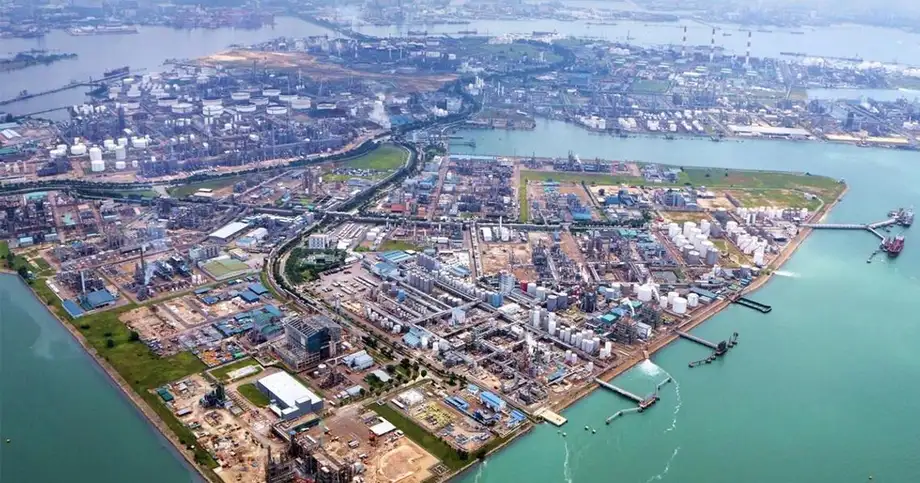
According to the Singapore Ministry of Energy, Trade and Industry, the framework leverages the complementary strengths of both nations. Singapore offers a steady supply of captured carbon from its refineries and petrochemical plants, while Australia offers vast offshore geological formations capable of permanent storage.
Joint Management and Regulatory Alignment
To oversee the implementation of the treaty, the two governments will establish a Joint Management Committee (JMC). This committee, co-chaired by government representatives from both countries, will meet at least annually to discuss technical standards, handover locations, and regulatory compliance. The JMC will play a crucial role in coordinating permits and ensuring that domestic legislation in both countries aligns with the treaty's requirements.
In Australia, the agreement operates alongside existing laws such as the Hazardous Waste (Regulation of Exports and Imports) Act 1989 and the Ozone Protection and Synthetic Greenhouse Gas Management Act 1989. These laws provide the legal backbone for regulating the import of CO2 and managing the environmental risks associated with offshore storage. The JMC will also agree on how to verify, record, and exchange shipment data to ensure a seamless flow of information between the two nations.
The treaty enters into force 30 calendar days after both governments provide written notice that they have completed their domestic procedures. This clause allows for a swift rollout once administrative formalities are concluded. Individual projects will still require specific permits and environmental assessments before they can begin shipping carbon. Singapore will provide Australia with detailed evaluations of each proposed new CO2 source, including the cargo properties and potential effects on maritime transport.
Australia is an important source of Singapore's food and energy imports, while the Republic is a major supplier of refined petroleum products to Australia. These are practical arrangements that will make a real difference when the next disruption comes, reflecting the trust we have built.
Prime Minister Lawrence Wong highlighted the practical benefits of the agreement during the signing ceremony. He noted that the deal reflects the deep trust between the two nations and their shared commitment to keeping supply chains open and resilient. The agreement also paves the way for increased investment in regional carbon management infrastructure, potentially attracting international funding to the Asia-Pacific region.
Infrastructure and Investment Outlook
The signing of the agreement is expected to catalyze investment in CO2 capture, purification, liquefaction, and storage infrastructure. The journey from Singapore to Australia involves shipping liquefied carbon in large tankers over a distance of approximately 4,000 kilometers. The gas is then piped under the seabed to storage sites, where it is permanently sequestered.
Australia has 17 CCS projects at various stages of development and operation, according to a September 2026 assessment by Geoscience Australia. Notable operational projects include the Gorgon and Moomba facilities in Western Australia. Among the developing projects is the INPEX-led Bonaparte CCS project offshore northern Australia, which has the potential to store more than 10 million tonnes of CO2 annually. Developers have already identified Singapore as a key potential market for storage services.
In Singapore, the S Hub consortium, led by Shell and ExxonMobil, has been selected as the lead developer for the cross-border project. The consortium is working to establish the necessary pipelines and shipping terminals to handle the volume of CO2 that Singapore aims to export. The rising carbon tax in Singapore, which increased to S45 per tonne this year and is targeted to reach S80 by 2030, strengthens the commercial case for CCS by making it a more cost-effective alternative to paying taxes on emitted carbon.
The deep trust between our two countries, of course, comes from over six decades of cooperation working towards a more secure and prosperous region. These agreements will deepen this important relationship and keep our economies connected.
Prime Minister Anthony Albanese emphasized the historical depth of the Singapore-Australia partnership. He stated that the deal would enable the safe movement of carbon dioxide, support regional decarbonization, and attract new investment in Australian industry. The agreement is viewed as a first-of-its-kind model that could be replicated with other Asian nations in the future, potentially turning Australia into a regional hub for carbon storage.
Environmental Concerns and Public Scrutiny
While the agreement has been welcomed by industry leaders, it has also drawn criticism from environmental groups. The Australian Marine Conservation Society (AMCS) has raised concerns about the risks to marine life posed by the increased maritime traffic and underwater seismic blasting required to monitor the storage sites. The transport of carbon involves tankers larger than the Sydney Opera House, which can disturb marine habitats.
Carbon dumping is a greenwashing tactic used by the fossil fuel industry to keep expanding and polluting. It's a proven failure, with nearly 90% of all projects over the past 50 years being cancelled or indefinitely stalled. The Australian Government is ignoring the failures and risks.
Chelsea Deng, AMCS Fossil Fuel Industry Campaigner, described the agreement as a move toward making Australia a carbon dumping ground for the region. She pointed to the underperformance of flagship projects like Chevron's Gorgon facility, which recently captured only 27% of its targeted emissions and vented significant amounts into the atmosphere. Critics argue that the agreement primarily benefits fossil fuel companies by allowing them to continue extraction and consumption while shifting the long-term liability of monitoring and potential leaks to Australian taxpayers.
The deal is subject to parliamentary scrutiny. It must be tabled in the Australian Parliament and referred to the Joint Standing Committee on Treaties. The committee will have 15 to 20 joint sitting days to examine the terms, liability arrangements, and costs before the final vote. This process offers an opportunity for public submissions and political debate to shape the final implementation of the treaty.
Broader Regional Context
The signing of the CCS agreement coincides with other significant diplomatic and economic developments between the two nations. Singapore and Australia also signed a Memorandum of Understanding on Essential Supplies, expanding cooperation beyond petroleum oils to include food, semiconductors, and medical products. This move enhances economic resilience in the face of global uncertainties, such as supply chain disruptions in the Middle East.
Additionally, the leaders issued a joint statement on artificial intelligence, pledging to cooperate on international AI governance and security challenges. The launch of the Getting to Zero co-innovation programme further supports firms in developing low-emission products. These concurrent agreements demonstrate a comprehensive strategy to strengthen ties across multiple sectors, from energy and trade to technology.
For Singapore, the agreement represents a crucial piece of its climate strategy. The country aims to capture up to 50 million tonnes of CO2 annually by the mid-2030s, with a significant portion destined for overseas storage. The ability to export carbon provides a viable pathway for hard-to-abate industries, such as cement and petrochemicals, to reduce their emissions without compromising production.
The Path Forward
The new rules for shipping captured CO2 set a precedent for international climate cooperation. By establishing clear measurement standards and liability transfers, Singapore and Australia have created a framework that can guide future cross-border carbon markets. The success of this initiative will depend on the effective implementation of the technical standards, the robustness of the storage sites, and the ability of both nations to maintain public confidence in the process.
As the JMC begins its work and individual permits are processed, the first shipments of Singaporean carbon to Australian seabeds are expected to commence within the next few years. The outcome of this experiment will likely influence how other Asian nations approach their own decarbonization challenges.
The Bottom Line
- Singapore and Australia signed the Agreement on Transboundary Movement of Carbon Dioxide Streams on 24 November 2026 in Canberra.
- The treaty allows Singapore to ship captured CO2 to Australia for permanent offshore storage, addressing Singapore's limited land space.
- Responsibility for emissions transfers at a designated handover point, with strict dual-point measurement protocols to prevent double-counting.
- A Joint Management Committee will oversee technical standards and regulatory compliance, ensuring alignment with Paris Agreement guidelines.
- The agreement is expected to spur investment in regional carbon infrastructure and supports Singapore's goal to capture 50 million tonnes of CO2 annually.
- Environmental groups caution that the deal may primarily benefit fossil fuel companies, with long-term monitoring risks falling to Australian taxpayers.
- The treaty requires parliamentary tabling and referral to the Joint Standing Committee on Treaties for final scrutiny before full implementation.