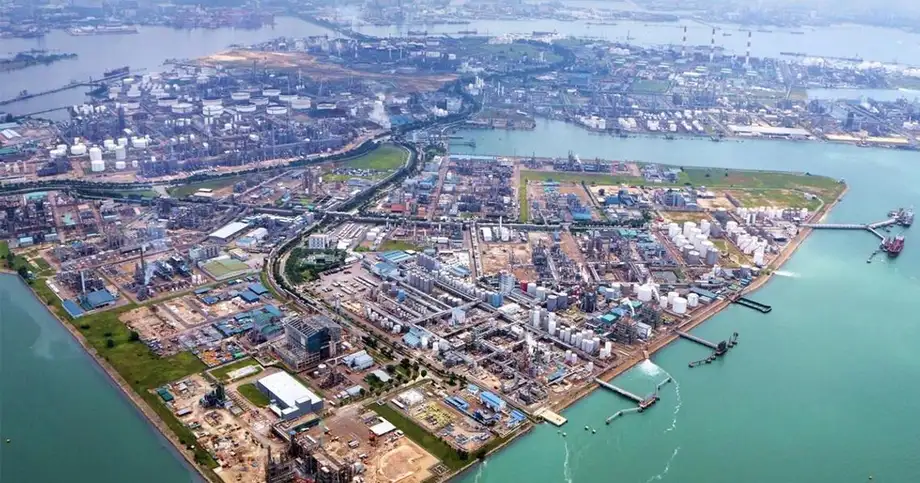
Jurong Island Turns an Industrial Base Into a Clean Energy Laboratory
Singapore set aside close to 300 hectares, about 10 percent of Jurong Island, for new energy projects and reserved another 20 hectares for its largest low-carbon data centre park, with room for up to 700 MW of capacity, JTC Corporation and the Economic Development Board announced on 27 October 2025 during Singapore International Energy Week.
Contents
- Jurong Island Turns an Industrial Base Into a Clean Energy Laboratory
- Where the Land and New Fuels Will Go
- Singapore's Data Centres Are Growing Again
- What the Green Data Centre Rules Ask For
- How Much Progress Has Jurong Island Made?
- Can Hydrogen and Ammonia Change the Fuel Mix?
- What Will the New Test Facilities Do?
- How US Chip Curbs Could Affect the Plan
- Why Industry Leaders Say the Island Matters
- What to Know
A data centre is a building packed with computer servers that store, process and move digital information. A megawatt is one million watts, a standard measure for the power a data centre or power plant can draw or supply. The park covering 20 hectares, about the size of 25 football fields, is meant to give Singapore more computing room while pushing operators to use less electricity, less water and cleaner fuels.
The Economic Development Board's Global Founder Programme page records the same core figures for the 27 October announcement. It is one of the clearest official markers of how the plan fits the agency's wider work on companies, investment and new industries.
Tan See Leng, the minister in charge of Energy and Science and Technology, said Jurong Island would become a global test bed for new energies and low-carbon technologies, including ammonia, hydrogen and carbon capture. Carbon capture traps carbon dioxide before it escapes into the air so it can be stored or used. He linked the industrial shift to company growth and jobs. He said:
All these efforts ensure that Jurong Island continues to be home to great firms and create meaningful career opportunities in the growing green economy.
The change matters because Jurong Island is not a small factory estate. More than 100 companies and over 27,000 employees work there, and the refining and petrochemicals sector accounts for about one third of Singapore's greenhouse gas emissions. Tan also said regional demand for higher quality products was drawing speciality chemical companies to Singapore. The global petrochemicals market is under pressure from oversupply and tighter climate rules, so the island's future depends on making existing industry cleaner as well as adding new businesses.
Where the Land and New Fuels Will Go
Close to 300 hectares, an area slightly bigger than 400 football fields, will be set aside largely in the southwest and northwest of Jurong Island. Some of that land remains forested. The data centre park and new energy zones sit near existing power, utility and storage systems, which can lower the cost and complexity of running new industrial projects.
The power figure gives a sense of scale. The International Energy Agency says an average data centre needs 5 MW to 10 MW, while a hyperscale centre, the very large kind used by cloud and AI companies, can need 100 MW or more. At the top end of 700 MW, the park could in theory hold about 70 to 140 average centres, or seven hyperscale centres at 100 MW each. Its 700 MW ceiling is more than twice the at least 300 MW Singapore says it will add islandwide in the next few years.
Upcoming energy projects include a gas turbine able to use hydrogen and Singapore's first project using imported ammonia both to generate power and to refuel ships. Hydrogen and ammonia contain no carbon, so burning them does not release carbon dioxide. Their total climate effect still depends on how they are made, transported and used.
Keppel is leading a consortium to import cleaner ammonia fuel and build a plant that can generate up to 65 MW. That is enough electricity to power more than 90,000 four room flats built by the Housing and Development Board for a year. The project turns a fuel often discussed in shipping and fertiliser markets into part of Singapore's power and data infrastructure plan.
Singapore's Data Centres Are Growing Again
Singapore has more than 70 data centres. The government wants to expand capacity by more than one third to meet rising demand for computing, especially AI, which uses large banks of processors and heavy cooling. At least 300 MW of new data centre capacity will be added islandwide in the next few years, with more capacity possible for operators that use green energy.
Newer projects face tighter conditions than older centres. Facilities can cut electricity use with efficient equipment, cleaner fuels such as ammonia, and higher air conditioning settings of 26 degrees Celsius. A warmer server room, if done safely, means less work for cooling systems. That matters in Singapore because cooling uses both power and water.
Singapore's policy has moved in stages. It paused approvals for new large data centres from 2019 to 2022 because of energy, water and land concerns. The Data Centre Call for Applications pilot then created a selective approval route. The 2024 Green Data Centre Roadmap set the push for greener growth and at least 300 MW of near term capacity.
- 2019 to 2022: Singapore held a de facto pause on new large data centre approvals.
- 2021: Jurong Island's sustainable energy and chemicals plan launched with 2030 goals.
- 2022: The first Data Centre Call for Applications pilot began, targeting roughly 60 MW.
- 2023: About 80 MW was awarded to four operators under that pilot.
- 27 October 2025: JTC and EDB announced the park covering 20 hectares and close to 300 hectares for new energy.
- 16 November 2025: The United States announced licence rules for advanced AI chips sent to Singapore and four other countries.
- 24 November 2025: JTC and NUS said they would study a tropical data centre test facility.
- 2026: Singapore will launch a research, innovation and enterprise strategy to expand research and development and further decarbonise power and industry.
- End 2029: Aster targets operation for its new turbine.
- 2030: The island's energy efficiency and sustainable goods targets are due.
A new allocation round widely called DC-CFA2 was still not officially launched by 10 November 2025, according to a legal client alert. Analysts at CGS International later said Digital Realty, Equinix, STT GDC and Keppel were each provisionally allocated 50 MW in August. No official launch date was given, and no operators for the Jurong Island park had been named.
What the Green Data Centre Rules Ask For
A Client Alert 2025-278 dated 10 November 2025, by Manoj Purush, Ping Ting Tan and Shawn Tan, says the park is a shift from broad policy signals to a specific site where greener digital infrastructure can be built. The alert notes that the park can use shared energy storage, utilities and the island's existing power supply.
The 2024 Green Data Centre Roadmap from the Infocomm Media Development Authority set stricter sustainability conditions. New projects are expected to show strong energy efficiency, renewable energy sourcing and better cooling systems. A power purchase agreement, one tool operators may use, is a contract to buy electricity from a generator, often from a renewable project.
Companies preparing for the next round are expected to work on joint ventures, land and utility agreements, power purchase agreements, regional energy imports, solar panels, batteries, hydrogen, biomethane, efficiency benchmarks and talks with regulators. These details decide whether a data centre can actually run on cleaner power instead of simply being designed for it.
The park also gives Singapore a way to serve AI customers without lifting all limits at once. The earlier pause and application system were meant to control electricity and water demand. The Jurong Island plan adds land and infrastructure where companies can meet those conditions in one place.
How Much Progress Has Jurong Island Made?
Jurong Island was formed 25 years ago, and its 2021 plan set 2030 goals for more sustainable goods, high energy efficiency and carbon capture. JTC and EDB say the sector's output of sustainable products has reached 1.4 times 2019 levels. The 2030 target is 1.5 times, so the island is close to that production goal, though the last stretch still has to be delivered.
Companies are already making products that fit the plan. Arkema makes polymers from castor beans, and Kuraray plans to make a recyclable food packaging material from 2026. Sustainability goals are also driving demand for green solvents and coatings with lower emissions. More than 30 new speciality chemical projects have started in Singapore since 2021, including work from Arkema, Cariflex and Kuraray. They are expected to create more than 1,000 jobs in manufacturing, innovation, process engineering and sustainability.
Energy efficiency is moving more slowly than product changes. Refineries and crackers, the plants that turn crude oil into fuels and basic chemicals, are currently in the top half of global performers. The 2030 aim is the top quartile, meaning the best 25 percent. Reaching that would require a move from the middle half of the industry to its leading group.
The Resource Efficiency Grant for Emissions has funded 35 projects since 2021. The scheme helps manufacturers and data centres pay for changes that cut emissions or use energy more efficiently. Projects include alternative fuels, wastewater biotreatment and carbon capture, use and storage, with many on Jurong Island.
Evonik, ExxonMobil, Linde and Air Liquide are among the companies involved. The 35 projects are expected to cut more than 340 kilotonnes of carbon dioxide a year when complete. A kilotonne is 1,000 tonnes, so the target is more than 340,000 tonnes a year. JTC and EDB compare that with taking 80,000 cars off the road.
Can Hydrogen and Ammonia Change the Fuel Mix?
Aster, which took over Shell's refinery on Pulau Bukom, signed a deal with Air Liquide on 24 November to produce hydrogen with lower emissions. This is the first partnership of its kind in Singapore. The two companies will develop an auto thermal reformer, often shortened to ATR, that makes hydrogen and captures carbon dioxide at the same time.
ATR is a way of turning hydrocarbons into hydrogen using heat and steam. The carbon capture system can capture up to 99 percent of the carbon dioxide produced in the process. Aster will provide refining and petrochemical infrastructure and market knowledge, while Air Liquide will provide ATR technology. The hydrogen can be used in industrial processes that are difficult to decarbonise because simply switching to electricity is hard.
Aster group chief executive Erwin Ciputra said the deal fits Singapore's hydrogen plans and can help industries that are difficult to decarbonise. He said:
This collaboration directly supports Singapore's hydrogen strategy and aims to accelerate pathways to reduce emissions in hard-to-abate sectors.
Aster also plans to invest US$150 million in a new turbine through Aster Power, a unit backed by Chandra Daya Investasi, the infrastructure arm of Indonesia's Chandra Asri Group. The turbine is meant to be ready by the end of 2029. Aster has set aside US$2 billion for Singapore, its group chief financial officer Andre Khor said earlier.
The Keppel consortium's ammonia plant is another piece of the same puzzle. Ammonia carries hydrogen and can be burned without carbon dioxide, but it is toxic and needs careful handling. That is why the island's rules, training and shared infrastructure will matter as much as the technology itself.
What Will the New Test Facilities Do?
JTC and the National University of Singapore signed a memorandum of understanding to begin a study in 2026 for a green tropical data centre test facility on Jurong Island. The first phase of the Sustainable Tropical Data Centre Testbed is at NUS. The second phase will let companies try equipment in Singapore's hot and humid conditions, where cooling is a major cost.
Deputy Prime Minister Gan Kim Yong spoke at Jurong Island's 25th anniversary dinner at the Pan Pacific Orchard. He said the facility would let operators test systems that emit less and develop systems that use less water and energy. He said:
Through this facility, data centre operators will be able to test their low-carbon solutions and develop large-scale, water and energy-efficient systems on Jurong Island.
The second phase will use AI to manage energy and water use, cooling and power distribution. JTC and NUS will also study solar power, biofuels and fuel cells through smart microgrids and virtual power plants. A microgrid is a small local power network, while a virtual power plant uses software to link many smaller energy sources and flexible equipment so they act like one larger plant.
JTC also teamed up with Keppel and the Energy Market Authority on a 2026 study of a microgrid test bed for renewable energy. They will trial demand response, which pays customers to move electricity use away from peak times, and study thermal networks that share cooling between facilities.
Surbana Jurong will work with the Institute of Sustainability for Chemicals, Energy and Environment on a testbed for technologies that produce lower emissions. The institute is part of the Agency for Science, Technology and Research. JTC also signed a deal with Third Derivative, a climate technology accelerator with a network of more than 280 startups and solution providers.
Tank storage company Advario Singapore will work with Workforce Singapore on training for the safe handling of new energy sources. The programme expects 150 employees to benefit. Gan urged more companies to redesign jobs and improve workers' skills as products change, and he called for Jurong Island to remain a beacon of clean industrial innovation. The energy and chemicals sector employed more than 27,000 people and made up about 3 percent of gross domestic product and a quarter of manufacturing output in 2024.
How US Chip Curbs Could Affect the Plan
The United States Department of Commerce issued a rule on 16 November requiring licences for advanced AI chips shipped to Singapore, Malaysia, Indonesia, Thailand and Brazil, with exemptions for companies headquartered in the United States. Advanced AI chips are specialised processors used to train and run large AI models. The rule can slow shipments because buyers need government approval before receiving the hardware.
DBS Group Research said those five countries hold about 7 percent to 9 percent of the world's operational data centre capacity, about 5.5 gigawatts of IT load. IT load means the electricity used by servers and networking gear, before cooling and other overheads. One gigawatt equals 1,000 MW.
Malaysia has more exposure because about 30 percent of its 8.4 GW of data centre power supply agreements signed by June is linked to companies headquartered in the United States. Thailand's colocation market, where operators rent space and equipment to other companies, may slow when customers serving Chinese technology firms need licences for advanced chips.
In Singapore, analysts at CGS International said the development of DC-CFA2 and the Jurong Island park could be deferred if sentiment and demand weaken after the chip rule.
Cristina Brayton-Lewis, a partner at law firm White & Case, said the licensing rule could cool interest across Southeast Asia and leave some projects waiting or facing extra conditions. She said:
As a result of the new rule, some may not be able to obtain necessary licences. Other projects may be able to secure licences, but may face delays in licensing or potentially burdensome licensing conditions.
Foo Zhiwei, an analyst at Macquarie Capital, expected a slowdown, not a halt, because operators now have more licensing requirements and customer checks. DBS said delays could hit GPU shipments and AI deployments, especially for cloud operators outside the United States and independent GPU cloud providers. GPU means graphics processing unit, a chip type widely used for AI.
Some operators still see strong demand. Serene Nah, managing director and Asia Pacific head at Digital Realty, said the company was still choosing tenants for its SIN13 facility and had plenty of interest for its 50 MW. She said:
We're approached by so many people because we have the 50 MW, so we have to pick.
A Keppel spokesperson said most of the company's Singapore data centres, including a floating centre under construction, were committed mainly to large customers based in the United States. Keppel therefore did not expect a major effect on its Singapore data centre business. CGS International said Singapore could gain over time if it became a trusted computing hub for computing jobs that follow export rules and for large cloud customers.
Prime Minister Lawrence Wong said Singapore could help with United States checks on companies and on how advanced chips brought into the country are used. He said a large share of chips recorded as sales to Singapore never enter the country. Chip suppliers could also feel the change. CGS International flagged slower demand for AEM and possible indirect effects for UMS, Frencken and Venture, while DBS said the measures target chips rather than equipment and effects in the near term on UMS and Frencken were limited.
Why Industry Leaders Say the Island Matters
Jurong Island's plan is unusual because it treats polluting industry as something to improve rather than something to walk away from. Refineries, crackers and petrochemical plants make fuels, plastics and chemicals that modern life still uses. Dr David Broadstock, a partner at economic consultancy The Lantau Group, said support for energy and environmental solutions without losing economic competitiveness matters because the sector will remain pollutive for some time, possibly even by 2050. He said:
This is precisely where efforts on Jurong Island can help make a difference, to help ensure that (economically) necessary polluting industries are actively exploring alternative decarbonisation solutions.
Dr Broadstock also said efficiency gains have a limit in heavy industry. He said:
There are limits to how much energy-efficiency improvements can help here.
Jurong Island is combining several tools at once: cleaner fuels, carbon capture, shared utilities, test beds, training and tighter data centre standards. If one tool cannot deliver all the cuts, another can be tried. For workers, the shift means existing skills in engineering, operations and safety remain useful, while new skills are needed for hydrogen, ammonia, carbon capture and data centre cooling.
For companies, the next steps are practical. They must secure power, land and utility deals, meet green benchmarks, train staff and decide whether to use solar panels, batteries, hydrogen, biomethane or imported renewable power. The payoff Singapore is seeking is more computing capacity with a smaller rise in emissions, and a way to keep a major industrial hub relevant as global markets change.
What to Know
- JTC and EDB announced on 27 October 2025 that close to 300 hectares of Jurong Island will be reserved for new energy projects.
- Another 20 hectares will host Singapore's largest low-carbon data centre park, with up to 700 MW of capacity.
- Singapore plans at least 300 MW of new data centre capacity islandwide in the next few years, with greener conditions for newer projects.
- Keppel is leading a 65 MW ammonia power project, while Aster and Air Liquide will develop hydrogen production with carbon capture of up to 99 percent.
- JTC and NUS will study a tropical data centre test facility in 2026, and JTC, Keppel and the Energy Market Authority will study a renewable microgrid test bed.
- The energy and chemicals sector emits about one third of Singapore's greenhouse gases and employs more than 27,000 people.
- United States chip licensing rules could delay some AI and data centre projects, though operators and analysts still see demand.