A smaller seat at the global table
Indonesia closes 2026 with 44 companies inside the two MSCI benchmarks that global fund managers watch most closely, down from 74 at the start of January. Four quarterly reviews did the work, in February, May, August and November, deleting 38 stocks from the MSCI Global Standard Index and the MSCI Global Small Cap Index and pushing four more down a tier, for 42 companies affected in total.
Contents
- A smaller seat at the global table
- How the November review was run
- Barito Pacific out, Bumi Resources Minerals down a tier
- Seven more names leave the small cap index
- A year of exits, review by review
- From emerging market to standalone
- What the freeze does while the consultation runs
- Prabowo's call, and MSCI's reply
- What has already left the market
- Two emerging market labels, two different outcomes
- The reforms Jakarta has announced
- What to Know
The final round took effect at the close of trading on 30 November 2026, with the new line-ups in force from Tuesday 1 December. The deletions reach beyond the companies themselves, because funds that track MSCI benchmarks must sell shares they can no longer hold. They also land while the same index provider is consulting on whether Indonesia should leave the emerging market category altogether.
That larger question, opened on 15 October 2026, would place Southeast Asia's largest economy outside both the emerging and the frontier benchmarks. A final decision is due by the end of June 2027.
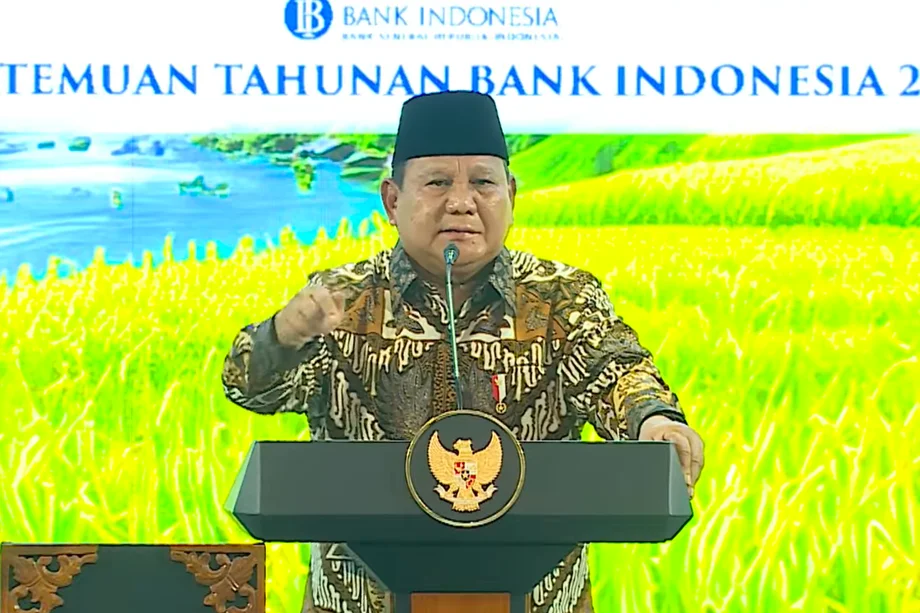
President Prabowo Subianto has answered with reform pledges and a warning to traders. At Bank Indonesia's annual meeting on 27 November he said the clean-up of the stock market was not being done out of fear of ratings agencies or index providers, and he singled out price manipulation that catches ordinary savers.
Already rich, and still playing at frying stocks. In the end millions of our people are the victims, young people, small people who are just trying.
The phrase he used, goreng saham, is local shorthand for pumping a share price and then dumping it on late buyers.
How the November review was run
MSCI Inc., the index provider listed in New York, published the November 2026 results shortly after 11:00 p.m. Central European Time on 11 November, which was early on 12 November in Jakarta. Its review announcement set the timetable in advance: results posted on msci.com, a summary carried on Bloomberg page MSCN and Reuters page MSCIA, and detailed rebalancing files released to subscribers straight after.
Every change was made as of the close of 30 November 2026. The review covered the MSCI Global Standard, Global Small Cap and Micro Cap indexes, the Global Value and Growth indexes, the Frontier Markets and Frontier Markets Small Cap indexes, the US Equity and US REIT indexes, and the China A Onshore and China All Shares indexes.
The calendar ahead is already fixed. The next routine reviews are scheduled for announcement on 9 February 2027 and take effect on 1 March 2027, then 10 May and 28 May, 12 August and 1 September, and 11 November and 1 December 2027, with four more rounds booked into 2028. MSCI's announcement policy says additions to and deletions from the Standard and Small Cap series are published two days before implementation where possible, and it sets a market closure rule: if a bourse is shut on the effective date, the change lands the following day at the previous close.
Barito Pacific out, Bumi Resources Minerals down a tier
Two Jakarta names summarise the November cut. PT Barito Pacific Tbk (BRPT) lost its place in the MSCI Global Standard Indexes, the main benchmark. PT Bumi Resources Minerals Tbk (BRMS) dropped to the MSCI Global Small Cap Indexes rather than leaving the MSCI family completely.
BRI Danareksa Sekuritas laid out both moves for clients on 27 November and warned that passive money would have to be repositioned around them.
The results of the November 2026 MSCI evaluation put BRPT out of the MSCI Global Standard Indexes, while BRMS moves down a tier to the MSCI Global Small Cap Indexes. Portfolio adjustments by funds benchmarked to MSCI will take place after the close of trading on Monday, 30 November 2026. The new index composition takes effect on Tuesday, 1 December 2026.
The broker also told investors to watch the days before the switch, because institutional holders and index funds adjusting their positions can move both the trading volume and the share price of the two stocks. For BRPT, the sale is forced by the rules of the benchmark. For BRMS, the buyers are different funds tracking a different index, which is why the two names behave differently on the day.
Seven more names leave the small cap index
Indonesia's contribution to the November small cap review was lopsided. Seven listed companies were removed and one arrived: PT Avia Avian Tbk (AVIA), PT Ciputra Development Tbk (CTRA), PT Dayamitra Telekomunikasi Tbk (MTEL), PT Elang Mahkota Teknologi Tbk (EMTK), PT Jasa Marga (Persero) Tbk (JSMR), PT Rukun Raharja Tbk (RAJA) and PT Solusi Sinergi Digital Tbk (WIFI). BRMS was the single addition, arriving by downgrade rather than by promotion.
Across Asia Pacific the same review removed 116 stocks from the MSCI Global Small Cap Index and added 84. China and India each accounted for 29 deletions. China led the additions with 24, ahead of Taiwan with 18 and Japan with 14. Malaysia lost seven and added one, Singapore lost six and added one, Thailand lost four without adding any, and Hong Kong added three without losing one.
The yardsticks MSCI applies are market capitalisation, trading liquidity and the share of stock actually available to outside investors, known as the free float. A company can be large and still fail the third test, which is precisely the dispute between Jakarta and the index provider.
A year of exits, review by review
The route from 74 constituents to 44 ran through every quarter of 2026.
- 27 January 2026: MSCI published the results of a consultation on Indonesian free float, raised concerns about ownership transparency and froze index changes. The Jakarta Composite Index fell as much as 8% the next day, enough to trigger a trading halt, and hit the same limit again the day after.
- 2 March 2026: the February review took effect. PT Indofood Sukses Makmur (INDF) was moved down from the Global Standard Index to the small cap index, and two companies left the small cap index.
- May 2026: six Indonesian stocks were deleted, three of them controlled by Prajogo Pangestu.
- June 2026: MSCI kept Indonesia in the emerging market category but said it would look at a reclassification consultation if it saw no adequate progress by the November review.
- August 2026: 11 Indonesian stocks were removed. The Global Standard Index count fell from 11 to 9, and PT GoTo Gojek Tokopedia (GOTO) left the MSCI family entirely.
- 15 October 2026: MSCI proposed reclassifying Indonesia as a standalone market and opened a consultation, with feedback due by 30 April 2027 and a decision by 30 June 2027.
- 10 November 2026: the Financial Services Authority and the Indonesia Stock Exchange classified 383 listed companies as having high shareholding concentration.
- 11 November 2026: the November review results were published, with the effective date set at the close of 30 November.
- 24 November 2026: MSCI said the October proposal stood unchanged.
MSCI has not said which investors, government officials or regulators it has met during the consultation. It has said the proposal will proceed unless the consultation produces clear evidence of substantial improvement in market governance and market function.
From emerging market to standalone
MSCI has treated Indonesia as an emerging market since 1989. The October proposal would take the country out of that index without offering it a place in the frontier index, a double step the provider has taken rarely. The recent precedents are Argentina in 2021 and Russia in 2022. The standalone group includes Lebanon and Zimbabwe, and MSCI's own framing places Indonesia alongside Ukraine and Nigeria in the lowest tier of its market categories.
The mechanics explain why this is worse than a simple demotion. When a country drops from emerging to frontier, emerging market funds sell but frontier funds buy, because the country becomes one of the largest members of a much smaller index. A standalone demotion has no buyer on the other side. Every fund benchmarked to MSCI Emerging Markets that holds Indonesia either sells or keeps the stock as a position outside its benchmark.
MSCI said investor feedback suggested frontier status would not reflect how serious the concerns were. The concerns it listed were the persistent lack of transparency in share ownership structures and suspected coordinated trading, which Indonesian reforms had not yet answered with consistent enforcement.
What the freeze does while the consultation runs
A separate decision has been quietly shrinking Indonesia's footprint all year. Since January, MSCI has frozen certain changes for Indonesian securities, both from index reviews and from corporate events. Under that policy it will not raise foreign inclusion factors or share counts, will not add securities to the MSCI Indonesia Investable Market Index, and will not move a stock up to a larger size segment.
Deletions, however, continue. MSCI keeps removing securities that Indonesian authorities identify under the high shareholding concentration framework, and it uses the new 1% shareholder disclosure data to adjust its estimates of how many shares are genuinely free to trade.
A freeze that lets weights fall but never rise is a slow exit in its own right. Fund managers describe the effect plainly: Indonesia's share of the benchmark drifts down with every review, whether or not MSCI ever votes on the standalone proposal.
Prabowo's call, and MSCI's reply
The lobbying effort went to the top. On 10 November, five days before the consultation became public knowledge in Jakarta's markets, Prabowo held a video conference with MSCI chief executive Henry Fernandez that ran for more than an hour. Bridgewater Associates founder Ray Dalio acted as intermediary, and Danantara chief executive Rosan Roeslani took part.
Prabowo pledged to strengthen capital market regulation. The issues raised included removing people with political affiliations from the Financial Services Authority and improving communication with investors. Fernandez responded that MSCI did not necessarily intend to downgrade Indonesia and that it had been giving Indonesian authorities guidance on the steps needed to meet its standards, and he agreed to weigh other options.
Markets read the call as a reprieve. The Jakarta Composite Index, down more than 1.6% at the open, had turned positive and was up more than 1.4% by 10:42 a.m. Jakarta time. The reprieve did not survive the month. On 24 November MSCI issued a statement denying that it had told the government it would not reclassify the country.
There is no change in MSCI's consultation process or in the proposal announced on 15 October, which remains in force.
MSCI added that it meets institutional investors, government officials, regulators, exchanges and other parties routinely during a classification consultation, without naming who attended. Three days later Prabowo used the Bank Indonesia stage to say the reforms were for Indonesia's own savers, not for the index provider.
What has already left the market
The bill has been paid mainly in valuations. Indonesia's stock market capitalisation fell 44% in rupiah terms between December 2025 and October 2026, leaving it at 30% to 40% of gross domestic product, less than half the levels of Malaysia and Thailand. The value of Indonesia's slice of the MSCI index, adjusted for free float, dropped 59% over fourteen months, part of it price falls, part of it the deletions themselves.
The index is also thinner and more concentrated than it was. It now holds nine Indonesian companies, down from eighteen a little over a year earlier. Four banks, Bank Central Asia, Bank Rakyat Indonesia, Bank Mandiri and Bank Negara Indonesia, make up 71.8% of the MSCI Indonesia Index, and Telkom Indonesia and Astra International account for most of what remains. Those are among the most liquid stocks in Jakarta, which is why the rest of the exit can be absorbed without a collapse in prices.
Estimates of the forced selling have to be read against how much has already gone. MSCI reports more than $1.8 trillion benchmarked to its emerging market indexes. Applying Indonesia's weight gives roughly $22 billion of exposure at the end of 2025 and roughly $7 billion after 1 December, a figure that includes active managers who are under no obligation to sell on any given day. Bank estimates put passive outflows at $3 billion to $6 billion, while UBS has put potential withdrawals by active investors at up to $15 billion.
Foreign investors had already sold $4.88 billion of Indonesian equities on a net basis by mid October. Bank Indonesia raised its benchmark interest rate to 6% on 18 November to defend the rupiah, a reminder that currency weakness has compounded the equity story.
Two emerging market labels, two different outcomes
Indonesia's fate depends on which index a fund follows. In its September 2026 annual review, published in October, FTSE Russell kept Indonesia as a Secondary Emerging market and left it off its watch list. FTSE has deferred additions and free float increases for Indonesian stocks since February, so its index carries the same ownership problem, but it is not proposing to remove the country.
The result is visible in two products sold under identical labels. At the end of October, Indonesia was 0.61% of the FTSE Emerging Index, according to the Vanguard FTSE Emerging Markets UCITS ETF factsheet, against 0.41% of the MSCI Emerging Markets Index. On a 100,000 euro holding, that is about 610 euros of Indonesian exposure through an FTSE tracker and about 407 euros through an MSCI tracker. If the standalone proposal goes through, the MSCI figure goes to zero on the implementation date while the FTSE figure stays where it is.
For one investor the sums are small. The point is that a choice usually made on cost now carries a country decision nobody made openly.
The reforms Jakarta has announced
The regulatory answer began in April 2026, when the Financial Services Authority and the Indonesia Stock Exchange introduced disclosure requirements for holdings above 1%, more detailed investor classification, reporting of concentrated ownership and a phased increase in the minimum free float toward 15%. On 10 November the exchange classified 383 listed firms as having high shareholding concentration, companies that accounted for 44% of market capitalisation at the end of 2025 and that have since been excluded from the exchange's benchmark index.
Enforcement followed on 16 October, the day after MSCI published its proposal, when the authority announced fines of Rp 2.1 trillion (US$114.8 million) on three listed companies over trading violations. Those cases now test the country's investigative and legal machinery.
Deeper problems sit underneath. Outstanding local currency corporate bonds made up 2.3% of gross domestic product at the end of 2025, against 23.4% in Thailand, which leaves Indonesian firms with little choice but bank loans and foreign borrowing. Disclosure rules do not build a bond market, and excluding concentrated companies from an index does not raise new capital for anyone.
Ownership questions keep surfacing outside the index file. Bayan Resources reported delayed mining workplan approvals on 23 September 2026. On 7 October, a 30.2% stake in the coal miner was transferred to Jhonlin Baratama, a company owned by a businessman seen as close to Prabowo, at about 80% below the market price. The energy ministry has denied any connection between the approval delay and the share transfer.
What to Know
- MSCI removed 38 Indonesian stocks from its Global Standard and Global Small Cap indexes across four 2026 reviews and downgraded four more, cutting the count from 74 in January to 44.
- The November review was published on 11 November and took effect at the close of 30 November 2026, with the new composition trading from 1 December.
- Barito Pacific (BRPT) left the Global Standard Indexes in November, while Bumi Resources Minerals (BRMS) dropped to the small cap index.
- Seven Indonesian companies left the Global Small Cap Index in November: AVIA, CTRA, MTEL, EMTK, JSMR, RAJA and WIFI.
- MSCI proposed on 15 October 2026 to reclassify Indonesia from emerging to standalone market, a status with no frontier index to fall back on; feedback is due by 30 April 2027 and a decision by 30 June 2027.
- MSCI froze increases to foreign inclusion factors, share counts and index migrations in January and has rejected reports that the proposal was withdrawn.
- Stock market capitalisation fell 44% between December 2025 and October 2026, and the index now holds nine Indonesian companies, four of them banks accounting for 71.8% of its weight.
- Prabowo met MSCI chief executive Henry Fernandez on 10 November and pledged reforms at the Financial Services Authority; on 27 November he said the clean-up was not driven by fear of index providers.
- FTSE Russell kept Indonesia as a Secondary Emerging market in its September 2026 review, leaving the country at 0.61% of its emerging index against 0.41% for MSCI.