A video from inside a Russian training camp
Anna, 42, was at home in the Philippines on the afternoon of November 26 when her husband sent her a video from Russia. In it, a group of Filipinos in military uniform asked President Ferdinand Marcos Jr. to bring them home. She posted the clip online, and within a day it had reached the Senate floor.
Contents
- A video from inside a Russian training camp
- What the men say they were promised
- Kicks, rifle butts and 10km a day
- From a burger shop in Calapan to a camp near the front
- Who is behind the recruiting
- A community leader's map of the scheme
- Three names, and a wait for confirmation
- The airport stops and the warnings
- How large the pipeline has become
- What Manila has done, and what is still open
- Mercenaries, workers or trafficking victims
- Key Points
The men say about 30 Filipinos are in the same position. They were recruited for cleaning and construction work inside military camps and instead found themselves in combat training. The video is the most direct evidence yet of a recruitment pipeline Philippine agencies have been tracking since early 2026.
On Friday, November 27, Senator Risa Hontiveros raised the video during plenary debate on the Department of Migrant Workers' proposed 2027 budget. She said the men were hired for janitorial and construction jobs and ended up building bunkers. Senator Joel Villanueva, who sponsored the budget, said the department is working with the Department of Foreign Affairs to locate the workers and is reaching out to embassies and security agencies.
The same day, Senator Raffy Tulfo, who chairs the Senate committee on migrant workers, met Migrant Workers Secretary Hans Leo Cacdac and Undersecretary for Licensing and Anti-Trafficking-in-Persons Darlene Pajarito. Cacdac said his department is coordinating with the foreign affairs and defence departments to verify where the Filipinos are, what condition they are in, and whether mercenaries are involved in recruiting them. Pajarito said the department has received reports of possible casualties among the group but that these remain unverified.
What the men say they were promised
Anna's husband had spent years working in the United Arab Emirates before a Filipino agent based in Dubai offered him a Russian contract. The offer was P180,000 a month plus a P400,000 bonus, and the job was described as cleaning inside a camp. He was told he would not be a soldier.
He belonged to what Anna calls the sixth batch of recruits. The batch started with 10 men. Two backed out before departure. She said her husband sent her the video at about 4 p.m. on November 26 as their training was about to begin, and that she has not reached him since. She believes the recruits' mobile phones were taken away. Training, she said, could run 20 to 27 days, and the men in the video had finished theirs and were due to be deployed.
Anna said no one from the migrant workers department had contacted her when she spoke.
I hope you can help them as soon as possible, because their lives there are truly in danger.
Different groups were promised different amounts. Four Filipinos stopped at Manila's airport in September had been promised P70,000 to P150,000 a month. A recruiter working out of Dubai promised others a monthly salary of $3,500 and a P150,000 signing bonus for repairs, utility work and manual labour.
Kicks, rifle butts and 10km a day
Ron, who asked to be identified only by an alias for his safety, described the routine inside the camps. He said a fellow Filipino in the Middle East recruited him and his companions for construction, cleaning and general labour inside Russian military camps, and assured them they would not be sent to fight.
The group flew on October 19. Two Russian nationals met them on arrival and took them to a holding place where they stayed nearly five days. Medical and neurological examinations were carried out, ATM cards and SIM cards were issued, and contracts written in Russian were signed one by one with mobile phones barred from the room.
We had no idea, sir, because they made us sign the contract inside the place where we were staying. Then they called us one by one, and we were not allowed to use our cellphones.
Next came a military camp for eight days, then a second camp where combat training began. Uniforms, vests and heavy equipment were handed out on the first day. The men walked 10km a day to and from the training ground, and the programme has run nearly three weeks, including firearms instruction.
Discipline, Ron said, arrived as blows. Trainers kicked the men, struck them on the head and beat them with rifles when they made mistakes. When the Filipinos asked Russian officers to let them quit, nothing happened. After one refusal to continue, Ron said, a commander dragged them and threw water on them. They are not allowed to leave the camp freely. Bulletproof gear has been issued, and the commander told them deployment could come at any moment.
We can no longer bear staying here, sir. All of us are getting sick. We have all become so thin.
From a burger shop in Calapan to a camp near the front
John, 43, a father of children from Calapan City in Oriental Mindoro, had worked nearly 10 years in the UAE without coming home. A recruiter he knew as Nicole offered him welding and construction work on a contract for one year. To make the offer convincing, Nicole called her husband in front of the recruits and said he was already on site and would be their co-worker. John said the man was not there when they arrived.
John signed on October 17 and was taken to what he called Camp 1 the next day. Two of the men travelling with him were former Philippine Marines. None had combat experience. By the time he spoke, the group had moved to Camp 2 and had been told a transfer to Camp 3, where heavy fighting is under way, would come within 24 to 48 hours. Drones and scattered explosives were already a daily hazard at their position.
In UAE, I was a burger chef. We were fooled into coming here because we were told the job would be in construction. But now, we are soldiers.
Guards kept the men under surveillance, so John sent whispered voice notes and short text messages. A sympathetic guard occasionally let him contact his family. He asked the government to intervene, promised to send their coordinates, and cut a recording short when a guard ordered him back inside.
Who is behind the recruiting
A Filipina who owns a human resources consultancy in Dubai processed the exit papers for John and other overseas Filipino workers. She said her agency did not recruit anyone for Russia and only cleared the workers' overstay fines and exit clearances in the UAE. Most of the 21 Filipinos she says are held in the camp, including five who appear in the video, lived under her care for about three months while she paid for their food, shelter and penalties. Nicole, introduced through a mutual acquaintance, supplied the Russian visas, plane tickets and job offers.
They were told they would not carry bullets or guns but shovels and steel bars. We found out that this is a large syndicate.
She also alleged that Nicole told the workers to open two bank accounts and hand over a spare ATM card and its PIN, supposedly to resolve banking problems easily. The cards and PINs stayed behind when the men flew, leaving them without access to their money. The consultant said she has received death threats since speaking out and remains determined to help.
Her account puts 21 Filipinos in the camp. The men in the video say about 30 are there, and senators have used the figure of 30.
The migrant workers department said it has prevented four potential victims from leaving the country and has identified two individuals possibly behind the operation. It is working through its Migrant Workers Offices and labour attachés with Philippine embassies to find potential victims overseas while gathering evidence for formal charges, and is coordinating with the National Bureau of Investigation. The department described the case as being in its build-up phase and declined to release operational details.
Senator Erwin Tulfo, vice chairman of the Senate committee on foreign relations, called for the Filipina recruiter in Dubai to be deported and jailed. He said the workers asked what the job involved and were promised repairs in the camp, utility work and manual labour, at $3,500 a month with a P150,000 signing bonus.
She put the lives of 30 Filipinos at risk due to her scheme, and surely, she earned a lot at the expense of these innocent OFWs.
A community leader's map of the scheme
Genevive Dignadice, president of the Filipino Volunteer Leaders Association in Russia, monitors areas outside Moscow including Kazakhstan, Sochi and St. Petersburg, and passes what she learns to the Philippine Embassy. Her group has gathered basic information on the recruiters and estimates six to seven people are involved across different locations. Women make up most of those identified, with some linked to the UAE, some based in Russia and at least one moving in and out of the Philippines. Men also appear in the online chat groups, she said, but stay hidden.
Exact training sites are unconfirmed. Reports point to camps inside Russia or across the border in Kazakhstan, and Dignadice said workers unfamiliar with the terrain and the language may not know where they are.
They are in a training camp somewhere in Kazakhstan. And now, as we speak, we really don't know where they are.
She described one strand of the operation as a replacement arrangement, known in Filipino as pamalit-ulo. A recruiter with a partner in the Russian military keeps supplying foreigners so that her partner stays off the front line.
She has a boyfriend there and she is insistent to get people here because otherwise, the boyfriend would be on the frontline.
Recruits who pay their own way or are promised large sums form another strand, with Dignadice saying some recruiters handed over P100,000 or more to move people to Russia. Others, she said, treat it purely as business.
After arrival, acquaintances told her, recruits go through a medical check, record videos and are separated by physical condition and previous experience. Men with medical problems are given cleaning or kitchen work. Those judged fit, or who have military backgrounds, are sent toward the front lines or conflict areas. Dignadice questioned the claim that every recruit was kept in the dark.
They know and they are aware of this. And they're just maybe, let's just say, they were thinking about the P180,000, the P400,000, the money promised to them that they could get just like that.
Three names, and a wait for confirmation
The migrant workers department has confirmed that illegal recruitment of this kind is real. Cacdac told a forum in Manila that the agency is working with the foreign affairs and defence departments and the anti-trafficking council led by the justice department to stop it.
Meron at meron talagang illegal recruitment activity along these lines.
Ukrainian military intelligence, which has named the men it says were recruited by Russia and killed in the Donetsk region, reported that Malambahe Sabtar Sabanal, 39, from Labason in Zamboanga del Norte, signed a contract for one year with the Russian military in Ryazan on June 16 and was killed in fighting near Kostiantynivka in July. It earlier reported the deaths of Jeric Jumadil Undol, a Manila native killed near Katerynivka, and a man it identified as John Patrick, whose death it reported in January.
The agency's account of John Patrick was unusually detailed. It placed him in the 9th assault company of the 3rd battalion, 283rd regiment, 144th motorized rifle division, part of Russia's 20th combined arms army, and said his body was found near the village of Novoselivka in the Kramatorsk district. He carried a weapon, ammunition and a scrap of paper with a unit number, a phone number and his commander's name, and did not speak Russian. Data from his devices showed basic training of about a week. After he was wounded, the statement said, he was left without evacuation and died slowly in a forested area. Ukrainian forces describe the repeated frontal attacks that killed him as meat assaults, waves of troops used to draw fire and expose defensive positions.
Manila has not confirmed any of the three deaths. The Philippine Embassy in Moscow said on October 19 that it had asked Russia to confirm the reported death of a Filipino national fighting for Russian forces and was still waiting. The Armed Forces of the Philippines has said it is validating casualty claims. Foreign Affairs Secretary Ma. Theresa Lazaro told senators in September that two Filipino mercenaries were confirmed prisoners of war, one held by Russia and one by Ukraine.
An outside estimate puts the number of Filipinos recruited into the Russian military at 14 or more. Munira Mustaffa, an international security researcher, cited Ukraine's Coordination Headquarters for the Treatment of Prisoners of War when she gave that figure to reporters in September. The migrant workers and foreign affairs departments have not confirmed it.
The airport stops and the warnings
The clearest picture of how the scheme operates came from the Bureau of Immigration. On September 22 the bureau said four Filipinos bound for what they had been told were high paying security and military jobs in Russia were stopped at Ninoy Aquino International Airport in two incidents days earlier. Three travelled together and first declared Thailand as their destination. Under secondary inspection one said Russia was the real destination and that a Facebook post had recruited him for a security job paying P70,000 a month. The fourth claimed to be flying to Vietnam. Questioning showed Russia was the intended destination and the job was military service, promised at P150,000 a month with Russian citizenship after a year and bonuses for a special mission. All four were turned over to the Inter-Agency Council Against Trafficking.
Between November 2025 and November 26 this year, the bureau intercepted 86 Filipinos, 78 men and eight women, who said they were travelling as tourists to Russia, Brunei, China, Hong Kong, Malaysia, Singapore, Taiwan and other Asian countries but were later found to be seeking work abroad. All were referred to the anti-trafficking council.
Do not gamble with your life. No job offer is worth being sent to a conflict zone. Verify first, go through the DMW, and never bypass government procedures.
The speaker was Immigration Commissioner Joel Anthony Viado. His bureau and the migrant workers department have warned against offers that bypass government processing or promise unusually high pay and immediate deployment.
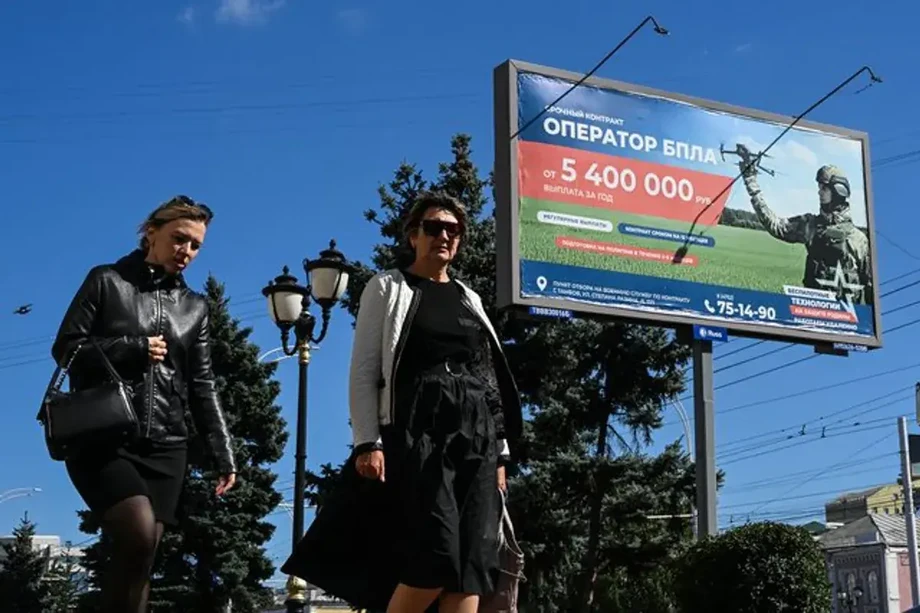
The migrant workers department issued an advisory on Saturday naming the roles it now treats as warning signs: border security, event and mall security, logistics, warehouse operations, driving and support services, particularly when paired with large signing bonuses and military training.
Mag-ingat sa mapanlinlang na recruitment na nag-aalok ng trabaho pero giyera pala ang destinasyon.
The line translates as a warning to beware of deceptive recruitment that offers a job when the destination is war. The advisory added that a job expected to secure a better future should not put a worker's life in danger.
How large the pipeline has become
Ukrainian military figures show 128 Filipinos were recruited in the first nine months of the year, a sharp rise from the small numbers identified earlier. The Philippines, like Indonesia, does not appear on Russia's list of countries whose citizens are barred from recruitment. That unofficial list reportedly includes China, India, Brazil, South Africa, Turkey, Cuba, Afghanistan, Venezuela and Iran.
Ukraine's I Want to Live project, which campaigns on foreign recruits in Russian service, has estimated that about 14 Filipinos are serving under Russian contracts, with two killed and another in captivity. It documented the case of Raymon Santos Gumangan, a resident of Alcala in Pangasinan, who signed up in 2024 for what was presented as a logistics job assisted by a foreign recruiter and was assigned instead to a Russian parachute regiment as a shooter. He was captured in Ukraine's Sumy region in September 2025.
His younger brother Ryan almost followed. Ryan found the offer through Facebook posts recruiting truck drivers for Russia at P200,000 to P250,000 a month, travelled by boat from Zamboanga to Malaysia, and in October 2024 was stopped from boarding a flight from Kuala Lumpur because of a deficiency in his records.
Similar cases have surfaced across Southeast Asia. Indonesian police are investigating 58 victims and treating some cases as human trafficking where recruits were deceived or coerced, and Jakarta has asked Moscow to exempt Indonesians from official military recruitment. Radityo Dharmaputra, a lecturer in international relations at Universitas Airlangga in Surabaya, said the contracts run until the recruit's death or the end of the war.
Moscow controls the entire process: It sets the pay and the list of countries whose citizens it no longer takes, and brokers go wherever they can.
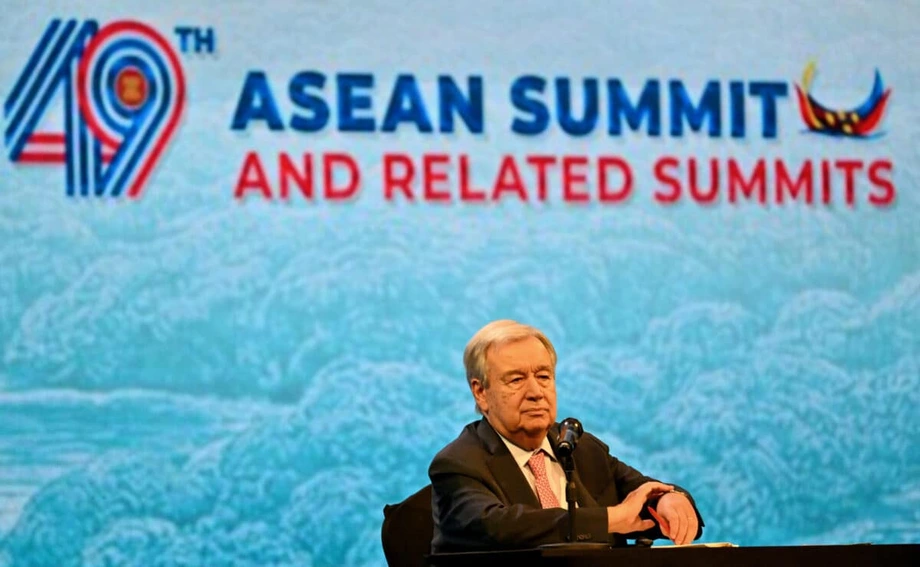
The UN Independent International Commission of Inquiry on Ukraine reported last month that it had found compelling evidence Russian authorities, working with overseas agents, had trafficked people from 29 countries using deception or coercion to bring them into the armed forces. The Philippines said at an ASEAN forum on migrant labour that it had helped take down as many as 250,000 online posts linked to fraudulent overseas job offers through cooperation with Meta and TikTok. The ASEAN leaders' meeting last week adopted a declaration on fair and ethical recruitment that addresses illegal hiring and cross-border employment scams, but did not name Moscow or the citizens lured into the Ukraine war.
What Manila has done, and what is still open
Government responses have come in stages since early this year, and the dates matter.
- February 11, 2026: the foreign affairs department warned that taking employment tied to foreign armed forces carries grave danger and serious legal consequences, including possible loss of citizenship.
- September 2026: the department said it was verifying reports of Filipinos recruited into foreign armed forces, and the immigration bureau announced the four airport stops.
- October 15: Ukrainian intelligence reported the death of Malambahe Sabtar Sabanal.
- October 17 to 19: John signed his contract and flew. Ron's group followed on October 19.
- October 19: the Philippine Embassy in Moscow asked Russia to confirm a reported death.
- November 26: the video reached Manila.
- November 27: the Senate debated the migrant workers budget, and Raffy Tulfo met Cacdac and Pajarito.
- November 28 and 29: the department issued its advisory, and Erwin Tulfo called for the recruiter's deportation.
Lazaro told Senate President Sherwin Gatchalian that she would meet Russia's ambassador to the Philippines, Marat Ignatyevich Pavlov, the following Monday to seek help in repatriating the men. Erwin Tulfo said the President is monitoring the case closely and wants the workers out of Russia safely.
The defence department said it is consulting the migrant workers department and other agencies. Its spokesperson, Assistant Secretary Arsenio Andolong, urged Filipinos at home and abroad to be vigilant against recruitment syndicates that put lives at risk.
Migrant workers' group Migrante International said advisories are not enough. Spokesperson Chat Dimaano asked what concrete action has been taken since January, when reports of Filipinos trafficked into the Russian military first circulated.
The Philippine government should be doing everything to rescue Filipinos from certain death in a faraway warzone, but what concrete actions have been done since January?
No one has confirmed how many Filipinos are in the camps, where exactly they are, or whether any of the men in the video have been sent to the front. Accounts place them inside Russia and in Russian occupied parts of Ukraine. Cacdac has not said how many recruiters are being pursued or whether any case has been filed. The people running the network, beyond the alias Nicole, have not been named publicly.
Mercenaries, workers or trafficking victims
International humanitarian law sets a narrow test for the word mercenary. A mercenary is someone specially recruited to fight in an armed conflict, who takes a direct part in hostilities and is motivated mainly by private gain rather than by nationality or ideology, usually for pay far above that of regular soldiers. A key question is whether the person belongs to the armed forces of a party to the conflict.
Filipinos such as Raymon Gumangan and John Patrick appear to have been folded into regular Russian units, which complicates the label even where money was the motive. Recruits described being handed uniforms and unit assignments, and John Patrick's unit designation was recorded in detail by Ukrainian intelligence.
Philippine law takes a separate view. The foreign affairs department has warned that recruitment into a foreign armed force may violate Philippine laws and cost a Filipino citizenship, which is why the government's public message has focused on the danger of leaving through irregular channels. Migrante frames the men as trafficking victims rather than volunteers, and Indonesian police are pursuing a similar approach where recruits were deceived.
Inside the camps, the practical question is time. Ron said the men have asked to quit and been refused. John said the move to a third camp, where heavy fighting is under way, was expected within 24 to 48 hours of his last message.
Key Points
- About 30 Filipinos appear in a video from Russia asking President Ferdinand Marcos Jr. for rescue after being recruited for cleaning and construction jobs and put into combat training.
- Recruits were promised P180,000 a month plus a P400,000 bonus, with other cases involving P70,000 to P150,000 a month or $3,500 a month and a P150,000 signing bonus.
- The Department of Migrant Workers is coordinating with the foreign affairs and defence departments to locate the men, and Undersecretary Darlene Pajarito said reports of casualties remain unverified.
- Recruits described kicks, blows to the head and beatings with rifles, 10km daily marches, contracts signed in Russian, and phones and ATM cards taken away.
- Ukrainian military intelligence has named three Filipinos killed in the Donetsk region: Malambahe Sabtar Sabanal, Jeric Jumadil Undol and John Patrick. Manila has not confirmed the deaths.
- The Bureau of Immigration stopped four Filipinos at Manila's airport in September and 86 in total between November 2025 and November 26 this year.
- A Filipina recruiter known as Nicole, based in Dubai, is the focus of calls for prosecution, including from Senator Erwin Tulfo, who wants her deported and jailed.
- Foreign Affairs Secretary Ma. Theresa Lazaro was to meet Russia's ambassador, Marat Ignatyevich Pavlov, to seek help in bringing the workers home.