Eight Votes, One Whip, and a Shift in Maharashtra
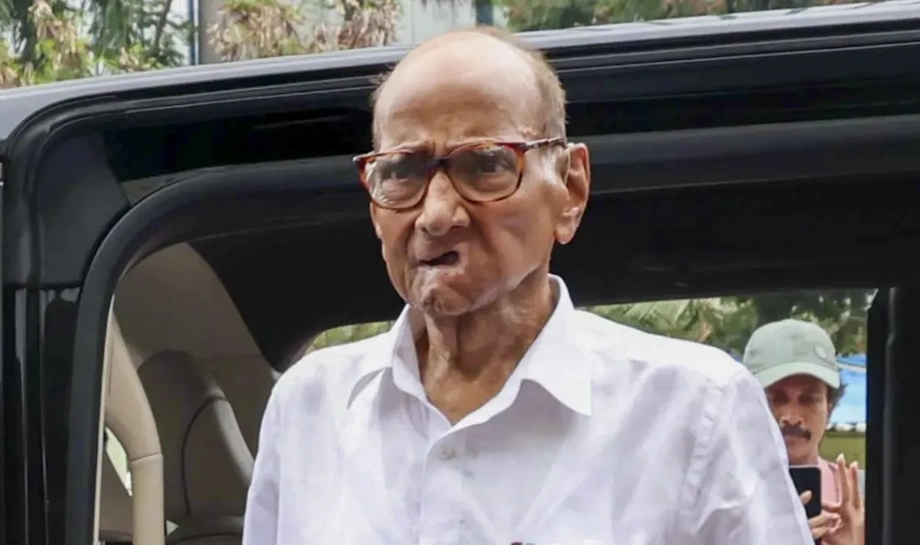
Sharad Pawar's Nationalist Congress Party (Sharadchandra Pawar) will vote for the two bills that redraw India's parliamentary map, its national spokesperson said on 27 November 2026, hours after he visited the 85 year old leader at Breach Candy Hospital in south Mumbai. Pawar had been admitted there the previous day with dehydration.
Contents
- Eight Votes, One Whip, and a Shift in Maharashtra
- What the Two Bills Would Actually Change
- The Arithmetic From April to November
- How the DMK Was Turned Around
- A Phone Call, a Hospital Visit and a Promise
- One Party, Three Different Answers
- Congress Calls It Gerrymandering
- Six Decades of Changing Sides
- What It Means for Maharashtra
- What Is Still Unknown
- Key Points
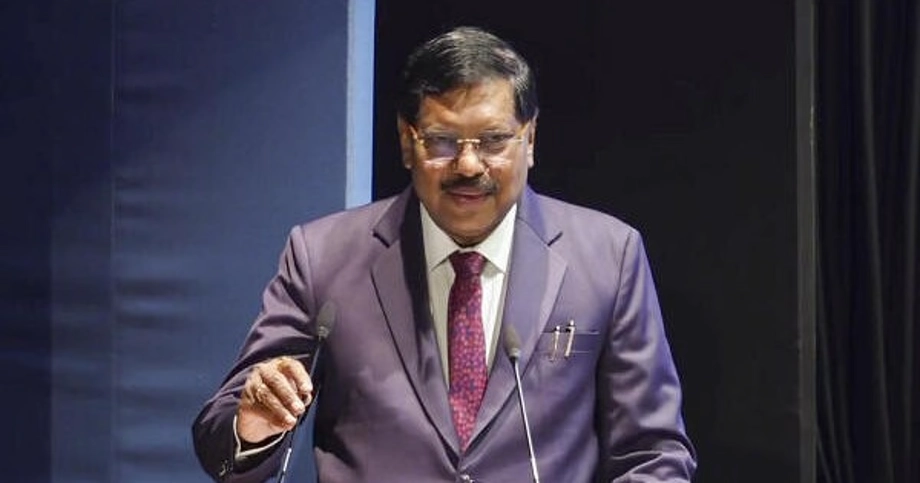
Jitendra Awhad, an MLA and the party's national spokesperson, told reporters that a decision had been taken, and that Pawar had described delimitation as a constitutional exercise that would have to happen sooner or later.
There is absolutely no confusion. It has been decided that we will support delimitation. We will support it.
By the same evening the party's whip in the Lok Sabha, Amol Kolhe, had directed all eight of its MPs to be present in the House from 30 November, when a special sitting of Parliament opens. The Rajya Sabha meets from 2 December. Delimitation is the redrawing of constituency boundaries and the reallocation of parliamentary seats between states, an exercise India last carried out in the 1970s and has frozen since.
The stakes are easy to state. The Constitution (One Hundred and Thirty-second Amendment) Bill, 2026 changes how many seats each state gets and how many voters each MP represents. Eight votes from a party with eight MPs in the Lok Sabha and one in the Rajya Sabha are enough to carry the government across the line it needs.
What the Two Bills Would Actually Change
Arjun Ram Meghwal, the Minister of Law and Justice, is listed to introduce the amendment on 30 November, together with the Delimitation (Second) Bill, 2026. The amendment takes the Lok Sabha from 543 seats to 850, with 815 members elected from the states and 35 from the Union territories. A table of seats for each state and territory issued with the proposal adds up to 816, with 789 from the states and 27 from the Union territories.
Uttar Pradesh, the largest state, goes from 80 seats to 120. Maharashtra rises from 48 to 72, Tamil Nadu from 39 to 59, Bihar from 40 to 60, West Bengal from 42 to 63 and Kerala from 20 to 30. Andhra Pradesh goes from 25 to 38, Karnataka from 28 to 42 and Rajasthan from 25 to 38. Delhi's seven seats become 11.
Because every state grows by the same 50 per cent, the shares barely move. Maharashtra's 8.84 per cent of the House becomes 8.82 per cent, Tamil Nadu's 7.18 per cent becomes 7.23 per cent and Uttar Pradesh's 14.73 per cent becomes 14.71 per cent. No state loses a seat, and none ends up with a larger slice of the House than it holds today.
Two further provisions carry as much weight as the numbers. The bill lets the Delimitation Commission begin work before the 2027 census is completed, which shortens the wait before seats are reserved for women in the Lok Sabha and in the state assemblies. It also freezes each state's relative share for 25 years, until 2051.
The Arithmetic From April to November
In April, a package that bundled delimitation with three other proposed laws failed in the Lok Sabha, the first defeat of a government bill in the 12 years of the Narendra Modi government. It needed 352 votes and got 298, 54 short. The package now returns as two bills.
The amendment needs the support of two thirds of the members present and voting, and a majority of the total membership of each House. With full attendance of 540 in the Lok Sabha, that means 360 votes. The BJP has 241 MPs of its own. Allies take the governing side to about 319, a figure that includes 20 MPs of the Trinamool rebels now sitting with the NCPI, 16 from the TDP, 13 from the Shiv Sena and 12 from the JD(U). The NCP (SP)'s eight lift that to 328, and the DMK's 22 to 350, ten short of 360. The YSRCP's four and smaller parties are expected to close the gap. One published tally of declared positions puts 360 MPs for the motion and 172 against, among them the Congress with 98, the Samajwadi Party with 37 and the Shiv Sena (UBT).
Dates now crowd the calendar.
- 16 April 2026: the delimitation package falls 54 votes short in the Lok Sabha.
- 7 May: Kanimozhi Karunanidhi asks Speaker Om Birla to seat DMK MPs away from the Congress.
- 10 August: Sharad Pawar and all eight of his Lok Sabha MPs meet Narendra Modi at Parliament House.
- 26 November: Pawar is admitted to hospital with dehydration.
- 27 November: Awhad announces support, and the party whip goes out.
- 28 November: the INDIA bloc meets in Delhi without Supriya Sule.
- 30 November: the Lok Sabha sitting begins, with the Rajya Sabha following on 2 December.
How the DMK Was Turned Around
MK Stalin's Dravida Munnetra Kazhagam brings 22 MPs in the Lok Sabha and eight in the Rajya Sabha. In February the party pushed a resolution against delimitation through the Tamil Nadu Assembly, and on 16 April Stalin burned a copy of the Centre's bill and called it a black law. Home Minister Amit Shah had told the Lok Sabha on 16 and 17 April that the government was ready to provide for a 50 per cent increase in seats for all states. The DMK did not move.
The state election changed the ground. The DMK lost, not to the AIADMK but to the Tamilaga Vettri Kazhagam of the actor C Joseph Vijay, which won 108 of 234 seats, ten short of a majority. The DMK finished second with 54. The Congress, its ally at the poll, then left to join Vijay's government with two ministers, its first share of power in Tamil Nadu in 59 years. The DMK cut ties with the Congress and with the INDIA bloc, and on 7 May its parliamentary party leader Kanimozhi Karunanidhi wrote to Speaker Om Birla asking that its MPs be seated away from the Congress.
The Union Cabinet's decision on the revised bills settled the rest. The government accepted the DMK's two demands: a flat 50 per cent increase for every state, Tamil Nadu included, and a freeze on the resulting shares for 25 years. On 28 November, after a meeting of the party's MPs in Chennai, Stalin said the party had "succeeded in our efforts to protect Tamil Nadu's parliamentary representation for the next 25 years". The DMK's 22 MPs are counted among those voting for the motion in the Lok Sabha.
The reversal has a cost at home. The ruling TVK accuses the DMK of walking away from a position it argued for years. DMK leaders answer that rejecting the revised bill would leave the state exposed to a fresh exercise drawn on the 2027 census, and say Tamil Nadu's 39 seats could then fall to 31.
A Phone Call, a Hospital Visit and a Promise
The ground for Pawar's move was laid during the monsoon session. On 10 August he walked into Parliament House with all eight of his Lok Sabha MPs to meet Modi. The stated subject was the drought in Maharashtra. The meeting was read in Delhi as part of the government's search for votes on delimitation.
When Pawar was later hospitalised, Modi telephoned him. A close aide of the veteran leader recounted the conversation: the prime minister told him he "should rest now", and said that he and Pawar's daughter Supriya Sule would "together look after the country's affairs". The remark was taken as a sign that a place in the Union Council of Ministers might be found for Sule.
A merger of the two NCP factions, floated during the monsoon session as a way to bring Pawar's party into the National Democratic Alliance, did not happen. Ajit Pawar's widow Sunetra Pawar, who became NCP president and Maharashtra's deputy chief minister after his death in a plane crash in January 2026, opposed it, as did their son Parth Pawar. She is reported to have told alliance leaders that the NCP (SP) would be welcome in the NDA as a separate party. Inside the family, reunion talk faded over who would lead a merged party.
The government also held back four bills that the DMK and the NCP (SP) had opposed: the plan called One Nation, One Election; an education bill named the Viksit Bharat Shiksha Adhishthan Bill; a bill providing for the removal of a prime minister, chief minister or minister jailed for 30 days; and the Foreign Contribution (Regulation) Amendment Bill, which would tighten the flow of foreign money to NGOs. The joint parliamentary committees examining the first three had their tenures extended and produced no report, and the FCRA amendment went to a committee too.
One Party, Three Different Answers
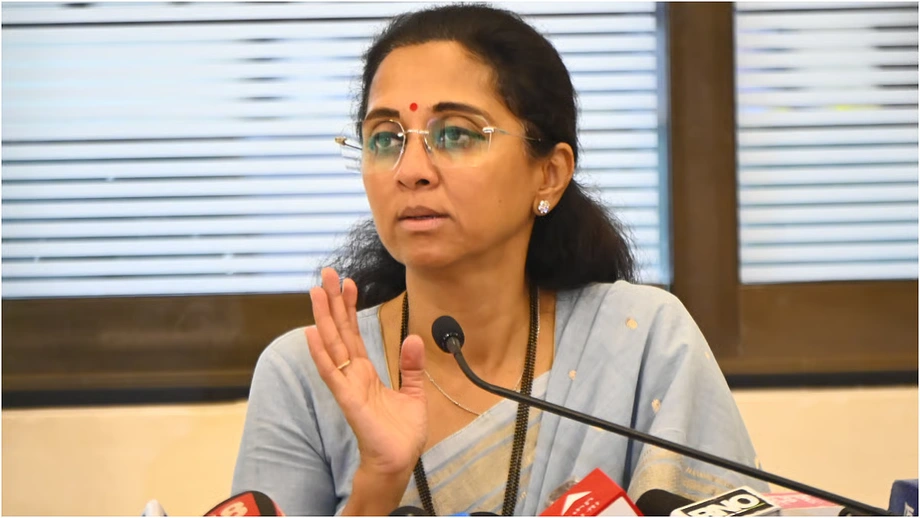
Inside the NCP (SP), the announcement has not settled the party's line. Sule, the working president and MP from Baramati, said on 27 November that she had not seen the text.
I have not seen the bill yet, so how can I state the party's position on it? I do not know anything about this matter. We are not a faction; we are a party.
Amol Kolhe, who issued the whip, declined to endorse Awhad's certainty.
Sule had made the party's stand clear. We have to first study the draft of the bill; only then can any decision be taken.
Sule had set three conditions earlier in the year: that women's reservation be implemented alongside delimitation, that every state receive a uniform 50 per cent increase, and that opposition parties be adequately represented on the Delimitation Commission. On 26 November she put it more loosely, saying that if the bill is "good for the nation, we might support it". She skipped the INDIA bloc meeting on 28 November to stay with her father in Mumbai, while other party MPs attended. Rohit Pawar, an NCP (SP) MLA, has argued against the legislation.
Pawar himself gave the Congress a reason for the shift that has little to do with the census. He telephoned the party's leadership and, according to accounts of the call, described backing the bill as a compulsion: it was, he said, what was needed to keep the NCP (SP) together.
Congress Calls It Gerrymandering
The Congress, which shares power with the NCP (SP) and the Shiv Sena (UBT) in Maharashtra, answered within hours. Its state spokesperson Sachin Sawant called the decision "unfortunate" and said a matter of this size should have gone to the INDIA bloc first.
This is called gerrymandering. There is no doubt that the government intends to replicate this experiment at the national level.
Sawant also asked why the exercise was being taken up without a fresh census. The party's account on X recalled March 2026, when Pawar sought another Rajya Sabha term with only 10 MLAs behind him against the 36 votes he needed. The Congress set aside its own claim to a Maharashtra seat, Rahul Gandhi and Mallikarjun Kharge agreed to back him, the Shiv Sena (UBT) followed, and the Maha Vikas Aghadi confirmed his candidature, sending him to the House unopposed. The same Pawar, the post said, is now poised to help the BJP.
The Shiv Sena (UBT) has taken a different line. Its leader Arvind Sawant said his party would read the bill word by word once it has a copy, discuss it with Uddhav Thackeray and then decide.
Six Decades of Changing Sides
Pawar's career has been built on such turns. He became Maharashtra's chief minister for the first time on 18 July 1978, at 37, by engineering a split in the coalition of two Congress factions then in power, and taking the support of the Janata Party and the Peasants and Workers Party, with the CPM backing him from outside. He had been industries and labour minister under Vasantdada Patil. His government was dismissed in February 1980, when Indira Gandhi returned to power in Delhi.
On 10 June 1999 he announced the NCP with P.A. Sangma and Tariq Anwar, after questioning Sonia Gandhi's foreign origin. Four months later he was supporting the Congress to form a government in Maharashtra under Vilasrao Deshmukh. In September 2014 he pulled out of a 15 year alliance with the Congress, bringing down the Prithviraj Chavan government; President's rule followed, and the BJP emerged from the October election as the single largest party. In 2019, three days before the state election, he campaigned in unseasonal rain in Satara, and afterwards the undivided Shiv Sena, the NCP and the Congress formed the Maha Vikas Aghadi government, which did not last a full term. The NCP split in 2023 when his nephew Ajit Pawar took his faction into the alliance led by the BJP.
A senior Congress leader from Maharashtra, who has served in the state and at the Centre, described the mix that has kept Pawar in play.
He has a mass connect, is very hard-working and a people's person. He had some good qualities without doubt. Then he pulled down Congress governments in Maharashtra, stabbed Indira Gandhi in the back, and now he is doing the same with Rahul Gandhi.
An MP from another INDIA bloc party was blunter still, saying of Pawar: "He symbolises what ails Indian democracy."
What It Means for Maharashtra
In Maharashtra, 48 seats become 72, the second largest increase after Uttar Pradesh's 40. The state's ruling Mahayuti holds 237 of the 288 assembly seats: the BJP has 132 legislators of its own, and with the Shiv Sena of Eknath Shinde, the NCP of Sunetra Pawar, five smaller parties and two independent MLAs it commands a working majority.
Talk in Mumbai is that the NCP (SP) could enter that alliance as a fourth partner in early December, without merging with the rival faction. Praful Patel, a leader of the other NCP, visited Pawar in hospital on 26 November, feeding the speculation. Uday Samant, the state's industries minister and a Shiv Sena leader, said the Centre would welcome such a move.
Members of Parliament will decide the delimitation and it will take place in the Lok Sabha and Rajya Sabha. If Sharad Pawar is coming with the NDA or supports this (delimitation) bill, the central government will welcome it.
Samant also dismissed speculation about an operation to pull leaders out of the Shiv Sena (UBT), saying the government's focus was drought relief and industry, with a target of ₹1.5 lakh crore in investment commitments for the state. The uncertainty has unsettled the Maha Vikas Aghadi, where Congress leaders have demanded that the NCP (SP) state its intentions openly rather than keep its partners guessing.
What Is Still Unknown
No vote has been held, so the size of the government's majority on the amendment is not established. The text the parties see on the floor may still differ from the cabinet's revised formula, which is why Sule and Kolhe want to read the bill first. Whether Sule enters the Union Council of Ministers, and whether her party joins the NDA, has not been settled in public. Two seat totals remain in circulation, 850 in the bill and 816 in the table issued alongside it.
Key Points
- The NCP (SP) of Sharad Pawar will support the Constitution (One Hundred and Thirty-second Amendment) Bill, 2026 and the Delimitation (Second) Bill, 2026, spokesperson Jitendra Awhad announced on 27 November 2026.
- Amol Kolhe issued a whip ordering all eight NCP (SP) Lok Sabha MPs to attend from 30 November, when the special sitting begins; the Rajya Sabha meets from 2 December.
- The amendment raises the Lok Sabha from 543 seats to 850, and lifts every state's seats by 50 per cent, freezing relative shares until 2051.
- Maharashtra goes from 48 seats to 72, Uttar Pradesh from 80 to 120 and Tamil Nadu from 39 to 59.
- A similar package lost in April by 54 votes, 298 to a required 352; the government now needs 360 votes with full attendance in a House of 540.
- The DMK's 22 MPs moved after the Cabinet accepted a flat 50 per cent increase and the 25 year freeze.
- Stalin said the party had protected Tamil Nadu's representation for the next 25 years; the ruling TVK accuses the DMK of abandoning its opposition.
- Supriya Sule skipped the INDIA bloc meeting on 28 November, and Amol Kolhe said the draft must be studied before a final position.
- The Congress called the decision unfortunate and, in the words of its state spokesperson Sachin Sawant, gerrymandering.
- Pawar, 85, first became Maharashtra's chief minister on 18 July 1978 and founded the NCP on 10 June 1999.