Singapore's mobile market shrinks to three players
StarHub and Keppel signed definitive agreements on 24 November 2026 to place M1 inside StarHub, paying M1's owners with new StarHub shares rather than cash. The enlarged group would serve 4.1 million customers across mobile, broadband and enterprise services, and the two companies put its enterprise value, a measure that counts debt as well as equity, at S$5 billion.
Contents
- Singapore's mobile market shrinks to three players
- What StarHub is actually paying for M1
- Why Keppel is trading a business for a minority stake
- Keppel's exit comes in two stages
- The Simba deal that collapsed first
- What changes for your phone bill
- Circles.Life joins the same group
- Three operators, two of them large
- Analysts split on the price
- What still has to happen
- Key Points
StarHub will issue about 651.7 million new shares, equal to 27.4 per cent of its enlarged share base. Keppel, the asset manager that took M1 private in 2019 and owns an effective 83.9 per cent of it, receives 546.5 million of those shares, an effective 23 per cent stake in StarHub. M1's other shareholders hold the remaining 4.4 per cent.
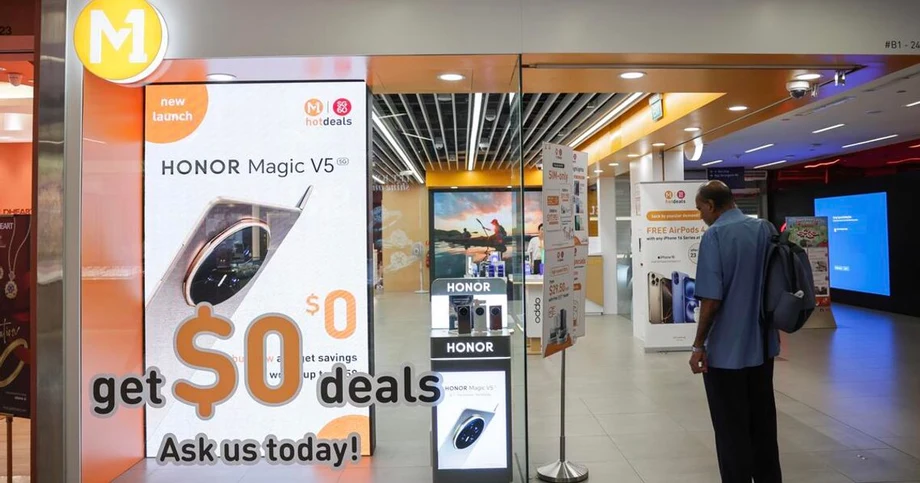
Singapore has run four mobile network operators since Simba, then called TPG Telecom, entered in 2017. After the deal closes, Singtel, the enlarged StarHub and Simba remain. A market where the three smaller operators spent a decade undercutting one another becomes a contest between two large groups, with a much smaller third trailing.
Completion is targeted for the first half of 2027. It needs approval from the Infocomm Media Development Authority (IMDA) and the Ministry of Digital Development and Information (MDDI), plus separate votes by StarHub and Keppel shareholders at extraordinary general meetings. Until then, the two companies keep operating and competing as separate businesses.
What StarHub is actually paying for M1
Two valuations sit inside the announcement, and they answer different questions. StarHub estimates M1's enterprise value at about S$1.06 billion on a standalone basis, using an implied issue price of S$1.04 per share and M1's net debt of about S$380 million. On a pro forma basis, which treats the two businesses as already combined, at S$1.50 per StarHub share and including expected savings, the shares handed to M1's owners imply an enterprise value of S$1.36 billion for M1.
The comparison that matters to many investors is the one that got away. Simba Telecom, owned by the Australia listed Tuas, agreed in August 2025 to pay S$1.43 billion in cash for M1, a deal that would have handed Keppel close to S$1 billion in cash. Keppel now takes paper instead.
The merged group would have had revenue of about S$2.6 billion and earnings before interest, tax, depreciation and amortisation (EBITDA) of about S$0.5 billion in the 12 months to June 2026, had it existed then. It would start with net debt of 2.9 times EBITDA, a common gauge of how heavily a company borrows against what it earns.
StarHub expects operating cost savings with a net present value of S$1.1 billion, which is what those future savings are worth in today's money. They rest on annual savings of about S$110 million by 2030, spread across network, infrastructure, commercial and information technology functions. The two companies valued both telcos at comparable multiples of enterprise value to EBITDA, anchored on StarHub's traded price, with each bringing similar leverage to the closing.
J.P. Morgan is advising StarHub and DBS is advising Keppel.
Why Keppel is trading a business for a minority stake
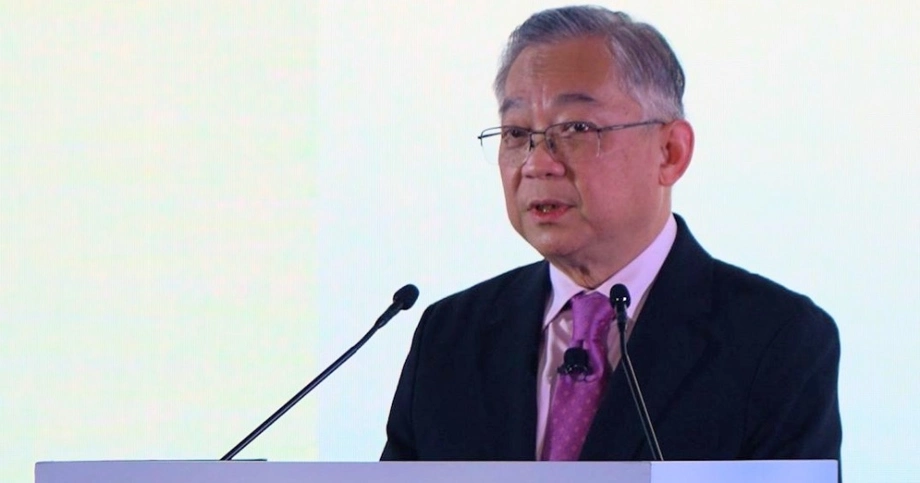
Keppel chief executive Loh Chin Hua told investors that after the Simba sale collapsed, StarHub was the "only realistic merger partner" left for M1. The share based structure, he argued, lets the combined company keep its cash for integration and growth while Keppel shares in the upside of a market that is consolidating.
Keppel's accounts explain the urgency. M1 recorded a net loss of S$9.2 million in the first half of 2026, and Keppel says it would otherwise have to keep funding M1's technology stack, cyber resilience, network and spectrum costs out of its own pocket. Owning M1 as a subsidiary also drags its results into Keppel's consolidated numbers.
If we continue to own M1 as a subsidiary, we would also continue to consolidate its results, including losses such as those we saw in the first half of 2026.
The arithmetic on the other side is stark. M1 contributed S$3 million to Keppel's profit in the 2025 financial year. Loh estimates that Keppel's 546.5 million StarHub shares would have produced S$34 million in dividends alone if the deal had been struck on 1 January 2025, more than ten times as much. Completion also removes about S$324 million of M1's net debt from Keppel's consolidated balance sheet.
Costs from the failed Simba transaction still weigh on Keppel. The group booked a S$65 million loss on that deal, part of S$375 million of net losses in its non core portfolio in the first half of the 2026 financial year, which pulled net profit down by 59 per cent.
We believe that the benefits of deconsolidating M1 and the longer-term potential of our stake in the combined entity make this a very good trade for Keppel.
Analysts said Keppel is likely to gain more by staying invested in StarHub for now than by taking cash today, because the lock up period keeps it exposed to the S$1.1 billion of expected savings and to any improvement in how the market values telcos.
Keppel's exit comes in two stages
Loh described the merger as step one of a divestment in two stages, part of Keppel's plan to hold fewer assets and monetise businesses it does not consider central to its future by 2030. The target for those disposals is S$13.7 billion.
On the StarHub stake, Keppel is weighing three routes: selling the shares gradually over time, selling them in one block to a strategic investor or a fund, or handing them directly to its own shareholders. A mix of all three is possible. The shares cannot be touched before a lock up period of at least 12 months from completion, which CGS International's Lim Siew Khee and Meghana Kande said means Keppel can begin to exercise the options only in the first half of 2028.
Loh put numbers on the prize. A rise of S$0.10 in StarHub's share price over a year would add about S$55 million to the value of Keppel's stake, and StarHub's ordinary dividend of S$0.06 per share would bring in S$33 million of cash, about S$88 million in total. A move from S$1.01, the price when the deal was announced, to S$1.50 would lift the value of Keppel's holding by roughly S$268 million, an illustration the company said was not a forecast.
The market has been harder to please. Keppel's shares fell from S$8.87 to a low of S$8.30 before recovering to S$8.39, and Macquarie's Foo Zhiwei cut his rating to underperform from outperform and his target price to S$6.94 from S$12.87. UOB's Roy Chen kept a buy call but trimmed his target to S$11.70 from S$11.90, and CGS International cut its target to S$11.22 from S$13.52 while keeping an add rating. UOB estimates a disposal loss that does not involve cash of between S$107 million and S$375 million depending on StarHub's price at completion, while Macquarie expects S$375 million.
The debt relief and any future share sale proceeds will be counted when Keppel works out special dividends for 2027. Analysts expect those payouts to rise by S$0.018 to S$0.027 per share, and Macquarie's Foo sees limited further upside beyond that.
The Simba deal that collapsed first
StarHub was not the first suitor in line. The path to this merger runs through a failed cash bid and a regulatory investigation that is still open.
- August 2025: Tuas, through Simba Telecom, agrees to buy M1 from Keppel for S$1.43 billion in cash, in what would have been Singapore's first telecom consolidation.
- May 2026: The deal is terminated after IMDA suspends its review on learning that Simba may have been using radio frequencies it was not licensed for. Keppel books a S$65 million loss.
- September 2026: StarHub and Keppel confirm they are in talks about a deal involving M1, with no certainty one would be reached.
- 17 November 2026: Tuas says it does not contest several regulatory breaches, including unauthorised use of spectrum bands and 5G equipment.
- 24 November 2026: StarHub and Keppel announce the merger and the Circles.Life purchase. StarHub files its regulatory submission with the authorities by the next day.
- 1 January 2027: Matt Williams, appointed chief executive designate in June, takes over from Nikhil Eapen.
- First half of 2027: Targeted completion of the merger and the Circles.Life acquisition.
IMDA is still reviewing Simba's response to a show cause notice and has not decided what penalty to impose. The range runs from a fine to the suspension or cancellation of its spectrum rights, a decision that will shape what competition is left in the market.
What changes for your phone bill
For now, nothing. StarHub and M1 say customers keep their existing plans, services and points of contact, and both companies continue to compete independently until the deal completes. The announcement does not say what happens to prices, contract terms or the M1 name afterwards.
Incoming chief executive Matt Williams said the company does not intend to change pricing during 2027, when its focus will be on combining the businesses.
Our intention is not to make changes during 2027 because our focus during that year is really on making sure that we bring the businesses together, we keep all the customers happy.
StarHub also has no plans to cut jobs for now. The combined headcount of StarHub, M1 and Circles.Life is about 2,700, and Williams said any changes further out would follow tripartite guidelines. The group intends to keep its smaller brands, including giga, eight, MyRepublic and M1's Maxx, because each speaks to a different group of customers.
A price freeze may not be StarHub's choice to make. When Simba agreed to buy M1 in 2025, the two companies pledged in their submissions to IMDA to hold mobile subscription prices for two years. Current chief executive Nikhil Eapen declined to say whether StarHub would make a similar commitment. Bloomberg Intelligence said a retail price freeze is a likely remedy, with tariffs on existing contracts frozen for two to three years, citing Thailand's True and DTAC merger in 2023, and that a two year freeze would push any repricing to around 2029.
Analysts do not expect much relief on revenue per user before then. Bloomberg Intelligence's Chris Muckensturm said a meaningful recovery in average revenue per user is likely from late 2028 at the earliest, while gains from cost savings arrive mostly in 2029 and 2030. Tech observer Oo Gin Lee said a merged group that holds prices in 2027 will still look for ways to earn more from each user, through cost cuts or longer contracts. Nanyang Polytechnic's Puar Leong Sing said customers may see fewer promotions or leaner data bundles rather than a headline price rise, while better network sharing could bring improved 5G coverage.
Circles.Life joins the same group
On the same day, StarHub exercised a call option to buy the Singapore mobile business of Liberty Wireless, which trades as Circles.Life, from its parent. The purchase covers subscribers, employees and brand assets, and is expected to complete alongside the M1 merger. StarHub estimates Circles.Life at about 290,000 subscribers.
Circles.Life had warned in November 2025 that consolidation between M1 and Simba could hurt competition and consumer choice without safeguards. It now becomes part of a larger group, and StarHub has picked Circles X, the Circles platform built around artificial intelligence, to run selected consumer mobile services.
We also see significant opportunities to leverage our Circles X AI-native telco platform and digital expertise to drive further innovation, enhance customer experiences and support our shared ambitions for growth.
Rameez Ansar, chief executive of Circles, framed the partnership that way. For StarHub, the appeal is partly defensive: Circles.Life buys wholesale network capacity from M1, so owning both keeps that revenue inside the group and removes a competitor in the price conscious segment.
The infrastructure side is older than the deal. StarHub and M1 filed a joint application in 2020 for one of Singapore's two standalone 5G licences, an unusual step for rival operators, and won spectrum alongside Singtel. Their joint venture, Antina, already owns and runs the shared 5G radio network. The merger brings Antina's ownership together, which StarHub says will speed up integration of spectrum and network assets and the roll out of network automation and monitoring.
Three operators, two of them large
Bloomberg Intelligence put mobile subscriber shares at June 2026 at about 43 per cent for Singtel, 22 per cent for M1, 21 per cent for StarHub and 14 per cent for Simba. UOB's Roy Chen measured the same market by existing mobile subscribers and arrived at 47 per cent for Singtel and 41 per cent for the combined StarHub, which would make it the second largest operator by some distance.
The customer counts behind those shares are uneven. Singtel reported 4.5 million mobile customers in its 2026 financial year, StarHub and M1 count 4.1 million between them, Circles.Life brings about 290,000, and Simba said in a regulatory submission that it reached 1 million subscribers by early 2024.
Simba's position is the most exposed. It went from would be buyer of M1 to the smallest standalone operator in six months, and it is waiting for IMDA to decide on penalties for the spectrum breaches it has admitted. Oo said Simba's own network, unlike other mobile virtual network operators that lease capacity from the big three, makes it harder to squeeze out, and that removing its licence would leave Singapore with only two network operators.
Simba also holds prices down. Oo noted that it has stayed profitable at an average revenue per user below S$10, while the other operators earn about S$20, which limits how far Singtel and StarHub can push tariffs up.
Analysts split on the price
Macquarie and UOB both call the deal slightly dilutive for StarHub. The 651.7 million new shares expand its share base by 38 per cent, and UOB's Chong Lee Len said that dilutes pro forma earnings per share by about 5 per cent. She kept a hold call and cut her target price to S$1.10 from S$1.26, calling the deal near term negative because settlement costs for network leases and early termination of IT, marketing and operational contracts will bite in 2027 and the first half of 2028.
Macquarie's Foo expects earnings per share to improve only around 2030, and kept a neutral call while raising his StarHub target to S$0.98 from S$0.95. RHB raised its target to S$1.13 from S$1.00 with a neutral call and called the consolidation positive for scale and for repairing the market, while flagging that the savings are loaded towards later years and carry execution risk.
Chong pointed to one reassurance for StarHub investors: the company will keep its commitment to pay S$0.06 per share to existing shareholders for 2027, backed by proceeds from the planned sale of its stake in Ensign InfoSecurity. Phillip Securities Research's Paul Chew said the price was fair because the shares swapped at equivalent valuations, adding that StarHub has to carry the added debt and deliver the savings.
StarHub's shares rose 3 per cent to S$1.04 on the day of the announcement, added S$0.05 to S$1.09 the next day and closed 1.8 per cent higher at S$1.11 on 26 November.
What still has to happen
Two regulators and two shareholder meetings stand between the announcement and a combined company. IMDA and MDDI must clear the transaction, and StarHub and Keppel each need a yes from shareholders at separate extraordinary general meetings.
Both companies have controlling shareholders sitting on both sides of the table. Asia Mobile Holdings, a controlling shareholder of StarHub, will abstain at StarHub's meeting, and Temasek, a controlling shareholder of Keppel, will abstain at Keppel's. StarHub filed its regulatory submission by 25 November, with a public consultation to follow, and IMDA will weigh the loss of a fourth competitor against the investment case the companies present.
IMDA took nine months to review the Simba bid without reaching a decision, in part because M1 runs large mobile and internet networks that carry public interest and cyber security obligations. This transaction is bigger by market share. StarHub and M1 were among the four operators breached by the UNC3886 threat group in a campaign that triggered Operation Cyber Guardian, Singapore's largest cyber incident response to date, and both companies argue that greater scale and cash flow will pay for stronger defences.
What the release leaves open is what customers get beyond a wider menu of brands. StarHub says the combined group will offer a broader range of mobile, broadband and digital services across premium, digital and value tiers, and that savings may support more investment in 5G, fibre, cloud and security. How much of the S$110 million a year reaches a monthly bill is not stated.
Key Points
- StarHub will issue about 651.7 million new shares, or 27.4 per cent of its enlarged capital, to buy M1 in a deal announced on 24 November 2026.
- Keppel ends up with 546.5 million StarHub shares, an effective 23 per cent stake, and its other M1 investors hold 4.4 per cent.
- The combined group would serve 4.1 million customers, with S$5 billion in enterprise value and pro forma revenue of about S$2.6 billion.
- M1 is valued at S$1.06 billion standalone, or S$1.36 billion on a pro forma basis that includes S$1.1 billion of expected savings.
- StarHub expects annual cost savings of about S$110 million by 2030 and says it will not change prices during 2027.
- Keppel sheds about S$324 million of M1 net debt, which M1 lost S$9.2 million in the first half of 2026.
- Approval is needed from IMDA, MDDI and both shareholder meetings, with completion targeted for the first half of 2027.
- Singapore drops from four mobile network operators to three, leaving Singtel, the enlarged StarHub and Simba.
- StarHub is also buying Circles.Life Singapore, which has about 290,000 subscribers, alongside the merger.