A lead lost in the final 21 seconds
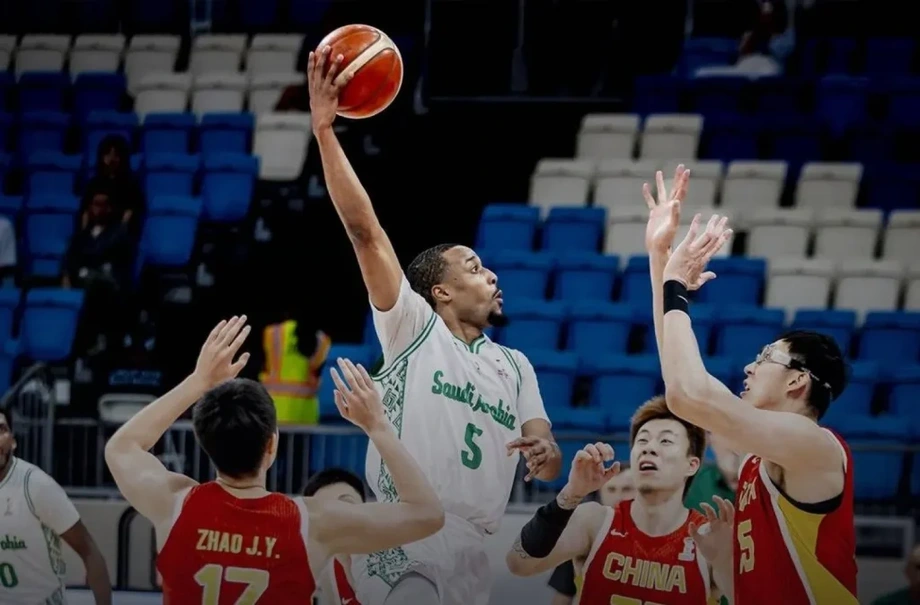
Hu Mingxuan's shot from beyond the arc hit the rim in the closing seconds at the Al Janoub Stadium in Al Wakrah, Qatar, and China's men's team lost 80-82 to Saudi Arabia on 26 November 2026. FIBA recorded an attendance of 150 for the game. It was China's first defeat by Saudi Arabia in an official FIBA competition since the 1993 Asian Championship in Jakarta, a gap of 33 years.
Contents
- A lead lost in the final 21 seconds
- The rebounds China won and the shots it missed
- Guo Shiqiang blames one number
- Three substitutions and an ejection
- What Saudi Arabia made of it
- Where China stands in Group F
- A coach with a contract to 2027
- Three names, three obstacles
- The cost beyond the scoreboard
- What has to happen before any decision
- Key Points
The quarter scores, 25-29, 23-14, 20-23 and 14-14, describe a game that kept turning. China closed the first period four points ahead, fell five behind by half time as the second quarter slipped away 14-23, and entered the last ten minutes two down at 68-66. A spell of defensive pressure early in the fourth put China back in front.
Yu Jiahao's free throw made it 79-78 with 20.9 seconds on the clock. Saudi Arabia went to the line at the other end and made both shots to take the lead. China had the ball and a full shot clock, Hu Mingxuan took a three pointer off a simple screen, and it did not drop. The final horn came with the scoreboard reading 82-80.
The rebounds China won and the shots it missed
The statistics show China controlled most of the physical parts of the game. China finished with 48 rebounds to Saudi Arabia's 32, took 25 of them at the offensive end against nine, and turned those into 30 points against 11 for the Saudis. China attempted 78 shots and made 30. Saudi Arabia attempted 13 fewer and made more of them.
Saudi guard Al-Suwailem led all scorers with 20 points and added eight rebounds and four assists. Hu Mingxuan and Liao Sanning had 15 points each for China, Yu Jiahao pulled down eight rebounds and Liao added six assists.
The damage came from long range. China made 5 of 30 three point attempts, a rate of 16.7 percent. Three of those makes came in a first quarter that China closed 29-25 ahead, with Hu Mingxuan striking from the corner and Hu Jinqiu finishing a pick and roll dunk off a Zeng Fanbo pass to open a 10-2 lead. Over the remaining three quarters China went 2 for 26 from beyond the arc.
The shooting slump changed how Saudi Arabia could defend. With the outside threat gone, the Saudis packed the paint and cut the driving lanes that China's guards had used early on. China's 25 offensive rebounds produced plenty of second possessions, but few clean looks.
Guo Shiqiang blames one number
Guo Shiqiang, who has coached the national team since July 2024, took the podium afterwards and narrowed the defeat to a single statistic. His players, he said, had done only one thing badly.
Only one thing was not done well, the three point percentage was too low. The chances came, we did not take them.
Guo put the number at 16 percent for the night and argued the other parts of the game had gone China's way, pointing to the lead in offensive rebounds and to a low turnover count, with two point shooting also better than the opponent's. He added that the result made the road ahead hard.
The rankings after this are quite severe. If we win the next game, our chance of qualifying is still good.
Commentators picked at that account. Su Qun wrote that the poor three point shooting was not the root cause of the loss, and the wider criticism settled on the decisions made in the last four minutes, which Guo did not discuss at the press conference.
Three substitutions and an ejection
Zhou Qi left the floor with 4 minutes 44 seconds left in the third quarter. Contesting a position under the basket, he swung an elbow into an opponent's face; the referees reviewed the video and upgraded the call to a disqualifying foul. He had 10 points on 5 of 6 shooting in 11 minutes, and his exit stripped China of its main rim protector while the team was still ahead.
Li Hongquan then became the story. In the fourth quarter he drew a foul on a three point attempt and made all three free throws to push China ahead, finishing with 20 points, eight rebounds and a plus-minus of plus 11, the best on the team. With 3 minutes 42 seconds remaining he was replaced by Zeng Fanbo. Zeng missed a corner three on his first possession and Saudi Arabia scored four straight points to retake the lead.
With 1 minute 46 seconds left Guo brought Li Hongquan back, but took off Zhang Zhenlin, who had been guarding Rahman, the Saudi team's naturalised scoring guard. Rahman promptly attacked the smaller Liao Sanning and scored the points that decided the game. Zhao Jiwei finished with no points on 0 for 6 shooting and a minus 19 rating, the worst on the floor, and Zhang Zhenlin made 3 of 13. China used all 12 players and put four in double figures; Saudi Arabia used nine and put six there.
Television commentary questioned the changes as they happened. Du Feng, the former national coach working as a commentator, described China as standing at the edge of a cliff and asked for a fast review, noting another hard game was three days away.
China's men's team is standing on the edge of a cliff.
Fu Zhenghao was blunter about the final play, saying China had used the worst weapon of the night to fire the decisive shot, with the team's three point shooting at 16.7 percent and Hu Mingxuan cold all evening. A Shandong outlet summed up the fourth quarter substitutions in four words: a pile of baffling calls.
What Saudi Arabia made of it
Saudi Arabia arrived in this window with the worst record in the group and left with the result of its campaign. Its players were direct about the shape of the game.
Winning while grabbing 16 fewer rebounds is not something you see often.
That was Rahman's reading of the night, and the boxscore backs him: the rebound count finished 48-32. Saudi Arabia's six double figure scorers, against four for China, reflected a team that converted a smaller number of possessions more efficiently.
Where China stands in Group F
China is fourth in Group F with 14 points from a 5-4 record, behind Japan on 16, Lebanon on 15 and South Korea on 14. South Korea sit above China because they have won both meetings between the two, which is the first tiebreaker after points. China's points differential of plus 21 is in fact better than South Korea's plus 16. Saudi Arabia have 13 points and Qatar 13.
Qatar are in the group as hosts of the 2027 World Cup, which they qualify for automatically. Their results count towards the standings but they are excluded from the final ranking, so the group is effectively a five team race for the qualifying places.
The path to the tournament runs through the second round, where the 12 surviving teams are split into two groups of six and play the three teams from the paired group twice, with all first round results carried over. Eight Asian places are available. The first three teams in each group qualify directly, and the fourth placed teams in Groups E and F are ranked against each other for the last spot. Iran, on 14 points and a differential of plus 40, currently hold that place ahead of China on 14 and plus 21.
Three games remain in this window and the next one: away to Lebanon on 29 November at 21:00 local time in Zouk Mikael, which is 3am on 30 November in Beijing, then home games against Saudi Arabia and Qatar. Winning all three would leave China at 8-4.
- 26 November 2026: China lose 80-82 to Saudi Arabia in Al Wakrah and drop to fourth in Group F.
- 29 November 2026: away to Lebanon, who are second in the group on 15 points.
- Later in the window: home games against Saudi Arabia and Qatar.
- Until 2028: Li Chunjiang's registration ban runs to 2028, ruling him out of any immediate appointment.
A coach with a contract to 2027
The Chinese Basketball Association appointed Guo on 21 July 2024 with a mandate covering the 2027 World Cup and the 2028 Los Angeles Olympics, and his contract runs to the end of the 2027 World Cup. His record in 24 official matches stood at 18 wins and six defeats before this window, including a run to the 2025 Asian Cup final that China lost 89-90 to Australia, the country's best result at that tournament in a decade.
The 2026 Asian Games in Nagoya went worse. China lost the semi-final 77-97 to a Japan team made up largely of second string players, a margin of 20 points, then lost the bronze medal game 70-79 to Iran and finished fourth, the second worst Asian Games result in the team's history. Guo put that defeat down to a young roster and a shortage of experience in tight games, and said after the Japan match that his defence had been poor and that the opponent had opened the game with fast breaks and three pointers.
No official word of a change has come from the association or the team, and Guo has not offered to resign. The association's stated benchmark is the full Olympic cycle rather than a single tournament, and its public language after the Asian Games focused on a thorough review of what went wrong. In February 2026, at the team's entry meeting, Guo asked his players to start from below zero and to treat defence as the foundation of everything.
A Xinhua commentary argued that the coaching staff's tactical work could not be dismissed wholesale, and that expecting a change of coach to transform the team was even less realistic.
Within the team, the response has been procedural rather than dramatic. The plan reported after the defeat is a review that runs through the whole chain, with data reports from the coaching staff and the support team, and selection for the next window based on form in the first eight rounds of the CBA rather than on reputation.
Three names, three obstacles
Speculation about a successor has centred on three coaches, each with a clear obstruction.
Li Chunjiang carries the heaviest record of the three: seven CBA titles with Guangdong and a hand in developing Hu Jinqiu and Sun Minghui. He also carries the clearest bar. On 17 April 2023 the Chinese Basketball Association punished him over the Shanghai case involving a game played without competitive intent, suspending his coaching registration for five years, a ban that runs to 2028. While it stands, he cannot take the post.
Du Feng has the most complete file: three CBA titles with Guangdong, three CBA coach of the year awards, a National Games gold medal in 2025 and a previous spell in charge of the national team that ended with a World Cup place secured. He left that job because of a rule barring national team coaches from holding club posts, and he is now free of one. On 24 August 2026 he moved from head coach of Guangdong to the club's general coach, and in February 2026 he was elected president of the Guangdong Basketball Association. His style, a quick small ball game with pressure applied from the backcourt, would represent a clear break from the current approach. His final seasons in Guangdong also brought a decline, and his demanding manner is known to wear on a dressing room.
Yang Ming built the Liaoning run of three CBA titles in five finals and stepped down on 26 January 2026 citing his health. His strength is said to lie in managing players rather than in drawing up plays, and at 41 he speaks the same language as the current squad. His weakness is that he has never taken a senior team through a continental tournament as head coach, and the pressure of the national job is a different thing from a CBA final.
The rule requiring the national coach to hold no club position narrows the field further, and both Du Feng and Yang Ming have shown no appetite for the job in its current state. The Chinese phrase that has circulated among basketball writers is that the association is not choosing the best coach but the least bad one.
The cost beyond the scoreboard
He Xining tore the anterior cruciate ligament in his left knee during this window and will miss the rest of the season, an injury that typically takes nine to 12 months to recover from. Zhu Junlong was hurt at the Asian Games and sat out a CBA season. Insurance covers only the base salary of an injured national team player, which leaves clubs paying for treatment, absorbing the drop in results and losing the bonuses tied to them.
Several club executives have complained privately about the load Guo places on players, arguing that heavy training blocks leave them exhausted for the league and that weak national results drag down the competition's visibility. China's Asian Games camp ran 138 days; Japan, which beat them in the semi-final, prepared for eight.
The commercial picture is deteriorating alongside the results. Only two broadcasters took part in the new season's rights process, and state platform offers fell sharply. Shandong paid 550,000 yuan of its own money to a television station to have its games shown. The 2027 World Cup is the direct route to the 2028 Los Angeles Olympics, and missing it would leave China dependent on a far narrower path.
What has to happen before any decision
The next 72 hours matter more than any announcement. Lebanon sit second in the group with six wins from nine and will be playing at home. Guo has said his staff will study Lebanon's games, including their meeting with Japan, and that the match is one his team must win. Du Feng's verdict after the Saudi defeat was that the coaching staff needed to draw conclusions quickly because a hard game followed within three days.
No date has been set for an evaluation of the coaching position, and no candidate has been approached publicly. The association's stated plan is to judge the position on the whole window once the games are played. The immediate work is narrower: a rotation with clear reasons behind it, a plan for the closing minutes, and an answer for what the team does when a player is ejected, all of it to be settled in days rather than weeks.
The loss in Al Wakrah exposed problems that outlast any appointment. A team that wins the rebound count 48-32 and the points from offensive rebounds 30-11, yet loses by two, has a scoring problem that a new face on the bench will inherit. China's next coach, whoever it is, will be given a shorter leash than the man who just lost a record that stood for 33 years.
Key Points
- China lost 80-82 to Saudi Arabia on 26 November 2026 in Al Wakrah, Qatar, their first defeat by the Saudis in an official FIBA game since 1993.
- China led 79-78 with 20.9 seconds left, then conceded two free throws and missed a final three pointer through Hu Mingxuan.
- China won the rebounds 48-32 and points from offensive rebounds 30-11, but made only 5 of 30 three point attempts, 16.7 percent, and 2 of 26 after the first quarter.
- Guo Shiqiang said his players did only one thing badly, the shooting from long range, and did not address the late substitutions.
- Zhou Qi was ejected with 4:44 left in the third quarter after a review upgraded an elbow to a disqualifying foul.
- China are fourth in Group F on 14 points from 5-4, behind Japan, Lebanon and South Korea, and behind Iran in the race for the best fourth placed team.
- No official change of coach has been announced, and Guo's contract runs to the end of the 2027 World Cup.
- Li Chunjiang's registration ban runs to 2028, Du Feng holds roles with Guangdong's club and provincial association, and Yang Ming lacks continental experience as a head coach.
- China play away to Lebanon on 29 November, then host Saudi Arabia and Qatar.