SpaceX Wins Historic FCC Authorization for Orbital Data Centers
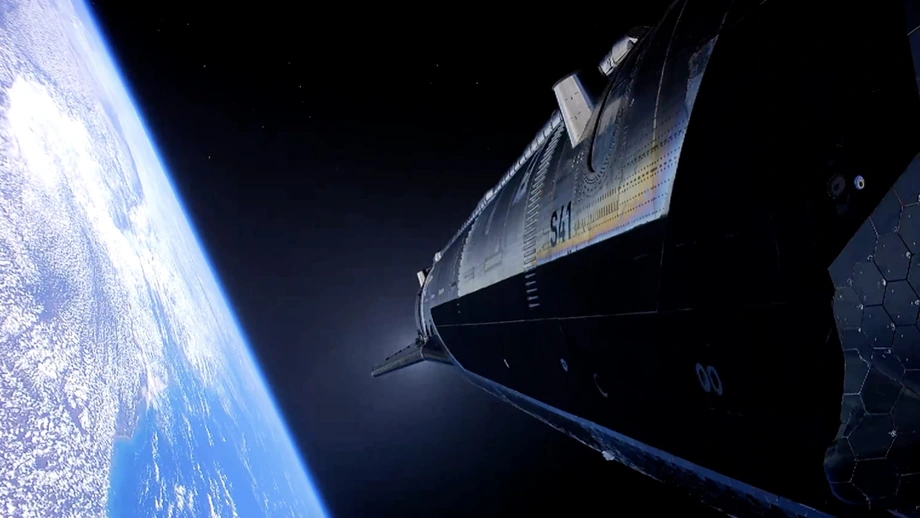
The United States Federal Communications Commission authorized SpaceX to deploy up to one million satellites designed to operate as orbital data centers. The decision, announced on November 25, 2026, marks the first regulatory approval in US history for a constellation of data centers in space. The project, named Starmind, aims to harness solar energy to power artificial intelligence computing in orbit, reducing the burden on terrestrial power grids and water supplies.
Contents
FCC Chairman Brendan Carr stated that the approval opens a bold new frontier for computing infrastructure. He emphasized that the move unites American strengths in space and advanced technology to reinforce economic leadership. Elon Musk responded on social media X that the project would be a great asset to America and the world.
America is leading the world into the era of super intelligence," Carr said in a statement. "This action opens a bold new frontier for the computing infrastructure needed to power America's leadership and growth.
Starmind satellites will operate in low-Earth orbit at altitudes between 500 and 1,002 kilometers. They will use optical links to exchange data with Starlink satellites, which will then relay the processed results back to Earth. The first satellite, designated AI1, features a wingspan of 75 meters and a height of 30 meters. It is powered by a 210 kilowatt solar array and houses an optimized Nvidia Vera Rubin NVL72 computing system.
SpaceX plans to manufacture these satellites at the Gigasat Factory in Bastrop, Texas. The company has also signed a major supply contract with German firm Singulus Technologies for heterojunction solar cells. The FCC granted the authorization with specific deployment milestones to ensure progress.
Deployment Timeline and Technical Requirements
Under the license, SpaceX must launch its first Starmind satellite by November 25, 2033. The company is required to deploy 10 percent of the authorized constellation, or 100,000 satellites, by November 2035. Half of the satellites must be in orbit by November 2038, with the full one million satellites deployed by November 25, 2040. Failure to meet any of these deadlines would void the authorization.
The FCC requires the use of Starship rockets for these launches. While Starship is currently being developed at Starbase in Texas and the planned Starbase Louisiana spaceport, the agency noted that meeting these targets will be a significant logistical challenge. Analysts estimate that SpaceX may need to launch approximately 5,000 Starship rockets per year to complete the constellation within the timeframe.
The authorization covers specific radio spectrum licenses for backup and emergency telemetry, tracking, and command. The FCC also approved SpaceX's request to use additional optical network communications for data transfer. However, the regulator deferred a request from SpaceX to dispose of satellites above 600 kilometers in disposal or heliocentric orbits rather than by atmospheric re-entry, citing insufficient information.
Experts point out that cooling computers in the vacuum of space is difficult. Unlike Earth data centers that use water or air, space-based centers must radiate heat away. This process can be slow, requiring large deployable liquid radiators on the satellites to shed excess heat into the cold vacuum.
Financial and Industrial Implications
Starmind represents a major bet on the future of artificial intelligence computing. The International Energy Agency projects that electricity consumption by AI data centers could more than double to 945 terawatt-hours per year by 2030. Ground-based data centers face increasing opposition due to their high energy use and water consumption, particularly in regions prone to droughts.
By moving compute capacity beyond Earth, SpaceX argues that its satellites can offer transformative cost and energy efficiency. The company highlights near-constant solar power with little operating or maintenance cost as a key advantage. The AI1 satellite has a compute payload of 120 kilowatts and can reach up to 250 kilowatts at peak.
The approval comes at a time when tech companies are racing to build infrastructure for super intelligence. Google announced Project Suncatcher, and Blue Origin petitioned for Project Sunrise, a network of up to 51,600 satellites. Amazon, through its Leo satellite unit, has been building a competitor to Starlink and criticized Starmind as a lofty ambition.
Scientific and Environmental Concerns
Despite the regulatory green light, the plan has raised alarm among scientists and astronomers. Critics worry about the environmental impact of launching and disposing of one million large satellites. A study by University College London researchers estimates that emissions from rocket launches and satellite re-entries could increase by 70 to 150 times current levels.
When satellites burn up in the atmosphere, they release metals such as aluminum, titanium, copper, and lead into the upper atmosphere. Aluminum is of particular concern because alumina deposition can lead to the destruction of the ozone layer. This could increase ultraviolet light on Earth and raise the risk of skin cancers.
Michael Brown, an associate professor at Monash University, described the night sky as becoming vastly busier. He noted that the Starmind satellites would be larger and brighter than current satellites, potentially undermining the public's ability to study the night sky. The American Astronomical Society expressed dismay, stating that the constellation could disrupt decades of federal investment in astronomical facilities.
Astrophysicist Adam Becker called the prospect of launching a million satellites a fantasy. He warned of the Kessler Syndrome, a runaway cascade of debris collisions that could render low Earth orbit unusable for decades. He argued that the FCC approval was a mistake, hoping that the public would not notice the potential for orbital pollution.
Regulatory Dismissal of Petitions
The FCC rejected petitions to deny the application filed by Amazon Leo, Viasat, and the American Astronomical Society. Amazon had argued that SpaceX provided scant details about how it would deliver on its grand claims and that it would take centuries to build the constellation.
FCC Chairman Brendan Carr rebuked Amazon, stating that the e-commerce giant should focus on getting its own house in order with its launches rather than worrying about others. Carr emphasized that SpaceX is already launching satellites at a rapid pace.
The FCC also dismissed concerns regarding environmental impacts, stating that they fall outside its authority under the National Environmental Policy Act. The regulator maintained that deploying the satellites serves the public interest and supports the super intelligence economy.
However, experts like Ian Christensen from the Secure World Foundation remain skeptical about the launch capacity. He noted that current technology does not support the volume of launches required, not even within SpaceX alone. The company would need to significantly scale up its production and launch cadence to meet the 2040 deadline.
Key Points
- FCC approved Starmind on November 25, 2026, for up to one million orbital data center satellites.
- SpaceX must launch its first satellite by November 2033 and complete the full constellation by November 2040.
- The project aims to use solar power for AI computing, reducing strain on Earth's power and water grids.
- Scientists warn of increased atmospheric pollution and space debris risks with the massive satellite expansion.
- Amazon and astronomers filed petitions that were rejected by the FCC.